Consistently when out in fields, I see Bluebird pairs that appear strongly committed to each other. I wondered, do Bluebirds mate forever? In our region, we see Eastern Bluebirds. Ornithologists found from a long term study of Western Bluebirds that the great majority stay together for life. No such studies exist for Eastern Bluebirds however, field observations suggest that about 95 percent mate for life when both are still alive.
Eastern Bluebird female, left, male, right
Interestingly though, mating for life does not exclude extra pair copulations. Genetic studies of broods show that about twenty percent of nestlings are sired by more than one male.
Pairs softly warble to each other early in the morning, the male brings nesting material to a chosen site, and once she has entered his nesting cavity, she will begin to bring nesting material and he will bring food to her to “seal the deal.” In our north of Boston region, you can see the courtship behavior beginning as early as February and March.
Eastern Bluebirds re-mate with another partner if one dies.
In the photos below, it’s very easy to see the difference between a male and female Bluebird. The female’s blue is a more subdued grayish hue while the male’s blue feathers are brilliantly hued.
For a second year in a row, the Monarch numbers are plummeting.
“World Wildlife Fund Mexico in collaboration with CONANP and the Monarch Butterfly Biosphere Reserve (MBBR) announced the total forest area occupied by overwintering monarch colonies today. Nine (9) colonies were located this winter season with a total area of 2.10 hectares, a 26% decrease from the previous season (2.83 ha).” – Monarch Watch
Call to Action! Create wildlife sanctuaries by planting flowering native trees, shrubs, vines, and wildflowers that bloom throughout the growing season.
For nearly two decades I have been sharing information on how we can all help all pollinators, not just Monarch Butterflies. Learn more by joining me virtually on March 17th for my program “The Pollinator Garden” that I am presenting to the Massachusetts Pollinator Network.
For Monarchs specifically, we in the northeast need plant milkweed for Monarch caterpillars and asters and goldenrods for the southward migrating adult butterflies. Creating habitats for Monarchs has a cascading effect that helps myriad pollinators and songbirds.
All along the Monarch’s migratory corridors, climate change, loss of habitat, and the use of pesticides are the greatest threats to the butterflies. Because of climate change, the life cycle of wildflowers are often out of synch with the time the butterflies are traveling through a region. Examples include last September’s drought in the Texas Funnel (2020) and the cold Arctic blast in Texas this past February (2021). When the Monarchs migrated through Texas last fall, there were few if any wildflowers still in bloom to help fuel their journey. Followed by the unusually deep freeze in Texas that killed emerging milkweed shoots (food for the next generation’s caterpillars), this double whammy of sorts does not bode well for this year’s already reduced population traveling along the Monarch Highway.
I have so loved filming and photographing Snow Buntings this winter, finding small and medium sized flocks from Sandy Point to Cape Ann, and further south, all along the coast of Massachusetts. The flocks I have been filming are becoming smaller; male Snow Buntings have already begun their long migration north. Don’t you find all migrating species of wildlife fascinating? Especially a tiny creature such as the Snow Bunting, which breeds the furthest north of any known land-based bird. From the shores of Massachusetts Snow Buntings migrate to the high Arctic where they nest in rocky crevices.
The range shown in orange is where Snow Buntings nest
What has been especially fun to observe is when the Snow Bunting uses its feet as snowshoes and belly like a sled when traversing snow covered beaches. Oftentimes that’s how you can find them, with their unique step-step-slide-tracks. Snow Buntings seem to forage nearly non-stop, perching while shredding grassy seed heads and leaves, and pecking on the ground for seeds caught between sand, stones, and snow. To get from one clump of vegetation to the next, they hop lightly over the surface, snowshoeing along, and then slide along on their bellies. Snow Buntings must gain 30 percent of their body weight before beginning their journey.
Snowshoeing and Sledding
Lively disagreements over food ensue, usually nothing more than a mild spat.
Males typically depart the northeast for their nesting grounds earlier than do the females, arriving three to six weeks ahead of the females. Snow Buntings migrate entirely at night, following the geomagnetic field of the Earth, independent of any type of visual clue!
Notice in several of the photos you can see their “feathered pantaloons,” providing extra protection against freezing temperatures.
Snow Bunting eggs and nest in rocky crevice, images courtesy Google image search
Nicknamed Snowflakes because of their ability to nest in snow!
Wildly blustery at the Point last evening on this the first day of March.
‘In like a lion, out like a lamb’ – the old weather folklore is proving to be true for the first few days of March, 2021. Wouldn’t it be delightful if ‘out like a lamb’ were true as well.
ROCKPORT — Paul St. Germain of Rockport and Eric Jay Dolin of Marblehead made their film debuts this month in “The Last Lightkeepers,” a documentary by Rob Apse.
Apse’s film profiles a handful of the nearly 200 remaining lighthouse keepers across New England.
“In 2000, the National Historic Lighthouse Preservation Act was passed which created a mechanism to dispose these structures to cities and non-profits first and as a last resort they are put up to bid for private ownership,” Apse wrote in an email. “And so, ‘The Last Lightkeepers’ covers the historic past of these structures and the important events surrounding them and parallels those stories and events with all the people behind the preservation efforts that is happening today.”
St. Germain stepped down as president of the Thacher Island Association, a nonprofit group dedicated to raising funds for the restoration and on-going maintenance of the island, last summer after 22 years. Over the past decade, he oversaw a massive, $3.2 million effort to open Straitsmouth Island off Rockport to the public for the first time in 180 years. Massachusetts Audubon assisted the association in the near decade-long effort to rehabilitate the island’s historic landmarks for public use, such as the $150,000 project to repair the iconic lighthouse in 2013. Straitsmouth Island finally reopened in 2019.
On a damp overcast day, a cloud of of Robins descended on our garden. The Dragon Lady hollies provided an abundance of food for the traveling flock. Their beautiful birdsongs filled the neighborhood as they went from tree to tree, devouring any remaining winter fruits.
The Eastern Coyote breeding season runs from December through March although typically, the end of February is peak mating season. Pairs are generally monogamous and may maintain a bond for several years. In April or May, anywhere from four to eight pups are born and both the male and female will raise the litter.
This pair was photographed from quite a distance, in the low light of daybreak, and is heavily cropped however, I feel fortunate to have seen a mated pair together.
The Coyote (scientific name Canis latrans or “barking dog”) is one of the world’s most adaptable mammals. It can now be found throughout North and Central America. Eastern Coyote DNA reveals that as it was expanding its territory northward and eastward, coyotes occasionally interbred with wolves encountered in southern Canada. Eastern Coyotes are typically larger than their western counterparts because of the wolf genes they picked up during their expansion. The wolf gene gives them the strength and ability to hunt deer. Because there are no wolves in our area they are not actively cross-breeding and are not “coywolves.” Many species in the Canid Family (dog family) often hybridize so our Eastern Coyote has a nearly equal percentage of both dog and wolf DNA, and an even higher percentage of dog DNA in southern states, Mexico, and Central America. Coyotes that I filmed in Mexico looked much more dog-like than our heavily bodied local Eastern Coyotes.
This young Red Fox was spotted early one recent morning, hungrily scraping the ground for food. Perhaps he was hunting a small rodent or digging for grubs. How have the Red Foxes that were born in our neighborhoods last spring adapted to survive winter’s harsh temperature and snowy scapes?
Red Fox have evolved with a number of strategies and physiological adaptations. Their fur coats grow thick and long, up to their footpads, which aid in heat insulation. Adult Fox begin to moult, or shed, their winter coat typically in April. Young Red Fox do not moult at all the first year but continue to grow fur until their second spring.
Red Fox tails are extra thick and when not cozily curled up in a snow bank, they will lay on the ground with their tail wrapped around for extra warmth.
Red Fox have relatively small body parts including their legs, ears, and neck, which means less body surface is exposed to frigid temperatures allowing them to conserve body heat. During the winter, Red Fox are less active than during the summer months. Decreased activity also helps to conserve body heat.
The Red Fox’s diet varies according to seasonal abundance. In the summer their diet is supplemented with berries, apples, pears, cherries, grapes, grasses, and acorns. All year round they feed on grubs and insects as well as small mammals such as rabbits, rodents, and squirrels. Red Fox have extraordinarily sharp hearing largely because their ears face outward. They can detect a mouse a football field away, under cover of snow!
I am overjoyed to share that Beauty on the Wing received the Best Feature Film award at the Providence Children’s Film Festival. Thank you friends for voting!I am so appreciative of your ongoing support.Thank you for taking the time to watch and to vote.
It is not easy to host a film festival during the pandemic. Without doubt, it takes enormous amounts of work and professionalism. Festival organizer Eric Bilodeau created a fantastic event, and managed to do all with grace and a wonderful sense of humor. I looked forward to Eric’s communications, for instance, when he requested stills from the film, I sent a batch of photos. He wrote back, did I have anything more colorful? I was taken aback at first before realizing he was kidding. And when he announced Beauty had won, writing -“the Monarch is King!” I think I will use that in the future 🙂
I was able to view many of the films and they were wonderfully interesting and inspiring. I am so proud Beauty on the Wing was a part of the Providence Children’s Film Festival! This was mentioned previously but two of my favorites were Microplastic Madness and The Last Lightkeepers. I hope you have a chance to see if you haven’t already done so.
Thank you so very much again for your kind support.
Beauty on the Wing is playing through tomorrow, Saturday, and I will be part of a Q and A at 3:00pm on February 20th, Saturday afternoon. If you would, please share the link with friends and please vote for Beauty on the Wing after watching the film. Thank you! Here is the link if you would like to sign up to participate in the Q and A. All the films in the festival are geoblocked to Massachusetts, Rhode Island, and Connecticut.
All this school vacation week, the virtual Providence Children’s Film Festival has been airing an outstanding collection of wonderfully educational and interesting films for families and kids of all ages. Tickets are only $12.50 per film for the entire family. Or you can do as I did and purchase a pass, which allows for viewing all films all week long.
Some of the outstanding documentaries I have had the chance to view this week are First We Eat, Microplastic Madness, and The Last Lightkeepers. I think everyone would enjoy all the films in the festival but especially, we on Cape Ann will love The Last Lightkeepers.
Do you know why Thacher Island has not one, but two lighthouses? At about ten minutes into the documentary, local lighthouse historian and president of the Thacher Island Association Paul St. Germain reveals why. Thacher Island’s Twin Lights are featured prominently in the film as are a number of familiar New England lights.
The Last Lightkeepers is filmed beautifully, telling different aspects of the history of lighthouses as well as current status. A quote from one of the interviewees, author Eric Jay Dolan (Brilliant Beacons), especially resonated, “Lighthouses are there to benefit everyone regardless of where they come from, their race, nationality, their creed, their beliefs. Lighthouses are a manifestation of a government’s desire to make navigation for Everyone safer. In today’s turbulent political times, I especially like to think about lighthouses being a beacon for the world, a welcoming embrace for those that are choosing to come to our country…”
Do you know why Thacher Island has not one, but two lighthouses? At about ten minutes into the documentary, local lighthouse historian and president of the Thacher Island Association Paul St. Germain reveals why. Thacher Island’s Twin Lights are featured prominently in the film as are a number of familiar New England lights.
The Last Lightkeepers is filmed beautifully, telling different aspects of the history of lighthouses as well as current status. A quote from author Eric Jay Dolan (Brilliant Beacons) especially resonated, “Lighthouses are there to benefit everyone regardless of where they come from, their race, nationality, their creed, their beliefs. Lighthouses are a manifestation of a government’s desire to make navigation for Everyone safer. In today’s turbulent political times, I especially like to think about lighthouses being a beacon for the world, a welcoming embrace for those that are choosing to come to our country…”
All this school vacation week, the virtual Providence Children’s Film Festival is airing an outstanding collection of wonderfully educational and interesting films for families and kids of all ages. Tickets are only $12.50 per film for the entire family. Or you can do as I did and buy a pass, which allows for viewing all films all week long. Beauty on the Wing is playing through Saturday and I will be part of a Q and A at 3:00 on Saturday afternoon. Please vote for BotWing after watching the film. Thank you!
After watching The Last Lightkeepers, I am more inspired than ever that we form a nonprofit organization to restore Gloucester’s crumbling lighthouses. There is a great deal of expertise from which we can draw upon.
THERE IS NO TIME LIKE THE PRESENT! Please write and let me know if you have every thought about how to go abut restoring our lighthouses and if you have an interest in Gloucester’s beautiful, but severely decaying, beacons. What do you think about the name Friends of Gloucester Lighthouses?Director, Filmmaker & Editor Rob Apse
A large flock of American Robins, often times mixed with European Starlings, arrives annually on Cape Ann round about mid-winter. Over the past several weeks they have been devouring tree fruits all around Eastern Point and East Gloucester. Yesterday our ‘Dragon Lady’ holies were bursting with brilliant red frutis, today, nary a berry!
Please write if you have seen the Robins in your garden or local wooded walks 🙂
Our garden is a postage stamp but we have planted it richly for the songbirds. The pair of ‘Dragon Lady’ holly trees hold their berries for the Robins, the crabapples have yet to be sampled, the winterberry is still ripe with fruit, and the tiny rosehips of the climbing white rose are beckoning.
We’re fortunate that on Cape Ann many American Robins nest and migrate along our shores, having several different habits for surviving winter. There are year round resident robins that breed throughout Cape Ann during warmer months and also spend the winter here. Some Robins arrive in springtime, having spent the winter further south in parts warmer. A third group, the ones I like to call winter Robins, arrive in mid-winter, from parts further north. We are like their Bermuda. They are very hungry and thirsty and are here to feed on wild fruits and berries, as well as small fish fry and fingerlings, and mollusks.
In early spring, Robins begin to disperse from flocks. The ground thaws and worms, insects, and snails once again become part of the Robin’s diet. In early spring, too, is when we begin to hear the beautiful liquid notes of the male robin. He is singing to attract a mate. The robin’s song is one of the of most beloved and it is his music with which we associate the coming of spring.
Be sure your bird baths are filled with fresh, accessible water.
With several edits and updates since I first wrote the following article, I think you’ll find the information helpful in knowing what to feed and to plant for the robins.
Food for the American Robin
During the winter months Cape Ann often becomes home to large flocks of robins, and we have had the joy of hosting numerous numbers in our garden. I can’t help but notice their arrival. Their shadows descend, crisscrossing the window light, followed by a wild rumpus in the ‘Dragon Lady’ hollies. This pair of hollies is planted on opposing sides of the garden path, alongside my home office. I have learned to stealthily sneak up to a window, as any sudden activity inside startles birds that are investigating our garden, and they quickly disperse. Dining not only on berries of the ‘Dragon Ladies’, but also the ‘Blue Princess’ Meserve holly and winterberry bushes, I find dozens of noisy, hungry robins.
These winter nomads flock to trees and shrubs that hold their fruit through January and February, feasting on red cedar, American holly, Meserve hollies, chokecherries, crabapples, sumac, and juniper. Robins traveling along the shores of Cape Ann also comb the shoreline for mollusks, and go belly-deep for fish fry. Depleting their food supply, they move onto the next location. Gardens rife with fruiting shrubs and trees make an ideal destination for our migrating friends.
Year round resident robins will call your garden home when provided with trays of chopped fruit and raisins, supplemented with meal worms.
What to Plant for Robins
The garden designed to attract nesting pairs of summer resident robins, as well as flocks of winter travelers, would be comprised of trees and shrubs for nest building, plants that bear fruit and berries that are edible during the summer and fall, and plants that bear fruits that persist through the winter months. Suburban gardens and agricultural areas provide the ideal habitat, with open fields and lawns for foraging insects as well as trees and hedgerows in which to build their nests.
The following plants, suggested with robins in mind, will also attract legions of songbirds and Lepidoptera. The list is comprised primarily of indigenous species with a few non-native, but not invasive, plants included.
Trees for nesting ~ American Holly (Ilex opaca), Eastern Red Cedar (Juniperus virginiana), Red Maple (Acer rubrum), Sugar Maple (Acer saccharum), Flowering Dogwood (Cornus florida).
Summer and autumn fruit bearing trees, shrubs and vines for robins ~ Black Cherry (Prunus serotina), Blackberry (Rubus spp.), Flowering Dogwood (Cornus florida), Gray Dogwood (C. racemosa), Red-osier Dogwood (C. sericea), Silky Dogwood (C. amomum), Elderberry (Sambucus canadensis), Apple (Malus pumila), Virginia Rose (Rosa virginiana), Highbush Blueberry (Vaccinium corymbosum), Lowbush Blueberry (Vaccinium angustifolium), Wild Grape (Vitis spp.).
Trees and shrubs with fruits persisting through winter ~ Winterberry (Ilex verticillata), Mountain Ash (Sorbus americana), Crabapple (Malus spp.), Sargent’s Crabapple (Malus sargentii), American Holly (Ilex opaca), Meserve Hollies (Ilex x meserveae), Eastern Red Cedar (Juniperus virginiana), Common Juniper (Juniperus communis), Chokecherry (Prunus virginiana), Smooth Sumac (Rhus glabra), Staghorn Sumac (Rhus typhina).
All this school vacation week, the Providence Children’s Film Festival is airing an outstanding collection of wonderfully educational and interesting films for families and kids of all ages. Tickets are only $12.50 per film for the entire family. Or you can do as I did and buy a pass, which allows for viewing all films all week long. Beauty on the Wing is playing through Saturday and I will be part of a Q and A at 3:00 on Saturday afternoon. Please vote for BotWing after watching the film. Thank you!
At this moment I am currently watching The Last Lighthouse Keepers. This is a film I have been especially super excited to see largely because I think here in Gloucester we should form a Friends of Gloucester Lighthouses Association. Our lighthouses are in increasingly deplorable condition. I would like very much for we in Gloucester to follow in the footsteps of Rockort’s Paul St. Germain and the Thacher Island Association in restoring our lighthouses and the surrounding grounds.
The Last Lighthouse Keepers – This stunning documentary explores lighthouses across New England (including in Rhode Island) and the sadly decaying condition of many of them. Many abandoned lighthouses haven’t been tended to in decades or since they were replaced by updated tools of navigation. Director Rob Apse captures the beauty of these American sentinels that once defined a nation’s coastline. The Last Lightkeepers highlights stories of individuals currently fighting to preserve these structures while capturing their folklore before the lights go dim forever.
All this school vacation week, the Providence Children’s Film Festival is airing an outstanding collection of wonderfully educational and interesting films for families and kids of all ages. Tickets are only $12.50 per film for the entire family. Or you can do as I did and buy a pass, which allows for viewing all films all week long. Beauty on the Wing is playing through Saturday and I will be part of a Q and A at 3:00 on Saturday afternoon. Please vote for BotWing after watching the film. Thank you!
At this moment I am currently watching First We Eat – funny, wry, and fascinating to watch the teenagers especially as they try to adjust to eating only local sourced food, in the middle of the Yukon. Read more here –
“What happens when an ordinary family, living just south of the Arctic Circle, bans all grocery store food from their house for one year? Add 3 skeptical teenagers, 1 reluctant husband, no salt, no caffeine, no sugar, -40 temperatures.
Putting food security to the test in the far North of Canada filmmaker Suzanne Crocker, living just 300 km from the Arctic Circle, removes absolutely all grocery store food from her house. For one year, she feeds her family of five, only food that can be hunted, fished, gathered, grown or raised around Dawson City, Yukon. Add three skeptical teenagers, one reluctant husband, no salt, no caffeine, no sugar and -40 temperatures. Ultimately the story becomes a celebration of community and the surprising bounty of food that even a tiny community in the far North can provide. After all, “First we eat, then we do everything else.” – MFK Fisher. Written by Suzanne Crocker”
Check out this fantastic video created by Dave Rimmer, Essex Greenbelt’s Director of Land Stewardship and Osprey Program. The footage was taken last summer from Greenbelt’s OspreyCam. Watch highlights of the 2020 Osprey season captured from Annie and Squam’s nest in Gloucester. Annie and Squam fledged three chicks, Vivi, Rusty, and Liz, and you can watch their development from egg to fledging.
For further reading and some terrific background information, see the following article, published by the NRDC in early February of this year. Scenes from Beauty on the Wing were filmed at the stunning forest at the Cerro Pelón Monarch Butterfly sanctuary.
NRDC Profiles:
For a Family in Mexico, a Mission to Protect Monarchs
Siblings Joel, Anayeli, and Patricio Moreno see the future of their community and that of the butterflies that migrate annually to the local Cerro Pelón forest as being intimately connected.
If there’s something that the Moreno family agrees on, it’s that monarch butterflies changed their lives. And not just their own but the lives of most in Macheros, Mexico. The agricultural village of 400 people—whose name translates to “stables” in Spanish, because of the 100 horses that also make their home here—sits at the entrance to Cerro Pelón, one of four sanctuaries in Mexico’s Monarch Butterfly Biosphere Reserve, established by the federal government in 1986.
It started when Melquiades Moreno de Jesus secured a job as a forest ranger, or guardabosque, in 1982. Six years earlier, National Geographic had run a feature on monarch migration, bringing international attention to the butterflies’ overwintering sites in the mountainous oyamel fir forests some 80 miles west of Mexico City—though locals had discovered the colonies long before outsiders descended on the area. Soon after that publication, the State of Mexico’s Commission of Natural Parks and Wildlife (Comisión Estatal de Parques Naturales y de la Fauna, or CEPANAF) established the local forest ranger positions, employing men from Macheros to patrol the part of the sanctuary that’s in the state of Mexico. (Part of the butterfly reserve also lies in the state of Michoacán.) CEPANAF hired Melquiades several years later and he stayed on, monitoring the butterflies and deterring illegal loggers, for more than three decades.
The village of Macheros; Cerro Pelón is the tallest peak on the right.
Ellen Sharp
“When my dad got the job as a forest ranger, it changed our lives,” says Joel Moreno Rojas, the fourth-born of Melquiades’s 10 children. His father’s steady income brought the family out of poverty and afforded the children the chance to go to school. It also instilled a sense of local pride and inspired his family’s commitment to caring for the natural wonder at their doorstep.
Among the Moreno siblings, three have continued their father’s legacy: Joel, Anayeli, and sixth-born Patricio (“Pato”). Pato took over Melquiades’s forest ranger position after his dad’s retirement in 2014. When the monarchs are roosting in Cerro Pelón, roughly from November to March, he spends many days near the overwintering colonies, monitoring them and asking visitors not to disturb the impressive clusters. The butterflies, which have migrated thousands of miles from the eastern part of the United States, are drawn to the oyamel canopy—which provides insulation and keeps out the elements—for their winter rest. “I love it,” says the father of two. “It’s the most marvellous thing that could have happened in my life to have a job like this.”
Pato Moreno at work in Cerro Pelón after a rainstorm
Ellen Sharp
Being among hundreds of thousands of butterflies sparks such an intense emotional reaction that the Moreno siblings say it is impossible to name. When they do find the words, they describe experiencing the monarchs as powerful, beautiful, and emotional. Joel has seen visitors drop to their knees and pray or break out in tears when they first see the butterflies, who some locals believe are the souls of their ancestors, since the migrating monarchs arrive in Macheros right around the first of November, el Día de los Muertos, or the Day of the Dead.
“As Mexicans, we should all be proud of the butterflies,” Pato continues. “I’d like everyone to understand the value of the forest, because it helps us and it helps the butterflies.”
I hope you are doing well and taking good care. I have exciting news to share regarding virtual screening times for Beauty on the Wing at the Providence Children’s Film Festival for my Massachusetts, Connecticut, and Rhode Island friends. The festival opens at 4pm on this coming Friday, the 12th. Tickets may be purchased in advance and you will then have seven days in which to view. Once viewing begins, you have 24 hours to complete the screening. The tickets are only $12.50. Purchase tickets here. I am going to be participating in a Q and A on the afternoon of Saturday, the 20th, and will let you know more in the next few days.
The festival is showcasing a fantastic lineup of films. I plan to purchase a full access pass and there is also a family access pass option for ten films. The festival takes place during February school vacation week and will be a wonderfully inspiring source of entertainment for you and your family. Here is a link to all the films showing at the festival: FILM GUIDE. Just two of the many films I am super excited to see are The Last Lighthouse Keepers and Microplastic Madness.
I hope you’ll have a chance to watch Beauty on the Wing virtually. The Providence Children’s Film Festival is a truly stellar organization devoted to bringing inspiring and educational films to families in Rhode Island and the surrounding region. More information on how to participate in the Q and A to follow.
Take care dear friends and stay well.
Warmest wishes,
Kim


 Eastern Bluebird female, left, male, right


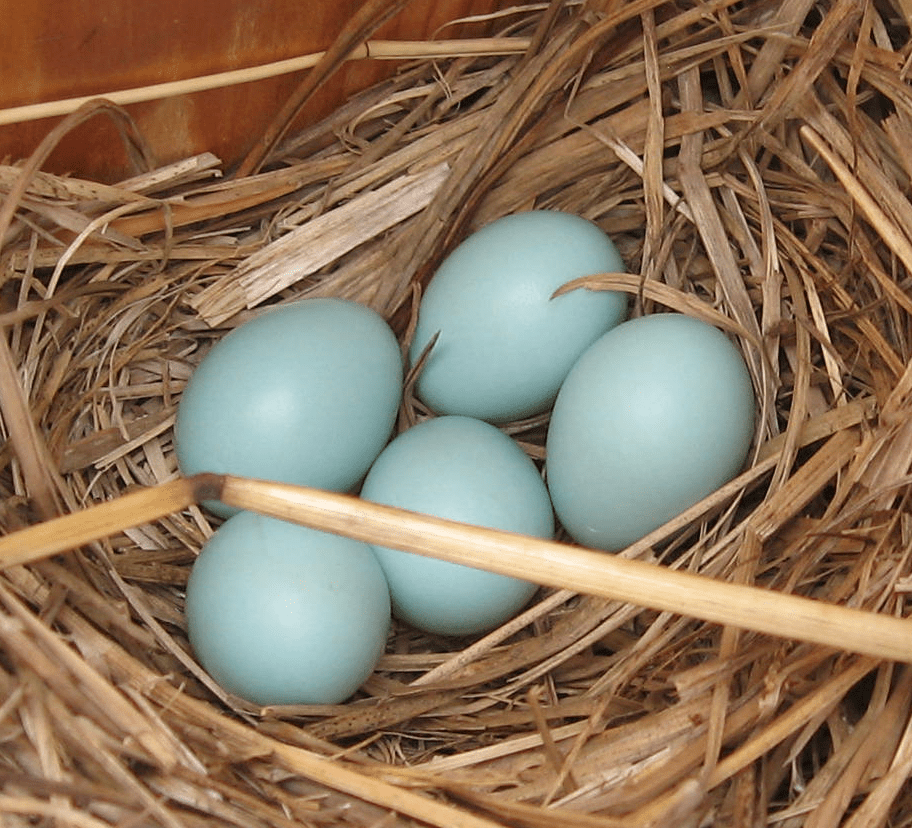 Bluebird nest with eggs, courtesy wikipedia


