Category Archives: MassWildlife

THANK YOU PIPING PLOVER AMBASSADORS!

Dear PiPl Friends

Thank you so much everyone for putting in extra time, covering shifts (Barbara), doubling up on shifts (Deb and Sharen), staying soooo long at the beach today (Jennie), and stopping in to keep eyes on Hip Hop in between shifts (Paula and Alexa). Hopefully, Hip Hop will stick with the family for the remainder of the day and evening.

Just to let everyone know, in the morning, I have seen both Mom and Dad thermoregulate Hip Hop. Paula and Alexa have as well. Oftentimes, I see the triplets tucked under wing, but Hip Hop can’t push in so he goes off for a bit. Mom or Dad will pop up and then give him his own special time, this morning for several twenty minute sessions. So even though he has his little handicap and is slower, I don’t think the parents are rejecting him. Barbara, yes Hip Hop was the one that was attacked, but it was not SuperMom or SuperDad.

An unfortunate problem with a drone family on the beach this morning. We don’t have signs and we will definitely have them for next year, but you can gently tell a drone operator (hopefully they will listen), operating a drone near endangered species violates the Migratory Bird Treaty Act and is absolutely considered harassment, and also comes with a hefty fine.

Have a lovely evening.
xxKim

In spite of his handicap and pint-size, 18-day-old Hip Hop is foraging, pooping, and being his usual big and bad independent self.

REMINDER: PIPING PLOVER INFORMATIONAL MEETING THURSDAY JUNE 16TH AT 5:45PM

Good Morning PiPl Friends,

A reminder of our Piping Plover informational meeting this Thursday the 16th, at 5:45 pm, at area #3. For new PiPl friends, park in the lot at the far end, near Boardwalk #3. Walk down the boardwalk and turn right towards the footbridge. You will see the symbolically roped off area and we will meet there. I am looking forward to seeing everyone, old and new <3

We are looking for more volunteers. If you know someone who would like to help, please feel free to bring them to the meeting and please share my email.

Mini-update on our GHB nesting pairs. Both Moms were on the nests this morning while both Dads were foraging at the tidal flats and in the wrack. Everyone looks healthy and ready for chicks! There was hardly any trash on the beach, which was wonderful to see. Thank you Gloucester’s DPW beach crew!

#3 Dad eating a Painted Lady Butterfly

#3 Mom on the nest, well-camouflaged in beach grass

There are many tracks in Area #2 and I am hoping perhaps, if Cape Hedge Mom is still alive, we will have a renest there, but there are no nest scrapes, only footprints. We’ll keep checking.

Thank you to all our PiPl friends, old and new. We’ll see you Thursday!
Warmest wishes,
xxKim

#1 Mom on the nest, next to a shoot of Sea Rocket

#1 Dad preening

IF YOU GO TO GOOD HARBOR BEACH AT SUNRISE BE SURE TO…

Take in the wonderful fragrance of the flowering Black Locust trees adjacent to the footbridge entrance. The air is redolent with the scent of orange blossoms and honey, along with the Rosa rugosa blooming nearby.

The stand at Good Harbor Beach has been increasing in size and I don’t ever recall the scent quite as potent as it is this year. You can smell the flowers halfway down Nautilus Road!

Black Locust are native to the Appalachian Mountains. The leaves are a host to over 67 species of Lepidoptera, including  Eastern Tiger Swallowtail, Mourning Cloak, Red-spotted Purple, Viceroy, Giant Leopard Moth, and the Elm Sphinx Moth. A host plant is a caterpillar food plant. And they offer nectar to pollinators, including Ruby-throated Hummingbirds.

PLEASE JOIN ME FOR A SPECIAL LIVE SCREENING OF BEAUTY ON THE WING!

TO REGISTER, GO HERE

For more about the Essex National Heritage Pollinator Week programs, go here.

AMERICAN LADY AT CAPE HEDGE BEACH

There are a surprising number of butterflies this year at Cape Hedge Beach. Several days ago an American Lady was warming on the popples and today, a female Black Swallowtail.

An easy way to see the difference between an American Lady Butterfly and a Painted Lady Butterfly

American Lady (Vanessa virginiensis) ~ Note the two large eyespots on the underside of the hindwing, close to the outer margin.The Painted Lady (Vanessa cardui) has four smaller eyespots on the underside of the hindwing. 

Painted Lady, left; American Lady right

MOM COMING IN FOR A LANDING!

Please share your Monarch sightings. We would love to hear from you <3

This Mama Monarch photographed yesterday was zeroing in and depositing eggs on the freshly emerging shoots of Common Milkweed sprouting in the grassland meadows at Cox Reservation.


On May 21st the first Monarch was spotted; this is the earliest many of us have seen Monarchs in our gardens, dunes, and meadows. MJ observed one on the 21st in Lanesville, Patti in East Gloucester on the 23rd (she has tons of milkweed), Duncan spotted one at Brier Neck, they are in the dunes at Good Harbor Beach in the Common Milkweed patches, in my garden (also lots of milkweed), and have been seen at several Greenbelt sanctuaries, both Castle Neck River Reservation and Cox Reservation.

The butterflies at Cox Reservation were drinking nectar from the Red Clover

The Marvelous Magnificent Migrating Monarch –  share with kids!


Please join us Wednesday, June 22nd at 7pm for a free in-person screening and Q and A of Beauty on the Wing: Life Story of the Monarch Butterfly at the Salem Visitor Center, as part of Essex National Heritage Pollinator week-long series of events.

HAPPY EARTH DAY ON THIS MOST BEAUTIFUL OF EARTH DAYS!!

“There is symbolic as well as actual beauty in the migration of the birds, the ebb and flow of the tides, the folded bud ready for the spring. There is something infinitely healing in the repeated refrains of nature – the assurance that dawn comes after night, and spring after the winter.” –Rachel Carson

Dear Friends,

It’s glorious outdoors today and I hope you have a chance to get outside.  See below for photos from my morning Earth Day walk, although I can’t bear to sit at my computer all day when it’s so gorgeous out and will head back out this afternoon to see what we see.

For Earth Day this past week I gave several screenings of Beauty on the Wing (thank you once again most generous community for all your help funding BotWing!) along with presenting “The Hummingbird Habitat Garden” to the Massachusetts Horticultural Society. For over twenty years I have been giving programs on how to create pollinator habitats. People are hungry for real information on how to connect to wildlife and wild habitats and each year the interest grows and grows. It’s truly a joy to witness!

Last night it was especially rewarding to bring Beauty on the Wing to Connecticut’s Sherman Conservation Commission attendees. We had a lively Q and A following the screening with many thoughtful questions and comments. My gratitude and thanks to Michelle MacKinnon for creating the event. She saw the film on PBS and wanted to bring it to her conservation organization. Please let me know if you are interested in hosting a Beauty on the Wing screening

Monarchs are on the move! The leading edge in the central part of the country is at 39 degrees latitude in Illinois and Kansas: the leading edge along the Atlantic Coast is also at 39 degrees latitude; Monarchs have been spotted in both Maryland and New Jersey. Cape Ann is located at 43 degrees — it won’t be long!

Monarchs are heading north! Female Monarch depositing egg on Common Milkweed

Hummingbirds have been seen in Mashpee this past week (41 degrees latitude). Don’t forget to  put out your hummingbird feeders. Dust them off and give a good cleaning with vinegar and water. Fill with sugar water and clean regularly once installed. The sugar water recipe is one part sugar to four parts water; never replace the sugar with honey, and never use red food coloring.

Happy Glorious Earth Day!

Female Ruby-throated Hummingbird

Super surprised to see this mystery duck asleep on a rock. I was so curious and kept hoping he would wake up so as to identify. He at last lifted his head for all of ten seconds and then promptly tucked back in and went back to sleep. I’ve only ever seen Surf Scoters bobbing around far off shore in the distance. Skunk bird- what a cutie!

American Kestrel, male, too far away to get a good photo but a joy to see!

Beautiful, beautiful Great Egret preening its luxurious spray of feathers. An egret’s spray of feathers is also referred to as aigrette.

No Earth Day post would be complete without our dear PiPls – Mom and Dad foraging at the wrack line this am, finding lots of insects for breakfast.

A seal’s life


PEEP IN A CLAMSHELL

Is a Sanderling a sandpiper? The short answer is yes.

Sanderlings are a species in the genus Calidris, which also includes locally seen Semipalmated Sandpipers and Least Sandpipers. All three are called sandpipers, with the sweet nickname “peeps.”Pretty Sanderling in a clamshell

LOVELY ORANGE-CROWNED WARBLER IN OUR MIDST!

Yet another beautiful vagrant has been spotted on our shores, the Orange-crowned Warbler!

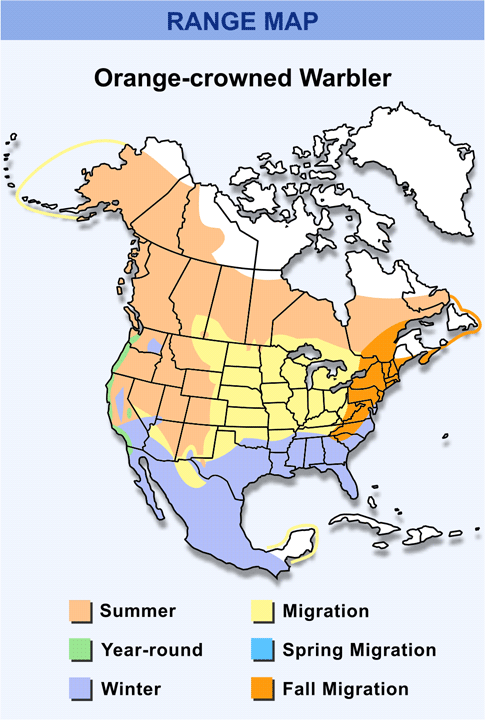
As you can see from the map, the Orange-crowned Warbler is nowhere near its winter range. This, from Cornell, “Medium to long-distance nocturnal migrant. Many birds winter in Mexico, with some continuing south to Guatemala and Belize. Others winter in central California and the southern U.S.”

Finding insects in the brush, bark, and rotting wood

Finding plenty of insects in rotting pieces of driftwood, peeling bark, and drying seaweed, the little fellow is very active and seems relatively unperturbed by the below freezing temperatures of the past month. Orange-crowned Warblers are purported to be one of the most hardiest of warblers. I met up with some old time knowledgeable gentlemen birders and they shared that about once a year an OCW shows up in Massachusetts, but rarely as far east as Cape Ann.

After looking at the photos you may wonder, as did I, why this yellowish-olive green songbird is so named ‘orange crowned?’ You can just barely see a very slight rusty orange hued patch of feathers when its head is bowed forward.

beautiful birds

FOR NEW YORK, SAN FRANCISCO, AND LA FRIENDS AND FAMILY – THIS WEEK’S BEAUTY ON THE WING AIR TIME ON PUBLIC TELEVISION

Good Morning Friends! The following are this week’s showtimes for Beauty on the Wing: Life Story of the Monarch Butterfly airing on NY, LA, and San Francisco stations. Thank you for watching <3

WEDWDT3 1 __W____ 2:30:00 2/17/2022 2/17/2022 New York 1 6.24 %
WEDWDT3 1 ____F__ 5:00:00 2/19/2022 2/19/2022 New York 1 6.24 %
WEDWDT3 1 M______ 9:00:00 2/14/2022 2/14/2022 New York 1 6.24 %
WEDWDT3 1 _T_____ 13:00:00 2/15/2022 2/15/2022 New York 1 6.24 %
WEDWDT3 1 ______S 15:00:00 2/13/2022 2/13/2022 New York 1 6.24 %
WEDWDT3 1 ______S 22:00:00 2/13/2022 2/13/2022 New York 1 6.24 %
KOCEDT2 1 _____S_ 17:00:00 2/12/2022 2/12/2022 Los Angeles 2 4.66 %
KVCRDT 1 ______S 16:00:00 2/20/2022 2/20/2022 Los Angeles 2 4.66 %
KVCRDT3 1 M______ 5:00:00 2/22/2022 2/22/2022 Los Angeles 2 4.66 %
WYINDT 1 __W____ 23:00:00 2/16/2022 2/16/2022 Chicago 3 2.90 %
KQEDDT 1 __W____ 5:00:00 2/17/2022 2/17/2022 San Francisco 8 2.14 %
KQEDDT 1 __W____ 23:00:00 2/16/2022 2/16/2022 San Francisco 8 2.14 %
KQEHDT2 1 __W____ 5:00:00 2/17/2022 2/17/2022 San Francisco 8 2.14 %
KQEHDT2 1 __W____ 23:00:00 2/16/2022 2/16/2022 San Francisco 8 2.14 %
KRCBDT 1 ___T___ 12:00:00 2/17/2022 2/17/2022 San Francisco 8 2.14 %
KRCBDT 1 _T_____ 21:00:00 2/15/2022 2/15/2022 San Francisco 8 2.14 %

BEAUTY ON THE WING PREMIERES ON PUBLIC TELEVISION TODAY!!

Hello Friends!

Today Beauty on the Wing: Life Story of the Monarch Butterfly is scheduled to begin premiering on over 180 public television across the US. From cities coast to coast (including New York, LA, San Francisco, Chicago, Philadelphia, Seattle, Charlotte, Raleigh, Kansas City, Cincinnati, Columbus, Hartford, and many more), you can check your local listings to find out when Beauty on the Wing is scheduled to air.  Additionally, if you don’t see your city listed this week, more stations are planning to add the documentary to their schedule in the coming days.

If you happen to watch Beauty on the Wing on television, please write and let us know. We would love to hear from you!

The one major market that at this date is not planning to air Beauty on the Wing is Boston (??). However, if you are a member of your local PBS station and have contributed more than $60.00, shows are available to stream through PBS Passports. I believe the streaming option for Beauty on the Wing begins this week.

My deepest thanks and appreciation once again to all who so kindly donated to Beauty on the Wing. With your support we were able to complete our documentary, showcase at film festivals, and now bring to a nationwide television audience. Huge special shoutouts to my dear friend Lauren Mercadante who is not only extraordinarily generous, she also loves creating butterfly magic in her garden, and to Jesse Cook, who gave so generously of his music. Thank You Friends <3

Official 30-second promo for American Public Television

2021 WILD CREATURES REVIEW! PART TWO

Cape Ann Wildlife – a year in pictures and stories

July through December continued from part one

July 2021

Conserve Wildlife NJ senior biologist Todd Pover makes a site visit to Cape Ann beaches, summer long updates from “Plover Central,” GHB Killdeer dune family raise a second brood of chicks,  Cape Hedge chick lost after fireworks disturbance and then reunited with Fam, Great Black-backed Gulls are eating our Plover chicks, thousands of Moon Snail collars at Cape Hedge,  Monarchs abound, #savesaltisland, missing Iguana Skittles, and Earwig eating Cecropia Moth cats.

August 2021

New short film for the Sawyer Free Library The Marvelous Magnificent Migrating Monarch!, Coastal Waterbird Conservation Cooperators meeting new short Piping Plover film, Ruby-throated Hummingbirds in the garden, why we love Joe-pye and other wildflowers, butterfly friends, Monarch cats in the garden, what is the purpose of the gold dots found on Monarch chrysalides?,Black Beauty came calling, Tigers in the garden, School Street sunflowers, Hoverflies, luminescent Sea Salps return to Cape Ann beaches, Petal Dancers and lemony Yellow Sulphurs on the wing.


September 2021

Flower Fairies, irruptive Green Darner migration, mini glossary of late summer butterflies, what to do if you find a tagged Monarch, Painted Ladies, White-tailed Deer family, Monarchs mating, Tangerine Butterflies,  yellow fellow in the hood, and Beauty on the Wing first ever live screening at the Shalin Liu.

October 2021

Bee-sized butterfly the American Copper, Monarch conga line, Thunder and Cloud, abandoned Piping Plover egg, School Street Sunflowers, Monarchs migrating, quotidian splendor, Monarch fundraiser updates, collecting milkweed seeds, the Differential Grasshopper, Cooper’s Hawk – a conservation success story,  #ploverjoyed, and nor’easter from the EP Lighthouse.

November 2021

Bridges between life and death, ancient oak tree uprooted, autumn harvest for feathered friends, Monarch migration update, we have achieved our fundraising goal!, Harbor Seal pup hauled out,  flight of the Snow Buntings, and a very rare for these parts wandering Wood Stork calls Cape Ann home for a month.

December 2021

New short film Wandering Wood Stork, tiny tender screech owl suffering from rat poison under the care of Cape Ann Wildlife Inc., Praying Mantis in the autumn garden, masked bandits in the hood, short film The Majestic Buck and Beautiful Doe Courtship Frolic, Snowy Owl boy in the dunes, short film Cedar Waxwing vocalization, the story of the Steller’s Sea-Eagle’s foray to Massachusetts, and Harbor Seal Pig Pile.


SEE PART ONE, JANUARY THROUGH JUNE, HERE


BEAUTY ON THE WING: LIFE STORY OF THE MONARCH BUTTERFLY COMING SOON (FEBRUARY 2022) TO A PBS STATION NEAR YOU!


MASSACHUSETTS WANDERING WOOD STORK UPDATE

The beautiful young Wood Stork appears to have departed the shores of Cape Ann. As far as I am aware, no further sightings have been reported. A week ago, Tuesday the 23rd of November, the weather turned much cooler with early morning temps dipping in the low thirties. I observed the young WS foraging and swooping across the marsh at daybreak before heading to work. At the end of Tuesday, I didn’t see him, nor the following morning when temps were in the low twenties. Daily checks in all his hotspots have resulted in no sightings. Possibly the cold weather prompted a movement southward. Many of the Great Blue Herons that were also feeding in the marsh have also moved on. Perhaps most have gotten the message that it’s time to get out of here!

The Wood Stork has been on Cape Ann for over a month. I first caught site of him swooping over the marsh and into a tall deciduous tree along Route 128. The site of the WS in flight took my breath away. Several times I circled around trying to catch a second glimpse, but did not see. Over the course of the next month, many sightings were reported and by the mid-November, the WS had settled into the marsh near the railroad tracks.

Fortunately, I did manage to capture some footage of the Wood Stork foraging at dusk and am working on a short video. Most of its time spent feeding on Cape Ann, the WS was crouched down low with only torso visible. I really lucked out because the Wood Stork flew to an opening in a marsh tidal pool where I could see his legs and feet in action. This great gawky bird does an elegant dance shaking its feet in the mud to stir up edible creatures. At one point that you can clearly see in the footage, he does a delightful backward turn whilst foraging.

Elegant dance of the Wood Stork

In reading abut Wood Stork sightings in Massachusetts (see story here, of an elusive juvenile Wood Stork on Cape Cod in 2019),  I learned the Wood Stork is rather tolerant of people, which would explain why Cape Ann’s Wood Stork appeared relatively unfazed by the large crowds he attracted:

Mike Faherty, NPR, “I connect with Wood Storks, and not just because we are both bald. They remind me of my younger days doing bird research in the Everglades, where the Wood Stork is one of those birds that, although federally Endangered, could be seen in roadside ditches next to strip malls. Such is birding in South Florida, where the birds are tame and abundant even in the unlikeliest of places. Wood Stork populations crashed from 15,000 pairs to 500 pairs when the Everglades were ditched and drained in the early 20th century, but populations have stabilized enough recently to upgrade them from Endangered to Threatened.

Read More Here: WANDERING WOOD STORK IN MASSACHUSETTS (VERY RARE)

HOW TO WATCH BEAUTY ON THE WING THROUGH THE SWITZERLAND INTERNATIONAL FILM FESTIVAL PORTAL

Good morning Monarch Friends!

If you would like to watch Beauty on the Wing today for free, here is the link to the Switzerland International Film Festival. Go to the festival and click the green box with “Screenings.” Today is documentary film screening day so you will be directed to a selection of docs. Beauty on the Wing is about fifteen rows down. Click on Beauty. If it doesn’t play, copy the password (monarchbutterflyfilm22) and go to the Vimeo link provided.

I think the link will only be good through 5pm EST. The festival changes genres at midnight, Swiss time.

I hope so much you enjoy if you haven’t already seen.

Happy Thanksgiving!

xoKim

WHY DO SO FEW MONARCH EGGS SURVIVE IN THE WILD?

A female Monarch deposits 300 to 500 eggs during her lifetime. We knew the rate of survival for Monarch eggs in nature was low, as low as 10 percent, but recently I learned it is actually closer to 5 percent.

Why is the rate of survival so low? Mostly, because a tiny egg or tiny caterpillar is a food for an insect. But I have always been curious as to what insects exactly?

Female Monarch curling her abdomen to deposit an egg.

Michigan State University phd entomology student Andrew Myers was determined to find out. He noticed much of the predation happened after nightfall. He camped out for three nights monitoring milkweed plants to discover who exactly were the culprits. The night time predators were earwigs, harvestmen, ants, tree crickets, and spiders. The daytime munchers included stinkbugs, plant bugs, mites, jumping spiders, and milkweed bugs.

Tip for raising Monarchs – When you see a female ovipositing eggs in the garden, wait until she has completely finished depositing her clutch and then head out immediately and snip the leaves and stems with the eggs.  If you wait even an hour, many will have already been eaten.

We had a terrible problem with earwigs this summer. They ate every one of our Cecropia Moth eggs and newly emerged caterpillars, despite the fact that the tops of the glass terrariums are covered with several layers of cheesecloth and a fine mesh screen. The pesky creatures can slither into anywhere! Next year, all eggs and newborns are living in the house until they become too big to be an earwig or stinkbug meal!

Note the two eggs above – pinhead-sized eggs are a yummy meal for hungry insects

Stinkbug

Earwig

Earwig and Stinkbug bug photos courtesy wikicommons media


AUTUMN HARVEST – SONGBIRDS FEASTING ON FRUITS, BERRIES, AND SEEDS

A very berry morning to you!

During early morning walks it has been a joy to observe the many beautiful songbirds breakfasting  on the array of autumn foods readily available, truly a smorgasbord of seeds, berries, and fruits.

My wild creature habitat radar has been especially drawn to a wonderful spot, so nicknamed ‘Four Berries Corners.’ Always alive at this time of year with chattering songbirds, there is a lovely crabapple tree, bittersweet, a small tree with black berries, privet I think, and two scraggly, but highly productive, Eastern Red Cedar trees.

In thinking about the about the most successful habitats for songbirds, a combination of seed-producing wildflowers, grasses, and garden flowers are planted along with primarily native flowering and fruiting trees and shrubs. The shrubs and trees also play the important role of providing nesting habitat and protective cover. The photo collection is a small sampling, and meant for design inspiration.

Native Eastern Red Cedar (Juniperus virginiana) and Male House Finches

A male and female House Finch feeding each other in the Crabapples!


Grass seeds, much beloved by many including Song Sparrows, Bobolinks, and even Snow Buntings

Poison Ivy berries – by no means am I suggesting to plant, just mentioning that over 60 species of birds have been documented eating Poison Ivy drupes.

Cattail seed heads for male Red-winged Blackbirds


Sunflower Seeds fo all!

Along with songbirds, come their predators. Look for Merlins, Red-tailed and Cooper’s Hawks

Blue Jay preening after a morning of berry eating

The berries of Spindle Tree are the most beautiful part of the tree, but the tree is not recommended as it reseeds freely and is notorious for pushing out species of native trees and shrubs.

Seed heads make great perches for dragonflies and damselflies

Coyotes getting in on the action– much of their scat at this time of year has plainly visible partially digested fruits and berries.


MONARCH MIGRATION UPDATE AND LAST WEEK OF FUNDRAISING!

Good Morning Monarch Friends!

Thank you to all who have contributed so generously to Beauty on the Wing. We are in the final week of fundraising. I want to thank everyone who has given so generously, not only to this fundraiser to bring our documentary to American Public Television, but also to the first fundraiser we had back in 2018, which was for post-production. Although I did everything on the film up to post, including screenplay, editing, and camera work, the cost for rerecording the narration, sound mix, and color correction was large. Because of your generosity for the first fundraiser we were able to finish the documentary and just as importantly, to showcase at film festivals. In this second fundraiser, your donations are contributing to creating a new edit for public television, marketing and distribution fees, the cost of insurance, and more. A number of you have given to both fundraisers, and I am so very grateful for that. The list that you see at the bottom of the page includes everyone, from both fundraisers.

I wanted to share with you the stunning map that we have been able to license from Paul Mirocha, which will be added to the new edit. Paul designed an original map for Monarch Watch, which he later adapted for the USFWS. He has created a new map for Beauty on the Wing with further adaptations, along with the most up to date information on the Monarch’s migratory routes.

MONARCH MIGRATION UPDATE!

We on Cape Ann have been enjoying a beautiful mini wave of Monarchs over the past week. The butterflies are fortifying for the long southward journey, mostly drinking nectar from wild Black Mustard, the few remaining asters, and other wildflowers and garden blooms they can locate. Thank you to Caroline Haines and Ellen Higgins for sharing your Monarch sightings from Washington Street and from Gloucester High School!

As of yesterday morning, Monarchs at Cape May were waiting for the right winds to cross the Delaware Bay but I think the latest news is that they have begun to cross and have mostly departed.

The first wave of Monarchs are passing through Texas in high numbers and have been arriving to northern Mexico in splendid swirls overhead and overnight roosts.

The truly exciting news in the world of Monarchs is that the Pacific Coast western population has seen an uptick in Monarchs, from last year’s record breaking low numbers, to several thousand at both Pismo Beach and Pacific Grove Monarch sanctuaries.  Insect populations fluctuate wildly from year to year however, the numbers were so low last year, their extirpation from California has been predicted.

From the Western Monarch Count, “On October 16th, 2021, over 1,300 monarchs were counted at the Pacific Grove overwintering site; this site did not have a single monarch butterfly during last year’s count. Pismo State Beach Monarch Butterfly Grove and an adjacent site tallied roughly 8,000 Monarchs on October 20th, 2021; last year, these sites hosted less than 300 butterflies.” Although these numbers are heartening, for perspective, see the graph below to show how dire the situation is.

Western Monarchs at Eucalyptus grove, Goleta, Santa Barbara, 2015

Fundraising Update

We are in the final week of fundraising to bring Beauty on the Wing to American Public Television. If you have thought about giving a contribution and have not yet done so, please consider making a tax deductible donation or becoming an underwriter to bring our Monarch Butterfly documentary Beauty on the Wing: Life Story of the Monarch Butterfly to public television. To Learn More go here and to DONATE go hereThank you!

An added note – for any person or organization contributing over $1,000.00, your name will be at the beginning and end credits each and every time the documentary airs nationwide! For contributions of $5,000.00 or more, your organization’s logo will be featured in the credits. For more information, please feel free to contact me.

With gratitude and deep appreciation to the following for their generous contributions to Beauty on the Wing during both the first fundraiser and the current fundraiser –

Lauren Mercadante, New England Biolabs, Jonathan and Sally Golding, James Masciarelli, Pete and Bobbi Kovner, Joeann Hart and Gordon Baird, Karrie Klaus (Boston), Sally Jackson, Marion Frost (Ipswich), Heidi and John Shiver (Pennsylvania), Marty and Russ Coleman, Joy Van Buskirk (Florida), Lillian and Craig Olmstead, Suki and Fil Agusti (Rockport), Janis Bell, Nina Groppo, Nubar Alexanian, Marguerite Matera, Claudia Bermudez, Thomas Hauck, Judith Foley (Woburn), Jane Paznik-Bondarin (New York), Paul Vassallo (Beverly), Stella Martin, Liv Hauck (California), Julia Williams Robinson (Minnesota), Cynthia Dunn, Diane Gustin, John Ronan, Karen Maslow, Fernando Arriaga (Mexico City), Holly Nipperus (Arizona), Kristina Gale (California), Maggie Debbie, Kate and Peter Van Demark (Rockport), Mia Nehme (Beverly), Chicki Hollet, Alice Gardner (Beverly), Therese Desmarais (Rockport), Jennie Meyer, Kathy Gerdon Archer (Beverly), Melissa Weigand (Salem), Duncan Todd (Lexington), John Hauck Foundation, New Breeze Foundation, Jan and Bob Crandall, Nina Goodick, Sherman Morss, Jay Featherstone, Juni VanDyke, Karen Maslow, Kimberly McGovern, Megan Houser (Pride’s Crossing), Jim VanBuskirk (Pittsburgh), Donna Stroman, Joey Ciaramitaro, Robert Redis (New York), Hilda Santos (Saugus), Patricia VanDerpool, Fred Fredericks (Chelmsford), Leslie Heffron, Dave Moore (Korea), John Steiger, Pat Dalpiaz, Amy Kerr, Barbara T. (Jewett, NY), Roberta C. (NY), Marianne G. (Windham, NY), Paula Ryan O’Brien (Walton, NY), Martha Swanson, Patti Sullivan, Ronn Farren, Susan Nadworny (Merose), Diane Lindquist (Manchester), Jennifer Cullen, Catherine Ryan, Linda Bouchard (Danvers), Elaine Mosesian, Paul Wegzyn (Ipswich), Catherine Bayliss, Alessandra Borges (Rhode Island), Jan Waldman (Swampscott), Carolyn Constable (Pennsylvania), Nancy Mattern (New Mexico), Ian Gardiner, Judy Arisman, Tom Schaefer, Margaret Thompson, Edward DeJesus (Maryland), Kim Tieger (Manchester), Mary Weissblum, Nancy Leavitt, Susan Pollack, Alice and David Gardner (Beverly), Kristina and Gene Martin, Gail and Thomas Pease (Beverly), Carol and Duncan Ballantyne (Beverly), Sharon Byrne Kashida, Eric Hutchins and Julia McMahon, C. Lovgren, Joan Keefe, Linda Kaplan, Mary Rhinelander, Ann Cortissoz, Mark Nelson (Essex), Christine and Paul Callahan and Wassetman, Todd Pover, Martin Del Vecchio, Ellen Higgins

#ploverjoyed FOR A BIT OF PLOVER FLOUFERY!

Over the weekend a mini flock of a half dozen Semipalmated Plovers arrived on Eastern Point, basking in the warm sun and partaking of an abundance of sea worms. I had to take a second look because at this time of year, Semipalmated Plovers look very similar to Piping Plovers. The SemiPs fade from rich chocolate brown and black plumage to hues of weathered driftwood and sandy shores, very closely resembling their cousins.

SemiPs bathe just as do PiPls. They cautiously approach the water, making sure there are no predators before plunging. Repeatedly dipping and diving, then springing from the water with  outstretched wings in a hopping flourish, they then take some quiet moments to flouf and to pouf.

Thank you to our PiPl friend Todd Pover for sharing the hashtag #ploverjoyed!


Semipalmated Plover in summer breeding plumage

COLLECTING MILKWEED SEEDS AND WHY HELLO LATE, LATE LITTLE CATERPILLAR!

Ripe vessels of beauty promised –  for both the flowers, and pollinators attracted

Beginning in September and through the month of October is the best time of year to collect Common Milkweed seed pods. The packets are usually ripe, or near fully ripened, and many have already begun to split open.

An easy way to separate the floss from the seeds is gently pop open the pod and grab the tip of the floss at the tip of the pod. Hold the pod over a bowl and slide your fingers over the seeds. The seeds will fall away and you are left holding the floss. The floss stays relatively intact and is easier to discard, rather than floating everywhere, including your nose 🙂 To prevent skin irritation, always wash your hands after handling milkweed.

Either scatter your seeds now, or store in a paper, not plastic, bag. If you decide to plant now, choose a location that gets at least a half day of sun. Lightly scratch the surface where you intend to plant, sprinkle the seeds over the cultivated area, and cover with a 1/4 inch layer of soil.

If planning to plant in the spring, the seeds must experience a period of cold for at least six weeks. Store in an airtight container in the refrigerator six to eight weeks prior to planting. This is called “cold stratification.”

Saturday I spent the afternoon looking for seeds for a special friend of a special milkweed I’d come across several years earlier. It blooms in a royal rich purplish magenta and is a mecca for many species of butterflies and bees. The mystery milkweed grows in a field where the farmer usually mows  before the milkweed has gone to seed. Not this year and I was able to collect a bunch!

Much to my surprise and delight, I found more than seeds! From across this grand meadow, I spied a solitary caterpillar. How extraordinary that he/she has been able to survive living in the wild this late into October and is only due to the wonderful late season warmth we have been experiencing. With temperatures expected to drop down in the 40s later this week, I gently carried the caterpillar back to my car and brought him home. He never stopped eating while transporting and he is continuing to chow down nearly nonstop. Perhaps he knows he is in a race against time.

Mid-October Monarch Sightings!

Monarch friend Alessandra shares her Monarch sighting from north Providence, Rhode Island.

And her friend Casey shares a photo from Woonsocket, RI. Many thanks to Alessandra and Casey for sending photos!

There were two at the EP lighthouse on Saturday and one in my garden on Sunday. My friend Lillian shares from her garden in the the Niles Beach area that she had 3 – 5 Monarchs last Monday and Tuesday, 1 – 3 Monarchs on Wednesday and Thursday. Hers, as was mine, as well as our RI friends, were all drinking nectar from Butterfly Bushes.

Monarch Friends at Point Pelee are still reporting hundreds migrating through, which portends a possible late wave along the Atlantic Coast as well.

Fundraising Update – We are in the final two weeks of fundraising to bring Beauty on the Wing to American Public Television. If you have thought about giving a contribution and have not yet done so, please consider making a tax deductible donation or becoming an underwriter to bring our Monarch Butterfly documentary Beauty on the Wing: Life Story of the Monarch Butterfly to PBS. To Learn More go here and to DONATE go hereThank you!

An added note – for any person or organization contributing over $1,000.00, your name will be at the beginning and end credits each and every time the documentary airs nationwide! For contributions of $5,000.00 or more, your organization’s logo will be featured in the credits. For more information, please feel free to contact me.

With gratitude and deep appreciation to the following for their generous contributions to Beauty on the Wing –

Lauren Mercadante, New England Biolabs, Jonathan and Sally Golding, James Masciarelli, Pete and Bobbi Kovner, Joeann Hart and Gordon Baird, Karrie Klaus (Boston), Sally Jackson, Marion Frost (Ipswich), Heidi and John Shiver (Pennsylvania), Marty and Russ Coleman, Joy Van Buskirk (Florida), Lillian and Craig Olmstead, Suki and Fil Agusti (Rockport), Janis Bell, Nina Groppo, Nubar Alexanian, Marguerite Matera, Claudia Bermudez, Thomas Hauck, Judith Foley (Woburn), Jane Paznik-Bondarin (New York), Paul Vassallo (Beverly), Stella Martin, Liv Hauck (California), Julia Williams Robinson (Minnesota), Cynthia Dunn, Diane Gustin, John Ronan, Karen Maslow, Fernando Arriaga (Mexico City), Holly Nipperus (Arizona), Kristina Gale (California), Maggie Debbie, Kate and Peter Van Demark (Rockport), Mia Nehme (Beverly), Chicki Hollet, Alice Gardner (Beverly), Therese Desmarais (Rockport), Jennie Meyer, Kathy Gerdon Archer (Beverly), Melissa Weigand (Salem), Duncan Todd (Lexington), Catherine Ryan, Linda Bouchard (Danvers), Elaine Mosesian, Paul Wegzyn (Ipswich), Catherine Bayliss, Alessandra Borges (Rhode Island), Jan Waldman (Swampscott), Carolyn Constable (Pennsylvania), Nancy Mattern (New Mexico), Ian Gardiner, Judy Arisman, Tom Schaefer, Margaret Thompson, Edward DeJesus (Maryland), Kim Tieger (Manchester), Mary Weissblum, Nancy Leavitt, Susan Pollack, Alice and David Gardner (Beverly), Kristina and Gene Martin, Gail and Thomas Pease (Beverly), Carol and Duncan Ballantyne (Beverly), Sharon Byrne Kashida, Eric Hutchins and Julia McMahon, C. Lovgren, Joan Keefe, Linda Kaplan, Mary Rhinelander

MORE SUPER EXCITING MONARCH UPDATES!

Good Morning Friends!

More fantastic migration news to share – a massive wave of butterflies is traveling through the Texas Hill Country. Although experts predicted a late migration, butterfly observers on the LLano River, at a location about two and half hours west of Austin, witnessed thousands arriving in an early wave. The Monarchs appeared stalled in the face of winds out of the south, roosting overnight in Pecan trees.

It’s entirely possible that the early wave of Monarchs that we saw migrating through Cape Ann this season are part of the early wave currently traveling through Texas!

Monarch good news update at home – the eighteen late coming caterpillars have all pupated and are now beautiful green chrysalides. The warmer temperatures we are experiencing has surely helped these cats pupate more quickly than expected and I am relieved there will be nectar plants still blooming to help get them started on their southward migration. This is a good reminder as to why we need not clean up our gardens in autumn. Late blooming flowers provide nectar, dried flower stalks create winter homes for bees, and leaf litter offers shelter from the cold for overwintering caterpillars and other insects.

Twins – these two October chrysalides pupated within moments of one another!

Wonderful news from film festivals – Beauty on the Wing has been accepted to the New Haven International Film Festival!! We have also been notified that we are an award winner at the Boston Independent Film Awards (they haven’t yet let us know what award). It’s because of generous contributions from friends such as yourself that we were able to apply to and to bring Beauty to film festivals. Thank you once again!

There were several Monarchs on Eastern Point this past weekend and in our garden. If you see a Monarch in your garden at this late date, please write and let me know, and please feel free to send a photo; we would love to post.

Warmest wishes,
xxKim

Fundraising Update – We are in the final phase of fundraising to bring Beauty on the Wing to American Public Television. If you have thought about giving a contribution and have not yet done so, please consider making a tax deductible donation or becoming an underwriter to bring our Monarch Butterfly documentary Beauty on the Wing: Life Story of the Monarch Butterfly to PBS. To Learn More go here and to DONATE go hereThank you!

An added note – for any person or organization contributing over $1,000.00, your name will be at the beginning and end credits each and every time the documentary airs nationwide! For contributions of $5,000.00 or more, your organization’s logo will also be included in the credits. For more information, please feel free to contact me.

With gratitude and deep appreciation to the following for their generous contributions to Beauty on the Wing –

Lauren Mercadante, New England Biolabs, Jonathan and Sally Golding, James Masciarelli, Pete and Bobbi Kovner, Joeann Hart and Gordon Baird, Karrie Klaus (Boston), Sally Jackson, Marion Frost (Ipswich), Heidi and John Shiver (Pennsylvania), Marty and Russ Coleman, Joy Van Buskirk (Florida), Lillian and Craig Olmstead, Suki and Fil Agusti (Rockport), Janis Bell, Nina Groppo, Nubar Alexanian, Marguerite Matera, Claudia Bermudez, Thomas Hauck, Judith Foley (Woburn), Jane Paznik-Bondarin (New York), Paul Vassallo (Beverly), Stella Martin, Liv Hauck (California), Julia Williams Robinson (Minnesota), Cynthia Dunn, Diane Gustin, John Ronan, Karen Maslow, Fernando Arriaga (Mexico City), Holly Nipperus (Arizona), Kristina Gale (California), Maggie Debbie, Kate and Peter Van Demark (Rockport), Mia Nehme (Beverly), Chicki Hollet, Alice Gardner (Beverly), Therese Desmarais (Rockport), Jennie Meyer, Kathy Gerdon Archer (Beverly), Melissa Weigand (Salem), Duncan Todd (Lexington), Catherine Ryan, Linda Bouchard (Danvers), Elaine Mosesian, Paul Wegzyn (Ipswich), Catherine Bayliss, Alessandra Borges (Rhode Island), Jan Waldman (Swampscott), Carolyn Constable (Pennsylvania), Nancy Mattern (New Mexico), Ian Gardiner, Judy Arisman, Tom Schaefer, Margaret Thompson, Edward DeJesus (Maryland), Kim Tieger (Manchester), Mary Weissblum, Nancy Leavitt, Susan Pollack, Alice and David Gardner (Beverly), Kristina and Gene Martin, Gail and Thomas Pease (Beverly), Carol and Duncan Ballantyne (Beverly), Sharon Byrne Kashida, Eric Hutchins and Julia McMahon, C. Lovgren, Joan Keefe, Linda Kaplan, Mary Rhinelander

BEAUTIFUL MONARCHS MIGRATING!

There is wonderfully exciting news to share about this year’s Monarch migration. My friend and super Piping Plover champion, Todd Pover, who is also the Senior Wildlife Biologist at the stellar conservation organization Conserve Wildlife Foundation of New Jersey, shares that there have been thousands of Monarchs migrating along the Jersey coastline. Cape May, which is the southernmost point of New Jersey, is the launching place for Monarchs before crossing the Delaware Bay. Cape May is the narrowest point (approximately 13 miles) where they can cross from the Jersey coast to the shores of Delaware, making for safer travels. After traveling along the New England and mid-Atlantic shorelines, the Atlantic Coast Monarchs wait for favorable winds before continuing their journey over the Bay. In some years, there are thousands roosting overnight in the trees at Cape May Point.

In 2017, after receiving numerous reports from friends and from our daughter Liv of sightings of large numbers of Monarchs migrating along the coast of Long Island and NYC, I made a whirlwind trip to Cape May and Stone Harbor Point to catch the Monarch migration –  See Chasing Monarchs Part One and Chasing Monarchs Part Two – and it was spectacular. The trees in the photos, the Japanese Black Pines, although not native, are a favorite Monarch roosting tree.

Will the fantastic numbers we have seen at locations such as Cape Ann, Point Pelee, and Cape May translate to great numbers at the Monarch’s wintering home? Perhaps yes, if there are nectar plants that will provide sustenance along the way on their journey southward. Only time will tell.

More fun Monarch updates, a local one – I wrote briefly in September about the unusual, but not unheard of behavior, of Monarchs mating during the fall migration. Several days after filming a pair mating at Eastern Point, we had a female in our garden depositing eggs. After she departed, I brought indoors what I could find. Twenty eggs in total. I didn’t want to share too much about the eggs because it gets very dicey towards the end of the season and the survival rate often isn’t great. Of the twenty eggs, eighteen are doing beautifully! We have eight chrysalides, two J-shapes, and eight caterpillars getting ready to turn into a Js (pupate). If this mild weather continues, I have high hopes they will at least make it as far as Florida.

Patch of Common Milkweed Rockport field October 9, 2019

Thank you to all my Rockport and Gloucester friends who have allowed me to raid their gardens of milkweed this past week. One of the biggest hurdles to rearing Monarchs at this late date is finding milkweed that isn’t an orange mushy mess from aphids or has foliage that has yellowed and dried out. But between friends and local dunes and meadows we had enough to cover the appetites of 18 very hungry caterpillars!

October Monarch caterpillars

We are in the final phase of fundraising to bring our Monarch documentary Beauty on the Wing: Life Story of the Monarch Butterfly to American Public Television. If you have thought about giving a contribution and have not yet done so, please consider making a tax deductible donation or becoming an underwriter to bring Beauty on the Wing to PBS. To Learn More go here and to DONATE go hereThank you!

An added note – for any person or organization contributing over $1,000.00, your name will be at the beginning and end credits each and every time the documentary airs nationwide! For contributions of $5,000.00 or more, your organization’s logo will also be included in the credits. For more information, please feel free to contact me at kimsmithdesigns@hotmail.com.

Happy Columbus Day Weekend!

xxKim

Black Skimmers also waiting for favorable winds to cross the Delaware Bay at Cape May

With gratitude and deep appreciation to the following for their generous contributions to Beauty on the Wing –

Lauren Mercadante, New England Biolabs, Jonathan and Sally Golding, James Masciarelli, Pete and Bobbi Kovner, Joeann Hart and Gordon Baird, Karrie Klaus (Boston), Sally Jackson, Marion Frost (Ipswich), Heidi and John Shiver (Pennsylvania), Marty and Russ Coleman, Joy Van Buskirk (Florida), Lillian and Craig Olmstead, Suki and Fil Agusti (Rockport), Janis Bell, Nina Groppo, Nubar Alexanian, Marguerite Matera, Claudia Bermudez, Thomas Hauck, Judith Foley (Woburn), Jane Paznik-Bondarin (New York), Paul Vassallo (Beverly), Stella Martin, Liv Hauck (California), Julia Williams Robinson (Minnesota), Cynthia Dunn, Diane Gustin, John Ronan, Karen Maslow, Fernando Arriaga (Mexico City), Holly Nipperus (Arizona), Kristina Gale (California), Maggie Debbie, Kate and Peter Van Demark (Rockport), Mia Nehme (Beverly), Chicki Hollet, Alice Gardner (Beverly), Therese Desmarais (Rockport), Jennie Meyer, Kathy Gerdon Archer (Beverly), Melissa Weigand (Salem), Duncan Todd (Lexington), Catherine Ryan, Linda Bouchard (Danvers), Elaine Mosesian, Paul Wegzyn (Ipswich), Catherine Bayliss, Alessandra Borges (Rhode Island), Jan Waldman (Swampscott), Carolyn Constable (Pennsylvania), Nancy Mattern (New Mexico), Ian Gardiner, Judy Arisman, Tom Schaefer, Margaret Thompson, Edward DeJesus (Maryland), Kim Tieger (Manchester), Mary Weissblum, Nancy Leavitt, Susan Pollack, Alice and David Gardner (Beverly), Kristina and Gene Martin, Gail and Thomas Pease (Beverly), Carol and Duncan Ballantyne (Beverly), Sharon Byrne Kashida, Eric Hutchins and Julia McMahon, C. Lovgren, Joan Keefe, Linda Kaplan


VIBRANT TANGERINE ORANGE BUTTERFLY ON THE WING!

Please join us for a free live premiere of Beauty on the Wing: Life Story of the Monarch Butterfly at the Shalin Liu on Thursday, September 23rd, at 7pm. I hope to see you there! Masks are required to be worn at all times while in the hall. For more information go here. Presented by the Boston Film Festival and Rockport Music.

Orange Sulphur Butterfly on the Wing!

The vibrantly beautiful male Orange Sulphur Butterfly was spotted on our shoreline, flitting from flower to flower along a stand of Black Mustard. No other butterfly of New England flashes that beautiful shade of tangerine when in flight. The females are considerably paler with wings in shades ranging from white to buttery yellow.

The Orange Sulphur Butterfly is seen from coast to coast, from southern Canada to central Mexico. I most often observe them at the edge of marshes and in fields where clovers grow.

Male Orange Sulphur Butterfly

Orange Sulphurs drink nectar from many types of flowers including milkweeds, dandelions, asters, and goldenrods.

The caterpillars eat a wide variety of plants in the Legume Family, both native and introduced. Favorite host plants (caterpillar food plants) include Alfalfa (Medicago sativa), White Clover (Trifolium repens), and White Sweet Clover Melilotus alba).

LOOK FOR AMERICAN PAINTED LADIES ON THE MOVE!

Please join us for a free live premiere of Beauty on the Wing: Life Story of the Monarch Butterfly at the Shalin Liu on Thursday, September 23rd, at 7pm. I hope to see you there! For more information go here.

The American Painted Lady (Vanessa virginiensis) is seen often drinking nectar alongside Monarchs during the late summer migration. She is one of four North American (of the 22 species found worldwide) Vanessa butterflies. The North American tribe also includes the Red Admiral (Vanessa atalanta), Painted Lady (Vanessa cardui), and the West Coast Lady (Vanessa anabella). 

Some of the caterpillar’s favorite food plants are Sweet Everlasting (Graphalium obtusifolium), Pearly Everlasting (Anaphalis margaritacea), and Plantain-leaved Pussytoes (Antennaria plantaginifolia). The caterpillars also feed occasionally on Burdock (Arctium), Wormwood (Artemisia), and Ironweed (Vernonia)

BEAUTY ON THE WING AT THE SHALIN LIU! AND THANK YOU NEW ENGLAND BIOLABS!!!

Good Morning Butterfly Friends!

Don’t you love these last days of summer, they are simply so atmospherically glowing! According to the calendar, September 22nd marks the official beginning of autumn but if this balmy weather continues we still have many days ahead of warm golden light to look forward to.

The Monarch’s are on the move with continuous reports from all around the region of great flyovers and stopovers at meadows and friend’s gardens. I thought I was done rearing butterflies but a beautiful Mama stopped in our garden on Monday where she deposited dozens and dozens of eggs. More about that when I have time to write the story about why this happens. My friend Lauren was getting milkweed for the last of her caterpillars. She found an egg on one of the milkweed plants and it hatched yesterday! These late hatching Monarchs most likely won’t make it to Mexico, but they may travel as far as Florida where they will spend the cooler months there.

Female Monarch in the garden depositing eggs on September 13, 2021. Note the two tiny pin-head sized eggs on the milkweed leaf.

I am very delighted and proud to announce that we have our first corporate contributor/underwriter, New England Biolabs, Inc. We are equally as proud to write that New England Biolabs is a certified B Corporation, which means that a Certified B Corporation, or B Corp as it is commonly referred to, is a for-profit company that meets the highest level of third-party verified social and environmental performance, public transparency, and legal accountability to balance profit and purpose. More about New England Biolabs and its founder, Donald G. Comb’s love of butterflies, in an upcoming post.

I have been working like crazy making posters and postcards for the upcoming screening, along with preparing images and artwork for American Public Television and PBS. It’s all pretty exciting, and also a bit nerve wracking, as this is the first time Beauty on the Wing will be appearing in front of a live audience on the big screen. We have printed a few extra posters. Any suggestions of where would be the best place to post, please write. Many thanks to Samantha at Seaside Graphicsfor her excellent advice in printing! The screening and Q and A are next Thursday, September 23rd, at 7pm.

I hope so much that all our friends who have supported Beauty so greatly, through interest and good will and/or contributions, will be able to attend. Please spread the word to your friends and family.  The screening is early enough in the evening that I think school age kids can attend and will really enjoy. Please be assured that this is a masked event and proof of vaccination may be required.

That Beauty on the Wing is having its live premiere at the Sahlin Liu is a full circle moment. Jesse Cook, the artist whose transcendent music you hear in the documentary, played at the Shalin Liu several years ago, pre Covid. Link to the concert photos at the Shalin Liu “Follow the Road

Here is the link to the lovely Rockport Music/Shalin Liu listing. Many thanks to Rockport Music’s Michelle Alekson for creating the page!

Happy September Days!

xoKim

Please consider making a tax deductible donation, or becoming an underwriter, to bring our Monarch Butterfly documentary Beauty on the Wing: Life Story of the Monarch Butterfly to American Public Television. To Learn More go here and to DONATE go here. Thank you!

With deep appreciation and gratitude for generous contributions to the following butterfly friends –

Lauren Mercadante, New England Biolabs, Inc., Jonathan and Sally Golding, James Masciarelli, Pete and Bobbi Kovner, Joeann Hart and Gordon Baird, Karrie Klaus (Boston), Sally Jackson, Marion Frost (Ipswich), Heidi and John Shiver (Pennsylvania), Marty and Russ Coleman, Joy Van Buskirk (Florida), Lillian and Craig Olmstead, Suki and Fil Agusti (Rockport), Janis Bell, Nina Groppo, Nubar Alexanian, Marguerite Matera, Claudia Bermudez, Thomas Hauck, Judith Foley (Woburn), Jane Paznik-Bondarin (New York), Paul Vassallo (Beverly), Stella Martin, Liv Hauck (California), Julia Williams Robinson (Minnesota), Cynthia Dunn, Diane Gustin, John Ronan, Karen Maslow, Fernando Arriaga (Mexico City), Holly Nipperus (Arizona), Kristina Gale (California), Maggie Debbie, Kate and Peter Van Demark (Rockport), Mia Nehme (Beverly), Chicki Hollet, Alice Gardner (Beverly), Therese Desmarais (Rockport), Jennie Meyer, Kathy Gerdon Archer (Beverly), Melissa Weigand (Salem), Duncan Todd (Lexington), Catherine Ryan, Linda Bouchard (Danvers), Elaine Mosesian, Paul Wegzyn (Ipswich), Catherine Bayliss, Alessandra Borges (Rhode Island), Jan Waldman (Swampscott), Carolyn Constable (Pennsylvania), Nancy Mattern (New Mexico), Ian Gardiner, Judy Arisman, Tom Schaefer, Margaret Thompson, Edward DeJesus (Maryland), Kim Tieger (Manchester), Mary Weissblum, Susan Pollack

New Poster –

THE BEST NEWS FOR BEAUTY ON THE WING AND PLEASE SAVE THE DATE!

Good morning Butterfly Friends!

I hope so much you had an enjoyable Labor Day weekend. We on Cape Ann were treated to the magnificent Schooner Festival. The Schooner Festival committee, Maritime Gloucester, and the City of Gloucester create a magical last-weekend-of-the-season hurrah, all tied around the Schooner Fest, and each year more and more fun events and activities for the whole family are added.

I have fantastic news to share. As many of you know, all my in person film screenings and live film festival events were cancelled because of Covid. Beauty on the Wing has never been shown on the Big Screen. We have been accepted to the outstanding Boston Film Festival! Not only that, but Robin Dawson, the Executive Director of the Boston Film Festival, has created a wonderful event. We are going to have a live, free, in-person, fundraising, community screening and Q and A at the Shalin Liu!!!

Please save the date of September 23rd at 7pm. The film is 56 minutes long, followed by the Q and A. I think the standard for all Boston Film Festival live screenings will be masks and proof of vaccination required. Admission will be on a first come first serve basis I believe but will find out more about that. The Boston Film Festival, which runs September 23rd through September 27th is truly a stellar event and as soon as I know more about the lineup of films and full schedule, I will post that as well.

For my several new Butterfly Friends who are reading this, please go to kimsmithfilms.com or here and here to learn more about our ongoing fundraising efforts to bring Beauty on the Wing to PBS.

Monarch and Zinnia elegans

Common Green Darners on the move!

An added note of good news – with all the breeding Monarchs we have been seeing this summer, the butterflies are on the move and it appears as though we may have a strong migration. So many friends from around the Northeast are reporting many sightings and for we on Cape Ann, this is very early in the season. And from what we are observing empirically (not actual numbers counted) we are having a phenomenal dragonfly and darner migration, too.

Happy September Butterfly Days!

xoKim

With deep appreciation and gratitude for generous contributions to the following butterfly friends –

Lauren Mercadante, Jonathan and Sally Golding, James Masciarelli, Pete and Bobbi Kovner, Joeann Hart and Gordon Baird, Karrie Klaus (Boston), Sally Jackson, Marion Frost (Ipswich), Heidi and John Shiver (Pennsylvania), Marty and Russ Coleman, Joy Van Buskirk (Florida), Lillian and Craig Olmstead, Suki and Fil Agusti (Rockport), Janis Bell, Nina Groppo, Nubar Alexanian, Marguerite Matera, Claudia Bermudez, Thomas Hauck, Judith Foley (Woburn), Jane Paznik-Bondarin (New York), Paul Vassallo (Beverly), Stella Martin, Liv Hauck (California), Julia Williams Robinson (Minnesota), Cynthia Dunn, Diane Gustin, John Ronan, Karen Maslow, Fernando Arriaga (Mexico City), Holly Nipperus (Arizona), Kristina Gale (California), Maggie Debbie, Kate and Peter Van Demark (Rockport), Mia Nehme (Beverly), Chicki Hollet, Alice Gardner (Beverly), Therese Desmarais (Rockport), Jennie Meyer, Kathy Gerdon Archer (Beverly), Melissa Weigand (Salem), Duncan Todd (Lexington), Catherine Ryan, Linda Bouchard (Danvers), Elaine Mosesian, Paul Wegzyn (Ipswich), Catherine Bayliss, Alessandra Borges (Rhode Island), Jan Waldman (Swampscott), Carolyn Constable (Pennsylvania), Nancy Mattern (New Mexico), Ian Gardiner, Judy Arisman, Tom Schaefer, Margaret Thompson, Edward DeJesus (Maryland), Kim Tieger (Manchester), Mary Weissblum

Please consider making a tax deductible donation, or becoming an underwriter, to bring our Monarch Butterfly documentary Beauty on the Wing: Life Story of the Monarch Butterfly to American Public Television. To Learn More go here and to DONATE go here. Thank you!