Tag Archives: Snowy Owl

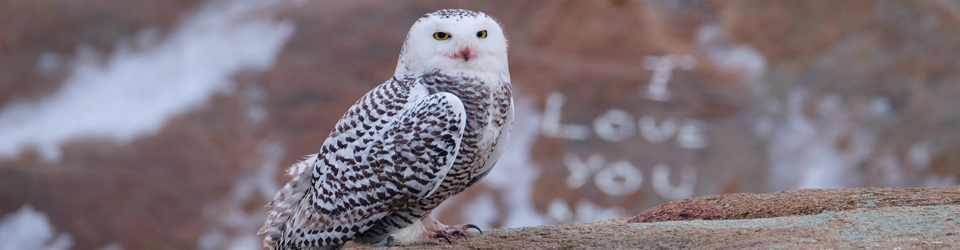
“We Love You Too Snowy Owl” Prints for Sale

“We Love You Too Snowy Owl” prints for sale.

For the next two weeks, I am offering a limited edition of the photo “We Love You Too Snowy Owl.” The 8 x 12 photo will be printed on fine art hot press paper and signed. At the end of two weeks, after orders are in and checks received, I will place the order with the printer. The $95.00 price includes shipping and tax. If you would like to purchase a photo of Hedwig, please email me at kimsmithdesigns@hotmail.com Thank you!

NORMAN SMITH, THE MAN WHO SAVES SNOWY OWLS!

Norman Smith from Mass Audubon has done more to save Snowy Owls and bring awareness to this beautiful and at risk species than any other person nationwide. Since 1981 he has been at the forefront of Snowy Owl conservation and his Project SNOWstorm has become a model for saving and studying Snowy Owls around the country.

Several weeks ago I was up north for my short film about Hedwig and came upon a Snowy Owl in the marsh. With very similar feather patterning around the face, I think she is the same Snowy that was released in the video!

SNOWY OWL HEDWIG WEEKLY UPDATE AND THE REASON WHY CROWS ATTACK OWLS

Our beautiful Snowy Owl Hedwig was last seen on Monday night, March 12th. This was also the night before the third nor’easter. She was perched on the railing of the Ocean House Inn facing towards the sea. The wind was blowing fiercely. Well after dark, and after making several attempts, she successfully flew in a southerly direction out over the water.

It has been two weeks since that last sighting and perhaps we will see her again, but I imagine her to be safe and undertaking her return journey to the Arctic tundra, well-fed from her stay on Cape Ann. Whether she was well-rested is another story. The great majority of people who came to see this most approachable of owls were respectful and considerate of her quiet space. The crows however, were nothing short of brutal. After learning about why crows attack owls, and the degree of aggression possible, I am surprised she lasted as long as she did, and without great injury.

American Crow harassing a Peregrine Falcon, Atlantic Road

Crows and owls are natural enemies because a murder of crows may mob an owl to death (or any raptor by which it feels threatened) and owls occasionally eat crows. Crows are diurnal, which means they feed during the day. The majority of North American owl species that they encounter are nocturnal (night feeding). In the case of Snowy Owls, which feed both day and night, their paths may occasionally cross, as happened when Hedwig moved into the crow’s territory along Gloucester’s Atlantic Road.

American Crows harassing Snowy Owl Hedwig

A flock of American Crows can run circles around most owls, pecking, dive bombing, chasing, and in some instances killing. Snowy Owls are the exception; they are larger, stronger, and faster flyers than other North American owl species. And too, Snowy Owls are closely related to Great Horned Owls, a species known to eat crows when they are roosting overnight. So even though a crow in our area may never before have encountered a Snowy Owl, they instinctively know danger is present.

American Crow

With their incredible ability for recollection, crows are considered the brainiacs of the bird world. Daily, Hedwig outsmarted this smartest of bird species. She learned to stay well-hidden during the daylight hours, laying low atop the hotel roofs. Her salt and pepper coloring blended perfectly with the black, white, and gray colors of industrial roof venting equipment. She adapted to hunting strictly at night, after the crows had settled in for the evening, returning to her hideouts before the day began.

Where’s Hedwig?

From Hedwig’s perch atop the Atlantic Road hotels, she had a crystal clear view of the golf course and Bass Rocks, places prime for nightly hunting.

On one hand it would be fascinating if Hedwig had been outfitted with a tracking device. On the other, if she had been trapped for tagging, she may not return to this area. There is some evidence that Snowies occasionally return to an overwintering location. Next winter I’ll be taking more than a few peeks in the location of the Atlantis and Ocean House Inn Hotels to see if Hedwig has returned.

Clear Evidence of the Destructive Force of Global Warming on the Massachusetts Coastline and How This Negatively Impacts Local Wildlife

Female Piping Plover Sitting on an Egg

The recent winter storms of 2018 have provided empirical evidence of how global climate change and the consequential rising sea level is impacting the Massachusetts coastline. Whether broken barriers between the ocean and small bodies of fresh water, the tremendous erosion along beaches, or the loss of plant life at the edge of the sea, these disturbances are profoundly impacting wildlife habitats.

The following photos were taken after the March nor’easter of 2018 along with photos of the same areas, before the storm, and identify several specific species of wildlife that are affected by the tremendous loss of habitat.

Barrier Beach Erosion

Nesting species of shorebirds such as Piping Plovers require flat or gently sloping areas above the wrack line for chick rearing. Notice how the March nor’easter created bluffs with steep sides, making safe areas for tiny chicks nonexistent.

You can see in the photos of Good Harbor Beach (top photo and photos 3 and 4 in the gallery) that the metal fence posts are completely exposed. In 2016, the posts were half buried and in 2017, the posts were nearly completely buried. After the recent storms, the posts are fully exposed and the dune has eroded half a dozen feet behind the posts.

In the photo of the male Piping Plover sitting on his nest from 2016 the metal posts are half buried.

Although scrubby growth shrubs and sea grass help prevent erosion, the plants have been ripped out by the roots and swept away due to the rise in sea level.

Plants draw tiny insects, which is food for tiny chicks, and also provide cover from predators, as well as shelter from weather conditions. If the Piping Plovers return, will they find suitable nesting areas, and will plant life recover in time for this year’s brood?

Other species of shorebirds that nest on Massachusetts’s beaches include the Common Tern, Least Tern, Roseate Tern, American Oyster Catcher, Killdeer, and Black Skimmer.

Common Tern parent feeding fledgling

Where Have All the Wildflowers Gone?

Female Monarch Depositing Egg on Common Milkweed Leaf

Wildflowers are the main source of food for myriad species of beneficial insects such as native bees and butterflies.

Monarch Butterflies arriving on our shores not only depend upon milkweed for the survival of the species, but the fall migrants rely heavily on wildflowers that bloom in late summer and early fall. Eastern Point is a major point of entry, and stopover, for the southward migrating butterflies. We have already lost much of the wildflower habitat that formerly graced the Lighthouse landscape.

Masses of sea debris from the storm surge washed over the wildflower patches and are covering much of the pollinator habitat at the Lighthouse.

Broken Barriers

American Wigeon Migrating at Henry’s Pond

Barriers that divide small bodies of fresh water from the open sea have been especially hard hit. The fresh bodies of water adjacent to the sea provide habitat, food, and drinking water for hundreds of species of wildlife and tens of thousands of migrating song and shorebirds that travel through our region.

The recently rebuilt causeway (2014) between Niles Pond and Brace Cove was breached many times during the nor’easter. The causeway is littered in rocks and debris from the sea.

The causeway being rebuilt in 2014.

The road that runs along Pebble Beach, separating the sea from Henry’s Pond has been washed out.

The footsteps in the sand are where the road ran prior to the storm.

Mallards, North American Beavers, Muskrats, North American River Otters, and Painted Turtles are only a few examples of species that breed in Massachusetts fresh water ponds and wetlands. All the wildlife photos and videos were shot on Cape Ann.

Migrating Black-bellied Plover

Cape Ann is hardly alone in coping with the impact of our warming planet and of rising sea level. These photos are meant to show examples of what is happening locally. Regions like Plymouth County, which include Scituate and Hingham, have been equally as hard hit. Plum Island is famously heading for disaster and similar Massachusetts barrier beaches, like Cranes Beach, have all been dramatically altered by the cumulative effects of sea level rising, and recently accelerated by the devastating winter storms of 2018.

To be continued.

Impassable Road to Plum Island

Snowy Owl Cranes Beach

GLOUCESTER MARCH NOR’EASTERS STORM COVERAGE 2018

Covering storms back to back, I didn’t have time to post on both Good Morning Gloucester and on my blog. The following are links to storm posts from the region’s three March nor’easters, beginning on March 2nd.

LIVE FROM ATLANTIC ROAD WITH HUGE WAVES THREE HOURS BEFORE HIGH TIDE

LITTLE RED SHED NO MORE

BANGERS, CRASHERS, COASTAL FLOODING, BEACON MARINE BASIN, PIRATE’S LANE, AND THE GOOD HARBOR BEACH FOOTBRIDGE BOMBOGENESIS RILEY NOR’EASTER #GLOUCESTERMA

#GLOUCESTERMA RILEY STORM DAMAGE ATLANTIC ROAD PASS AT OWN RISK, GOOD HARBOR BEACH FOOTBRIDGE DAMAGE, PHOTOGRAPHERS WITH DEATH WISH, CHURNING SEAS, YOU WANTED TO BUILD A HOUSE WHERE?, AND THE THIRD SUPER HIGH TIDE ON THE WAY

#GLOUCESTERMA RILEY STORM DAMAGE MORNING AFTER, EASTERN POINT ROAD IMPASSABLE DUE TO STROM SURGE, CLEAN-UP BEGINS, HUGE SHOUT OUT TO GLOUCESTER’S DPW AND POLICE OFFICERS, GOOD HARBOR BEACH FOOTBRIDGE IN THE EMBANKMENT

DOWNED PHONE POLE AT THE ELKS BASS ROCKS #GLOUCESTERMA RILEY NOR’EASTER

BREAKING: BRACE COVE-NILES POND CAUSEWAY ANNIHILATED, NILES POND FLOODING #GLOUCESTERMA NOR’EASTER RILEY

BREAKING: EASTERN POINT LIGHTHOUSE ROAD WASHED AWAY AND PARKING LOT LITTERED WITH STORM SURGE DEBRIS; DO NOT DRIVE DOWN, NOWHERE TO TURN AROUND! #GLOUCESTERMA NOR’EASTER RILEY

DISASTER AT PEBBLE BEACH #ROCKPORTMA MARCH STORM NOR’EASTER RILEY

BEFORE AND AFTER ATLANTIC ROAD ESTATE MARCH NOR’EASTER STORM RILEY 

ATLANTIC OCEAN WAVE WATCHING -EXPLODERS, BANGERS, ROLLERS, CRASHERS, AND SONIC BOOMERS – #GLOUCESTEMA #ROCKPORTMA MARCH NOR’ESTER STORM RILEY 

CLEAR EVIDENCE OF THE DESTRUCTIVE FORCE OF GLOBAL WARMING ON THE MASSACHUSETTS COASTLINE AND HOW THIS NEGATIVELY IMPACTS LOCAL WILDLIFE 

NILES POND BRACE COVE RESTORATION UNDERWAY 2018 #GLOUCESTERMA NOR’EASTER STORM RILEY

SHORING UP THE NILES POND-BRACE COVE CAUSEWAY BEFORE THE NEXT NOR’EASTER (ARRIVING TONIGHT)

MARCH NOR’EASTER #GLOUCESTER MA ATLANTIC OCEAN EXPLODING WAVES, SPINDRIFTS, AND THE PRICE TO PAY

https://www.instagram.com/p/Bf7CK96lzfT/

DAGGERS! SNOWY OWL HEDWIG WEEKLY UPDATE

Our beautiful Snowy Hedwig’s routine hasn’t much changed since she discovered the safety zone provided by hotel rooftops (safe from crows, that is). Hunting during the night, returning at dawn to the roof to various well-hidden niches, and then making her “entrance” at around sunset, she has adapted well to New England coastal living. After preening, pooping, and occasionally passing a pellet, she then scans the neighborhood. Hedwig bobs her head in an up and down motion a half dozen times, then flies east over the sea or west over the Arctic tundra-like golf course.

Snowy Owl Hedwig lifts her head in a bobbing motion to track prey.

Owls cannot move their eyes in the eye sockets. Instead, they employ several techniques to increase their range of sight. An owl can swivel its head a full 270 degrees. Additionally, owls bob their head up and down, a movement that aids in triangulating potential prey.

Dagger Sharp Talons.

Because the forceful impact of the Snowy Owl hitting its prey is so powerful, combined with the vise-like grip of its talons, the animal usually dies instantly.

Hedwig has so far survived three tremendously fierce storms during her stay in Gloucester. Last night, on the eve of the blizzard, she tried to take off several times towards the water. The wind current was strong, but she eventually flew successfully, heading in the direction of Thacher Island. Heres hoping she is waiting out the blizzard in one of her hideaways.

Folks are wondering how long will Hedwig stay. Most Snowies leave Massachusetts by April, although one was recorded at Logan Airport as late as July.


SNOWY OWL HEDWIG MESSY-FACED GIRL

Our winter resident Snowy Owl Hedwig finds plenty to eat along the backshore. Prior to taking off to hunt in the early evening we see her swivel her head and look out to sea, and then swivel around to scan the golf course. We wonder, is she thinking “Shall I have Duck a la Buffledhead for dinner, or shall I have Rarebit Tartare?” Here she is yesterday morning, face covered in schmutz, a happy sign to see.

SNOWY OWL HEDWIG SURVIES MARCH NOR’EASTER RILEY!

Our beautiful Snowy Owl Hedwig survived, and looks none the worse for wear. She spent the afternoon of March 5th resting in a sunny, but wholly unphotogenic location (and extremely windy corridor, too, I might add). Perhaps a New England Nor’easter is nothing to her, when compared to an Arctic tundra storm. She’s clearly a genius 🙂 And has some mighty good survival skills.

Thank you to Betty G. Grizz for sharing her Hedwig sighting this afternoon ❤

Snowy Owl Feathers in the Moonlight

Hedwig is the gift that keeps on giving! What a joy to see her awakening in the rising full moon last night. She preened and fluffed, then flew through the moonlight to a nearby phone pole.

The wind was whipping up and ruffling Hedwig’s feathers, making her look extra fine in the glow of the Snow Moon rising.

Dear Friends,

While I am sorting through the challenges of one of the hard drives for my Monarch film crashing, I have been organizing the Snowy footage. Captured in photos and on film, we have her bathing, passing a pellet, pooping, eating, flying, and much more, and is going to make a terrific short film. It’s a mystery to me exactly where she goes when she disappears for several days and I am hoping to document every aspect of her stay in Gloucester. She has been spotted at several locales in East Gloucester, Salt Island, and Twin Lights but, if by chance, she is a regular visitor to your yard, please write and let me know. The best way to keep the information from becoming public knowledge is to email me at kimsmithdesigns@hotmail.com. I am also looking for a few minutes of footage of a Great Horned Owl (Bubo virginianus) as they are closely related to Snowies (Bubo scandiacus), so please write and let me know if you have a resident Great Horned Owl. Thank you so much for any leads given 🙂

Full Snow Moon Rising

GOOD MORNING SLEEPYHEAD! SNOWY OWL HEDWIG WEEKEND UPDATE

Good Morning Sleepyhead! Actually, afternoon, for you and I. Snowies hunt during the long day light hours of the Arctic summer, but here on Cape Ann, Hedwig awakens every afternoon to begin a night of hunting, returning to her roost at daybreak.

She spends a good deal of time grooming before take off–cleaning her feet, pulling her front feathers through her beak, washing overall, and fluffing out her feathers. Oftentimes she’ll spit up one, two, and even three pellets. Moments before take off she poops, and then off she goes.

A Snowy Owl’s beak and mouth look small, covered in feathers as they are, until you see it wide open. The size of a pellet that is regurgitated from her mouth can be as large as a rat. The beak is covered in small bristles to help detect nearby objects. Snowy Owls have tiny ears and owl’s ears are often asymmetrically set on their head, all the better to hear sound from different angles.

Hedwig was observed everyday this past week in rain, fog, snow, and sun. She’s feasting well on Cape Ann fare!

HOW CAN THE BEATING WINGS OF A SNOWY OWL BE QUIETER THAN A BUTTERFLY’S WING BEATS?

Snowy Owl Hedwig Preparing for Take-off

Several times Hedwig has flown so close that I can feel the swooshing wind around her, but I wondered, why her wingbeats are virtually soundless. I have audio recordings of comparatively tiny Monarchs, whose wingbeats are a thousand times louder than that of Hedwig’s wingbeats.

Snowy Owls, like all owls, have evolved with specially designed wings that enable them to fly soundlessly, a necessary feature for stealth hunting of small mammals such as mice, lemmings, voles, shrews, and rats. Their wings are disproportionately large to their body mass, which allows for slow flying, as slowly as two miles per hour, a sort of glide-flying, with very little flapping needed.

Additionally, comb-like serrations on the leading edge of an owl’s wingtips break up the air that typically creates a swooshing sound, creating a silencer effect. And, too, the streams of air are softened by a velvety texture unique to owl’s wings and because of the feathery combs of the wing’s trailing edge (see illustration below).

Close-up images of a Great Horned Owl’s wing. On the left, you can see the leading-edge comb; it’s this width that Le Piane measured for her study. On the right, the trailing-edge fringe. Diagram: Krista Le Piane.

Image of a Great Horned Owl’s wings from Mass Audbon. READ MORE HERE.

HELLO HEDWIG! WHAT ARE YOU EATING? SNOWY OWL WEEKEND UPDATE

Hedwig foggy morning.

Hedwig has been seen daily along the backshore, mostly laying low during the day. She has become quite expert in fooling the crows as to her whereabouts. Fog, snow, rain, or sunshine, she isn’t deterred much from her routine of sleeping, resting, and grooming during the day, in preparation for an evening of hunting.

Early this week I watched in amazement as Hedwig swooped down from her perch and flew hundreds of feet directly to the rocks and in between crevasses. She resurfaced with a small mammal in her mouth and ate it very quickly–from the time she flew off her perch until she gave a satisfied lick of her beak could not have taken more than three minutes. I felt very fortunate to have witnessed a glimpse of her hunting prowess, albeit all too brief.

Perhaps the tail is too long for a mouse or rat and too short for a vole, but perhaps not. Small mammal caretaker Erin Whitmore wrote with her suggestion. What do you think Hedwig is eating?

Hedwig eating a black and white waterbird.

Again, tonight she flew off her perch, this time heading out to sea. In mere minutes she returned with a waterbird of some sort and proceeded to eviscerate, much to the thrill of her Sunday evening fan club. The lighting was low and I was mostly filming, but did manage a few stills.The prey was black and white and as she mostly sat on her catch while eating, it was difficult to determine which species. Without a crow in sight (as they had surely settled for the night), Hedwig ate well into the early evening.

The feathers were flying! Hedwig with feathers on her face but it’s almost too dark to see.

She’s finding the eating here in Gloucester excellent, but with the warm weather predicted for the upcoming week, I wonder if Hedwig will stay or that will be a cue to depart for the Arctic.

Please don’t get electrocuted Hedwig, as happened recently to a Snowy in southern Massachusetts!

RATS, RATS, AND MORE RATS! SNOWY OWL HEDWIG WEEKEND UPDATE #2

Hedwig was observed Saturday morning, when repeated harassment by a flock of crows sent her hiding. She reappeared Saturday afternoon, and was again seen Sunday morning in the drizzle, not too far from where she was perched Saturday evening. Later Sunday afternoon she slept and rested in the pouring rain.

Hedwig sleeping in the rain (thank you to Arly Pett for letting me know she was out in the rain!)

That she stays in a highly localized winter territory seems in keeping with known Snowy Owl behavior traits. I read that during the summer season in the Arctic, male Snowies hunt over hundreds of miles, whereas female Snowies typically hunt within a much smaller range. She has been observed eating sea ducks and rabbits and there are plenty of rat holes along the backshore rocks.

Both rats and lemmings (the Snowies super food in the Arctic) belong to the order Rodentia. From wiki, “A lemming is a small rodent usually found in or near the Arctic in tundra biomes. Lemmings are subnivean animals. They make up the subfamily Arcicolinae together with voles and muskrats which forms part of the superfamily Muroidea which also includes rats, mice, hamsters, and gerbils.”

Lemming (Lemmini)

Often Hedwig has been seen flying straight out over the water towards Twin Lights. I wondered, if she is hunting there, does Thacher Island have a rat population. Thacher Island Association president Paul St. Germain answers that question for our readers, 

“Hi Kim, there are lots of rats on Thacher mostly in the shore line rocks. We don’t see them often but know they are there. I discovered a bunch in the cellar of the keeper house making their nest in an old tarp. I would love to see Hedwig out there but we don’t go out in the winter. Have never seen snowy owls in the summer.” 

Great info and thanks to Paul for sharing that! A Snowy Owl has been seen on the rocks in Rockport, across the strait, opposite Twin Lights, and wonder if it is our Hedwig.

Rat and Lemming photos courtesy wiki commons media

This brings up the topic, what to do if you have a rat problem. The absolute worst way to control rats is with rat poison, namely for the sake of beautiful predatory birds such as Snowy Owls, falcons, hawks, and eagles. Birds that ingest rats that have been poisoned with rat poison will generally become gravely ill and die. Secondly, it is a cruel, slow death for the rat. They will usually go back to their nest to die. If that nest is located behind a wall in your home, you will smell that unmistakeable horrendous smell for many months. Thirdly, rat poison is only 60 percent effective. I wonder if the rats that survive rat poison will go on to breed super rats.

The best way to avoid having to kill a rat is to make sure they cannot gain access to your home or business by regularly inspecting soffits and woodwork for holes. Old-fashioned snap traps and live trapping continue to be the most effective way to rid your home or business of rats.

Saturday I stopped to say hello to a group of birders flocked together along the backshore who had traveled all the way from western Mass. They were observing Grebes, Buffleheads, and a Common Murre. And a Puffin had been spotted! I asked if they were planning to go to any of our local restaurants for lunch, but they had packed lunches. One Mom shared that an expert from Audubon told the group that there were at least a “dozen Snowy Owls” on Bass Rocks. Bananas! I have to say that it makes me hoppin’ mad when folks spread misinformation about our local wildlife. I gently told her that no, there were not a dozen owls, but that if she and her group waited until late afternoon, they might catch sight of Hedwig.

Twin Lights from a Snowy Owl POV

SNOWY OWL HEDWIG UPDATE

Last weekend was a busy one for Hedwig. She is attracting crowds from all around the Boston area. I checked in on her Monday afternoon on my return from Brooklyn and according to a photographer friend she had a very rough day with the crows. One actually hit her hard in the head. She left Bass Rocks Monday evening and I didn’t see her the rest of the week until this morning.

Found this morning with messy face and talons, tidying up from a morning hunt.

A single crow came by to harass her and unlike previous incidents, where I have seen here hold her ground, she left her post immediately and flew to a very cool super secret hiding place. I have never seen her do this before but am so impressed with her ingenuity. She is safe from both crows and crowds in this locale.

Hedwig returned to the railings at the end of the day. After first fluffing and poohing she took off over the water and headed straight toward Twin Lights. I imagine there is good hunting on Thacher Island 🙂

Heading off to hunt late day 

Sleeping in the afternoon sun

My What Big Feet You Have Hedwig

A Snowy Owl’s feet are covered in feathers, providing insulation against Arctic temperatures–just like a pair of warm fluffy slippers.

Hedwig left her perch and walked over to a patch of snow, which she proceeded to eat. She also washes her face and feet in snow patches.

How Long Will the Snowy Owls Stay in Massachusetts?

Sleeping on a Precipice

Not all Snowy Owls migrate south, but the ones that do leave the Arctic tundra to winter over in North America arrive at their wintering grounds (areas such as the Massachusetts coastline) usually beginning in mid-to late-November. Some don’t arrive until December and some as late as January. They migrate along coastlines, prairies, river valleys, and even mountain ridgelines are thought to help guide the Snowies.

By mid-April, most Snowies have left Massachusetts, although one study that I read recorded a Snowy that did not leave Logan Airport until July 7th! Another study reported that in most cases, the Snowy Owls that did not leave until summer were non-breeding birds in their first year of life.

How long will Hedwig stay? She appears to be getting plenty to eat and is quite well adapted to backshore living, despite her throngs of weekend fans. Let’s hope her stay is a good one and that she returns to the Arctic this summer to make lots of little Hedwigs and Bubos!

SNOWY OWL WATCHING TIPS: The following are some helpful tips for watching Snowy Owls.

  1. Watch from a comfortable distance–comfortable for the bird that is. Nothing makes the Owls more stressed than people getting too close.
  2. Please keep children from throwing rocks towards the Snowy or anywhere within the vicinity of the Owl.
  3. Please don’t allow dogs to play near the Snowies.
  4. There have been reports of Snowies flying into cars. They often fly low when flushed and it is easy to understand why this may happen, especially as the Snowies are drawing so much traffic. Please be on the look out when you are in known Snowy Owl territory.
  5. Slamming doors, radios blasting, barking dogs, and loud mufflers all stress the Snowies.

Thank you Everyone for being good caretakers of Hedwig, Bubo, and all the Snowies during their stay in Gloucester!

Jennifer and her daughters Ellie and Isla are super Snowy stewards, keeping well beyond the 150 feet recommended for safe observation.

SNOWY OWL HEDWIG TAKES A BATH!

Filming and photographing Cape Ann wildlife I have experienced extraordinary beauty and fascinating behaviors at nearly every encounter but filming a Snowy Owl take a bath has to be one of my favorite captures. I think there are a number of reasons why we are so captivated by these beautiful creatures. Most owls are nocturnal, which doesn’t allow much viewing of their day to day life. On the other hand, the diurnal Snowy Owl gives us a wonderful window into their world. Culturally, owls symbolize wisdom and intelligence and the characters they are assigned in literature strengthen our associations. Mostly though we are drawn to these creatures because they do not appear to be afraid of us, unlike most wild animals. Snowies will become irritated and depart an area when startled, or are being pestered, but I don’t sense fear in these Arctic visitors. I wonder if most have ever even seen a human being prior to migrating south.Hedwig was a contented mess, her feet and talons blood stained reddish pink from a fresh kill. It was the morning after a storm, and the crevices atop Bass Rocks held pools of icy fresh water.

She at first gingerly hopped over to the largest pool, paused, and then jumped in. Repeatedly Hedwig dipped her face into the water to drink. After quenching her thirst, she plunged her entire face into the pool of water. She cleaned her face feathers by rubbing them against her breast feathers. Immersing, rubbing, immersing, rubbing, her face was clean in no time.

Then Hedwig went all in, dipping and soaking all her feathers, but not all at once did she completely submerge herself. I think that would have left her vulnerable to predators if she were unable to fly. She dipped and soaked, then fluffed her feathers, then repeated all several times more. The total length of time was about 40 minutes; she was still fluffing when I had to leave. Watching a Snowy Owl take a winter bath was beautiful and fascinating, unexpected and funny and am overjoyed to have captured with photos and film.

Happiness is a long winter bath.

A flock of Herring Gulls had the same idea. 

SNOWY OWL HEDWIG GOING POOP

I have along the way taken many photos of animals going pooh, quite incidentally, as it just happens. For some (childish) reason it always strikes me as mildly funny. One of the funniest is the Great Blue Heron–the bigger the bird, the greater the amount, and Great Blues are pretty big birds.

That Hedwig goes pooh seemingly so frequently means she is getting plenty to eat. This morning she arrived on the rocks a bloody mess (more signs of good eating) and took a luxuriously long bath in a puddle (posting those photos tomorrow when I have time too sort through). After bathing, she pooped several times before flying to higher ground.

Digestion in Owls

By Deanne Lewis

Like other birds, Owls cannot chew their food – small prey items are swallowed whole, while larger prey are torn into smaller pieces before being swallowed. Some Owl species will partially pluck bird and larger mammal prey.

Unlike other birds, Owls have no Crop. A crop is a loose sac in the throat that serves as storage for food for later consumption. Since an Owl lacks this, food is passed directly into their digestive system.

Now, a bird’s stomach has two parts:

The first part is the glandular stomach or proventriculus, which produces enzymes, acids, and mucus that begin the process of digestion.

The second part is the muscular stomach, called the Ventriculus, or gizzard. There are no digestive glands in the gizzard, and in birds of prey, it serves as a filter, holding back insoluble items such as bones, fur, teeth and feathers (more about this below).

Read More Here

CAPE ANN WILDLIFE: A YEAR IN PICTURES 2017

CAPE ANN WILDLIFE: A YEAR IN PICTURES 2017

By Kim Smith

Cape Ann provides welcome habitat for a menagerie of creatures beautiful, from the tiniest winged wonder to our region’s top predator, the Eastern Coyote. Last year I posted a Cape Ann Wildlife Year in Pictures 2016 and I hope you will find the wildlife stories of 2017 equally as beautiful. Click on the image to find the name of each species.

WINTER

Winter: Only partially frozen ponds allowed for dabblers and divers such as Mallards, Mergansers, and Buffleheads to forage at the freshwater. Mr. Swan had his usual entourage of quwackers and daily heads to the other side of the pond to get away for his morning stretches. Sightings of Red-tailed Hawks and other raptors abounded. Although photographed in Newburyport, the owl photos are included, well, just because I like them. An Eastern Screech Owl (red-morph) was seen daily perched above a playground and Barred Owl sightings too were reported throughout the winter. Raptors live on Cape Ann all year round but are much easier to see in winter when the trees are bare of foliage.

The beautiful green eyes of the juvenile Double-crested Cormorants were seen wintering at both Niles Pond and Rockport Harbor. And during a warm February day on a snowless marsh a turkey bromance shindig commenced.

SPRING


In early spring, a male and female American Wigeon arrived on the scene making local ponds their home for several weeks. In the right light the male’s electric green feathers at the top of his head shine brightly and both the male and female have baby blue bills.

Meadow and marsh, dune and treetop were graced with the heralding harbingers of spring with photos of a Red-winged Blackbird, a pair of Cedar Waxwings, Northern Mockingbird, Brown Thrasher, Eastern Towhee, Eastern Kingbird, Tree Swallow, and Grackle included here.

The Great Swan Escape story made the news in Boston as Mr. Swan eluded captors for hours. He had re-injured his foot and someone took it upon themselves to call the animal rescuers, which would have surely meant death for our beloved 27-year old swan if he had been wrangled into captivity.

M is clearly for Migration through Massachusetts and the month-long arrivals and departures did not abate. Short-billed Dowitchers, winsome Willets, Yellow Legs, and Ruddy Turnstones are just some of the migrating shorebirds spied on Cape Ann beaches and marshes. The best news in May was the return of the Piping Plovers. Of the five or six that camped at Good Harbor Beach to investigate potential nesting sites, one pair bonded and built their nest mere yards from the nesting pair of last year. Could it be the same pair? The nesting Piping Plover story took up much of the spring and by early summer four little Piping Plover chicks hatched over Fiesta weekend. Hundreds of photos and hours of film footage are in the process of being organized with a children’s book and documentary in progress.

Piping Plover Courtship Dance

Piping Plover Nest


SUMMER


OctoPop

The survival of one Piping Plover chick was made possible by a wholesale community effort, with volunteers covering all hours of daylight, along with Mayor Sefatia and her team, Ken Whittaker from the conservation office, Chief McCarthy, and animal control officer Diane Corliss all lending a hand.

Sadly, several Northern Gannets came ashore to die on our Cape Ann beaches, struck by the same mysterious and deadly disease that is afflicting Northern Gannets in other regions. During the summer season they are typically at their North American breeding grounds, which are six well-established colonies, three in the Gulf of St. Lawrence, Quebec, and three in the North Atlantic, off the coast of Newfoundland.

An orphaned swan was introduced to Niles Pond, much to the dismay of Mr. Swan. Eastern Point residents Skip and Lyn kept watch over the two while they reluctantly became acquainted.

By mid-July many of us were seeing Monarchs in much greater numbers than recent years. Nearly every region within the continental United States experienced a fantastic Painted Lady irruption and butterflies of every stripe and polka dot were seen flitting about our meadows, fields, and gardens.

The tadpoles and froglets of American Bullfrogs and Green Frogs made for good eating for several families of resident otters, who are making their homes in abandoned beaver lodges. Little Blue Herons too, find plentiful frogs at our local ponds.

In early August we see the Tree Swallows begin to mass for their return migration. They find an abundance of fruits and insects in the dunes, headlands, and beaches. The Cedar Waxwings and Ruddy Trunstones were back again observed foraging on their southward journey, along with myriad species of songbird, shorebird, diver, and dabbler.

Tree Swallows Massing

FALL


The Late Great Monarch migration continued into the fall as we were treated to a wonderfully warm autumn. Waves and waves of Monarchs came ashore and more butterflies arrived on the scene including new batches of Painted Ladies, Clouded Sulphurs and Common Buckeyes (nothing common about these beauties!).

A pair of Northern Pintails called Cape Ann ponds and coves home for nearly a month while we seem to be seeing more and more raptors such as Red-tailed Hawks, Osprey, Bald Eagles, and Peregrine Falcons. Juvenile herons of every species that breeds on Cape Ann lingered long into the fall—Black-crowned Night Herons, Yellow-crowned Herons, Great Blue Herons, Snowy Egrets, Great Egrets, and Green Herons.

Just as Mr. Swan and the Young Swan appeared to be warming to each other, the Young Swan, who has yet to learn to fly, became trapped in the ice at Niles Pond. He was rescued by caretakers Lyn and Dan and is now spending the winter at a cozy sanctuary built by Lyn and friends.

Heart-wings Monarch

Thank you to all our readers for your kind comments of appreciation throughout the year for the beautiful wild creatures with which we share this gorgeous peninsula called Cape Ann. If you’d like to read more about a particular animal, type the name of the animal in the search box and the original post should come up

With its expansive marshes and dunes, bodies of fresh clear water, saltwater coves and inlets, and geographic location within the Atlantic Flyway, 2017 has been a banner year for Cape Ann’s wild and wonderful creatures. I can’t wait to see what awaits in 2018!

Snowy Owl “Hedwig” January 2018 Backshore Gloucester
How to Tell the Difference Between Male and Female Snowy Owls

The winter of 2017-2018 has proven so far to be an irruptive year for Snowy Owls, as was predicted by scientists. In years when there is a lemming population boom, which is a staple of the Snowy’s diet, double, even triple, the amount of Snowy Owl hatchlings survive the summer breeding season. Arctic winter arrives and for whatever reason, either there is less food available or the first hatch year owls can’t hunt as well, a number of Snowies head south, both adults and juveniles, generally though, more juveniles than adults migrate.

Snowy Owls are white birds, with varying degrees of brown, black, and gray feather patterning. They are North America’s largest owl by weight. As with most bird of prey species, female Snowies are larger than the males, by about one pound. That is considerable, knowing that the average weight of a Snowy Owl is four pounds. A male may grow up to 25 inches, a female to 27 inches, and the wingspan of both is about equal. Because females are larger and more dominant, they usually don’t migrate as far south, staking out territory further north. Typically in our area we see first hatch year males, although currently there is thought to be an adult male at Salisbury Beach. The Snowy at Bass Rocks is presumably a female. When out in the field, the hardest to tell apart are the darkest males and the palest females.

In learning about Snowy Owls, I came across several very helpful photos of Snowy Owl specimens. And we have three examples, from Snowies found right here on the North Shore, from which to compare.

In the photo below, you are looking at eight Snowy Owl specimens from the Cornell University Museum of Vertebrates. One through five on the left are males; six, seven, and eight are females. Notice how similar, yet different, are five and six (male #5, female #6).

  1. Snowy Owl males are generally whiter.
  2. Snowy Owl females tend to be larger.
  3. Snowy Owl male’s tails have up to three bars, the female’s have from three to six.
  4. Snowy Owl females have wider and darker marks and bars on the back, nape, and tail.
  5. Snowy Owl males have a larger white bib.

Closeup of the intermediary male (five) and female (six).

Underside of the Owls, in the same order.

Comparing the above photos I think we can logically conclude that the Snowy Owl that was at Captain Joe and Sons in 2015 was a young male, with light markings and a large white bib.

Young Male Snowy Owl

The Snowy Owl currently at Bass Rocks, I think it is safe to say, is a female, and most likely a juvenile. She doesn’t have much bib showing and her overall markings are wide and dark.

Female Snowy Owl

We have our own example of an intermediate–is the Snowy Owl recently photographed at Cranes Beach a juvenile male or a female?

Male or female?

We Love You Too Snowy Owl!

For the past week or so there has been a remarkably tolerant Snowy Owl feeding and perching on the rocks at Atlantic Road. Perhaps she (or he) is the same Snowy that has been noticed on the backshore over the course of the past month. I write tolerant because this Snowy was perched about fifteen feet from the sidewalk and neither traffic nor birdwatchers seemed to faze her much. As word has gotten out, her fan club has grown, so much so that there was a bit of a traffic jam today. Every several hours I stopped by to check on her whereabouts. At 2:00 today, she had only moved about a foot from where she was at daybreak. By sundown, she had flown up onto the rooftops of an Atlantic Road resident.
Many thanks to Kate for all her text alerts letting me know when the Snowy was on the backshore!

Early morning and the Snowies face and talons were bloodstained, which is a very positive sign that she is feeding well. Snowy Owls wintering over in our region eat rabbits, rodents (lots of rats), songbirds, and sea ducks. Being good stewards of the Snowies means not applying rat poison around your home or business. There are several methods equally as efficient in killing rats as rat poison. When a bird of prey such as a Peregrine Falcon, Snowy Owl, Red-tailed Hawk, or Bald Eagle ingests a rat that has eaten rat poison, the raptor becomes sick and will usually die.

The Snowy spent the better part of the day mostly dozing, preening, cleaning her talons, and puffing her feathers for warmth. At one point she pushed her face into a snow patch but I couldn’t tell if it was to drink or to wash.

For a moment the Snowy sat bolt upright from a loud bang heard in the distance, but generally, she was a satiated and sleepy owl.

Snowy Owl Fan Club Traffic Jam

WINTER BEAUTY ABOUNDS WITH SNOWY OWLS, HORNED LARK, SNOW BUNTINGS, YELLOW-RUMPED WARBLERS, DUNLINS AND MORE!

With early predictions of a Snowy Owl irruption heading our way and several sightings in Gloucester, I have been periodically popping over to Cranes Beach in Ipswich. Thanks to Bill Foley, Cranes Chief of Police (and Kate’s awesome Dad!), who showed me around and provided some great tips on locating the Snowies, I was able to find one second time out. The first day was a bust because a dog owner had allowed his dog off leash. I watched the dog chase the Snowy, who then headed far and away over the dunes. This made me so very sad for myriad reasons, but especially so at Cranes Beach because there is a fabulously huge area that dogs are allowed off leash. Anyhow, seeing the Snowy that first day, and knowing he was there, was all I needed to keep trying.

Dunlins, Sanderlings, Snow Buntings, and Horned Lark

That day, a flock of Dunlins was resting in the sand, with one lone Sanderling, and there was a small flock of Snow Buntings in the parking lot. Feeding amongst the flock was, what I believe to be, a female Horned Lark!

Second day out was wonderfully rewarding. Approaching the stairs to descend to the beach, I inadvertently startled a Snowy and he flew from the area, way, way down the beach, perching on one of the poles that mark the access to the Green Trail. Off I trudged in 15 degree weather, keeping my eyes peeled on where he was resting. He stayed for quite some time while I stood back at a great distance, not wanting to disrupt his hunting. Suddenly, and with what I thought, great bravery, he flew quite close and past me, heading over to the sandy beach. I wasn’t anticipating his flight and didn’t get much of a photo, but it was exquisite to see.

The temperature had climbed to twenty, but I was getting worried about exposed photo fingers and frostbite. After taking a few more photos and some footage of the Snowy in the sand, I very reluctantly headed home.

Today I didn’t see the Snowy Owl, but did find a scattering of Snowy feathers in the sand, in the same area where one had been hunting the previous week. I showed the ranger at the gate, Emily White, the feathers and she confirmed they were from a Snowy. She said that hawks and falcons will attack Snowies. I didn’t see any bones or body parts, so hopefully it wasn’t a fight to the death. Emily was super helpful and shared lots of useful information. This year’s Audubon Christmas Bird Count at Cranes was relatively uneventful, with fewer numbers counted than usual. Many more beautiful birds will be arriving to our shores in the coming weeks, foraging in the dunes and shrubby habitat, and hopefully, there will be lots more Snowy Owl sightings!

Emily White, Cranes Ranger

Song Sparrow eating ripe beach grass seed heads.

Yellow-rumped Warbler winter plumage.

More scenes from the Green Trail

Scofflaw dog owner

Peregrine Falcon Devouring a Bird

On the lookout for Snowy Owls, I instead encountered this scene of a Peregrine Falcon eating a freshly killed bird. At one point I caught a quick glimpse of what I think was a webbed duck foot, but could possibly also have been a cormorant. Despite all the gore, the Falcon was exquisite to observe. Especially beautiful were the hues of its slate blue wings in the early morning light.

Peregrine Falcons eat mostly birds. Over 450 species of bird prey have been documented in North America alone. From the tinniest Ruby-throated Hummingbird to the enormous Sand Hill Crane, few birds are safe from the talons of the Peregrine Falcon.

The Falcon methodically eviscerated its prey, all the while watching gulls, crows, me, and any other potential thief.

Robber crows stopped by to see what they could snatch and one brazen fellow made off with a gizzard dangling from its mouth.

A gull popped its head up from a lower rock outcropping to see what he could steal and after taking a quick look at the Peregrine Powerhouse, thought better of attempting robbery.

Nature’s Finest Flyer

Did you know that the Peregrine Falcon is the world’s fastest bird? A bird’s airspeed velocity is variable. During a hunting dive the Peregrine Falcon will average about 200 miles per hour; 242 miles per hour is the maximum speed recorded. The Golden Eagle is the second fastest bird, with an average diving speed of 150 miles per hour and a maximum speed of 200 mph.

Saved from the Brink of Extinction

Excerpted from The Nature Conservancy

Peregrines are fast, aggressive creatures and are on top of their food chain. While young Peregrines are preyed upon by Golden Eagle and Great Horned Owls there are few threats towards the adults other than man.

By the mid 1960’s, there were NO Peregrines in the eastern United States and the decline spread westwards so that by the mid-70’s western populations had declined by up to 90 percent. It was estimated that 3,875 nesting pairs were found

in North America prior to the 40’s; by 1975, only 324 pair existed in the US. Loss of habitat, shootings, egg collecting and other human disturbances had weakened North American populations for decades but drastic declines didn’t occur until after the widespread use of a popular insecticide – DDT. Like the canary in the coalmine, the Peregrine Falcon provided humans a warning as how chemical pollution can disrupt the environment and the life around it.

The use of dichlorodiphenyltrichloroethane, or DDT, began during World War II as an extremely effective pesticide. Its use continued after the war as a way to control agricultural pests and in killing malaria-carrying mosquitoes. Unfortunately it would be years later before it was understood that DDT would have adverse effects on a variety of ecologically important insects, birds, and the environment. Bats, Fireflies and Peregrine Falcons were just a few species that were greatly affected. Editor’s note: In the United States, DDT was manufactured by some 15 companies, including Monsanto, Ciba, Montrose Chemical Company, Pennwalt, and Velsicol Chemical Corporation.

For the Peregrine Falcon, DDT poisoning was due to its being on top of the food chain. After consuming other birds that fed on seeds, insects and fish contaminated with DDT, the poison eventually accumulated in its system. High concentrations of a DDT metabolite called DDE prevented normal calcium production causing thin, frail eggshells that would break under the weight of the parent during incubation. Because of the toxic contaminant, many eggs did not hatch and the populations precipitously dropped until a mere 12% of normal peregrine falcon populations remained in the United States.

In 1970, the American Peregrine Falcon was listed as endangered under the Endangered Species Conservation Act of 1969 (and then again in 1973 when the Endangered Species Act passed). Encouraged by the EPA’s banning of DDT in 1972, recovery projects began to take shape. Beginning in 1974, The Peregrine Fund, along with various national and state agencies in both the United States and Canada, embarked on a reintroduction program for the peregrine falcon.

Thanks to the scientists and researchers at Cornell University, adult birds were successfully bred in captivity. After the eggs hatched, they were raised in the labs until three weeks old. They were then placed in hack sites (artificial nesting sites) where they were fed and cared for by unseen benefactors until flight and hunting skills were developed enough for them to become independent. More than 6,000 American Peregrine Falcons have been released in North America since 1974 due to the cooperative efforts among federal and state Fish & Wildlife Services, The Peregrine Fund, Midwestern Peregrine Falcon Restoration Project and the Santa Cruz Predatory Bird Research Group.

The success of these recovery programs allowed the declassification of the Peregrine Falcon as a federally endangered species in 1999. Although the bird of prey remains federally protected under the Migratory Bird Treaty Act and will be monitored until 2015, the survival of the Peregrine Falcon marked the most dramatic success of the Endangered Species Act.

https://www.instagram.com/p/Bc8V39PFTvQ/

Cape Ann Wildlife: A Year in Pictures

snowy-owl-gloucester-massachusetts-c2a9kim-smith-2015My husband Tom suggested that I write a year-end post about the wildlife that I had photographed around Cape Ann. Super idea I thought, that will be fun and easy. Not realizing how daunting and many hours later, the following is a collection of some favorite images from this past year, beginning with the male Snowy Owl photographed at Captain Joe’s dock last winter, to December’s Red-tailed Hawk huntress.
red-tailed-hawk-eating-prey-gloucester-massachusetts-21-copyright-kim-smith

Living along the great Atlantic Flyway, we have been graced with a bevy of birds. Perhaps the most exciting arrival of all occurred when early summer brought several pairs of nesting Piping Plovers to Gloucester’s most beloved (and most highly trafficked) of beaches, Good Harbor Beach. Their story is being documented on film.

piping-plovers-chicks-nestlings-babies-kim-smithWork on Mr. Swan’s film will also resume this January—the winters are simply not long enough for all I have planned!swan-outstretched-wings-niles-pond-coyright-kim-smith

While photographing and filming Red-winged Blackbirds this past spring, there was a face-to-face encounter with a hungry coyote, as well as several River Otter sightings.

female-red-winged-blackbird-copyright-kim-smitrhFemale Red-winged Blackbirdeastern-coyote-massachusetts-kim-smith

The summer’s drought brought Muskrats out from the reeds and into full view at a very dry Henry’s Pond, and a short film about a North American Beaver encounter at Langsford Pond. Numerous stories were heard from folks who have lived on Cape Ann far longer than I about the extraordinary number of egrets, both Snowy and Great, dwelling on our shores.
three-muskrat-family-massachusetts-copyright-kim-smithThree Muskrateers
female-monarch-depositing-eggs-1-copyright-kim-smithnewly-emerged-monarch-butterfly-copyright-kim-smith-jpgThere were few Monarch sightings, but the ones seen thankfully deposited eggs in our garden. Thank you to my new friend Christine who shared her Cecropia Silkmoth eggs with me and thank you to the countless readers who have extended an invitation to come by and photograph an exciting creature in their yard.

cecropia-moth-caterpillar-copyright-kim-smith

Pristine beaches, bodies of fresh water, and great swathes of protected marsh and woodland make for ideal wildlife habitat, and Cape Ann has it all. With global climate change pushing species further away from the Equator, I imagine we’ll be seeing even more creatures along our shores. Butterfly and bee populations are overall in decline, not only because of climate change and the use of pesticides, but also because of loss of habitat. As Massachusetts has become less agrarian and more greatly forested, fields of wildflowers are becoming increasingly rare. And too fields often make the best house lots. Farmers and property owners developing an awareness of the insects’ life cycle and planting and maintaining fields and gardens accordingly will truly help the butterflies and bees.
female-mallard-nine-ducklings-kim-smith

Thank you to all our readers for your kind comments of appreciation throughout the year for the beautiful wild creatures with which we share this gorgeous peninsula called Cape Ann.

The images are not arranged in any particular order. If you’d like to read more about a particular animal, type the name of the animal in the search box and the original post should come up.

I wonder what 2017 will bring?

nine-piping-plovers-napping-gloucester-copyright-kim-smith

sandpipers-copyright-kim-smith

NEW VIDEO: SNOWY OWL AT CAPTAIN JOES!

Snowy Owl Gloucester Massachusetts ©Kim Smith 2015So many thanks to my friends Joey and Tom Ring for the wonderful tip. The Snowy is gorgeous!!! My right arm is a little unsteady with robo-cast but still managed to get a few moments. Notice how the Snowy Owl rotates its head, giving him nearly a 360 degree viewing vantage. The crows and a Peregrine Falcon were noisily dive-bombing the Snowy, but he held his ground. I hope we see him again soon

Snowy Owl Captain Joe and Sons ©Kim Smith 2015