Tag Archives: Snowy Owl

BEAUTIFUL, BEAUTIFUL DUXBURY!

Snapshots from beautiful Duxbury

A new twist on a dream home -living in a Lighthouse House. The private home is sited at the beginning of the wooden Powder Point Bridge.

Wonderful fun to drive across Powder Point Bridge, which was at one time the oldest and longest wooden bridge in the US. It lost that status when the bridge was damaged by fire and completely rebuilt in the late 1980s. The bridge is one of two ways for the public to access Duxbury Beach.

Duxbury Beach, like Crane Beach and Plum Island, is a barrier beach that is home to Piping Plovers in the summer and Snowy Owls during the winter months. Read more about Duxbury Beach here.

“Our mission is to restore and to preserve the beaches in so far as reasonably possible in their natural state as host to marine life, native and migratory birds and indigenous vegetation, as barrier beaches for the protection of Duxbury and Kingston and as a priceless environmental asset to the Commonwealth and the nation; and to operate for the benefit of the people of Duxbury and the general public a public recreational beach with all necessary and incidental facilities, while preserving the right to limit and regulate such use so as to be consistent with the corporation’s primary ecological objective.”

Duxbury cranberry bog

BEAUTIFUL, BEAUTIFUL SNOWY OWLS

I haven’t seen any Snowies yet this winter on Cape Ann; there simply seem to be fewer that migrated to our region than there were several years ago when Hedwig was the star of the backshore.

These Snowy Owl photos were taken earlier in the month at Parker River. The dirt road, the one that begins after the Hellcat Trail, has reopened, although I wouldn’t recommend going there on the weekends, much better to go during the week. There are so many photographers and owl lovers on the weekends, especially in the afternoon, that it has become really disruptive to the owls, both the Snowies and Short-eared. Even though folks are very respectful and (most) stay on the road, the Short-eared Owls aren’t catching much food, as far as I can observe, when there are great crowds chasing them up and down the road.

RULER OF THE MARSH – FEATURING RABBIT, HAWK, OWLS, AND EAGLE

Life on the marsh –

The Marsh Hawk (Northern Harrier) sitting in the grass off in the distance, was holding captive a bunny.

The bunny was staying still and the hawk was, surprisingly, not attempting to capture the rabbit. Perhaps because avian predators, like hawks, hunt by swooping in, and in a short distance stand-off, the hawk would have to sort of hop over to the bunny. Rabbits can hop to escape a great deal quicker than can hawks-on-foot give chase.

The Short-eared Owl arrives and the Marsh Hawk takes cover.

The Snowy Owl appears on the scene…

and the Short-eared Owls are nowhere to be seen.

The Bald Eagle, Ruler of Marsh and Meadow, swoops in. The Snowy departs.American Bald Eagle Juvenile

MORE SNAPSHOTS OF THE BEAUTIFUL SHORT-EARED OWL, SNOWY OWL, TENDERCROP FARM, AND IPSWICH CLAMBAKE

Charlotte and I had a wonderful adventure morning checking on the owls at Plum Island. We observed several Harrier Hawks flying low over the marsh grass hunting for prey, a Short-eared Owl perched on a craggy tree, and a Snowy parked for the morning far out in the dunes. We played on the beach and she had a blast zooming up and down the boardwalk at lot no. 2.

Tiny white wedge in the distance

We next stopped at the refuge headquarters to play in the marsh boat that is part of the exhibit about the Great Salt Marsh. She brought along her own stuffed Snowy to join on the boat ride.

Next destination was a visit to see the farm friends at Tendercrop Farm. Currently in residence are a turkey, ginormous steer, pony, chickens, ducks, llama, and the sweetest miniature goat who is just wonderful with toddlers.

I purchased the best steaks we have ever had, Tendercrop’s own grass fed rib-eye, made even more magnificent cooked to perfection by Alex, with a beautiful red wine demi-glace.

Everything at Tendercrop Farm is always amazingly delicious. They have the freshest and best selection of fruits and vegetables during the winter months, bar none.

Great bunches of freshly cut pussy willows are for sale at Tendercrop

Last stop was lunch at the Ipswich Clambake. The owners and staff are just the most friendly. The clam chowder at the Clambake is perfection. Charlotte and I shared a mini super fresh fried clam appetizer and that, along with the chowder, made the best sort of lunch to top off our fun adventure morning.

Tendercrop Farm is located at 108 High Road, 1A, in Newbury.

Ipswich Clambake is located at 196 High Street, 1A, in Ipswich.

SHORT-EARED OWLS IN OUR MIDST!

Melded to the grass as he was, in monochromatic winter pasture shades of taupe, buff, and gray, it was nearly impossible to spot the impostor posing in the dry stalks and twigs. But there he was, a small mound resting along the thicket edge. You can barely see him in the photo below.

He sat up for a brief moment and even from a great distance his wide-eyed, and only seconds long, golden-eyed look was unmissable.

I’ve read the Short-eared Owl flight described as erratic, but I would call it anything but that. They swoop gracefully over fields in multi-directions, with great intention, listening for the sound of voles, moles, mice and other small mammals scurrying through the tall winter grass and phragmites. Flying low while hunting, their wingbeats are smooth and steady.

The Short-eared Owl (Asio flammeus)  is called as such because of the little tufts of display feathers atop its head, which aren’t really ears at all. The Long-eared Owl (Asio otus) is a cousin of the Short-eared and it has longer feather tufts. Owls have a highly developed hearing system and their ears are actually located at the sides of their heads, behind the eyes, and are covered by the feathers of the facial disc.

Unlike many species of owls, which prefer forest and woodland, the Short-eared Owls is a bird of open country. They require fields, grasslands, marshes, bogs, heaths, and dunes. Shorties are crepuscular, which means they mostly feed at dawn and dusk.

Short-eared Owls are found the world over on every continent except Australia and Antarctica. Sadly, in Massachusetts, breeding pairs have been driven to the brink of extirpation. There may still be one or two pairs that breed at Nantucket’s Tuckernuck Island but, because of loss of habitat, the Short-eared Owl was listed as endangered in Massachusetts in 1985.

Listen for the Short-eared Owls wing “clapping” in the video below, and some adorable chicks, too 🙂

From Cornell: “Hawaii’s only native owl, the Pueo (Asio flammeus sandwichensis), is a Short-eared Owl subspecies found on all the chain’s major islands. Pueos may have descended from Alaska forebears, taking hold in the islands after the first arriving Polynesians brought owl food in the form of the Pacific rat.”

Short-eared Owl Range Map

OWL FEVER!

This past weekend’s glorious and record breaking mid-January 70-degree-plus weather encouraged everyone to get out doors and it was wonderful to see. On both Saturday and Sunday there was a line to get into Parker River Wildlife Refuge. Many were enjoying the beaches and hiking the trails while quite a few were there to see the Snowy Owls and Short-eared Owls.

There are currently two Snowy Owls and several Short-eared Owls at Parker River. Folks are asking where the owls can be found specifically. I can only share where I have seen them and that covers almost the entire refuge, from parking lot no.1 (where the gates are) all the way down to parking lot no. 6. The photographers and birders out shooting at the refuge are super helpful and if you see a bunch, park  your car (intelligently please, so that you are not blocking traffic) and ask. Many of the birders will also share a look through their scopes.


SNOWY OWL ALERT! AND BALD EAGLES, TOO!

It was a beautiful morning at Parker River despite mostly overcast skies and a strong wind. This first day of our “January thaw” was made even more beautiful by the presence of the Snowy Owl.

I believe she’s a female, although the lightest females can look like the darkest males. She appeared largely unperturbed by the gaggle of photographers that came and went. The Snowy flew across the dune for a few moments, but then flew back to roughly the same spot; in both locations she was somewhat protected from the blustery wind.

I have it on good authority that there are currently SIX Bald Eagles at Parker River, two hatch-years, two that are roughly three years old, and two adults. I have only seen one youngster this week, in a battle with a crow, and I couldn’t tell who was chasing who 🙂

FIRST SNOWY OWL SIGHTING OF THE 2019-2020 WINTER

Far, far down the ridge sat a little white wedge-shaped dot. We were all wishing he would fly our way, but alas, he was content to stay in place while washing his face and preening his flying feathers, with the crowd standing comfortably behind the rope set up by the refuge.

There are two Snowy Owls currently at Parker River and one has been spotted at Salisbury Beach. Hopefully, more will call the North Shore home this winter. The photo below was taken with a 400mm lens and very closely cropped.

ENCHANTING ENCOUNTER WITH THE BEAUTIFUL AMERICAN BITTERN

Taking advantage of whatever sunshine can be had at this time of year, I took Charlotte to Plum Island for the day this past Thursday. We began at Parker River National Wildlife Refuge and were immediately enchanted with an American Bittern stealth hunting in the marsh, a regal buck, Pintail Ducks, and hawks. Next we made sand castles at Sandy Point and then spent a great deal of time exploring a seemingly abandoned bulldozer in the parking lot there.

https://www.instagram.com/p/B5J-kSDnwTM/

Lunch was a shared lobster roll from Bob’s Lobster Shack, which is located on the causeway heading out to Plum Island. We then stopped at the refuge headquarters to see the Snowy Owl, Piping Plover, and Monarch displays.

Charlotte’s day was made perfect when we learned that homemade cupcakes could be found at the Buttermilk Baking Company.

Last stop was one of my favorite shops for wonderfully unique and vintage home decor, The Barn at Todd Farm. The shop is decorated beautifully for the holidays and is bursting with Christmas gifts and treasures.

The American Bittern hunting in the marsh at Parker River was not at first easy to locate. Not only do the brown and buff colors of their feathers meld perfectly with the surrounding vegetation, but this heron has adapted an additional, highly effective method of camouflage. The Bittern stands motionless with its neck tilted upward, mirroring the tall reeds where the bird forages for fish, crustaceans, amphibians, insects, reptiles, and even small mammals.

The Bittern was beautiful to watch, perfectly poised in striking mode and waiting for the exact moment to attack. He wasted not an ounce of energy and did not miss a single strike.

American Bitterns breed in our region however, they generally migrate further south for the winter to regions where the water does not freeze. Managed wetlands such as those found within Parker River Wildlife Refuge play an important role in the survival of the American Bittern, especially during migration and the winter months.


Snowy Owl Besties on the Beach

When one Snowy Owl boy left his perch and flew within several feet of a second Snowy stationed further down the beach I wasn’t sure what to expect, especially after witnessing several territorial battles between Hedwig and Bubo last winter, as well as a Snowy dispute between a male and female at Crane Beach.

These two behaved as if they were expecting a visit from their best bud. After landing next to the stationary one, the active one immediately began to eat seaweed. This went on for several minutes.

Then he washed his big feet and fluffed his feathers. Both nodded and dozed off, like it was the most normal thing to hang with a Snowy bestie on the beach. They were spotted a few days later again, not too far apart 🙂

Superb Owl Sunday

Here’s my Superb Owl Sunday photo, which I forgot to post on Sunday. Since the photo was actually taken on Super Bowl Sunday, I thought better late than never.

FANTASTIC PRESENTATION BY CRANE BEACH ECOLOGIST JEFF DENONCOUR AT THE CAPE ANN MUSEUM

Jeff Denoncour, the Trustees of Reservations Eastern Region Ecologist, gave an outstanding and informative presentation to a packed audience Saturday afternoon. Subjects included the formation and history of Crane Beach, marsh, and dunes; the seven uniquely different ecological zones; the many species of flora and fauna that comprise the rich biodiversity at Castle Island; and the Trustees protective measures managing rare and endangered species.

Since 2010, Jeff has managed the Trustees Shorebird Protection Program at Crane Beach. Because of the very excellent shorebird management at Crane Beach, 2018 was a banner year, with 42 pairs of nesting Piping Plovers and approximately one hundred PiPl chicks fledged. Our community can learn a great deal from the success at Crane Beach in how to better manage shorebirds migrating and nesting at Cape Ann beaches.

We learned from Jeff that Crane Beach is part of a string of barrier beaches formed from sediment deposited by the outflow of the Merricmack River. Salisbury Beach is at the northern end, then Plum Island, then Crane, with Coffins and Wingaersheek at the southern end. The sand that was deposited at Salisbury Beach is the coarsest; the sand at Wingaersheek the lightest and finest as it would have more easily flowed furthest away from the mouth of the river.

Excerpt from a previous post OUTSTANDING COASTAL WATERBIRD CONSERVATION COOPERATORS MEETING! talking about Jeff and the success of the Crane Beach Trustees Piping Plover

“Readers will be interested to know that our region’s Crane Beach continues to have one of their best year’s ever. Trustees of Reservations Jeff Denoncour shared information on the latest census data from 2018 and Crane Beach has a whopping 76 fledglings, with 25 more chicks still yet to fledge. Because of the huge success at Crane Beach, the northeast region, of which we are a part, has fledged a total 136 of chicks in 2018, compared to 108 in 2017, and as I said, with more fledglings still to come! The northeast region encompasses Salisbury Beach to the Boston Harbor Islands.

Jeff noted that this year they had less predation by Great Horned Owls. Because of owl predation, several years ago the Trustees gave up on the wire exclosures and now use electric fencing extensively. The Great Horned Owls learned that the Piping Plover adults were going in and out of the exclosures and began perching on the edge of the wire, picking off the adults as they were entering and exiting the exclosure.

Crane has an excellent crew of Trustees staff monitoring the Least Terns and Piping Plovers, as well as excellent enforcement by highly trained police officers. No dogs are allowed on Crane Beach during nesting season and dogs are prevented from entering at the guarded gate. As we saw from one of the graphics presented about nesting Double-crested Cormorants, when a dog runs through a nesting area, the adults leave the nest, temporarily leaving the eggs and chicks vulnerable to predation by crows, gulls, raptors, and owls.”

Jeff Denoncour and Courtney Richardson, Director of Education and Public Programs at the Cape Ann Museum

CAPE ANN WILDLIFE 2018: A YEAR IN PICTURES AND STORIES Part Two: Spring

Go Here For Part One

Mama (left) and Papa (right) return to Good Harbor Beach on a bitterly cold day, April 3, 2018.

Part Two: Spring

By Kim Smith

The return of Mama and Papa Piping Plover to Good Harbor Beach filled our hearts with hope and heartache. Although not tagged with a definitive id, we can be fairly certain they are the same because the pair attempt to build their nest each year within feet of the previous year’s nest. Not only did our returning pair try to nest on Good Harbor Beach, there were two additional pairs of Piping Plovers, and several free-wheeling bachelors.

The GHB Bachelors

Papa guarding all-things-Mama

Papa and Mama courting, building a nest scrape, and establishing their territory on the beach.

The PiPls are forced off the beach by dogs running through the nesting area. They begin building a second nest in the Good Harbor Beach parking lot.

Each spring the Good Harbor PiPl have returned earlier than the previous, which show us that the pair is gaining in maturity, and in familiarity with the area. Tragically, at the time of their arrival in April, dogs are permitted on the beach. Dog traffic running through the Piping Plover nesting area was unrelenting, despite signs and roping. The Plover family never caught a break, and were soon making overtures at nesting in the parking lot.

Even with desperate calls for help and repeated warnings from the Piping Plover volunteer monitors, owners continued to allow off leash and on leash dogs to run freely through the PiPl’s nesting area, daily forcing the PiPl off the beach. They were at first torn between maintaining the territory they had established on the beach or establishing a new territory on the white lines in the parking lot. After one particularly warm sunny Sunday in April, they gave up completely on their beach nest scrape.

We learned that during the month of April, dogs at Massachusetts barrier beaches, such as Good Harbor Beach, not only endangers the lives of  threatened Piping Plovers, but many species of migrating and nesting shorebirds.

On May 5th, the first egg was laid in the parking lot. Thanks to Gloucester’s amazing DPW crew, a barricade around the nest was installed within hours of the first egg laid. Greenbelt’s Dave Rimmer soon followed to install a wire exclosure around the parking lot nest.

Four!

No shortage of vandals.

Garbage left on the beach brings predatory gulls and crows and they, too, became a serious threat to our Piping Plover family after the chicks hatched. The lack of a common sense ordinance to keep dogs off Good Harbor Beach during the month of April, the unaware dog owners, the garbage scavenging gulls and crows, and the vicious vandals are absolutely our responsibility to better manage and to control. For these reasons, and despite the kindness and care of dozens of PiPl volunteer monitors, as well as good people from around the community (and beyond), the Piping Plovers face terrible odds nesting at Good Harbor. 

Scroll down to the end of the post to find links to some of the dozens of stories that I have written about the Good Harbor Beach Piping Plovers. Many communities throughout Massachusetts and coastal New England have in place common sense management rules and are successfully fledging chicks. I wrote about that extensively during the summer months and you will find a list of the posts regarding that topic in Part Three: Summer 

Most of the Snowies from the great Snowy Owl irruption of 2017-2018 had departed for their Arctic breeding grounds by the time the Piping Plovers arrived to Cape Ann beaches. This was a relief as I imagined that the Piping Plovers might make a tasty meal in the mind of a Snowy Owl. Thinking we’d seen the last of Hedwig and all Snowies, Bob Ryan called to let us know there was a Snowy Owl hanging around the distillery. I jumped in my car and raced right over. She appeared in good health and stayed for a day.

We did learn weeks later that during July and August there were still a few Snowies remaining on Massachusetts beaches and, from examining their pellets, it was clear they had been eating Piping Plover adults.

I was deeply, deeply honored to receive Salem State University’s Friend of the Earth Award.
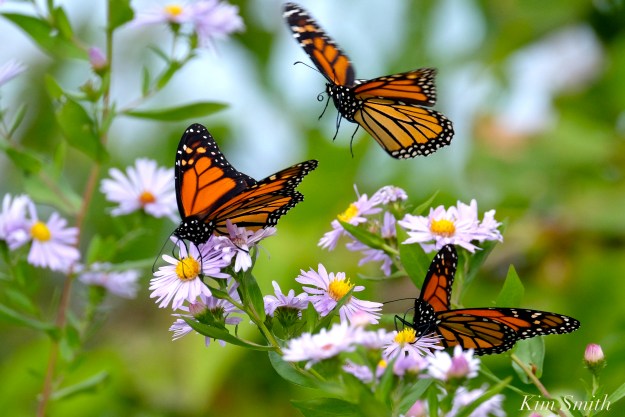
and to give my conservation program about the Monarch Butterflies as their keynote speaker.

In May, three Wilson’s Plovers were spotted briefly on Good Harbor Beach. This was a very, very rare northern sighting, especially so as there were three.

The Young Swan of Niles Pond was released by Lyn and Dan, only to lose his life later in the spring.

Amelie Severance sent us a lovely and detailed drawing of the Young Swan

A fabulous Green Heron was photographed and filmed on an area pond–signs of a great summer season for all species of herons, yet to come.

For the past several years, at least, Killdeers, which is another species of plover (although not endangered) have been nesting in the dunes at Good Harbor Beach. This year we had, at a minimum, two successful nests!

All four chicks hatched and, at only one-day-old, made the epic journey to the beach. Miraculously, four teeny tiny mini marshmallow-sized baby birds, led by Papa and Mama, zigzagged across the parking lot, trekked through the dunes, and landed within feet of the parent’s original nest scrape.

Only one chic, the one PiPl volunteer monitor Heather names Little Pip, survives into summer.

Piping Plovers Return to Good Harbor Beach!

Kim Smith to Receive “Friend of the Earth Award” and Keynote Speaker Salem State earth Days Week

Piping Plovers Driven Off the Beach

Monarch Butterflies at Salem State University

Fencing is Urgently Needed for the Piping Plovers

Check Out Gloucester’s DPW Phil Cucuru Showing Extensive Storm Erosion

How You Can Help the Piping Plovers

Gloucester Celebrates Earth Day With Great News: Lyn and Dan Release the Young Swan Back to the Wild

Piping Plovers Forced off the Beach By Dogs for the Second Weekend in a Row

Piping Plovers and Thoughts About Signs, Dogs, and Why We are in This Predicament

We Need Volunteer Piping Plover Monitors Saturday at the PiPl Nesting Area #3

Heartbreaking to See the Piping Plovers Nesting in the Parking Lot

Snowy Owl at Ryan and Woods Distillery

Breaking: Plover Egg in the Parking Lot at Good Harbor Beach

Breaking: Two Eggs in the Nest: Shout Out to Greenbelt for Installing the PiPl Wire Enclosure

PiPl Egg #3

Swan Crisis

Rarest of Rare Visits from Wilson’s Plovers

Vandals Harming the Piping Plovers

Four!

Tonight on Fox See Our GHB Piping Plovers

Debunking Piping Plover Myth #1

Amelie Severance’s Lovely Drawing of the Young Swan

Debunking Piping Plover Myths #2 and #3

More Shorebirds Nesting at Good Harbor Beach!

Angie’s Alpacas

So Sorry to Write Our Young Swan Passed Away this Morning

Beautiful Shorebirds Passing Through

Debunking Piping Plover Myth #4, Winthrop Beach is Amazing, and Lots of Sex on the Beach

Our Good Harbor Beach Killdeer Chicks

Breaking News: Our Piping Plover Good Harbor Beach Chicks Have Hatched

Piping Plover Makes the Epic Journey to the Beach

Good Harbor Beach Two-Day Old PiPl Chicks

Good Morning! Brought to You By the Fiercely Patient Green Heron

We Lost Two Chicks Today

Shout Out to Gloucester’s Animal Control Officers Teagan and Jamie!

Our Third Piping Plover Chick was Killed This Morning

Debunking Piping Plover Myth #5: Piping Plover Volunteers Are NOT Calling for and Outright Ban of Dogs on the Beach

What Do Piping Plovers Eat?

Happy Father’s Day, Brought to You By Papa Plover

CAPE ANN WILDLIFE 2018: A YEAR IN PICTURES AND STORIES Part One: Winter

Part One: Winter

By Kim Smith

Cape Ann provides welcome habitat for a menagerie of creatures beautiful, from the tiniest winged wonder to our region’s top predator, the Eastern Coyote. Last year and the previous year I posted a Cape Ann Wildlife: A Year in Pictures 2016 and Cape Ann Wildlife: A Year in Pictures 2017. This year I changed the title to A Year in Pictures and Stories and have provided a partial list of some of the stories. You can find links to the posts at the end of each season. I hope you have found the wildlife stories of 2018 equally as interesting and beautiful. Click on the image to find the name of each species.

*   *   *

The first days of January began with the dramatic rescue of our blue-eyed swan by Mr. Swan’s Niles Pond caretakers, Skip, Lyn, and Dan. He flew onto the ice and could not maneuver off. The most amazing thing is that two black-eyed “angel swans” magically appeared at just the right time they were needed and, in a swan sort of way, helped release Mr. Swan from the ice.

Mr. Swan stuck on the ice.

One of a pair of mystery black-eyed  “angel” swans.

“The” story of the winter of 2018 though is the story of Hedwig, the female Snowy Owl that made Gloucester’s Back Shore her home for several months.

She arrived sometime in December and stayed until mid-March. Hedwig staked out a territory that covered a great part of East Gloucester, from Captain Joes Lobster Company on the inner harbor, up over the Bass Rocks Golf Club hill, and all along Atlantic Road, even battling a young male we called Bubo to maintain her dominance over this rich feeding ground. Late in the afternoon we would see her departing for her nightly hunt and she was seen eating a wide variety of small animals, including rabbits, mice, and Buffleheads. 

Hedwig was photographed battling, bathing, grooming, and eating.

Mostly though, Hedwig was observed while sleeping and resting on her various perches; not only the beautiful rocks along the shoreline, but Atlantic Road homeowner’s chimneys, as well as the rooftop railings of the Ocean House Hotel and Atlantis Oceanfront Inn.

Hedwig’s onlookers creating traffic jams on Atlantic Road

This remarkably people-tolerant owl drew crowds from all over (including a Canadian visitor), providing a wonderful window into the secret world of these most magnificent of Arctic wanderers.

Resident Eastern Coyotes and beautiful migrating ducks were photographed and filmed. And then came the terribly destructive power of the four’easters of March, reeking havoc on wildlife habitats all along the coastline.

Hedwig was last seen during the early evening on March 12th, departing the rooftop of the Ocean House Hotel. This was also the night before the third nor’easter. She was perched on the railing of the Ocean House Inn facing towards the sea. The wind was blowing fiercely. After making several attempts, she successfully flew in a southerly direction out over the water.

We Love You Too Snowy Owl!

Mr. Swan Rescue Update and a Pair of Mysterious Swans Arrive at Niles Pond!
Mr. Swan Update Rescue #2
Not One, But Two Snowy Owls on the Back Shore
Snowy Owl Aerial Fight
Close Encounter of the Coyote Kind
Snowy Owl Hedwig Takes a Bath
My What Big Feet You Have Hedwig
Hello Hedwig! What Are You Eating
How Can the Wings of a Snowy Owl Be Quieter Than a Butterfly’s Wings?
Good Morning Sleepyhead
Snowy Owl Feathers in the Moonlight
Beautiful Brants, Scaups, and Ring-necked Ducks Migrating Right Now On Our Shores
Gloucester March Nor’easters Storm Coverage 2018
Clear Evidence of the Destructive Forces of Global Warming on the Coastline and How this Negatively Impacts Local Wildlife

Do Snowy Owls Hunt During the Day or Night?

Chance encounter, of the majestic Snowy Owl kind-

Snowy Owl perching in a pine tree after sunset.

I wasn’t expecting to see a Snowy Owl overhead in a pine tree, although its not entirely uncommon. Because Snowy Owlets hatch in the summertime in the treeless Arctic tundra, they may never even see a tree until they migrate southward.

Generally, Snowies prefer wide open spaces such as dunes, sandy beaches, fields, and airports, because this habitat looks most similar to the tundra.

For the same reason (their home territory is above the Arctic Circle), Snowy Owls hunt during the day in their summer range. Their eyes have evolved to hunt in the continuous daylight of the far north. When migrating to the lower 48 states, Snowies adapt to the shifting light. Unlike other species of owls, the Snowy Owl hunts during the day (this behavior is called diurnal), the night (nocturnal), and at twilight (crepuscular).

From observing Snowy Owls in our region, they mostly feed very early in the morning, before daybreak, rest during the day in dunes and fields, then at day’s end, fly up and perch on an open rooftop or phone pole (less occasionally to treetops), to begin hunting again. The elevated perches provide better visibility for triangulating prey.

At day’s end, perching on a phone pole and scanning the neighborhood.

Beach structures make great perches.

Even a flag pole makes for a terrific hunting perch for a Snowy!

The House Built of Spite

Pink house, pink clouds, pink marsh sea – 

The lonely pink house of Plum Island’s Great Marsh is today only visited by hawks and Snowy Owls, perching to scan the surrounding vista for their next meal.

Local lore has it that the house was built in 1922 by a couple who were in the process of divorcing and sorting their affairs. The wife asked that the husband build a replica of their Newburyport family home. She did not say where the house was to be sited. Out of spite, he built the house atop the isolated salt marsh, with only saltwater plumbing.

The Pink House has not been occupied since the early 2000s and looks worse with each passing year. Last winter I was at the refuge for a program held at the PRNWR headquarters. After the event I tried to drive towards Plum Island but with sea water gushing in from the marsh, the road in front of the house was dangerously impassable.

The house is FREE, if only you will either take it off the marsh or give Parker River National Wildlife Refuge a few acres of comparable land. The second option allows for the house to stay in its current location. Read more here: Free Pink House of Newbury: Take Me I’m Yours

TWO OWL SPECIES IN ONE DAY!

Saturday my daughter Liv and I took a break from all things Christmas and visited Parker River National Wildlife Refuge and Sandy Point Reservation. Hiking around the refuge is one of our favorite things to do and I was thrilled that she got to see not one, but two owls, a Barred Owl, and a Snowy Owl. The Barred was very nearly completely obscured in a dense thicket, nonetheless exciting to see, and the Snowy was spectacular, causing quite a hullabaloo with the onlookers as he perched in a tree by the road leading into the refuge.

To see an owl in the wild is a gift, and I am counting my blessings, for my beautiful, kind-hearted daughter, and wonderful wild creature encounters.


A Perfect Pair of Snowy Owl Tracks

Snowy Owl tracks in the sand

GOOD MORNING! BROUGHT TO YOU BY MISS SNOWY OWL (AND SNOW BUNTINGS, AND TURKEYS, TOO)

A fresh-faced and sleepy-eyed Miss Snowy Owl, a flock of Snow Buntings, and a gang of turkeys made for a beautiful morning

The Snow Buntings were too far away to get a good snapshot, but it is wonderful to see their return to Massachusetts from summer nesting grounds in the high Arctic.

Stirring up the leaf litter with their feet.

A great gang of Wild Turkeys (approximately three dozen!), of mixed age, were foraging amongst the leaf litter, using their big feet to kick up the leaves. The first-hatch year poults stayed more to the center of the flock, while the older hens were foraging at the perimeter.

Exquisite iridescence in Wild Turkey feathers.

RATS!

Gloucester’s Animal Advisory Committee recently sponsored an informative presentation by Gary Menin, director of the Massachusetts chapter of the organization R.A.T.S. (Raptors Are The Solution). Gary presented a talk with accompanying slides on the catastrophic effects of rodenticides on owls, hawks, falcons, eagles, and other birds of prey.

Gloucester is a waterfront community and as such, we will most assuredly always have a rat population.  As has been pointed out dozens of times at the AAC meetings, improper handling of garbage is one of our number one problems. Garbage bags not contained in cans that are placed on city streets the night before trash collection attracts and provides food for coyotes, gulls, crows, and rats. Dumpsters not properly closed and maintained also support rats, gulls, crows, and coyotes, as do overflowing beach barrels.

Although second generation rodenticides are banned, exterminators are still allowed to use them. Gary reminded us however that YOU are the client. If all else fails and an exterminator must be hired, tell them not to use rodenticide under any circumstance.

Firstly, if we better manage our trash, we can greatly shrink the nuisance critter population. Additionally, Gary provided an excellent list of alternatives to rodenticides.

1). Snap traps

2). Ultrasonic waves

3). Electrocuting traps

4). Live trap and relocate

5). Dry ice pellets placed at hole entryways

6). Moth balls and peppermint oil as a repellent

7). Goodnature A24 Rat Trap

Under no circumstances are glue traps recommended as they are an unusually cruel method of extermination.

As we have talked about many times on Good Morning Gloucester, the White-footed Mouse and the Chipmunk are the greatest vectors of Lyme disease. Raptors play a vital rope in controlling mice, chipmunks, and other small rodent populations and have proven to be an important link in the fight against Lyme disease.

Gary also mentioned that the city of Revere recently purchased rat-proof garbage cans that every member of the community is mandated to use. The local governing body was fed up with the proliferation of rats because of flimsy trash bags, overflowing barrels, and careless disposal of garbage. You can read more about Revere’s new barrels here: Revere Looks to Put Lid on Rat Problem.

  *   *   *

We can also purchase or build our own owl nest box. With a quick google search you can find tons of DIY videos, plans, and directions online such as this one for a Screech Owl house.

Screech Owl House Plans

Every year we hear Screech Owls in our neighborhood, close-by, and I’m inspired to build an owl house after hearing Gary’s presentation!

Last winter Hedwig was seen with almost clock-work regularity departing nightly for her evening hunt. An adult Snowy Owl feeds on average three to five times per day.

The food web graphics provided by R.A.T.S. are terrific and are free and downloadable for anyone’s use.

Snowy Owl Sighting!

Will the winter of 2018-2019 bring another Snowy Owl Snowstorm similar to the irruption of 2017-2018? It is too soon in the season to know. They have been trickling in, but Snowy Owls typically begin to move southward in greater numbers in mid- to late-November.

The Snowy spotted today is a male, with a beautiful nearly pure white face and neck. Although off in the distance, he appeared to be in good health, with plushy full set of feathers, big furry feet, and tell-tale pinkish hue smudged around his beak (hopefully from a recent catch). He was quietly nodding off until suddenly disturbed by someone approaching too closely. He swooped across the landscape and away from the onlooker to a more remote location, and was hopefully left undisturbed for the remainder of the day.

Grooming and dozing off amongst the tall grasses and dried wildflowers.

On high alert and then flushing after sudden disturbance.

THIRD IN ONE WEEK JUVENILE RED-TAILED HAWK BEING TREATED FOR RAT POISON

Our local wildlife rehabbers Jodi Swenson and Erin Hutchings (CAPE ANN WILDLIFE) are on the front lines of trying to save our raptors from rodenticide poisoning. They have treated three juvenile Red-tailed hawks just this week alone. Two perished and a third is barely hanging on. Tufts does necropsies on all dead raptors-98 percent have rat poison in their system. Please see previous post about safer alternatives to the new second-generation deadly poisonous rodenticides.

Alternatives to Deadly Second-generation Rat Poison

Recently we shared a story from the Snowy Owl Project that this year Snowy Owls have remained in Massachusetts throughout the summer. We also posted about eight cases of Snowy Owl deaths by rat poison, in Massachusetts, which has been documented during the present Snowy Owl irruption of 2017-2018. Buried in the post was a link to an article from Audubon, “Poisons Used to Kill Rodents Have Safer Alternatives,” which is about alternatives to the new second-generation rodenticide that is killing our native predator population. These are the very birds and animals that we want to support because they eat rats and mice. This is not an abstract problem; Cape Ann Wildlife rehabbers Jodi Swenson and Erin Hutchings are caring for almost daily dying wildlife that has been poisoned to death by second-generation rodenticide, and the problem is mushrooming. Second-generation rodenticides also kill pet dogs and cats! 

Jodi and Erin recently shared the above photo of a juvenile Red-tailed Hawk they had been treating for rodenticide poisoning, which tragically did not make it. These birds are victims of second-generation anticoagulant rodenticides used by exterminators, businesses, farmers, and homeowners.

The brand names are Havoc, Talon, Generation, d-Con, and Hot Shot. Do not buy these products because they contain the deadly indgredients brodifacoum, bromadiolone, difethialone, and difenacoum.

“Both first- and second-generation rodenticides prevent blood from clotting by inhibiting vitamin K, though the second-generation products build to higher concentrations in rodents and are therefore more lethal to anything that eats them.

What makes second-generation rodenticides so non-selective is that they kill slowly, so rodents keep eating them long after they’ve ingested a lethal dose. By the time they expire, or are about to, they contain many times the lethal dose and are therefore deadly to predators, scavengers, and pets.

There’s no safe place or safe delivery system for second-generation rodenticides. After a rodent partakes, it stumbles around for three to four days, displaying itself as an especially tempting meal not just for raptors but for mammalian predators, including red foxes, gray foxes, endangered San Joaquin kit foxes, swift foxes, coyotes, wolves, raccoons, black bears, skunks, badgers, mountain lions, bobcats, fishers, dogs, and house cats—all of which suffer lethal and sublethal secondary poisoning from eating rodents. Deer, non-target rodents, waterfowl, waterbirds, shorebirds, songbirds, and children suffer lethal and sublethal poisoning from eating bait directly.”

Here in a nutshell are alternatives to second generation rat poison. Please read the complete article, which goes in to much greater detail to better understand why this is happening, which companies are responsible for creating the toxic poison, which companies are taking it upon themselves to ban second-generation rodenticides (Walgreens, yes, Home Depot, no), and how you can help.

  1. Prevent a rodent infestation by keeping waste in tightly covered garbage pails and compost bins.
  2. RATS! (Raptors are the Solution) – a national alliance of citizens, nonprofit groups, and local governments that educates consumers and municipalities about safe methods of rodent control and the dangers of second-generation poisons. MASS-RATS is the newly formed state chapter of RATS.
  3. . Hungry Owl Project – delivers safe, effective rodenticide in the form of Barn Owls! This organization also advocate for other predators—coyotes, foxes, mountain lions, badgers, skunks, bobcats, raccoons, opossum.
  4. When natural rodent control is not possible in urban areas: single- and multiple-entrance snap traps, electrocuting traps, glue traps (provided you use them only indoors and frequently dispatch stuck rodents), and even first-generation baits with these active ingredients: chlorophacinone, diphacinone, diphacinone sodium salt, war-farin, and warfarin sodium salt.
  5. The “Better Mouse Trap” – Take a metal rod, run it through holes drilled in the center of both lids of an emptied tin soup can so the can becomes a spinning drum. Fasten both ends of the rod to the top of a plastic bucket via drilled holes. Coat the can with peanut butter, and fill the bucket with water and a shot of liquid soap (to break the surface tension and thus facilitate quicker, more humane drowning). Mice and rats jump onto the can, and it spins them into the water.

https://youtu.be/iho0Qgwz1y

Toxic Lunch photo by Dan Vickers

A healthy Red-tailed Hawk eating non-poisoned lunch.

OUTSTANDING COASTAL WATERBIRD CONSERVATION COOPERATORS MEETING!

Piping Plover Chick Lift-off! – Not quite ready to fly yet, but testing his wings and airborne for a few seconds.

On Tuesday this past week my friend Deborah and I attended the Coastal Waterbird Conservation Cooperators meeting, which took place at Cape Cod Community College in Barnstable. The meeting is held annually to bring together people and organizations that are involved with population monitoring and conservation efforts on behalf of coastal waterbirds. Threatened and endangered species such as Least Terns, Piping Plovers, and American Oystercatchers are given the greatest attention, while the meeting also encompasses efforts on behalf of heron, cormorant, and egret species.

American Oystercatchers

Conservationists from all seven Massachusetts coastal regions participated, as well as conservationists from nearby states, including representatives from New Jersey, Maine, Rhode Island, and New Hampshire. To name just some of the organizations presenting at the meeting-Mass Wildlife, Trustees of Reservations, Massachusetts Department of Conservation and Recreation (DCR), and US Fish and Wildlife. Gloucester was well represented. In addition to Deborah and myself, two members of the Animal Advisory Committee also attended; chairperson Alicia Pensarosa and former animal control officer Diane Corliss. Many of you may remember our Mass Wildlife Piping Plover intern Jasmine. She was there to give a presentation on habitat vegetation utilized by nesting Piping Plovers. Her aunt, Gloucester’s Terry Weber, was there to support Jasmine. This was Jasmine’s first time speaking in public and she did an excellent job!

Each region gave the 2018 population census report for nesting birds as well as providing information about problems and solutions. We all share similar challenges with predation from crows and gulls, uncontrolled dogs, enforcement, and habitat loss and it was very interesting to learn about how neighboring communities are managing problems and issues.

Just one highlight of a day filled with helpful insights and useful information is that we can be very proud of our state—Massachusetts is at the leading edge of the Piping Plover recovery effort. The representative from New Jersey was there specifically to learn from Massachusetts conservationists on how they could possibly improve their recovery program as the New Jersey PiPl population is not growing, with fewer and fewer each year retuning to nest. As you can see from the graph provided at the meeting, the Canadian recovery is going very poorly as well.

Readers will be interested to know that our region’s Crane Beach continues to have one of their best year’s ever. Trustees of Reservations Jeff Denoncour shared information on the latest census data from 2018 and Crane’s has a whopping 76 fledglings, with 25 more chicks still yet to fledge. Because of the huge success at Cranes Beach, the northeast region, of which we are a part, has fledged a total 136 of chicks in 2018, compared to 108 in 2017, and as I said, with more fledglings still to come! The northeast region encompasses Salisbury Beach to the Boston Harbor Islands.

Jeff noted that this year they had less predation by Great Horned Owls. Because of owl predation, several years ago Crane Beach gave up on the wire exclosures and now use electric fencing extensively. The Great Horned Owls learned that the Piping Plover adults were going in an out of the exclosures and began perching on the edge of the wire, picking off the adults as they were entering and exiting the exclosure.

Crane has an excellent crew of Trustees staff monitoring the Least Terns and Piping Plovers, as well as excellent enforcement by highly trained police officers. No dogs are allowed on Crane Beach during nesting season and dogs are prevented from entering at the guarded gate. As we saw from one of the graphics presented about nesting Double-crested Cormorants, when a dog runs through a nesting area, the adults leave the nest, temporarily leaving the eggs and chicks vulnerable to predation by crows, gulls, raptors, and owls.

Crane Beach Least Tern fledgling.

Compare the Least Tern to the Common Tern in the above photo. It’s easy to see why the birds are called Least Terns; they are North America’s smallest member of the tern and gull family (Crane Beach).

Another interesting bit of information shared–if you listen to our podcasts, back in April, we talked about the potential dilemma of what would happen if Snowy Owls remained on the beaches as the Piping Plovers returned from their winter grounds. Knowing that Snowy Owls (Bubo scandiacus) and Great Horned Owls (Bubo virginianus) are close cousins and that the Great Horned Owl eats Piping Plover chicks and adults, I was concerned that a Snowy might eat our PiPl. At one particular beach on Cape Cod, a Snowy stayed through mid-July. An adult Piping Plover skull was found in the owl’s pellet.

Snowy Owls remained in Massachusetts this year through July.

After attending the cooperators meeting, I am more hopeful than ever that our community can come together and solve the problems that are preventing our PiPl from successfully nesting and fledging chicks. What we have going in our favor is the sheer number of amazing super volunteers along with strong community-wide support.  

Piping Plover fully fledged and flying up and down the beach – we”ll have these next year, I am sure!

THE RETURN OF OUR SNOWY OWL HEDWIG!!!

At least, I think she is our Hedwig. Comparing photos from last winter, the feather patterning around her face looks to me identical. 

With thanks and gratitude to Bob and Doug Ryan from Ryan and Wood Distilleries. Bob emailed yesterday afternoon that a Snowy Owl was being dive bombed by crows and gulls. I raced over and she had tucked in under the rocks at the base of a tree.

I took several photos and footage, and just as I had packed up to go, she flew to a large boulder. Immediately, within thirty seconds, a noisy flock of gulls were harassing her from overhead once again, and a few crows dove at her. She then flew to the nearest building. The crows and gulls pestered her for another fifteen minutes, while she quietly perched.

To write “return” is not entirely accurate. She was probably here all along. As soon as work began on the Atlantic Road hotel roofs, we no longer saw her at the back shore. I thought Hedwig might still be here last month, but wasn’t positive, and then Alicia wrote to say she had seen a Snowy and thought it could possibly be Hedwig. It was difficult to confirm without looking at closeups from a long lens. I searched around Alicia’s location for several days but could not find.

Considering most Snowies have left Massachusetts by April, it’s wonderful to have a record of her here in Gloucester in early May. I am elated, and grateful, to Bob and Doug for the call, because now we have footage of her in a rocky woodland Cape Ann setting! Thank you, thank you!

The reason crows mob owls is because some owl species, like the Great Horned Owl, eat crows. Snowy Owls (Bubo scandiacus) and Great Horned Owls (Bubo virgianus) are closely related.