Tag Archives: Cape Ann

MAGICAL TIP TOP TULIPS NEW FARM FUN – COME ON DOWN AND PICK YOUR OWN!

You may recall that I have written a number of times about my friend Paul Wegzyn and his stunning and enchanting School Street Sunflowers. Paul has created another magically enchanted flower experience for the community! This past autumn, Paul, and his Dad Paul, planted several hundred thousand tulips at two different fields.

Early red tulips in bloom today!

The smaller field at 22 School Street, Ipswich, is opening on Sunday, April 18th. This field is planted for pick-your-own tulips. Charming wicker baskets are provided and the cost is $1.00 per stem.

The second field, named Tip Top Tulips (located at 71 Town Farm  Road, Ipswich ), is going to be the show stopper. Rows and rows of beautiful multi-colored tulips, from early flowering varieties  to late flowering cultivars will be blooming over the next two months. Tip Top Tulips is scheduled to tentatively open the following week, approximately April 24th, depending on the weather.

The theme this first year for Tip Top Tulips is Love, in honor of Paul’s Mom, and as with School Street Sunflowers, there will be beautiful photo vignettes positioned around the field.


Deanna Gallagher will have her adorable and friendly Shetland Sheep and cows at Tip Top field, providing even more fun and wonderful photo moments for the family. Charlotte had the best time with Deanna and her goats at School Street Sunflowers last summer and I cannot wait to take her to Tip Top Tulips this spring!


Fo more information, visit Tip Top Tulips website here and follow on Instagram here.

BEAUTIFUL BLUEBIRD “WING-WAVING!”

Bluebird courtship is as beautiful as is the bird! Last week my daughter Liv joined me on a film scouting mini adventure. She loves learning about wildlife and living in Southern California as she does, Liv is surrounded by beautiful wild creatures and wild lands. We had a fantastic morning of it. Brant Geese, Piping Plovers, Great Egrets, Tree Swallows, and Eastern Bluebirds were just some of the creatures we observed.

The Eastern Bluebirds were especially stunning in the crisp early morning sunshine. One particular gent had not yet secured his partner’s affections. From tree branches adjacent to nesting boxes, he sang softly and flashed his glorious blue wings to a female that had flown in on the scene.

At first we thought he was preening, but no, the bachelor was clearly enticing his lady friend with lapis lazuli flags, gesturing with quick up and down lifting movements. Called wing-waving, these gestures are part of Eastern Bluebird courtship.

The male first sings loudly from treetops. If a female shows interest, he further shows off his skill sets with wing-waving and soft warbles. He then entices her to join him at a nesting box or cavity, he entering first. After he flies out of the box and if all goes well, she enters the cavity, a sure sign the pair are hitting it off!

Male Eastern Bluebird Wing-waving

The lucky female


CAPE ANN’S GHOSTLY SNOWY OWL!

A beautiful mysterious Snowy Owl has spent the winter here on Cape Ann. She is very elusive, never dallying too long in one location. She has been spotted in the Good Harbor Beach dunes, Long Beach, Salt Island, Middle Street rooftops, woods, Back Shore, Bass Rocks, Rocky Neck, Smith’s Cove, and even at the bottom of our hill on Pirate’s Lane.

Thank you to many friends who have alerted me to her presence – Hilary, Catherine, Grace, Nicole, Gordon, Arley, Frankie, Susan, Roger – if I forgot to include you, I mean to thank you, too!

If you spotted a Snowy on Cape this winter, please write. I do not believe Cape Ann’s Snowy is still about however, if you do see a Snowy, please leave a comment or feel free to email at kimsmithdesigns@hotmail.com. Thank you!

I am almost certain she is not the same Snowy that stayed with us several winter’s ago. Unlike Piping Plovers, from tracking data, we know that Snowies don’t generally return to the same location every winter, and many only migrate during their youth. In case you missed it, here is a link to a series of fun educational short films that I made about Cape Ann’s 2018 resident Snowy Owl, including bathing, capturing a seabird, and passing a pellet. Snowy Owl Film Project

It’s been a banner year for Snowy Owls at Salisbury Beach, Sandy Point, and Parker River, so much so I have gone out of my way to avoid stopping to photograph owls at these locations for fear of disturbing the Snowies. There are a great deal more people out and about photographing than in previous years, due largely to the pandemic, and the owl disturbances are many.


BLUEBIRD LOVEBIRDS! – DO BLUEBIRDS MATE FOR LIFE?

Love is in the air!

Consistently when out in fields, I see Bluebird pairs that appear strongly committed to each other. I wondered, do Bluebirds mate forever? In our region, we see Eastern Bluebirds. Ornithologists found from a long term study of Western Bluebirds  that the great majority stay together for life. No such studies exist for Eastern Bluebirds however, field observations suggest that about 95 percent mate for life when both are still alive.

Eastern Bluebird female, left, male, right

Interestingly though, mating for life does not exclude extra pair copulations. Genetic studies of broods show that about twenty percent of nestlings are sired by more than one male.

Pairs softly warble to each other early in the morning, the male brings nesting material to a chosen site, and once she has entered his nesting cavity, she will begin to bring nesting material and he will bring food to her to “seal the deal.” In our north of Boston region, you can see the courtship behavior beginning as early as February and March.

Eastern Bluebirds re-mate with another partner if one dies.

In the photos below, it’s very easy to see the difference between a male and female Bluebird. The female’s blue is a more subdued grayish hue while the male’s blue feathers are brilliantly hued.

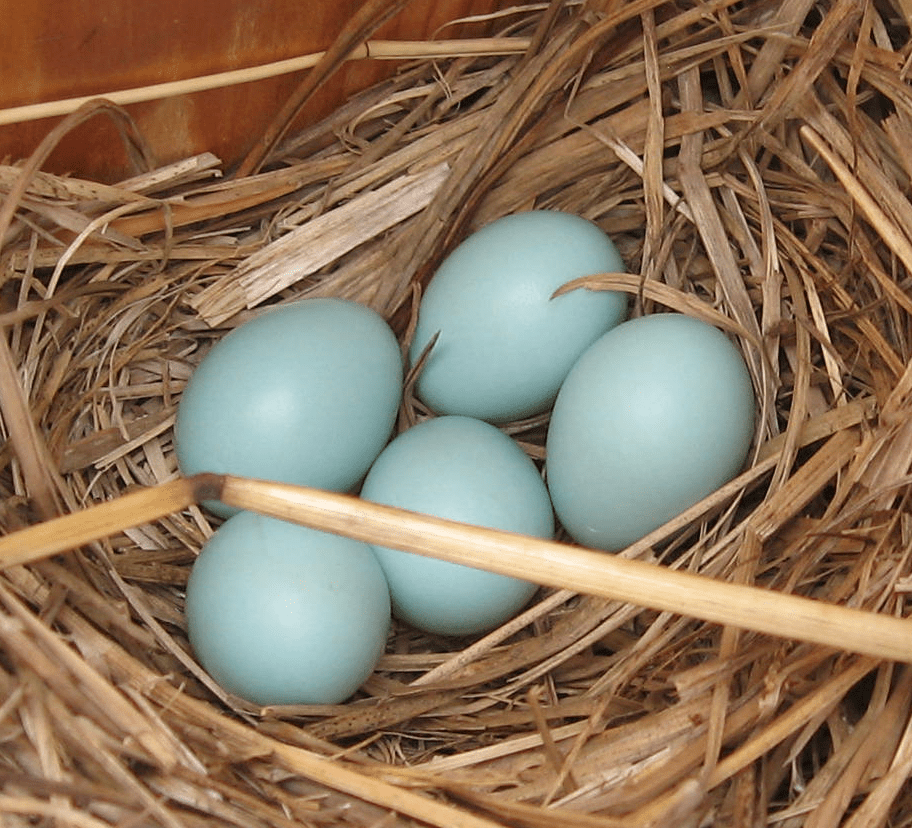
Bluebird nest with eggs, courtesy wikipedia

MARCH COMES IN LIKE A LION!

Wildly blustery at the Point last evening on this the first day of March.

‘In like a lion, out like a lamb’ – the old weather folklore is proving to be true for the first few days of March, 2021. Wouldn’t it be delightful if ‘out like a lamb’ were true as well.

CAREFUL FRIENDS! BRACE COVE/NILES POND BERM STORM WASHOVER – PROCEED WITH CAUTION

A heads up for all the many  people who enjoy walking the loop around Niles Pond. The berm is no longer a compacted path but is awash with rocks, pebbles, popples, and even some of the large boulders have become dislodged and knocked about.

A few snapshots more from Brace Cove after the nor’easter

EASTERN POINT LIGHTHOUSE AND MOTHER ANN DEPARTING NOR’EASTER

The footage of the Eastern Point Lighthouse and Mother Ann was shot Wednesday afternoon as the storm was waning, about an hour and a half after high tide.

BEAUTIFUL FV JEAN ELIZABETH LOBSTER BOAT AT THE DOGBAR BREAKWATER

Friday morning found the Jean Elizabeth at the Dogbar Breakwater. The lobster boat was close enough inshore for Charlotte to watch and understand what was happening and she was fascinated. Despite the  numbing cold and wind, the men were hard at work. Thanks to our local Cape Ann lobstermen, we are blessed to have fresh caught lobsters throughout the year!

Reader Ned Talbot writes that the captain of the boat is Jay Gustaferro. Thank you Ned for commenting!

HAPPY CHRISTMAS FROM MARITIME GLOUCESTER DECK THE DOCKS!

How beautiful the Maritime Gloucester and Schooners Adventure and Ardelle look decked out in holiday glow!

Merry Christmas dear Friends. Wishing you the best of health, peace, and joy.

CAPE ANN’S BEAUTIFUL LOBSTER TRAP TREE IN THE SNOW!

The Lobster Trap Tree looks extra splendid in fresh fallen snow!

Please share your Lobster Trap Tree photos by tagging @lobstertraptree on Facebook. Our fun funky tree has a way of lifting people’s spirits and the community would love to see your snapshots. Thank you!

If you are not on Facebook, feel free to email your photos to me at kimsmithdesigns@hotmail.com and I will post them for you.

PLEASE SHARE YOUR LOBSTER TRAP TREE PHOTOS!

Friends, please share your Lobster Trap Tree photos. We would love to see them! and it will help lift everyone’s spirits. 

When you post on Facebook, simply tag us at @lobstertraptree and your photos will go directly to The Lobster Trap Tree Facebook page. Thank you so much <3

TEN, NINE, EIGHT…THANK YOU SHAWN HENRY, DAVID BROOKS, THREE LANTERNS, TRACI THAYNE CORBETT, LOBSTER TRAP TREE BUILDERS, GFD, MAYOR SEFATIA, KEN RIEHL, JILL CAHILL, AND EVERYONE WHO HAD A HAND IN CREATING CAPE ANN’S SPLENDID LOBSTER TRAP TREE LIGHTING EVENT!

Despite a major power outage earlier in the afternoon, Sunday evening’s Lobster Trap Tree lighting went off without a hitch. Gloucester’s Fire Department arrived right on schedule. Using an aerial ladder, the firemen hoisted the star to the tippy top of the tree, where Shawn Henry was waiting to secure. Ten, nine, eight… Mayor Sefatia gave the virtual countdown and the vibrantly colored buoys and lights shone brightly.

The Lobster Trap Tree is a very special tradition for our community and we are especially grateful to David Brooks and Shawn Henry for their continued dedication in building, organizing, and sharing through Shawn’s films, particularly during the global pandemic

I love that the tree’s star is currently switched to alternating between colorful and white lights, simply wonderful!

PLEASE JOIN US VIRTUALLY AT 4:30 TODAY FOR THE LIVE LOBSTER TRAP TREE LIGHTING!

Virtual Lobster Trap Tree Lighting – Sunday, December 13th at 4:30

VIEW THE LIGHTING LIVE ON THE LOBSTER TRAP TREE FACEBOOK PAGE @lobstertraptree

Snapshots of Shawn Henry and David Brooks installing buoys today.

VIRTUAL LOBSTER TRAP TREE LIGHTING!

Virtual Lobster Trap Tree Lighting – Sunday, December 13th at 4:30
Since we can’t gather and celebrate this wonderful tradition together, let’s jump on Facebook and be together virtually. Thanks to Good Morning Gloucester and the crew from Gloucestercast, they will be bringing to you live – Mayor Sefatia Romeo Theken, Ken Riehl from the Cape Ann Chamber of Commerce and the Gloucester Fire Department as they light the Lobster Trap Tree. This tradition is made possible by the Lobster Trap Tree volunteers, Three Lanterns Marine and Fishing and Cape Ann Art Haven. Please do not come to this area of downtown as we do not want a gathering during this very critical time.

VIEW THE LIGHTING LIVE ON THE LOBSTER TRAP TREE FACEBOOK PAGE.

SHAWN HENRY AWESOME TIME LAPSE VIDEO OF THE LOBSTER TRAP TREE BUILD!!!

Check out this super fun time lapse video of the 2020 Gloucester Lobster Trap Tree Build from Shawn Henry!

Directed, edited and filmed by Shawn G. Henry

With thanks and deep appreciation to Three Lanterns

Tree Builders: David Brooks, Jason Burroughs, Gregg Cademartori, Dave DeAngelis, Shawn G. Henry, Andrew Nicastro, Josh Oliver, and George Schlichte

Hi Friends, If you take a photo of the Lobster Trap Tree and post on Facebook, we would love to share with the community. Please tag us with our new username @lobstertraptree. Thank you!


LOBSTER TRAP TREE LIGHTING UPDATE!

UPDATE FOR OUR LOBSTER TRAP TREE FRIENDS –

In response to lots of questions, David Brooks and Shawn Henry share that it appears as though there are enough lights in stock leftover from previous years! This is great news as most of us are on a tighter budget and lighting stocks are running low.

As soon as the lights and buoys are in place, the tree lighting will take place sometime this week, depending on the weather. Because of the global pandemic, the tree lighting will be a virtual tree lighting, hosted by Mayor Sefatia. Stay tuned for time and date!

Follow The Lobster Trap Tree on Facebook for all the latest updates <3


AN EAR-FULL OF CEDAR WAXWINGS! ALONG WITH MERLINS AND HAWKS ON THE HUNT

During the last weeks of summer, I was blessed with the great good fortune to come across a flock of Cedar Waxwings. Everyday I followed their morning antics as they socialized, foraged, preened, and was even “buzzed” several times when making too quick a movement or crunched on a twig too loudly for their liking. They were actually remarkably tolerant of my presence but as soon as another person or two appeared on the path, they quickly departed. I think that is often the case with wildlife; one human is tolerable, but two of us is two too many. 

The Cedar Waxwings were seen foraging on wildflower seeds and the insects attracted, making them harder to spot as compared to when seen foraging at berries on trees branches. A flock of Cedar Waxwings is called a “museum” or an “ear-full.” The nickname ear-full is apt as they were readily found each morning by their wonderfully soft social trilling.  When you learn to recognize their vocalizations, you will find they are much easier to locate.

These sweet songbirds are strikingly beautiful. Dressed in a black mask that wraps around the eyes, with blue, yellow, and Mourning Dove buffy gray-brown feathers, a cardinal-like crest atop the head, and brilliant red wing tips, Cedar Waxwings are equally as beautiful from the front and rear views.

Cedar Waxwings really do have wax wings; the red wing tips are a waxy secretion. At first biologist thought the red tips functioned to protect the wings from wear and tear, but there really is no evidence of that. Instead, the red secondary tips appear to be status signals that function in mate selection. The older the Waxwing, the greater the number of waxy tips. Birds with zero to five are immature birds, while those with more than nine are thought to be older.

Waxwings tend to associate with other waxwings within these two age groups. Pairs of older birds nest earlier and raise more fledglings than do pairs of younger birds. The characteristic plumage is important in choosing a mate within the social order of the flock.

By mid-September there were still seeds and insects aplenty in the wildflower patch that I was filming at when the beautiful Waxwings abruptly departed for the safety of neighboring treetops. Why do I write “safety?” I believe they skeedaddled because a dangerous new raptor appeared on the scene. More falcon-like than hawk, the mystifying bird sped like a torpedo through the wildflower patch and swooped into the adjacent birch tree where all the raptors like to perch. It was a Merlin! And the songbird’s mortal enemy. Cooper’s and Sharp-shinned Hawks, too, had been hunting the area, but the other hawks did not elicit the same terror as did the Merlin.

Merlin, Eastern Point

Cooper’s and Sharp-shinned Hawks

A small falcon, the Merlin’s short wings allow it to fly fast and hard. The Merlin is often referred to as the “thug” of the bird world for its ability to swoop in quickly and snatch a songbird out of the air. The day after the Merlin appeared, I never again found the Waxwings foraging in the wildlflowers, only in the tree tops.

Within the sociable ear-full, Waxwings take turns foraging. Some perch and preen, serving as sentries while flock-mates dine. Cedar Waxwings eat berries and they love a wide variety. The first half of their name is derived from one of their favorite fruits, the waxy berries of cedar trees. During the breeding season, Waxwings add insects to their diets. Hatchlings are fed insects, gradually switching to berries.

Juvenile Cedar Waxwing with adult Waxwings

If you would like to attract Cedar Waxwings  to your garden here is a handy list that I compiled of some of their most favorite fruits and berries –

Dogwood, Juniper, Chokecherry, Cedar, Honeysuckle, Holy, Crabapple, Hawthorn, Serviceberry, Mulberry, Raspberry, Grapes, and Strawberry. Cedar Waxwings are becoming increasingly more prevalent in backyards because people are planting more ornamental flowering and fruiting trees.

VOTE FOR CHICKS ON THE HALF SHELL!

Nesting shorebirds need safe habitat. Please share and Vote the Blue Wave to continue protections afforded under the Endangered Species Act.

What’s happening in this short clip? Within hours after hatching, tiny marshmallow-sized Piping Plover chicks leave the nest and begin foraging on their own. They still need Mom and Dad for thermo-snuggling and for protection. In this clip you can hear Dad Plover piping loudly, commanding the chick to take cover, and the day-old chick’s barely audible peeps in response.


MONARCHS IN DREAMS

Love when able to successfully (not always achieved!) capture the tracing of the Monarch’s wings in movement -the dot, dot dot of the beautiful border patterning.Monarch Butterfly Migration October 2020 – Monarch and wild mustard flowers

MONARCH BUTTERFLY MIGRATION ALERT FOR CAPE ANN, NEWBURY, IPSWICH, PLUM ISLAND!

Monarchs are currently migrating, albeit in small numbers, throughout the North Shore. The butterflies arrived several days ago and because of the rainy weather, they are in a holding pattern. When the sun reappears, look for Monarchs on any still-blooming  garden favorites such as zinnias, as well as wildflowers. Please send an email or comment in the comment section if you see Monarchs in your garden or while outdoors over the weekend and upcoming week. Thank you!

Many species of asters and goldenrods have finished flowering; instead the Monarchs are fortifying for the long journey by drinking nectar at Black Mustard flowers, and even Dandelions.

Although not native to North America, Black Mustard (Brassica nigra) is beneficial to bees and butterflies for late season sustenance. Don’t you love its lemony golden beauty in the autumn sunlight?

Black Mustard is not the easiest nor most efficient plant for Monarchs to draw nectar from. I never see the butterflies on Black Mustard unless it is very late in the migration and there are few other choices available.

The ray flowers of asters provide a convenient landing pad for butterflies. Panicle-shaped flowering plant, such as goldenrods, also provide a convenient landing pad while supplying a smorgasbord of nectar rich florets. Black Mustard provides neither. You can see in several photos in an upcoming post that the Monarchs are nectaring with their legs gripped tightly around the base of the flower.

Black Mustard is an annual plant native to Eurasia and North Africa. Cultivated widely as a condiment, medicinally, and vegetable, it came to North America via the early colonists. The plant is in bloom from May through October, or until the first hard frost, and grows well in disturbed man-made sites.

Black Mustard is a member of the Brassicaceae, also classically called the Cruciferae (Latin, meaning ‘cross-bearing’) in reference to its four ‘crossed petals’, which is commonly known as the mustard family. Black Mustard is related to cabbage, broccoli, Brussel sprouts, kohlrabi, kale, turnips, and watercress.

SHORELINE MAYHEM – HERONS, CORMORANTS, AND GULLS AMASSING!

Life at the Edge of the Sea- Double-crested Cormorant Feeding Frenzy!

A note about the photos – for the past five years I have been photographing and filming the Cormorants massing. The photos are from 2016 – 2019, and most recently, from 2020. Some of the earliest ones were taken at Niles Beach in 2017. In 2018, my friend Nina wrote to say that the massing also takes place in her neighborhood on the Annisquam River. Several weeks ago, while hiking on the backside of Sandy Point, facing the Ipswich Yacht Club, the Cormorants were massing there, too. Please write if you have seen this spectacular event taking place in your neighborhood. Thank you so much!

Massing in great numbers as they gather at this time of year, Double Crested Cormorants, along with many species of gulls and herons, are benefitting from the tremendous numbers of minnows that are currently present all around the shores of Cape Ann.

Waiting for the Cormorants early morning

At inlets on the Annisquam and Essex Rivers, as well as the inner Harbor and Brace Cove, you can see great gulps of Cormorants. In unison, they push the minnows to shore, where gulls and herons are hungrily waiting. The fish try to swim back out toward open water but the equally as hungry Cormorants have formed a barrier. From an onlooker’s point of view, it looks like utter mayhem with dramatic splashing, diving, and devouring. In many of the photos, you can see that the birds are indeed catching fish.

The Double-crested Cormorants are driving the feeding frenzy. I have seen this symbiotic feeding with individual pairs of DCCormorants and Snowy Egrets at our waterways during the summer, but only see this extraordinary massing of gulls, herons, and cormorants at this time of year, in late summer and early autumn.

Cormorants catch fish by diving from the surface, chasing their prey under water and seizing it with the hooked bill.

Double-crested Cormorants

Double-crested Cormorants are ubiquitous. When compared to Great Cormorants, DCCormorants are a true North American species and breed, winter over, and migrate along the shores of Cape Ann.

Nearly all the species of herons that breed in our region have been spotted in the frenzy including the Great Blue Heron, Snowy Egret, Great Egret, Little Blue Heron, Green Heron, and Black-crowned Night Heron.

After feeding, the herons often find a quiet place to preen before heading back in the late afternoon to their overnight roosting grounds.


Double-crested Cormomrant range map

BABY CEDAR WAXWINGS IN THE HOOD!

Life at the Edge of the Sea – Cedar Waxwing Baby Masked Bandits

For over a month I have been filming a flock of Cedar Waxwings. Exquisitely beautiful creatures, with their combination of soft buffy and brilliantly punctuated wing patterning, along with graceful agility, it’s been easy to fall in love with these birds and they have become a bit of an obsession. 

I filmed some wonderful scenes and will share the photos and story as soon as there is time but in the meantime I wanted to share these photos of a juvenile Cedar Waxwing so you know what to look for. Waxwings are often found high up in the treetops. They are most easily seen on limbs bare of leaves. Their repetitious soft trilling song gives them away and if you learn the sound you will begin to see Cedar Waxwings everywhere. They have an extended breeding period in our region and because it is so late in the season, this juvenile may be one of a second brood.

While I was shooting for my short short story, the Waxwing flock was mostly on the ground in a wildflower patch devouring insects. Cedar Waxwings are more typically berry-eating frugivores. During the spring and summer they add insects to their diet and I think it may have to do with keeping the hatchling’s bellies filled. It wasn’t until they moved back up into the treetops that this little guy began appearing amongst the flock. He has the same masked face, but the breast is softly streaked. You can see the yellow feathers tips beginning to grow in.

Juvenile Cedar Waxwing

Adult Cedar Waxwing

PIPING PLOVER CHRONICLES – WE LOST A NEST – AND SOME GOOD NEWS

Hello Friends, update on the Piping Plovers at Good Harbor Beach and other PiPl news-

First, a bit of sad news. We lost the second nest at Good Harbor Beach, which was located at area #1, the opposite end of the nest at #3, down by Salt Island Road. It only had two eggs and the exclosure installation was scheduled for Monday.

Good Harbor Beach Nest at Area #1

There is no way of knowing what happened because it was very windy yesterday and the tracks of predator or pet have been blown away.

There is the strong likelihood that the pair will renest and they appear to be making attempts to however, it is getting rather late in the year. This would be truly historic to have two nests at GHB if they do renest.

The good news is that our pair at #3 are coming along beautifully. They are constantly brooding the eggs and are doing an awesome job defending their “territory” against avian species (real and imagined predators) that fly onto the scene including sparrows, finches, Mockingbirds, gulls, and Crows. No bird is too small or too large to escape defense of their territory.

Good Harbor Beach Papa Plover brooding eggs.

A bit of amazing news –there is a Piping Plover nest for the first time ever in Quincy! More to come on that 🙂

Massachusetts is at the forefront of Piping Plover recovery and we can all be so proud of our local and state agencies and how they are managing beaches for both people and wildlife to share, despite the global pandemic. Just some of the organizations include Mass Wildlife, Massachusetts Department of Conservation, Essex Greenbelt, The Trustees of Reservations, Parker River National Wildlife USFWS, and many, many more. Thank you Massachusetts Piping Plover partners for all you are doing to help this tiny threatened shorebird.

On a separate note, over the past several days I have been filming a beautiful nest of four PiPl chicks hatching at a location in the area. It was amazing to witness, so very life reaffirming, and pure joy to see. Hopefully I’ll have time tomorrow to share more of the photos.

In this one photo,  you can see the hole where the chick is just starting to peck its way out (far left egg). I had lost track of the days with this particular family and only stopped by to check, not realizing it was “the day.” I said to myself, I don’t recall seeing that big black spot on that egg. After studying it for a few moments, I realized there was movement beneath the hole in the shell. Hatching was about to begin at any moment!

Piping Plover nest with egg cracking!

ANNIE OR SQUAM?

Greenbelt’s Dave Rimmer shares all three eggs are still in the nest.

View the Osprey Cam Here

From ECGA website –

Update May 28, 2020 – Not much new to report. The incubation phase for Annie and Squam continues. Squam is still bringing in numerous fresh fish daily, mostly river herring but the occassional small striped bass as well. One we roll into June the count down is on for hatching.

Annie or Squam? One of the pair of Cape Ann’s resident Ospreys (hopefully a family soon).