Category Archives: Good News!

CATS IN THE GARDEN, MONARCH CATS THAT IS!

Milkweeds, as most know, are the host plant for Monarch Butterflies. A host plant is another way of saying caterpillar food plant.

Monarchs deposit eggs on milkweed plants. Some milkweeds are more productive than other species. For the Northeast region, the most productive milkweed is Common Milkweed (Asclepias syriaca). The second most productive is Marsh Milkweed (Asclepias incarnata), also known as Swamp Milkweed.

What is meant by productive? When given a choice, the females choose these plants over other species of milkweed and the caterpillars have the greatest success rate. In our own butterfly garden and at at my client’s habitat gardens, I grow both Common and Marsh side-by-side. The females flit from one plant to the next, freely depositing eggs on both species.

Monarch caterpillar readying to pupate (become a chrysalis) and hanging in a J-shape

Please consider making a tax deductible donation, or becoming an underwriter, to bring our Monarch Butterfly documentary Beauty on the Wing: Life Story of the Monarch Butterfly to American Public Television. To Learn More go here and to DONATE go here. Thank you!

With thanks and gratitude to our growing list of wonderful folks for their kind contributions

Lauren Mercadante, Jonathan and Sally Golding, James Masciarelli, Pete and Bobbi Kovner, Karrie Klaus (Boston), Sally Jackson, Marion Frost (Ipswich), JoeAnn Hart and Gordon Baird, Joy Van Buskirk (Florida), Lillian and Craig Olmstead, Suki and Fil Agusti (Rockport), Janis Bell, Nina Groppo, Nubar Alexanian, Marguerite Matera, Claudia Bermudez, Thomas Hauck, Judith Foley (Woburn), Jane Paznik-Bondarin (New York), Paul Vassallo (Beverly), Stella Martin, Liv Hauck (California), Julia Williams Robinson (Minnesota), Cynthia Dunn, Diane Gustin, Heidi Shiver (Pennsylvania), John Ronan, Karen Maslow, Fernando Arriaga (Mexico City), Holly Nipperus (Arizona), Kristina Gale (California), Maggie Debbie, Kate and Peter Van Demark (Rockport), Mia Nehme (Beverly), Chicki Hollet, Alice Gardner (Beverly), Therese Desmarais (Rockport), Jennie Meyer, Kathy Gerdon Archer (Beverly), Melissa Weigand (Salem), Duncan Todd (Lexington), Catherine Ryan, Linda Bouchard (Danvers), Elaine Mosesian, Paul Wegzyn (Ipswich), Catherine Bayliss, Jan Waldman (Swampscott), Alessandra Borges (Rhode Island), Nancy Mattern (New Mexico), Carolyn Constable (Pennsylvania), and Ian Gardiner.

BUTTERFLY FRIENDS STOPPING BY FOR MONARCHS!

Walking past our front porch, butterfly friends Meadow, Frieda, and Ruby stopped by to see a batch of newly emerged Monarchs. Both Frieda and Meadow are featured in Beauty on the Wing: Life Story of the Monarch Butterfly, filmed when they were several years younger. It’s so wonderful to see all three girls are growing into the bright, beautiful young woman they are becoming.

Love our neighborhood kids <3

YOUR DAILY MONARCH BUTTERFLY PHOTO AND WHY WE LOVE JOE-PYE WILDFLOWER!

With wonderfully exuberant pollinator friendly flower clusters atop 7 -12 foot tall stalks, what is not to love! Plant Joe-pye in a sunny location at the back of the border and enjoy the array of bees and butterflies that will flock to the nectar-rich blossoms.

More reasons to love Joe-pye is that it is low maintenance, attracts pollinators, is deer resistant, not flattened by rain, not bothered by diseases, blooms when Monarchs are on the wing, and is super easy to grow.

Coming in for a landing


HOW TO TELL THE DIFFERENCE BETWEEN A MALE AND FEMALE MONARCH BUTTERFLY

Newly eclosed female in the petunia patchYou can tell she is a female Monarch because of her smokier and thicker wing venation. The male’s wing veins are narrower . The male also sports to black dots, or sacs, one on each hind wing. The sacs are filled with a pheromone, which the male sprinkles on the female during courtship. If she is receptive, the pair will mate. The pheromones are sometimes referred to by scientists as “love dust.”
In the above photo taken during the fall migration last year, you can easily see the difference. The female is on the left, the male on the right.

Please consider contributing to our online fundraiser to bring the feature length documentary Beauty on the Wing: Life Story of the Monarch Butterfly to American Public Television. Thank you! 

SUPER EXCITING NEWS FOR BEAUTY ON THE WING

Hello Monarch Friends!

I hope you are all doing well. It’s been a bit of a tumultuous past two weeks. Many of you have heard but I don’t want anyone to be surprised not knowing, so first the not-so-great-news is that I broke my leg. It’s going to take a number of months before I am back on my feet, literally, but not figuratively 🙂  Our darling daughter Liv is here visiting for what was supposed to be her vacation and she, our son Alex, and husband Tom are being fantastically helpful. I’ll soon be able to work from my desk and the forced confinement means that I’ll be able to get more work done on fundraising and beloved film projects.

The super exciting news is that Beauty on the Wing has been accepted to the 37th annual Boston Film Festival! The festival dates are September 23rd through the 27th. This year the film will be part virtual and part in person screenings. This is a fantastic festival and the organizers are simply a stellar group of people. When I have more information, I’ll let you know.

Have you been seeing more Monarchs in your garden and in meadows this past month? We have definitely been having a lovely influx, a greater number of Monarchs than in the past several years. It’s so beautiful to see. I’ve released a number of butterflies this past week, and currently have them in all stages in our terrariums, from the teeny tiniest newly emerged to chrysalides and adults.

A friend wrote to ask if these beauties we are currently seeing are the parents of the Super generation, or Methuselah Monarchs, the generation that flies to Mexico. They may very well be, but there could also be one more generation after this.

Monarchs don’t generally drink nectar from roses, especially hybridized roses. This variety is a very old Bourbon Rose that is divinely fragrant. The male was vigorously patrolling our garden looking for females and stopped frequently at the rose to rest before beginning pursuit again.

Please join me, along with the youngest members of your family. I have created a short film for Cape Ann young people for the Sawyer Free Library titled The Marvelous Magnificent Migrating Monarch – here is the link and more information: August 3rd – August 6th, Tuesday through Friday, 10:00 to 10:30. Children’s Services Summer Reading Program “Tails and Tales” presents Monarch Butterflies with Kim Smith! Kim created a short film and virtual presentation to share these beautiful creatures with children and families, and see how Gloucester is a part of their amazing migration journey! Register here and we will send you the link to enjoy this presentation throughout the week starting Tuesday August 3rd.

My deepest gratitude and thanks to all who are contributing to the second phase of launching Beauty on the Wing: Life Story of  the Monarch Butterfly out into the world, the world of Public Television. To date we have raised close to $18,000.00 toward our $51,000.00 goal. Thank you so very much to all these kind contributors:

Lauren Mercadante, Jonathan and Sally Golding, James Masciarelli, Pete and Bobbi Kovner, Karrie Klaus (Boston), Sally Jackson, Marion Frost (Ipswich), Joy Van Buskirk (Florida), Lillian and Craig Olmstead, Suki and Fil Agusti (Rockport), Janis Bell, Nina Groppo, Nubar Alexanian, Marguerite Matera, Claudia Bermudez, Thomas Hauck, Judith Foley (Woburn), Jane Paznik-Bondarin (New York), Paul Vassallo (Beverly), Stella Martin, Liv Hauck (California), Julia Williams Robinson (Minnesota), Cynthia Dunn, Diane Gustin, Heidi Shiver (Pennsylvania), John Ronan, Karen Maslow, Fernando Arriaga (Mexico City), Holly Nipperus (Arizona), Kristina Gale (California), Maggie Debbie, Kate and Peter Van Demark (Rockport), Mia Nehme (Beverly), Chicki Hollet, Alice Gardner (Beverly), Therese Desmarais (Rockport), Jennie Meyer, Kathy Gerdon Archer (Beverly), Melissa Weigand (Salem), Duncan Todd (Lexington), Catherine Ryan, Linda Bouchard (Danvers), Elaine Mosesian, Paul Wegzyn (Ipswich), Catherine Bayliss, Jan Waldman (Swampscott), and Alessandra Borges (Woonsocket RI).

Take care,

xoKim


Good Morning from Good Harbor and Cape Hedge Beaches!

Dear PiPl Friends,

Thank you so much for all your wonderful stories!

This week our fledglings/chicks have reached important milestones. Junior is 44 days old, the Cape Hedge chicks are about 35 days old, and our Littlest is two weeks and a day! The Cape Hedge chicks are doing the wonderfly flippy-floppy-fly-thing, and the Littlest is growing roundly, making magnificent treks up and down the beach.

Thank you everyone for your watchful eyes, diplomacy, eagerness to share with the public, and big hearts. You are all creating a wonderfully positive image for shorebirds everywhere and a super positive image for Cape Ann as well!!!

Skittles has been found! He was only about a block away from where he went missing, and sunning himself in a neighbor’s backyard. As Scott said, he was only waiting for the sun to come out 🙂

Have a great day!
xxKim

Happiness is a tail feather snuggle with Mom

SALT ISLAND UPDATE and we have the swimmingest Plovers ever at Good Harbor Beach!

Good morning dear lovers of all things PiPl!

I hope everyone is doing well. I sure miss seeing you at the beaches.

Salt Island Update (thank you to our Ward One Councilor Scott Memhard for the information) – the Salt Island hearing has been postponed upon Mr. Martignetti’s request. The hearing will be rescheduled for August.

In the meantime we can add Adrienne Lennon, the Conservation Commission clerk to the people who we should be sending our emails to –

alennon@gloucester-ma.gov

Please also send an email to Robert Gulla, the Conservation Commission co-chair  –

rgulla@robertgulla.com.

You can find a list of all members of the Conservation Commission here: https://gloucester-ma.gov/1027/Conservation-Commission, where their snail mail only addresses are provided

Several years ago, in 2019 I believe, our GHB PiPls began swimming daily across the Creek to forage on the other side. This year Junior was observed swimming, and now our littlest is also swimming.

PiPl Ambassador Deb writes, “Here’s the story. Dad and chick were feeding in different spots along the creek, then stopped to take a rest at the end of the creek. When they got back to work, Dad flew to the other side of the creek; chick dabbled her feet in the water, then swam over to the other side. At that point the creek was only about three feet wide.”
Deb sent a video but I am having trouble uploading. Thank you Deb for sharing! Here is the video from 2019 – Gloucester Plovers Go swimming

Have a great day!

xoKim


HOW DO WE KNOW HOW OLD THE CAPE HEDGE CHICKS ARE?

Good Morning dear PiPl Friends,

Thank you all so very much for the updates and great insights. And for all your watchful eyes over our Cape Ann PiPls!

Many thanks again to Denton Crews for installing the posters, to Jonathan for organizing the printing and laminating, and to Duncan Todd for designing. What a tremendous contribution! Thanks to Jonathan for providing the photos, it’s so nice to see!

Thank you Deb and Sally for pointing out the Least Terns. Both Least and Common Terns were here last summer at this time. I wonder if they are nesting on Salt Island? Wouldn’ that be exciting!

A note about the age of the Cape Hedge chicks, which are approximately four weeks old as of last Thursday. The first sighting was reported on Friday June 18th and was confirmed by Sue Catalogna on June 26th. The chicks were teenie tiny on the 18th so I am assuming their hatch date was roughly Thursday the 17th, which would make them approximately four weeks old last Thursday, the 15th of July.

They look smaller than our GHB chicks at the same age, due largely I think to their diet at Cape Hedge. Chicks develop at different rates, depending on the availability and quality of food.

The sun is shining now, but it looks as though the rest of the weekend may be another overcast and quietly perfect day for chick rearing 🙂

Have a super weekend!

xoKim

MAKING A BEELINE FOR THE MILKWEED! and save the date for my children’s programs at the Sawyer Free Library

Dear Monarch Friends,

A joyful sight to see so many Monarchs in the dunes and in our gardens over the weekend! A female flew in and left us with another dozen or so eggs, deposited on the Common Milkweed. She briefly inspected the Whorled Milkweed (Asclepias verticillata) and Butterflyweed (Asclepias tuberosa), but as usual, opted to only lay a batch on leaves and buds of the Common Milkweed.

Early Sunday morning on PiPl watch, several Monarchs flew in from across the bay and later that day, dozens and dozens were spotted drinking nectar and depositing eggs at the Common Milkweed growing at the Good Harbor Beach dunes. The milkweed has been blooming for over a month now and all this rain has kept the blossoms fresh and inviting.

Beeline for the Milkweed!

Save the dates to share Monarchs with the youngest members of your family. I have created a short film for Cape Ann young people for the Sawyer Free Library about the Magnificent Monarch – here is the link and more information: August 3rd – August 6th, Tuesday through Friday, 10:00 to 10:30. Children’s Services Summer Reading Program “Tails and Tales” presents Monarch Butterflies with Kim Smith! Kim creates a short film and virtual presentation to share these beautiful creatures with children and families, and see how Gloucester is a part of their amazing migration journey! Register here and we will send you the link to enjoy this presentation throughout the week starting Tuesday August 3rd.

My deepest gratitude and thanks to all who are contributing to the second phase of launching Beauty on the Wing: Life Story of  the Monarch Butterfly out into the world, the world of Public Television. To date we have raised over $17,500.00 toward our $51,000.00 goal. Thank you so very much to all these kind contributors:

Lauren Mercadante, Jonathan and Sally Golding, James Masciarelli, Pete and Bobbi Kovner, Karrie Klaus (Boston), Sally Jackson, Marion Frost (Ipswich), Joy Van Buskirk (Florida), Lillian and Craig Olmstead, Suki and Fil Agusti (Rockport), Janis Bell, Nina Groppo, Nubar Alexanian, Marguerite Matera, Claudia Bermudez, Thomas Hauck, Judith Foley (Woburn), Jane Paznik-Bondarin (New York), Paul Vassallo (Beverly), Stella Martin, Liv Hauck (California), Julia Williams Robinson (Minnesota), Cynthia Dunn, Diane Gustin, Heidi Shiver (Pennsylvania), John Ronan, Karen Maslow, Fernando Arriaga (Mexico City), Holly Nipperus (Arizona), Kristina Gale (California), Maggie Debbie, Kate and Peter Van Demark (Rockport), Mia Nehme (Beverly), Chicki Hollet, Alice Gardner (Beverly), Therese Desmarais (Rockport), Jennie Meyer, Kathy Gerdon Archer (Beverly), Melissa Weigand (Salem), Duncan Todd (Lexington), Catherine Ryan, Linda Bouchard (Danvers), Elaine Mosesian, Paul Wegzyn (Ipswich)

If you are interested in contributing to Beauty on the Wing: Life Story of the Monarch Butterfly, please find more information here.

DONATE HERE


WONDERFUL NEWS FROM GOOD HARBOR AND CAPE HEDGE BEACHES!

Good Morning PiPl Friends!

Lots to share – Heidi wrote that she watched our GHB chick take flight for several feet. Hooray! Many, many thanks to Susan for filling in for Heidi, who did a wonderful job and is a joy to talk with, and it’s so nice to have Heidi back. Heidi remarked what a difference a week makes in growth and development.

Proud Dad and 30 day old fledgling

The chicks are hatching at the Salt Island end of the beach!!! This is phenomenal, to have two successful nests at Good Harbor Beach.

It’s going to be a tough situation at this end of the beach and we have myriad questions, namely will the family try to make the super long trek to the Creek on hot, busy beach days to forage?

Mom and Dad are taking turns snuggling the two chicks that have hatched. The third egg has yet to hatch. We’ll check back at the end of the day.

I met several lovely couples and families at Cape Hedge this morning. Everyone is super interested in the Plovers, just as they are at GHB. All three chicks there are thriving, foraging in the tidal flats and between the popples, running for the shelter of the rocks when the occasional dog comes near, and staying relatively close to each other. A smart little one completely flattened in the sand as the Barn Swallows swooped low across the flats.

Two of the three Cape Hedge chicks navigating the popples

I was hoping the Ambassadors would have a little break between looking out for the Nautilus Road chicks and the Salt Island chicks. We are losing several Ambassadors during this flux. I have either a very rotten summer cold or the flu and am not able to take on extra shifts this week. Please email if you would like to be a Piping Plover Ambassador – kimsmithdesigns@hotmail.com. You will meet the nicest, most kind hearted group of people.

Thank you to our Cape Ann community and Ambassadors. It’s going to take a village to fledge all these chicks!

xoKim

Happiness is when Mom steps on your head

WE LOST ANOTHER CHICK TO A GREAT BLACK-BACKED GULL

Good morning PiPl Friends,

Only one chick and Dad were feeding in the flats this morning. The take happened yesterday when Jill was watching the chicks and Dad up by the dune beach grass. A Great Black-backed, quickly joined by a flock, swooped in and appeared to be fighting over a bag of chips when the GBB Gull grabbed the chick. Dad tried once again valiantly to rescue his chick but was unsuccessful.

Our GHB chicks have been growing right on schedule and are finding good foraging at the Creek and in the flats. It is incredibly heartbreaking to lose chicks at any age, but especially these older stronger chicks, one at 22 days and now one at 27 days.

No ambassador should feel responsible in any way. Everyone of you is doing a fantastic job and your dedication of time and energy is so very much appreciated and worthwhile. Takes can happen on anyone’s shift and as I said before it is tremendous for the collective knowledge of PiPls to know how these takes happen and why their numbers are dwindling.

Would these two deaths have occurred if Mom had not been injured? It’s very hard to know because up until a few days ago, she appeared to be managing her injury, while both supervising and defending her chicks, and feeding herself.

What we do know is that American Crows and Great Black-backed Gulls are wreaking havoc on Piping Plover populations on the North Shore. For example, Crows have eaten every egg and chick on Revere Beach (with the exception of one nest still intact) and gulls are eating nearly fully fledged birds.

Herring and Great Black-backed Gulls are relatively new breeders to the Massachusetts coastline. Up until 1912, they were primarily winter visitors. The first Herring Gull nest ever recorded was in 1912 and the first Great Black-backed Gull nest in 1930. Because of easy access to food, they are thriving. Gulls are colonial breeders. They have pushed terns off islands (traditional tern nesting areas), forcing the terns to breed in less desirable locations. I think until we can somehow manage the gull population, the threatened and endangered Massachusetts shorebird species will continue to struggle greatly and recovery will be painstakingly slow..

This weekend I watched a couple dump all the remains of their picnic in front of a gull in the GHB parking lot. The two laughed as an enormous flock suddenly appeared, dining and squabbling over on the garbage. Humans feeding gulls and crows is exacerbating the problem tenfold and dogs running on the beach, which forces the PiPl parents to stop tending nests and chicks to chase after the dogs, leaves the babies vulnerable to gull and crow takes.

Area #3 Dad and one remaining chick, 28 days old

On a brighter note, the three Cape Hedge chicks are all present and accounted for on this beautiful July morning. I am estimating they are twenty days old, not based on their size, but because of the first sighting submitted. The family was joined by two Great Blue Herons, until a photographer frightened the herons off the beach, which may be just as well because GBH eat Plovers, too.

Sally witnessed a most beautiful PiPl parenting moment last night, and it is one of the reasons why we all continue to work so hard for these tender tiny creatures. She writes, ” I found Dad and one chick at the Creek. Dad showed off his flying skills to the baby and then encouraged his chick to cross the creek from the island to the mainland. It was a wonderful experience to watch the communications between the two of them and to see the little one paddle across the creek.”

Thank you PiPl Ambassadors for all you are doing to help grow Cape Ann’s Plover population.

xoKim

Chick conference, 20 day old chicks

WE LOST A CHICK AT GOOD HARBOR BEACH

Good morning PiPl Friends,

We lost a chick yesterday afternoon. Super Piping Plover Ambasador Jennie witnessed the encounter, where a gull swooped in from behind and carried off the chick. Dad did his best, latching onto the gulls wings and trying to bite the gull but was unsuccessful in saving the chick.

We think Mom left yesterday morning to begin her southward journey. Seeing the two remaining chicks to fledgling is all on Dad now. It is not uncommon for the females to depart earlier, and the GHB Mom usually does depart sooner than the Dad and fledglings. We still have two more weeks to go before the chicks are considered fledged. Dads can do this! I am documenting a PiPl family where several years ago, the Mom left two chicks with Dad when the chicks were only ten days old.

Although I am sure it was devastating to witness, thank you Jennie for being there. Our chicks are so closely monitored and I think it really helps for the collective knowledge of Piping Plovers to know exactly how a chick is killed. I am surprised the gull took a twenty-two day old chick. The time I witnessed a similar take, the chick was only a week old. We now know, the PiPls are not safe from the gulls at any stage of development.There are so many Crows and seagulls on beaches today. They are scavengers and when the beach is empty because of bad weather, I think they are especially hungry without their usual diet of chips and junkfood. Seagulls need to relearn how to forage!

Waiting for the rain to subside a bit, this morning I put together the informational one sheets attached, one for each beach. I’ve been thinking about it for some time and Rockport Ambassador Eric Hutchins wondered if we had something like this to laminate and show to beachgoers. I think this answers most of the FAQs we are asked. I wish it could be longer. Please read over and let me know your thoughts. Thank you!

Being a PiPl Ambassador is wonderfully rewarding and you meet the nicest people, but it has its low moments, too. Thank you everyone for your good work and kind and caring ways.

Have a super day,
xoKim


FIVE IN THE FLATS – AND HAPPY THREE WEEK OLD BIRTHDAY LITTLE PEEPS!

Good morning PiPl Friends,

The GHB family of five were all in the flats this morning, foraging like nobody’s business. Both parents were very relaxed around the early morning beach walkers and joggers. The CHB three little chicklets are all doing beautifully as well. Leslie placed a double sided sign up by where this little family heads when the beach is crowded. Thank you so very much to Sally and Barbara for sharing tips and advice with Leslie!!

On Monday morning, Todd Pover, who is the senior wildlife biologist for the Conserve Wildlife Foundation of New Jersey visited us at Good Harbor Beach. We are so honored to have Todd come to GHB. We were hoping to have a visit earlier in the season and I was planning to have a group of us meet Todd. But as it goes, this was last minute however, Todd did get to meet Ambassadors Maggie and Kai!

Todd heads the CWFNJ beach nesting bird project and has been involved with nesting shorebirds for nearly thirty years. Todd also leads CWFNJ Bahamas PiPl wintering grounds initiative. Years ago, Todd had a dream to restore early successional habitat at New Jersey’s Barnegat Light, habitat ideal for nesting shorebirds. Please watch this video and see how Todd’s beautiful dream project came to fruition.

Todd has recently returned from a site visit to check on Chicago’s Monty and Rose PiPls and it was interesting to get his insights on our similarities/differences. As they are at Good Harbor Beach, battles between Killdeers and PiPls are a regular occurrence at Chicago’s Michigan Lake shorebird habitat. Todd loves our signs and especially our new badges (thanking Jonathan, Duncan, and Ducan, once again a million times over for the badges). We had a great meeting and I am just so sorry it was so brief. After checking at GHB, Todd was headed over to Parker River NWR and was possibly going to stop at Cape Hedge Beach. Many thanks to Todd for taking an interest in our Cape Ann Piping Plovers!

Todd, Maggie, Nancy beachgoer, and Charlotte

Here is an image of one of the birthday chicks grabbing a Mayfly for breakfast. When I googled Mayfly-Massachusetts-beach, hoping to id what species of Mayfly, the first thing that popped up is a website on how to kill them. It’s no wonder why insect species around the world are in sharp decline, and becoming extinct at an unprecedented rate.

Anglers love Mayflies, and so do Plovers!

Last day of the heat wave. Please take care everyone.
xoKim

Mayfly life cycle -from nymph to adult, a wide range of invertebrates and vertebrates consume Mayflies

HAPPY MISTY MORNING FROM PLOVERVILLE AND THANK YOU JONATHAN, DUNCAN T, AND DUNCAN H

Good Morning PiPl Friends,

Sally and I were remarking last night how the chicks seemed to have grown overnight. The plumplings are losing their baby faces and are turning into tweens. All three were feasting in the tide flats and wrack. The tide again was high, not as high as the previous two days, and the receding water is leaving a smorgasbord in its wake. The beach is so quiet on these foggy misty days. Perhaps the peaceful time foraging has allowed them to put on extra ounces.

I only saw Mom very briefly this morning. She was not putting any weight on her right foot and there appears to be a new piece of seaweed attached. I am going to stop by later today and try to get a better look.

Jonathan arrived this morning at GHB with the most fantastic and perfect Piping Plover badges. I think he is passing the bag along to Heidi, who will pass on to either Bette Jean or Jane Marie, and so on throughout the day. A thoughtful gift for us all and so very needed. A HUGE shoutout and thank you to Jonathan for organizing and purchasing, to Duncan T for his wonderful graphic skills, and to Duncan H for helping to organize.

Heidi saw a Dogfish Shark several days ago at the Creek! I think this is the second sighting in the past week. I’ll post her video later today.

Have a great day!
xoKim

The chicks two days apart, at 14 days and 16 days old

HOORAY FOR OUR LITTLE CHICKS’ TEN DAY MILESTONE!

Good Morning PiPl Friends,

Today marks the chicks’ ten day old birthday. Ten days is considered a milestone because at this point in time their chance of surviving improves vastly. From a nest of four eggs, on average, only 1.2 chicks survive. We’re aiming to fledge all three of our chicks!

Federal biologists count a chick as fledged at 35-36 days, whereas the State of Massachusetts considers a chick fledged at 28 days. We go with the 35-36 days because chicks develop at slightly different rates, depending on diet and accessibility to their food. We have observed that although they can fly some distance at 26 days, the chicks still rely on Mom and Dad to thermoregulate and for protection from predators. I have even seen a family of 42 day old chicks, that looked as large as their Dad, all crammed under his wings on chilly evening.

HexapodDad –  our wee ones under Dad’s wings this morning

No dogs in sight and the family was happily foraging and warming under wings the length and depth of #3, and a bit beyond.

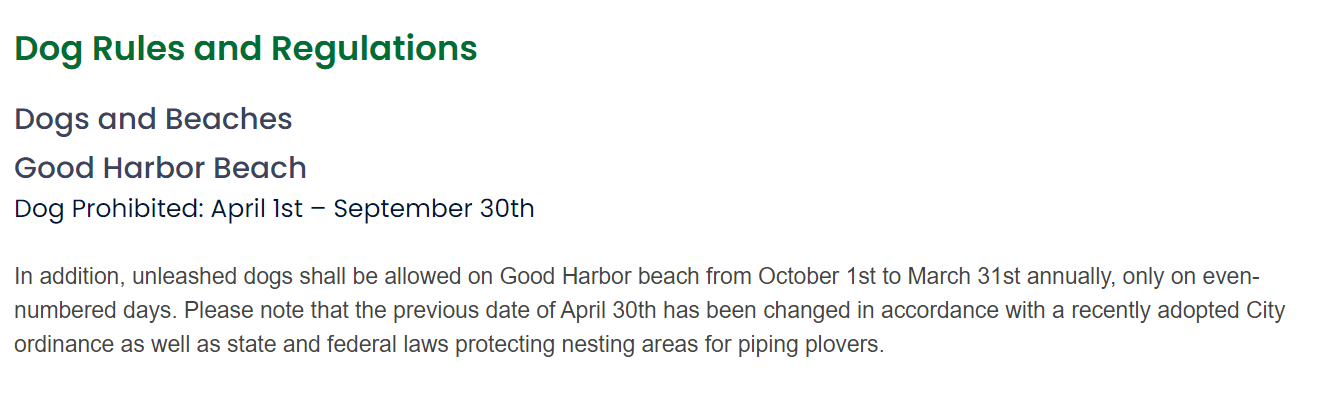
Sally had a tremendously great idea which was to take a screenshot of the dog regulations to share with scofflaw dog owners, especially the ones that insist that dogs are permitted on the beach after hours. We can grab the screenshot and put it on our phones.

Fines

$300 per violation. Fines for violations will be double in season for beaches and other off-leash areas as determined. (GCO Ch. 4, Sec. 4-16a)

The trash people leave behind on the beach (and oftentimes not trash but perfectly good items) is beyond belief. I forgot to bring garbage bags this morning, thankfully Heidi did!! THANK YOU HEIDI! Last year I tied a few  bags onto the roping low down for the days when I forget to bring a bag and will try to remember to do that tomorrow. Anyone can help themselves to the bags if needed. Please don’t pick up tissue looking paper unless you are wearing gloves because people are using the dunes as their personal bathroom. Tissue paper degrades and it is too gross to handle.

Yesterday as I was leaving GHB via the footbridge, an entire family, Mom, Dad, and three kids, each had a bag and were picking up trash.  I wish so much I had taken a photo but had to hurry back. Thank you kind Family!

Have a great Saturday and maybe I’ll see you at the Juneteenth Celebration at Stage Fort Park!


BEAUTY ON THE WING INVITED TO THE DOCTALKS FESTIVAL AND SYMPOSIUM AND FILM SCREENING!

Laura Azevedo, Director of Filmmakers Collaborative, and I are featured guests at the 2021 DOCTalks Festival and Symposium that takes place annually (this year virtually from New Brunswick). We will be screening Beauty on the Wing and then discussing myriad topics related to the filmmaking process. The screening and discussion are FREE and OPEN TO THE PUBLIC. Please see below to register for the event.  The schedule has not yet been finalized but I believe our talk and screening will take place June 16th at 7pm (our time), which is actually 8pm Atlantic Daylight Time.


Earlier on Thursday  June 16th, at 1pm (6pm UK time), I screening Beauty on the Wing to the British Mexican Society in London. Thanks to Zoom, it’s going to be an international day for Beauty!

Please consider becoming an underwriter and donating to our online fundraiser to bring Beauty on the Wing to American Public Television. Thank you! 

2021 DOCTalks Festival & Symposium

DOCTalks Dialogues – online June 15 to 17, 2021

The theme for the 2021 festival and symposium is – DOCTalks Dialogues – a program of conversations that will feature people from various cross-sectors that have associated with DOCTalks over the last nine years (2013 to 2021).

In a ‘relaxed conversational’ format that will feature knowledge-based documentary media – long form documentaries, short videos, podcasts, immersive learning technology, interactive website, social media – DOCTalks Dialogues will explore ‘best practices’ used to create, fund, and mobilize knowledge-based documentary media using a cross-sector collaborative storytelling approach.

Our moderator and host for the DOCTalks Dialogues program will be Catherine D’Aoust from Jemseg, New Brunswick. Enrolled in a Masters program studying linguistics at MUN (Memorial University of Newfoundland), Catherine will also be investigating – How does language and personal intention affect cross-sector collaborative outcomes when producing knowledge-based documentary media?

It should be noted that an underlying narrative for cross-sector, knowledge-based documentary media is – real stories, about real people, living in real communities, addressing real issues, and trying to create real change in society.

Event Registration:

Register at Eventbrite: www.eventbrite.com/e/2021-doctalks-festival-symposium-tickets-152537905983

Free Public Screenings & Talks

All evening screenings & talks are open to the public. A Zoom link will be provided for admission.

BEAUTY ON THE WING SELECTED AS A SEMI-FINALIST AT THE DUMBO FILM FESTIVAL!!

We are overjoyed to share that Beauty on the Wing has been selected a semi-finalist at the Dumbo Film Festival. We’ll know on June 11th whether or not we have been selected officially to show at the festival that takes place in September. Keeping my hopes up!

About the Dumbo Film Festival

The Dumbo Film Festival (DFF) is a yearly event structured in bimonthly contests. Every two months, each of the categories will be awarded and a final ceremony will be held every year in New York City’s district of Dumbo to award projects that have been judged the very best over the past year. This structure is meant to highlight both affirmed and emergent filmmakers and to launch promising artists into the world film stage.

Read more here

Please consider donating to our online fundraiser to bring Beauty on the Wing to American Public Television. Thank you!

Read more about our fundraiser here.

A GOOD HARBOR BEACH SPLENDID GOOD MORNING!

Filming B-roll at beautiful Good Harbor Beach this morning
Photobombed by a Song Sparrow – photo for Mary <3


Just some of the flora currently in bloom at GHB

CoreopsisBeach Pea (Lathyrus japonicus)Goldmoss Stonecrop (Sedum acre)

Yellow Goatsbeard (Tragopogon dubius)

Beach roses Rosa rugosa

Killdeer nest

Mom on the nest this morning


PIPING PLOVER AMBASSADOR INFORMATIONAL MEETING SUNDAY AT 5PM

Hello PiPl Friends,

Just a reminder that our Piping Plover Ambassador informational meeting is tomorrow, Sunday, June 6th, at 5pm. We will meet at the footbridge side of the beach, by the symbolically roped off area. Please feel free to ask questions and bring up any concerns.

I do want to mention one very important topic ahead of time in case everyone can’t attend. Last year we had an issue with teenage boys late in the afternoon. Our objective as ambassadors is to help educate as well as to deescalate every situation. Especially when speaking with teenage boys after a hot sunny beach day and there may be underage drinking in the mix, the best we can do is not get into any discussions, but to try to keep a good eye on the chicks and sort of place your person in-between the culprits and the chicks. Please do not engage verbally, especially if they start taunting pro-Trump rhetoric, etc., as happened last year. We do not want to engage in any political discussions whatsoever. If persons are being very rude and threatening, please call the police. I would like everyone to have the police and animal control on speed dial on their phones.

Animal Control (Jamie and Teagan): 978-281-9746

Gloucester Police: 978-283-1212

I am not trying to frighten anyone and incidents usually only occur once a summer, if that. But in thinking about how on edge people are on airplanes and equally how folks are super eager to have fun on the beach, our mission at all times is to deescalate.

All that being said, I am very much looking forward to seeing everyone tomorrow!

The best plover story of the week to share is this amazing Super Dad who tried so valiantly to save an egg. Last week’s King Tide wiped out many nests on North Shore beaches. I found this little family hatching two chicks outside of where their original nest scrape was located. The chicks were in a little divot, which looked much like a scrape, but it was not the nest where they had been prior to the storm. The nest had originally contained four eggs.

After watching the chicks hatch, Dad kept fussing about in a spot a foot or so away from the divot. Amazingly, there was a lone egg sitting in the flat sand. He tried and tried to roll and push the egg toward the two chicks, alternating between trying to also brood the egg. But because the egg was sitting high in the flat sand, not in a bowl, he couldn’t brood and kept sort of bellyflopping on top of the egg. He worked on the egg while simultaneously pausing to thermosnuggle the newborn hatchlings. The egg rolled toward a swath of wrack that had washed up during the storm and I think it got a little stuck there. This tremendous effort went on for about 45 minutes before I had to leave for work. Upon returning the following day, the egg was still there. Although not a happy ending, it was amazing and unforgettable behavior to observe, showing us once again, Dads are the super heroes of the Piping Plover world <3 

See you tomorrow!

Warmest wishes,

Kim

If you would like to be a Piping Plover Ambassador, please contact me at kimsmithdesigns@hotmail.com

Goofy things chicks do! 

NORTH SHORE PIPING PLOVERS ARE HATCHING! AND HOW WE CAN ALL HELP PROTECT THE PLOVERS

This past week I had the joy of filming a Piping Plover pair hatch two teeny adorable chicks. It’s extraordinary how these tiny tots are capable of propelling themselves around the beach within hours after pipping their way out of the eggshell.  To be very clear, the chicks did not hatch at GHB; our chicks are about two weeks away from hatching.

PiPl chicks hatched at several beaches on the North Shore, while at some locations the Plovers are just getting started.Hours old Piping Plover chick with Dad

Piping Plovers are precocial birds, which means that the chicks hatch with a coat of downy fluff, are not blind, and quickly learn to find food without the help of Mom and Dad. However, precocial birds cannot escape danger until they learn to fly and generally cannot regulate their body temperature. The chicks need Mom and Dad for protection and for warmth (to thermoregulate their little bodies).And with Mom. Note the chick is no taller than the emerging shots of Sea Rocket!

The opposite of precocial is altricial. Most species of songbirds are altricial. Songbirds hatch blind, naked, helpless, and must be fed by the parents. Although Piping Plovers are active within hours after hatching, they are often sleepy and very easily tire the first few days.

The first day or so after hatching, Piping Plover chicks go through the motions of foraging, giving chase to bugs and pecking at the sand, but often the insects escape or the chicks don’t eat the capture. By the third day they have mastered the skills needed to forage successfully.

I think we’ll call these two Thompson and Thomson, after the delightful twin detectives from Tintin. I certainly will never be able to tell one from the other!

The twins were doing beautifully when last checked, despite high winds, high tides, cold temperatures, and storm surges. The nest originally held four eggs but very unfortunately, two eggs disappeared. The most likely culprit is a Crow, with which this beach is rife.

Piping Plover nests and chicks are subject to predation by crows, seagulls, small mammals, Red Fox, and crabs. Adult Piping Plovers are predated by owls and hawks. The Plover’s greatest defense is its ability to blend with its surroundings but this perfect sand-hued camouflage works to their disadvantage on busy urban beaches such as Good Harbor Beach.

The very definition of camouflaged!

Plovers everywhere caught a break this Memorial Day weekend. The foul weather means fewer people on the beach, which equals fewer disturbances to nesting adults and to chicks foraging. Soon enough there will be marshmallow-sized Plover chicks zooming around Good Harbor Beach.

How we often find Good Harbor Beach the morning after a warm sunny day and before the awesome DPW crew arrives to clean the beach.

What can you do to help Piping Plovers? Here are a few simple guidelines and steps we can all take to help protect the Plovers.

1) Don’t leave behind or bury trash or food on the beach. Garbage attracts predators including crows, seagulls, foxes, coyotes, skunks, raccoons, and rats. All these creatures EAT plover eggs and chicks. Bring an extra trash bag if so inclined and help clean up the litter left by others.

2) Please do not linger near the Piping Plover chicks and nests. Activity around the Plovers attracts gulls and crows.

3) Respect the fenced off areas that are created to protect the Plovers. And recognize, too, that soon after hatching, the chicks will be going in and out of the protected areas to find food. The PiPl parents will warn you are too close to a hatchling by piping loudly. If you find yourself in that situation, carefully retreat and walk around the foraging family.

4) Never bring a dog, leashed or unleashed, to a beach where there are shorebirds nesting. Report dogs on the beach to the ACO and police at

5) Ball playing, kite flying, and drone flying are not permitted near nesting Piping Plovers. These activities are against city, state, and federal laws because stray balls have the potential to injure both nesting adults and chicks. To a Piping Plover’s way of thinking, kites and drones are avian predators. They will become super stressed and often fly after and try to attack a kite or drone, leaving the nest or chicks unattended and vulnerable to predation.

6) Help inform fellow beach goers about the chicks. We see so many folks approaching the symbolically roped off area to read the signs. Most people are interested in learning more about the Plovers and want to catch a glimpse. Point out the Plovers (from a safe distance away) and share what you know.

If you would like to become a Piping Plover ambassador, please leave a comment or contact me at kimsmithdesigns@hotmail.com

Hours old chick on the go


GOOD HARBOR BEACH PIPING PLOVER UPDATE – THE BAD NEWS AND THE GOOD NEWS

Dear Friends of Gloucester Plovers,

First the bad – the nest at Salt Island side was washed out by the storm surge and super high tide. The wrack left behind shows that the tide exceeded several feet beyond the exclosure.

I couldn’t locate the parents this morning, but that is not unusual after a storm. Oftentimes what follows are more attempts at nesting so we will see what we see. This sweet pair tried so hard to become established. Hopefully, they won’t give up.

Salt Island eggs washed away

The miraculous update is that our beautiful pair at #3, the footbridge end of the beach, has survived, but I think just barely. The tide came up past the exclosure. Wrack surrounds and is caught in the edges of the wire cage. Despite the 11 foot tide, both Mom and Dad were there, taking turns sitting on four eggs just like every other morning. Between the time I looked at daybreak and then returned later in the morning, they had dug the nest in slightly deeper.

The #3 nest that survived was built up on a slightly higher hummock. The beach narrows at the Salt Island end and I think the tide comes up higher and deeper at that end. The tides have risen well over 11 feet the past several nights. Today’s high tide at 3:26 is expected to be only 9. 2 feet and tonight’s 10.1 feet. I hope so much we are over the worst of it but with storm surges added to the equation, we’ll have to keep our fingers crossed for the best outcome.

Footbridge nest intact. Dad on the nest and Mom heading out to forage

The DPW has installed an additional symbolically roped off area between Boardwalk #1 and the snack bar entrance. There had been a pair attempting to nest there. Perhaps with all the disruption from the storm and high tides, they will return in the now protected area.

Barn Swallows were seemingly trying to sort themselves out. Usually we see them darting swiftly, crisscrossing the beach at top speed but this morning they struggled in the cold and wind to dry off and find a footing. There were several unleashed dogs running the beach and Not on voice command either.

We’ll count our blessings for our surviving nest. The next high tides will take place towards the end of June and by that time, the chicks will be several weeks old and able to skedaddle to higher ground.

More Good News story coming tomorrow!

ALL GOOD NEWS TO REPORT FROM GOOD HARBOR BEACH!

#3 Dad in the morning blue hour, finding lots of mini mollusks

The morning after the thunderstorm found both Piping Plover pairs doing remarkably well. I was super concerned about the full moon/storm combo tide because the beach is much narrower at the Salt Island end. Although the tide did rise to nearly the edge of the exclosed nest, nothing was damaged and the PiPl parents are seemingly unfazed.

Gloucester DPW’s Steve and Pat Marshall from Marshall’s Landscape Supplies were there bright and early.  Pat is using the Bobcat to smooth the pathways through the dunes. FYI, I was talking to Pat about his landscaping and composting business. Did you know you can bring your large brown bags of leaves and yard waste (absolutely NO PLASTIC flower pots, nothing plastic!). It’s only two dollars per bag, and you aren’t restricted to certain days.  Marshall’s Landscaping Supplies is located at 144 Concord Street in West Gloucester, phone number 978-281-9400, and you can visit their website here: Marshall’sSteve and Pat Marshall

This is the fourth time in the past two week that I have seen Glossy Ibis foraging in the tidal marsh at Good Harbor Beach. They are stunning, with plumage ranging in shades of rich chestnut to iridescent emerald green. 

Cape Ann is located in the northern range of the Glossy Ibis breeding grounds and each year I feel we see more and more.

JOYFUL NEWS TO SHARE! PIPING PLOVER WEEKLY UPDATE MAY 24

Dear Friends of Gloucester Plovers!

Such great news to share – the young family at the Salt Island end, the area we call #1, has a nest with (currently) three eggs!! We’re keeping our hopes up for a fourth egg. We now have two pairs of Plovers nesting at Good Harbor.

This morning Essex Greenbelt’s Dave Rimmer and his assistant Adam Phippen installed the wire exclosure around the nest. Exclosures protect shorebird eggs from 95 percent of avian and terrestrial predators, as well as from stray balls, pets, and people walking through the symbolically roped off areas. We can all breathe a collective sigh of relief once the exclosures are installed. We’re so fortunate that Dave and his Greenbelt crew make themselves available to help protect the Piping Plover nests. Thanks, too, to Gloucester’s DPW crew who are always looking our for the PiPls.

Dave and Adam installing the exclosure at Salt Island

Would you like to be a Piping Plover ambassador? You’ll join a great group of wildlife enthusiasts and kind citizens. We are having an informational meeting on Sunday, June 6th, at 5pm at Good Harbor Beach, near the nest next to the #3 boardwalk. If you would like to help keep an eye on adorable Plover chicks at Gloucester’s most popular beach,  please contact me by leaving a comment or at kimsmithdesigns@hotmail.com. We would love to have you!

The beautiful pale Mom PiPl and her first egg

Dad fearlessly brandishing his wings at  Dave and Adam during the installation

Dad back on the nest within two minutes after the exclosure was installed

THANK YOU O’MALEY INNOVATION MIDDLE SCHOOL STUDENTS FOR THE LOVELY THANK YOU NOTES AND DRAWINGS!!

Last week I had the joy of presenting my Monarch documentary Beauty on the Wing to a wonderful bunch of sixth, seventh, and eighth grade O’Maley students. I was invited by the school’s Spanish teacher Heidi Wakeman. Ardis Francour’s library media classes participated as well. The kids were wonderfully engaged and asked the best questions!

Heidi shared their thank you notes. I am so impressed by the kids expressive notes and drawings. Here are just some of their thoughts : Olivia writes, “…The documentary was super interesting and informed me on a topic I didn’t know much about…, ” and Brady writes, ” My favorite part was when you showed the butterfly escaping the chrysalis.” I shared the notes with my husband this morning and we both enjoyed Cassidy’s comment, …”It is crazy that it took ten years to make, that must take a lot of dedication and patience.” Yes, Cassidy it does take a lot of dedication and patience, and YES, it is a bit crazy!

Thanks so much again O’Maley students, Heidi, Ardis, and the Gloucester Cultural Council! it was My Joy!

Thank you Heidi!


OUR GOOD HARBOR BEACH PIPING PLOVER NEST HAS FOUR EGGS!

Dear PiPl Friends!

Happy News! The nest at Area #3 is complete with four eggs. Based on when I think the last egg was laid, we can expect the chicks to hatch around June 8th or 9th, which is when we begin monitoring full time. The fact that they will be hatching relatively early in the season tremendously increases their chance of surviving. By the time the busiest beach days are upon us, usually beginning around the weekend of July 4th, the hatchlings will be more than three weeks old.

I ‘d like to plan a PiPl ambassador informational meeting on the weekend of the 4th -6th. I thought perhaps 5:00 on Sunday, the 6th would be a good time to meet?  Mainly we’ll discuss any questions and issues along with protocol and our non confrontational roles as ambassadors for the Plovers and representatives of the City.

Saturday morning while checking on the PiPls, a man and a woman walked onto the beach with three unleashed dogs. Fortunately an officer appeared and escorted all off the beach. Way to go Gloucester GPD!!! It takes a community to help endangered and threatened species and without the police helping to enforce the laws, it just makes it all that much harder. We are grateful to the GPD for taking the time to check on the beach and remove the scofflaws!

Dad on nest within the exclosure

Sunday morning I met ambassadors Sally and Jonathan at #3.  Dad was contentedly on the nest while all was quiet at the #2 and #1 areas. Just as we were readying to leave, the new Dad on the scene appeared, calling to the new Mom, the beautiful pale PiPl, and without wasting much time, the pair courted and mated. It was quite a thrill as it was Sally’s first time witnessing courtship and I was thrilled she was able to see!  We were standing a safe distance away, and Sally came well prepared with a strong set of binoculars.

We need volunteers to commit to fill the time periods between 1 to 2pm, 2 to 3pm, and 3 to 4pm. Also, the 9am to 12pm, although we may have someone interested in filling that spot. Are you interested in becoming a Piping Plover Ambassador but don’t see a time slot that works for you? Let me know anyway because if we have two nests, we may be doubling up during the shifts. kimsmithdesigns@hotmail.com

Looking forward to PiPl days ahead!

Warmest wishes,

Kim