Tag Archives: common milkweed

Request for Help and Monarch Film Update

Header Good FINAL FINALFor the past three years I have been filming the life story of the Monarch Butterfly in backyards and along the shores of Cape Ann. My original intent was to tell the story of the butterflies primarily as it relates to their northern breeding grounds and specifically here in our community. Prior to filming, I wrote a children’s story about the Monarchs and during this entire time I have had an ongoing inner debate as to whether or not to travel to Mexico. While editing the film these past few months, I determined that capturing the butterfly’s story in their winter sleeping grounds as they are awakening in Mexico would only add to the film’s depth and beauty. To film in Mexico would be a dream come true.

In February I am going to Mexico to film the Monarchs!!! This all has come about very quickly! I have to practice walking five miles a day, recall how to ride a horse, and learn enough Spanish so that if I am separated from my group or kidnapped by bandits, I can at least inquire as to where is the bathroom.

Does anyone know of a local outfit that gives lessons in trail riding? And does anyone have experience with a Spanish language lesson CD (basic)? If so, can you please recommend in the comment section. Thank  you!!!!!!!

Stay tuned for adventures from Mexico! Beauty on the Wing ~ Life Story of the Monarch Butterfly will premiere  in the summer of 2014.

Rather than wait until the film was complete, this weekend I made a new website for the film-in-progress. When you have a moment, I hope you’ll visit my website and read more about Beauty on the Wing here.

monarch-butterfly-milkweed-good-harbor-beach-c2a9kim-smith-2011Monarch Butterfly Nectaring at Common Milkweed ~ Good Harbor Beach, Gloucester

Beauty on the Wing celebrates the poetry and majesty of the uniquely North American phenomenon of the Monarch butterfly and its migration. There are no other butterflies the world over that travel this distance and it is a fascinating ecological link that connects Mexico with nearly every geographic region within the United States and Canada. How well the forested habitats of Michoacán are taken care of is as of equal importance to the Monarchs as how we in Gloucester conserve our habitats.

Setting the Table for a Regal Butterfly Comeback, With Milkweed

Monarch Caterpillar Milkweed ©Kim Smith 2013Monarch Caterpillar Eating the Foliage of Common Milkweed (Asclepias syriaca)

Thank you readers and Monarch Butterfly friends for forwarding the following article from the NY Times!

By Michael Wines

Published December 20th, 2013

CEDAR FALLS, Iowa — Bounding out of a silver Ford pickup into the single-digit wind-flogged flatness that is Iowa in December, Laura Jackson strode to a thicket of desiccated sticks and plucked a paisley-shaped prize.

It was a pod that, after a gentle squeeze, burst with chocolate brown buttons: seeds of milkweed, the favored — indeed, the only — food of the monarch butterfly caterpillar.

Once wild and common, milkweed has diminished as cropland expansion has drastically cut grasslands and conservation lands. Diminished too is the iconic monarch.

Dr. Jackson, a University of Northern Iowa biologist and director of its Tallgrass Prairie Center, is part of a growing effort to rescue the monarch. Her prairie center not only grows milkweed seeds for the state’s natural resources department, which spreads them in parks and other government lands, but has helped seed thousands of acres statewide with milkweed and other native plants in a broader effort to revive the flora and fauna that once blanketed more than four-fifths of the state.Monarch Caterpillar milkweed -2 © Kim Smith 2012Monarch caterpillar hanging from a Marsh Milkweed (Asclepias incarnata) leaf rib, in the characteristic J-shape, readying to pupate.

Nationwide, organizations are working to increase the monarchs’ flagging numbers. At the University of Minnesota, a coalition of nonprofits and government agencies called Monarch Joint Venture is funding research and conservation efforts. At the University of Kansas, Monarch Watch has enlisted supporters to create nearly 7,450 so-called way stations, milkweed-rich backyards and other feeding and breeding spots along migration routes on the East and West Coasts and the Midwest.

But it remains an uphill struggle. The number of monarchs that completed the largest and most arduous migration this fall, from the northern United States and Canada to a mountainside forest in Mexico, dropped precipitously, apparently to the lowest level yet recorded. In 2010 at the University of Northern Iowa, a summertime count in some 100 acres of prairie grasses and flowers turned up 176 monarchs; this year, there were 11.

Read the story here

The Year the Monarch Didn’t Appear

Many, many friends have forwarded the following article from the New York Times, “The Year the Monarch Didn’t Appear.” 

Female Monarch Egg Marsh Milkweed ©Kim Smith 2013JPGFemale Monarch Depositing an Egg

In the above photo, the female Monarch Butterfly is curling her abdomen around to the underside of the Marsh Milkweed plant. She chooses the most tender foliage toward the top of the plant on which to deposit her eggs.

Begin New York Times article, published November 22, 2013 ~

ON the first of November, when Mexicans celebrate a holiday called the Day of the Dead, some also celebrate the millions of monarch butterflies that, without fail, fly to the mountainous fir forests of central Mexico on that day. They are believed to be souls of the dead, returned.

This year, for or the first time in memory, the monarch butterflies didn’t come, at least not on the Day of the Dead. They began to straggle in a week later than usual, in record-low numbers. Last year’s low of 60 million now seems great compared with the fewer than three million that have shown up so far this year. Some experts fear that the spectacular migration could be near collapse.

“It does not look good,” said Lincoln P. Brower, a monarch expert at Sweet Briar College.

It is only the latest bad news about the dramatic decline of insect populations.

Another insect in serious trouble is the wild bee, which has thousands of species. Nicotine-based pesticides called neonicotinoids are implicated in their decline, but even if they were no longer used, experts say, bees, monarchs and many other species of insect would still be in serious trouble.

That’s because of another major factor that has not been widely recognized: the precipitous loss of native vegetation across the United States.

“There’s no question that the loss of habitat is huge,” said Douglas Tallamy, a professor of entomology at the University of Delaware, who has long warned of the perils of disappearing insects. “We notice the monarch and bees because they are iconic insects,” he said. “But what do you think is happening to everything else?”

A big part of it is the way the United States farms. As the price of corn has soared in recent years, driven by federal subsidies for biofuels, farmers have expanded their fields. That has meant plowing every scrap of earth that can grow a corn plant, including millions of acres of land once reserved in a federal program for conservation purposes.

Another major cause is farming with Roundup, a herbicide that kills virtually all plants except crops that are genetically modified to survive it.

As a result, millions of acres of native plants, especially milkweed, an important source of nectar for many species, and vital for monarch butterfly larvae, have been wiped out. One study showed that Iowa has lost almost 60 percent of its milkweed, and another found 90 percent was gone. “The agricultural landscape has been sterilized,” said Dr. Brower.

The loss of bugs is no small matter. Insects help stitch together the web of life with essential services, breaking plants down into organic matter, for example, and dispersing seeds. They are a prime source of food for birds. Critically, some 80 percent of our food crops are pollinated by insects, primarily the 4,000 or so species of the flying dust mops called bees. “All of them are in trouble,” said Marla Spivak, a professor of apiculture at the University of Minnesota.

Farm fields are not the only problem. Around the world people have replaced diverse natural habitat with the biological deserts that are roads, parking lots and bluegrass lawns. Meanwhile, the plants people choose for their yards are appealing for showy colors or shapes, not for their ecological role. Studies show that native oak trees in the mid-Atlantic states host as many as 537 species of caterpillars, which are important food for birds and other insects. Willows come in second with 456 species. Ginkgo, on the other hand, which is not native, supports three species, and zelkova, an exotic plant used to replace elm trees that died from disease, supports none. So the shelves are nearly bare for bugs and birds.

Native trees are not only grocery stores, but insect pharmacies as well. Trees and other plants have beneficial chemicals essential to the health of bugs. Some monarchs, when afflicted with parasites, seek out more toxic types of milkweed because they kill the parasites. Bees use medicinal resins from aspen and willow trees that are antifungal, antimicrobial and antiviral, to line their nests and to fight infection and diseases. “Bees scrape off the resins from the leaves, which is kind of awesome, stick them on their back legs and take them home,” said Dr. Spivak.

Besides pesticides and lack of habitat, the other big problem bees face is disease. But these problems are not separate. “Say you have a bee with viruses,” and they are run-down, Dr. Spivak said. “And they are in a food desert and have to fly a long distance, and when you find food it has complicated neurotoxins and the immune system just goes ‘uh-uh.’ Or they become disoriented and can’t find their way home. It’s too many stressors all at once.”

There are numerous organizations and individuals dedicated to rebuilding native plant communities one sterile lawn and farm field at a time. Dr. Tallamy, a longtime evangelizer for native plants, and the author of one of the movement’s manuals, “Bringing Nature Home,” says it’s a cause everyone with a garden or yard can serve. And he says it needs to happen quickly to slow down the worsening crisis in biodiversity.

When the Florida Department of Transportation last year mowed down roadside wildflowers where monarch butterflies fed on their epic migratory journey, “there was a huge outcry,” said Eleanor Dietrich, a wildflower activist in Florida. So much so, transportation officials created a new policy that left critical insect habitat un-mowed.

That means reversing the hegemony of chemically green lawns. “If you’ve got just lawn grass, you’ve got nothing,” said Mace Vaughan of the Xerces Society, a leading organization in insect conservation. “But as soon as you create a front yard wildflower meadow you go from an occasional honeybee to a lawn that might be full of 20 or 30 species of bees and butterflies and monarchs.”

First and foremost, said Dr. Tallamy, a home for bugs is a matter of food security. “If the bees were to truly disappear, we would lose 80 percent of the plants,” he said. “That is not an option. That’s a huge problem for mankind.”

Jim Robbins is a frequent contributor to The New York Times and the author of “The Man Who Planted Trees.”
 *  *  *

My note about milkweeds ~

Common Milkweed (Asclepias syriaca) is the milkweed we see most typically growing in our dunes, meadows, roadsides, and fields. It grows quickly and spreads vigorously by underground runners. This is a great plant if you have an area of your garden that you want to devote entirely to milkweed. It prefers full sun, will tolerate some shade, and will grow in nearly any type of soil. The flowers are dusty mauve pink and have a wonderful honey-hay sweet scent.

Marsh Milkweed (Aclepias incarnata) is more commonly found in marshy areas, but it grows beautifully in gardens. It does not care for dry conditions. These plants are very well-behaved and are more clump forming, rather than spreading by underground roots. The flowers are typically a brighter pink than Common Milkweed.


Easiest Method on How to Grow Milkweed From Seed

Easiest Method on How to Grow Milkweed From Seed

Milkweed Eastern PointCommon Milkweed Patch Eastern Point

Now is the perfect time of year to collect and to plant milkweed seeds, either from pods that are just splitting open or from pods that have already split and are showing their silky fluff.

There are several different methods of propagating milkweed and the following is by far the simplest. Gather milkweed seeds and store in a paper bag. At the location in your garden where you are planning a milkweed patch, lightly scratch the soil with a rake. Scatter the seeds over the soil. Sprinkle a thin layer of soil over the seeds, just enough to keep them from blowing away. That’s it! Next spring, by mid-May, you will have a patch of milkweed seedlings. This super simple method works for Common Milkweed (Asclepias syriaca) and Marsh Milkweed (Asclpeias incarnata).

Note ~ when collecting seeds from wildflowers, never remove the plant from its location, and never take all the seeds.

Monarch Butterfly Marsh Milkweed ©Kim Smith 2011

If you’d like to learn more about this beautiful plant species, and how growing milkweed in your own garden directly benefits the Monarch Butterfly, there are over several dozen posts covering milkweed on Good Morning Gloucester; too numerous to list here. Type milkweed in the search box in the upper right hand corner of my home page to see all.

Monarch Caterpillars Feeding on Common Milkweed ©Kim Smith 2011Monarch caterpillars eating Common Milkweed leaves

Where Are All the Monarchs?

Cape Ann Milkweed Project

How Exactly is Monsanto’s Roundup Ravaging the Monarch Butterfly Population?

Marsh Milkweed Seeds Asclepias incarnata

Many Thanks to the Positively Most Awesome Community Ever!

The Cape Ann Monarch Milkweed Project was positively a resounding success. Thank you to everyone who ordered and picked up your milkweed plants. Thank you to Joe Ciaramitaro from Good Morning Gloucester who turned my small seed of an idea into a fabulous community-wide project and who also very kindly offered Captain Joe and Sons for mug up and pick up. Thank you to all my GMG fellow contributors and all the FOBs for coming, and for everyone’s enthusiasm in the project.

And, most importantly, the Monarchs thank you!!!

We have exactly fourteen plants remaining and all fourteen are spoken for. After all the plants are picked up and the money totaled, we will have enough to make a donation to the Rocky Neck Cultural Center. So thank you again. I am very inspired by the success of the program and plan to later in the summer have a Cape Ann Monarch Aster and Goldenrod Program.

Monarch Butterfles Eastern Point Gloucester MA © Kim Smith 2012
Monarch Butterflies at Eastern Point

How to Plant and Care for Your Milkweed Plants

Common Milkweed (Asclepias syriaca) has a taproot. Plants with taproots do not like to be disturbed once established so it is best to plant your Common Milkweed seedlings as soon as possible. Common Milkweed is not too fussy about soil and is the milkweed we see growing in fields, roadsides, dunes, and meadows. It can reach up to six-feet in height, but more commonly grows two- to four-feet. Common Milkweed spreads by underground shoots and by seed dispersal.

The Marsh Milkweed (Asclepias incarnata) are well-rooted year-old plants and can be planted in the garden now, or within the next month or so. Marsh Milkweed grows best in good garden soil and/or moist areas. Marsh Milkweed is clump forming and does not spread by underground shoots.

Both milkweed species prefer full sun, but will take some slight shade. Plant with the soil line equal to the soil line in the pot. Place a stake nearby so that you do not step on your little milkweed seedling. Water gently. Check frequently on your milkweed plant until it is fully established. Water when dry, but do not over water. Monitor for milkweed aphids. Milkweed aphids are tiny soft-bodied orange insects. If you do see any aphids, gently wash them away with water; no soap or strong pesticides needed!

Milkweed seed pod bl-wh ©Kim Dmith 2012

Monarch-Milkweed Mug Up This Saturday!

Hooray–our milkweed plants shipped from Missouri Monday and should arrive to Gloucester by Thursday!!!

Plants will be available for pick up at Captain Joe and Sons, 95 East Main Street, Saturday morning at 9:00am and we will be there all morning until noon. Felicia is helping and we will have coffee for everyone. Written instructions will be provided on how to take care of your plants.  Looking forward to seeing you all at the first ever Monarch~Milkweed Mug Up!

I did not collect the funds ahead of time. Please everybody,  if you ordered plants, be sure to pick-up Saturday morning. I am counting on you!! If the project is successful, we will do this again later in the season, with Seaside Goldenrod and New England Asters, but we can only have another plant sale if everyone honors their commitment. Thank you!! 

For more detailed information, see previous posts:

GloucesterCast Podcast 4/25/13 With Guest Kim Smith

Cape Ann Milkweed Project

Cape Ann Milkweed Project ~ Last day to order plants

WOW and WONDEFUL—150 milkweed plants ordered!!! (Actually, 190 plants were ordered!!)

How Exactly is Monsanto’s Roundup Ravaging the Monarch Butterfly Population?

Monarch Butterfly and Marsh Milkweed

News Release: MONARCH WATCH ANNOUNCES ‘BRING BACK THE MONARCHS’ CAMPAIGN

Monarch Butterfly Marsh Milkweed ©Kim Smith 2011

WOW and WONDEFUL—190 milkweed plants ordered!!!

Thank you to everyone participating in the Cape Ann Milkweed Project!

Monarch Butterfly milkweed Good harbor Beach ©Kim Smith 2011

Monarch Butterfly Nectaring at Common Milkweed ~ Good Harbor Beach

Milkweed may not be for everyone’s garden; even if you did not order plants, you are welcome to come on down to the dock Saturday morning, the 18th of May, and learn more about the Monarch-milkweed connection. The plants are being shipped on Monday the 13th and I will keep you updated on their progress.

Cape Ann Milkweed Project ~ Last day to order plants

Monarch Butterfly Marsh Milkweed ©Kim Smith 2011


Order Your Milkweed Plants Today!

In case you missed the details see Sunday’s Post: Cape Ann Milkweed Project

Tonight I am placing the order for the milkweed plants. Please get your orders in.

Thank you, thank you to Everyone participating in our Cape Ann Milkweed Project!!!

Monarch Butterfly Twins ©Kim smith 2011

Newly Emerged Monarch Butterflies. I called these two butterflies the” Twins,” because they completed every stage of their life cycle within moments of each other, including pupating and emerging from their chrysalides.

Cape Ann Milkweed Project ~ Place your orders today

Order Your Milkweed Plants Today!

Monarch Chrysalis on milkweed rib ©Kim Smith 2011

Monarch Chrysalis on Rib of Common Milkweed Leaf

Everyone who wrote in yesterday and placed an order has been recorded. Anyone interested in ordering either Common or Marsh Milkweed today, please place your order in the comment section of this post or yesterday’s post, which explains the project, and includes all details. Don’t forget to specify whether you are interested in Common or Marsh Milkweed and how many plants you would like.

Thank  you so much to everyone who is participating. Keep the orders coming!

Monarch Caterpillars Feeding on Common Milkweed ©Kim Smith 2011

Monarch Caterpillars Feeding on Milkweed in the Summer…

Monarch Willow tree ©Kim Smith 2012 copy

Equals Millions of Monarchs in the Fall!!!

Cape Ann Milkweed Project

Monarch Butterfly Monarch Butterfly Emerging from Chryslais ©Kim Smith 2011Monarch Butterfly Emerging from Chrysalis

Order Your Milkweed Plants Today!

In March I shared an article about bringing back the Monarch Butterflies. Great interest in planting milkweed was expressed by many. The way to bring as many Monarchs as possible to our region is to help recreate the butterfly’s habitat in our own gardens. The number one way to do this is by planting native wildflowers, milkweed for the summer caterpillars, and asters and goldenrod for the fall migrants. Number two is to make a commitment not to use pesticides, which will indiscriminately kill all the creatures that your milkweed plants invite to your garden.

Monarch Butterfly Eggs Common Milkweed ©Kim SmithMonarch Eggs on Common Milkweed ~ see the tiny yellow pinhead-sized dots on the top of the upper leaves of the milkweed plants (click to view larger)

Milkweed is the only food plant of the Monarch caterpillar and the flower is a fantastic source of nectar for myriad species of bees and butterflies.

So many readers wrote in requesting milkweed plants that my friend Joey from Good Morning Gloucester blog has very generously offered his place of business—Captain Joe and Sons—as our go-to-place for picking up plants!! It’s going to be a super fun morning–stop by with your coffee, visit, learn about milkweed and Monarchs, and pick up your order.

Please place your order today or tomorrow. I am not pre-collecting the money and am fronting the funds to purchase plants. I don’t want to have dozens of homeless plants, so I am asking everyone to please be on the honor system.

We are ordering two types of milkweed. The cost is 7.00 per plant, which will come in a 3.5 inch square pot. The plants are on the smallish side however, that is the ideal size for shipping and transplanting milkweed. I am writing instructions for planting and they will be provided at the time of purchase.

Monarch Caterpillars Common Milkweed ©Kim Smith 2011Monarch Caterpillars J-Shape on Common Milkweed Getting Ready to Turn into a Chrysalis

Common Milkweed (Asclepias syriaca) is the milkweed we see most typically growing in our dunes, meadows, roadsides, and fields. It grows quickly and spreads vigorously by underground runners. This is a great plant if you have an area of your garden that you want to devote entirely to milkweed. It prefers full sun, will tolerate some shade, and will grow in nearly any type of soil. The flowers are dusty mauve pink and have a wonderful honey-hay sweet scent.

Marsh Milkweed (Aclepias incarnata) is more commonly found in marshy areas, but it grows beautifully in gardens. It does not care for dry conditions. These plants are very well-behaved and are more clump forming, rather than spreading by underground roots. The flowers are typically a brighter pink than Common Milkweed.

Monarch Butterfly Emerging from Chryslais ©Kim Smith 2011.JPG

Monarchs deposit their eggs readily on both types of milkweed and in my garden I grow Common Milweed and Marsh Milkweed side-by-side.

The cost of the plants includes shipping from Missouri. Hopefully everyone will be good and if they place an order, will honor their commitment. If there is any money beyond what was spent on plants and shipping we will donate it to the ongoing fundraising drive for the Rocky Neck Cultural Center purchase of the beautiful center on Wonson Street.

Plant pick-up is at Captain Joe and Sons, 95 East Main Street, Gloucester, on Saturday, May 18th from 9:00am to 12noon. If you cannot pick up your plants at that time, please ask a friend.

My order to the nursery is being placed on Tuesday night, so please get your orders in asap. Place Your Milkweed Order in the comment section of this post. Be sure to indicate which type of milkweed, Common or Marsh, and number of plants.

Our deepest thanks to everyone who is participating. 

Monarch Butterfiles Female left Male right Milkweed ©Kim Smith 2012Female and Male Monarch Butterfly on Marsh Milkweed (Asclepias incarnata)

Rain date pick up: Sunday, May 19th from 9am to 12noon.

News Release: MONARCH WATCH ANNOUNCES ‘BRING BACK THE MONARCHS’ CAMPAIGN

I am going to look into purchasing a large quanity of milkweed seedlings at wholesale prices for anyone in our community interested in cultivating milkweed. If interested, please leave a comment in the comment section, which will help give me an idea, very approximately, on how many plants to order. You can also wait until the fall and sow ripened milkweed seedpods. (Note: Please do not dig up any wild milkweed).

The following timely news release was in my inbox this morning!

MONARCH WATCH ANNOUNCES
‘BRING BACK THE MONARCHS’ CAMPAIGN

“In real estate it’s location, location, location and for monarchs and other wildlife it’s habitat, habitat, habitat”, said Chip Taylor, Director of Monarch Watch. Monarch Watch (www.MonarchWatch.org) started in 1992 as an outreach program dedicated to engaging the public in studies of monarchs and is now concentrating its efforts on monarch conservation. “We have a lot of habitat in this country but we are losing it at a rapid pace. Development is consuming 6,000 acres a day, a loss of 2.2 million acres per year. Further, the overuse of herbicides along roadsides and elsewhere is turning diverse areas that support monarchs, pollinators, and other wildlife into grass-filled landscapes that support few species. The adoption of genetically modified soybeans and corn have further reduced monarch habitat. If these trends continue, monarchs are certain to decline, threatening the very existence of their magnificent migration”, said Taylor.

To address these changes and restore habitats for monarchs, pollinators, and other wildlife, Monarch Watch is initiating a nationwide landscape restoration program called “Bring Back The Monarchs.” The goals of this program are to restore 20 milkweed species, used by monarch caterpillars as food, to their native ranges throughout the United States and to encourage the planting of nectar-producing native flowers that support adult monarchs and other pollinators.

This program is an outgrowth of the Monarch Waystation Program started by Monarch Watch in 2005. There are now over 5,000 certified Monarch Waystations – mostly habitats created in home gardens, schoolyards, parks, and commercial landscaping. “While these sites contribute to monarch conservation, it is clear that to save the monarch migration we need to do more,” Taylor said. “ We need to think on a bigger scale and we need to think ahead, to anticipate how things are going to change as a result of population growth, development, changes in agriculture, and most of all, changes in the climate,” said Taylor.

According to Taylor we need a comprehensive plan on how to manage the fragmented edges and marginal areas created by development and agriculture since it is these edges that support monarchs, many of our pollinators, and the many forms of wildlife that are sustained by the seeds, fruits, nuts, berries, and foliage that result from pollination. “In effect,” Taylor argues, “we need a new conservation ethic, one dealing with edges and marginal areas that addresses the changes of the recent past and anticipates those of the future.”

Monarch Butterfiles Female left Male right Milkweed ©Kim Smith 2012

The above photo of a male (right) and female (left) Monarch Butterflies on Marsh Milkweed is part of the GMG/Cape Ann Giclee photography showcurrently on view at Cape Ann Giclee.

How Exactly is Monsanto’s Roundup Ravaging the Monarch Butterfly Population?

Monarch Butterfiles Female left Male right Milkweed ©Kim Smith 2012

The above photo of a male (right) and female (left) Monarch Butterflies on Marsh Milkweed is part of the GMG/Cape Ann Giclee Photography show, opening tonight, Friday. Hope to see you there!

I am often asked the following question at my butterfly  and pollinator garden design lectures. How exactly are Monsanto’s products ravaging the Monarch Butterfly population?

First, it is important to understand that all butterfly caterpillars rely on plant foods specific to each species of butterfly. For example, Monarch caterpillars only eat members of the milkweed family, Black Swallowtail caterpillars eat plants in the carrot family, and Heliconian butterflies eat plants in the passionflower family. Some caterpillars, like the larvae of the Eastern Tiger Swallowtail eat plants from a wide range of plant families. That being said, it is worth repeating that Monarch caterpillars only survive on members of the milkweed family.

Imagine a farm with row upon row of corn. Growing amongst and around the edges of the cornfields are wildflowers of all sorts, including milkweed. The wildflowers draw to the fields myriad pollinators such as bees, butterflies, and birds.

Monsanto has genetically modified the seed of corn and soybeans so that it will withstand extremely heavy doses of its herbicide, called Roundup. Monsanto’s corn and soybean seed is actually called Roundup Ready. Roundup Ready plants can withstand massive doses of the herbicide Roundup, but the milkweed and other wildflowers growing in the corn and soybean fields cannot.

Each year massive amounts of Roundup are sprayed on the corn and soybean fields, killing everything in sight, except the Roundup Ready corn and soybean. Additionally, Monsanto’s Roundup contains the active ingredient glyphosate, which has been tied to more health and environmental problems than you can possibly imagine.

Now imagine you are a Monarch Butterfly, having flown hundreds of miles northward towards breeding grounds of milkweed. But there is no milkweed to deposit your eggs. The circle in the chain of life is broken.

Since the use of genetically modified Roundup Ready began, milkweed has disappeared from over 100 million acres of row crops, or a roughly 58 percent decrease. Milkweed is not only the Monarch caterpillar host (or food) plant, the nectar-rich florets provide nourishment for hundreds of species of bees and other Lepidoptera.

The Monarch Butterfly migration is one of the great migrations of the world. Climate change and the loss of habitat are also factors in the decrease of butterflies. The Mexican government and the people of Mexico have enacted policies to help protect from logging the remaining oyamel fur trees in the Monarchs winter habitat.

There are several steps that we in the United States can undertake. 1) Avoid as much as possible genetically modified food, especially corn and soybean products. 2) If you own shares of Monsanto stock, get rid of it (Monsanto also developed Agent Orange). Thirdly, we need to start a national movement to cultivate milkweed and to create awareness about the important role wildflowers play in our ecosystem.

Calling Everyone: Plant Milkweed! No matter how small or large your garden, give a spot over to milkweed and watch your garden come to life!

http://onlinelibrary.wiley.com/doi/10.1111/j.1752-4598.2011.00142.x/full

My Close-up Photography Workshop at the Arnold Arboretum


Registration is still open however, my close-up photography workshop, Nature in Focus, is nearly full. The workshop will be will beheld at the Arnold Arboretum of Harvard, at the Hunnewell Building, on Sunday September 3oth, at 9:00 am.  I especially love teaching at the Arnold Arboretum. The facilities are beautiful, the staff wonderfully helpful, and September is a particularly gorgeous month to visit the gardens of the Arboretum. I hope you can join me!

Nature in Focus: Taking Great Close-ups  Kim Smith, Photographer and Filmmaker1 Session: Sunday, September 30, 9:00am–NoonLocation: Hunnewell BuildingLearn tips for taking great close-up photographs from celebrated butterfly and garden photographer Kim Smith. Through slides and hands on demonstrations, Kim will guide you in capturing the beauty of the flora and fauna found in nature. Bring your camera and questions, and a tripod if you have one. You will gain more from the class if first you familiarize yourself with your camera’s manual. (Note: This is not a macro-photography class.) See examples of Kim’s great images.

Fee $40 member, $55 nonmemb

Baltimore Checkerspot Butterfly

This striking Baltimore Checkerspot was photographed last week in a field of Common Milkweed (Asclepias syriaca). The field is located in Ipswich’s town center.

Notice the Baltimore Checkerspot’s vivid orange antennal clubs and white and orange dotted abdomen. The caterpillar’s food plant, or host plant, is mainly turtlehead (Chelone glabra) in low lands and gerardias upland, e.g., Smooth False Foxglove (Aureolaria flava).

Baltimore Checkerspot (Euphydryas phaeton) Ventral

I find absolutely the most interesting creatures in fields where grows Common Milkweed, which tells us that the plant provides a wealth of nourishment for a diverse range of organisms.

Note: The underside of butterfly wings are referred to as ventral; the upper surface as dorsal. An easy way to remember the difference between the terms dorsal and ventral is to think of the dorsal fin of a dolphin.

Butterfly Gardening with Eloise and Madeline

Madeline and Eloise

Last summer the Ciaramitaro girls stopped by our garden to see a newly emerged Monarch butterfly.  After releasing the butterfly, Eloise wanted to learn more about the Monarchs, and butterflies in general. This year she remembered from their visit the previous year that the Monarch caterpillar food plant is milkweed. Eloise, who I am convinced is a budding naturalist and artist, is an avid gardener (just ask her about her vegetable patch!), so I promised her milkweed plants. We scouted out a sunny a corner of the family’s yard and, after mom Jill helped dig up the sod, we planted a petite butterfly garden, with Common Milkweed for the Monarchs, parsley and fennel for the Black Swallowtails, and marigolds to attract the nectaring insects. We’re looking forward to their first butterfly sightings!

Gloucester Harbor Day’s End

Views from Eastern Point and Raymond’s Beach with wildflowers Smooth Aster, Common Milkweed, and Seaside Goldenrod. Time lapse of Seven Seas Navigator cruise ship turning in the harbor.

Click on panorama and horizontal photo to see full photo. WordPress distorts horizontally oriented images.

Raymond’s Beach Gloucester
Monarch Butterflies Mating

In organizing my Monarch book proposal to send to a friend, who has a friend who publishes children’s books, I am sorting through my illustrations. This painting was completed at the end of summer last and illustrates a male Monarch (above) and female (below) ascending towards a maple tree during their mating flight. He carries her and together they stay joined, abdomen to abdomen, for several hours–truly a beautiful thing to observe.

Monarch butterflies mating Ascending - Pages 22-23

I lay down on the ground under a neighboring maple tree and sketched while looking up into the canopy. This is what I imagine the leaf net canopy looks like to the Monarchs as they ascend into the trees.

PLANT MILKWEED AND YOU, TOO, WILL HAVE MONARCHS MATING IN YOUR GARDEN!!

Milkweed is the food plant of the Monarch caterpillars. I often observe females drinking nectar from the milkweed blossoms one moment and the very next, depositing an egg on the underside of a freshly unfurled leaf, near the top of the plant. We observe the greatest numbers of caterpillars on the foliage of Common Milkweed (Asclepias syriaca) and  Marsh Milkweed (Asclepias incarnata).

Butterflies of Ohio

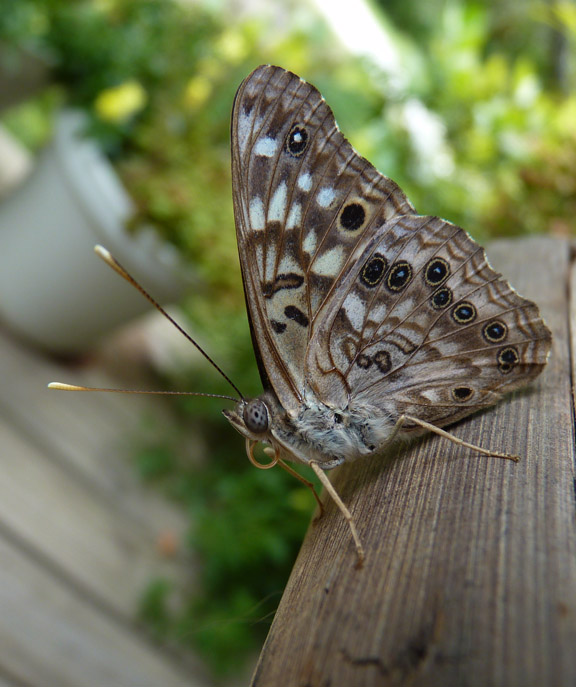
Hackberry EmperorMale Hackberry Emperor


A BUTTERFLY BONANZA!

Recently I returned from a trip to southwestern Ohio to visit my sister-in-law Amy, who is recovering from hip replacement surgery. She is mending beautifully and determined to get back on her feet —only a few days after returning home from the hospital the visiting nurse said she was doing as well as their typical patient at three weeks out!

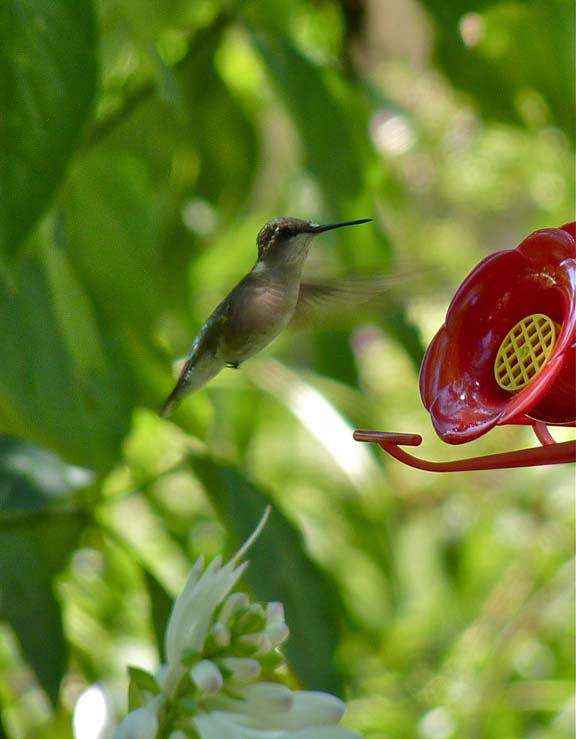
While Amy was resting I would grab my camera and head into her garden and the surrounding fields because here was a Butterfly and Hummingbird Bonanza! I encountered dozens of Ruby-throated Hummingbirds, typically feeding and frolicking in groups of threes and fours, and many differing species of butterflies. For the most part, the butterflies that I photographed are the same species of butterflies that are found on Cape Ann and throughout New England. Having no expectation of encountering myriad butterflies, in both range of species and in legions of each, I had not planned accordingly and only packed my Panasonic Lumix. I love this camera, but like all cameras it does have certain limitations. Lesson learned—that is to say—always travel prepared for anything to happen!

Spicebush Swallowtail at Rose of SharonMale Spicebush Swallowtail Dusted with Pollen

Amy is a working architect and, as time and her work schedule have permitted, she has (along with her recently deceased dear husband Tim) redesigned and restored her lovely old farmhouse and gardens. There are several cozy porches and a deck under construction in which to sit and observe the wildlife dramas that play out almost daily.

Ohio Farmhouse

What makes Amy’s garden so inviting to the pollinators? The old farmhouse is approached by traveling down a crushed limestone driveway. On either side of the drive are fields, either overgrown with wildflowers, or maintained as mowed grass. The fields meet the forest edge. There are several neighboring houses along the drive but privacy is afforded because the houses are sited a fair distance apart and because there are naturalized arrangements of native trees and shrubs. Flower borders are planted in close proximity to her home and also further afield. Beyond the flower borders is a large vegetable garden, approximately twenty feet deep by sixty feet long, with a row of sunflowers bordering the back length and a cheerful patch of zinnias running along the fore edge. Beyond the vegetable garden is a vigorous crop of blackberries and beyond that is a clump of wildflowers, including common milkweed (Asclepias syriaca), which were covered in Monarch caterpillars, and the tall growing New York Ironweed (Veronia noveboracensis), which was in full bloom. All of these elements provide clues as to why Amy’s garden is a haven for the butterflies and hummingbirds. Additionally, adjacent to the house is an old peach tree, which bears great quantities of fruit. Because Amy has been under the weather from her hip injury she was not able to maintain the peach tree this past season. The peaches were falling to the ground and rotting—not really a bad thing as you will soon see—imagine the not intolerable odor of vinegary peach juice.

Yellow Sulphur Butterfly Zinnia elegansYellow Sulphur

The combination of the atypically lengthy stretch of hot, sultry weather, punctuated by soaking rain storms, along with the salt and mineral-rich limestone driveway, flowering plants, wildflowers, surrounding woodlands that provide shelter and larval food for caterpillars, hummingbird feeders, and rotting peaches—all work in tandem to create a paradise for the pollinators—bees, butterflies, and hummingbirds.

Female Ruby-throated HummingbirdFemale Ruby-throated Hummingbird

In the morning I would find Buckeyes, Question Marks, and Red-spotted Purples drinking salts and minerals from moist patches in the driveway. Hungry families of Ruby-throated Hummingbirds were noisily nectaring from the flowers and feeders; one feeder is sited beneath the peach tree and the other about twenty feet away, under the lilacs, a hummingbird superhighway of sorts, with inviting nectar flowers along the route. The male and female hummingbirds are both territorial and, when encountering anything out of the ordinary (my camera and I, for example) will threaten by whizzing  and whirling, albeit harmlessly, close to your head.

Common Buckeye ButterflyCommon Buckeye

By mid-day the hummingbird and butterfly scene was full underway. Spicebush Swallowtails at the Rose-of-Sharon, tiger swallowtails, yellow sulphurs, Eastern Tailed-Blues, Monarchs, checkerspots, and angelwings nectaring at the zinnia patch, phlox, and lobelia, and most remarkable of all, were the number of butterflies that were drawn to the pungent lure of rotting peaches. By late afternoon dozens of Hackberry Emperors, Red-spotted Purples, Question Marks, and Red Admirals were to be found intently imbibing from the fermenting peaches, and by day’s end, I believe they were drunken butterflies, making extraordinarily easy subjects to photograph. I would be down on my hands and knees with the lens held so closely it was nearly touching them, and several times that did happen as they fluttered or hopped onto the camera’s lens. In the lingering remnants of late day’s light, the hummingbirds were there again at the feeders and flowers, and all manner of swallowtails in the wildflower meadow were nectaring from the New York Ironweed.

Spicebush Swallowtail at Rose of SharonSpicebush Swallowtail Nectaring at Rose of Sharon


Pipevine Swallowtail Butterfly Pipevine Swallowtail Nectaring at Phlox

Red-spotted Purple ButterflyRed-spotted Purple

The three different species of butterflies in the above group of photographs have a unique relationship. The Red-spotted Purple and Spicebush Swallowtail (both palatable to predatory birds) are thought to have evolved to mimic the Pipevine Swallowtail (center photograph), which is highly toxic and foul tasting.

I was sad to say goodbye to my sister-in-law but glad to return home to my family. My unexpected yet welcome encounter with the butterflies of Southwest Ohio reminded me once again that butterflies are a symbol of transformation, joy, and beauty throughout cultures the world over. Perhaps Amy’s butterflies mirror the transformative journey to which she has embarked.

Eastern Tailed-Blue ButterfliesEastern Tailed-Blues

Red Admiral ButterflyRed Admiral Mimicking Peach Tree Bark

Milkweed and IronweedIronweed and Milkweed

 Tiger Swallowtail at IronweedTiger Swallowtail Nectaring at Ironweed

Cicada lying in waitMale Cicada Disguised Amongst Rose of Sharon Buds

Ohio Vegetable gardenVegetable Garden

Farmhouse road


Monarch Caterpillars on Common Milkweed Leaves

Dear Gardening Friends,

I’ve updated the article on common milkweed (see below). The second video of the caterpillar pupating goes a bit dark in the beginning because I was trying to capture the caterpillar’s exoskeleton splitting apart, just below the head.

My husband, Tom Hauck, was quoted on Sound Off in this week’s issue of Time Magazine. His quote can also be found here (scroll down).

Looking at our thriving patch of common milkweed, I am eagerly anticipating the arrival of the Monarch butterflies to our garden in Gloucester. It is difficult to reconcile the enjoyment we derive from life’s simple pleasures when looking into the faces of the victims struck by the unfolding tragedy in the Gulf Coast region—a tragedy for the nation. I hope and pray that the net result of this catastrophe will be a wake up call, and that we will all come together to fully realize the potential of non-polluting alternatives to our unsustainable use of fossil fuels.

Best wishes, Kim

The pair of Monarch caterpillars, hanging in the characteristic J-shape, are attached to the underside ribs of common milkweed (Asclepais syriaca). They were filmed at approximately 7:30 am on August 22, 2009, one hour prior to pupation. The “twins” pupated within six minutes of each other. “Twin #2” is pupating in the video.

Monarch Caterpillar Pupating

Inside a moment’s time, the exoskeleton behind the caterpillar’s head splits apart. With undulating wave-like contractions the developing green chrysalis is revealed as the exoskeleton shrivels. With rhythmical repetitious revolutions, twirling first left, then right, and back again, he throws off his last striped suit. More gyrating rotations and he fastens himself securely to the pad of silk with his newly formed cremaster.

Creating Summer Magic

Common Milkweed ~ Asclepias syriaca

Recently a friend inquired that if I had to choose one native New England plant to grow to attract butterflies to the garden, which would it be, and why. It was a challenging question because butterflies are typically drawn to the garden planted with a rich and varied, yet very specific, combination of species. A successful Lepidoptera habitat is comprised of many elements all working in tandem. Sunny and protected areas in which to warm their wings, trees and shrubs that provide shelter, and a host of nectar plants for the adults, as well as specific caterpillar food plants, create the successful Lepidoptera garden.

Perhaps if I had to choose a favorite butterfly and therefore a favorite plant to grow to drawthis butterfly to my garden it would have to be common milkweed (Asclepias syriaca), which is both a larval host plant and nectar plant for the elegant Monarch butterfly. People often speak unkindly about common milkweed, rather I think it deserves applause for it is plant without rue and thrives wherever found—in the cracks of city sidewalks and along country roadsides, highly-trafficked soccer fields, and in the most neglected of neighborhoods. Whether in the garden, along the shoreline, or local meadow, it is on the foliage of common milkweed that we find the vast majority of Monarch eggs and caterpillars. Noteworthy also is that we observe many different species of butterflies and skippers nectaring at common milkweed—sulphurs, swallowtails, and fritillaries, to name but a few. In our garden we grow common milkweed alongside marsh milkweed (Asclepias incarnata); marsh milkweed blooms slightly earlier than common milkweed as it is sited in a sunnier locale. Both species attract a wide variety of winged pollinators. Male and female Monarchs nectar from the blossoms, while the males simultaneously patrol for females. The females utilize the foliage of both species to oviposit their eggs. Typically we observe females freely flitting alternatively between our common and marsh milkweed, depositing their eggs on the choicest leaves and buds, while pausing frequently to nectar.

Monarch Butterfly Egg on Common Milkweed Leaf

The milky sap that flows through milkweed veins lends the genus its common name. Monarch butterflies and their caterpillars have evolved to withstand the toxic milk, but not the predatory bird that attempts to eat one. The adult Monarch’s unique wing pattern and caterpillar’s striped suit warn of its dreadful taste and lethal toxins. A bird that is tempted becomes sick and may even die, and if it survives, remembers never again to try to eat a Monarch. “The larvae sequester cardiac glycosides from the milkweed leaves that they consume. Concentrations of these heart toxins in their bodies may be several times higher than those occurring in milkweed leaves. The glycosides consumed by the caterpillars are carried forward both into the chrysalis and adult stages, affording them protection as well.” (Caterpillars of North America David L. Wagner).

Common milkweed is highly adaptable and grows in nearly any soil. The size of the developing colonies and individual plants reflect the conditions in which it is grown.  Planted in a rich, moist soil, protected from the wind and where it receives some light shade, it will grow six to seven feet.  I use it extensively in my butterfly garden designs, planting in rich, average, and dry conditions, and find it especially appealing and useful for shoreline gardens. In sandy soil, sand dunes, and meadows, where it is exposed to wind and/or salt spray, common milkweed is equally as vigorous, but of a much shorter stature, typically obtaining the height of two to three feet.

A. syriaca thrives in full sun to light shade. In a moist, protected area, plant in the back of the border. In a more exposed site, plant in the mid-ground. Because of its ability to spread readily and rapidly, use in an informal, natural setting as opposed to planting in formal  beds.

Common milkweed is highly fragrant and is the most richly scented of the species of milkweeds found in Massachusetts (A. incarnata, A. syriaca, A. quadrifolia,  A. tuberosa, A. amplexicaulis, A. exaltata, A. pupurascens, and A. verticillata), with a complex wild flower honey fragrance. I have heard it described as similar to the scent of lilacs, but find lilacs have a much sweeter fragrance than common milkweed. Fragrance is highly mutable and subjective.

One- to two-year-old plants are easier to transplant than established plants. Common milkweed takes approximately three years to flower from seed. The method in which I have had the greatest success in propagating Asclepias syriaca, best attempted in early summer, is to dig up a rhizome, found at the base of a plant with newly emerging shoots. The rhizome would ideally be obtained from a friend’s garden. If collected in the wild, be sure to dig from an area where there are many shoots present. You need a fairly large chunk, at least a half-foot, with both roots and new shoots present. Replant the rhizome at the same depth. Water throughout the summer. Towards the end of the growing season you will be rewarded with newly emerging shoots. Common milkweed self-seeds readily, but spreads primarily (and rambunctiously) by its rhizomatic root structure.

Milkweed in general, and in particular, common milkweed, attracts a host of pollinators—bees, wasps, butterflies, and purportedly hummingbirds. I have yet to see the Ruby-throated hummingbird nectar from common milkweed, but it may also be the case that they are attracted to the plant for the multitude of tiny insect populations frequenting the flowers (over ninety percent of a Ruby-throated hummingbird’s diet is comprised of insects). We typically findMonarch eggs and caterpillars on milkweed plants during the months of July and August.

Buddleia davidii ’Nanho Blue,’ with blue-violet racemes, melds beautifully with the muted lavender rose florets of the softly drooping flower heads of common milkweed. The brilliant white of native Phlox davidii and vivid purple-pink of Liatris ligulistylus attractively offsets both. All are famously attractive to Monarchs (and myriad other species of Lepidoptera) and will provide a long season of nectar-rich blossoms and Monarch caterpillar food.

Monarch Butterflies Mating on Common Milkweed Leaves

A note about the video: Monarch butterflies deposit eggs on common milkweed (Asclepias syriaca) and marsh milkweed (Asclepias incarnata) in eastern Massachusetts. The chrysalis in this video was attached to a marsh milkweed stem. For a wealth of information on butterfly gardening, read Oh Garden of Fresh Possibilities!