Category Archives: Ohio

Hilton Netherland Plaza

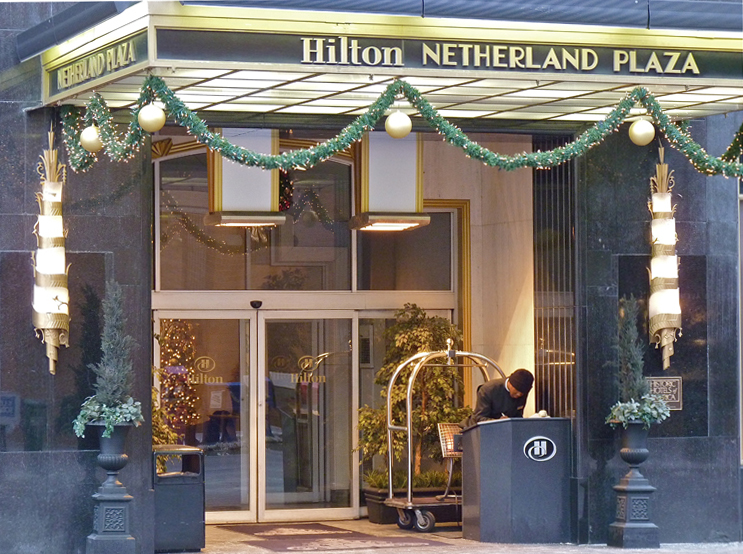
Hilton Netherland Plaza Cincinnati OhioRace Street Entrance with Brass Torcheres Flanking the Porte-cochère.

Notes About the Cincinnati Netherland Hotel Plaza and Carew Tower

I find it extraordinary that the plans for the Carew Tower and Netherland Plaza Hotel were announced in August of 1929, the foundation begun in January of 1930 and the project completed by January, 1931, not only because of the lightning speed in which this opulent monument to Art Deco design was constructed, but because the Wall Street Crash of October 1929 occurred several months after the project was first announced.

The financing came from the Emery family, which had made its fortune in Cincinnati’s stockyards. John Emery hired designer Walter W. Ahlschlager and Colonel William Starrett of Starrett Bros. & Eken of New York. William Starrett at that time was arguably the standard bearer of building first class buildings. Starrett Bros. & Eken are most famously known today as the builders of New York City’s Empire State Building. (For more information about William Starrett see The Empire State Building: The Making of a Landmark by John Tauranac, Scribner, 1995).

The Carew Tower and Netherland Plaza were designed to be what Col. William Starrett termed a “city-within-a-city.” By the time Emery brought him to Cincinnati, Starrett had written of his urban vision in his seminal book Skyscrapers and the Men Who Build Them (Scribner, 1928). Due to traffic density, Cincinnati was ranked the third most congested city in the U.S. Part theoretical and part practical, Starrett’s solution to the increasing density and street level congestion in American cities was an untried, mixed-use skyscraper complex—a city-within-a-city. Although the concept was new at the time, Emery was willing to risk his fortune, believing that the combination of department store, shops, offices, and hotel would invite downtown residents, workers, and visitors. The Carew complex was the first experiment in the design, construction, and development of such a concept and it inspired other mixed-use complexes such as Rockefeller Center, which was completed in 1934.

Emery’s vision for Cincinnati led to bold financial moves. He had approached the bank to underwrite his city-within-a-city project but because the concept was so novel the bank declined. Emery sold all his stocks and securities. The plans and the financing for the building complex were in place when the stock market crashed. Had he left his stocks and securities tied up in the market, he would have lost everything. The construction project became one of Cincinnati’s largest employers during the years after the Great Crash, creating over one thousand jobs.

The Restaurants at Palm Court

The Palm Court was once the main lobby for the hotel. Egyptian, French, and Greek influences abound and are transmuted into an eclectic vision of Art Deco design. At the far end of the Palm Court is a ram’s-head fountain with a breche marble ziggurat-shaped surround, guarded by two strikingly handsome seahorses, crowned with lotus-shaped lights.

Hilton Netherland Plaza Cincinnati Ohio Breche marble

Hilton Netherland Plaza Cincinnati Ohio

Hilton Netherland Plaza Seahorse Cincinnati Ohio

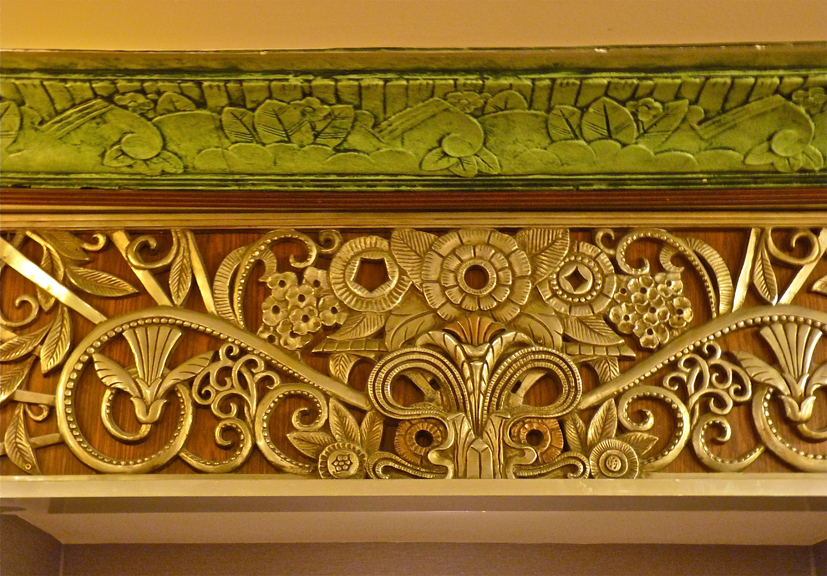
George Unger, a talented theatre designer during the 1920s and 1930s, is credited with the majority of the interior design work. Although myriad mythological figures are found throughout the hotel—the ram, dolphin, seahorse, and mermaid represent protection for travelers—the variety of Art Deco images and forms were adopted not so much for their for their symbolic attributes, but for their dramatic visual effect.
Carew Tower Rookwood Ceramic Arches Cincinnati OhioCarew Tower Ceramic Arches

Detail Carew Tower Ceramic Arches Cincinnati Ohio

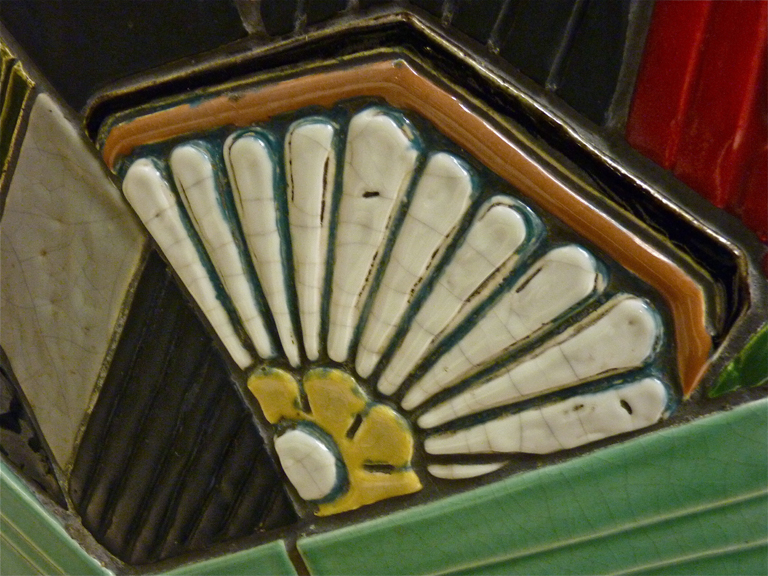
Detail of Ceramic Rookwood Art Tiles from the Carew Arcade Arches

Carew Tower Rookwood Ceramic Arches Cincinnati Ohio

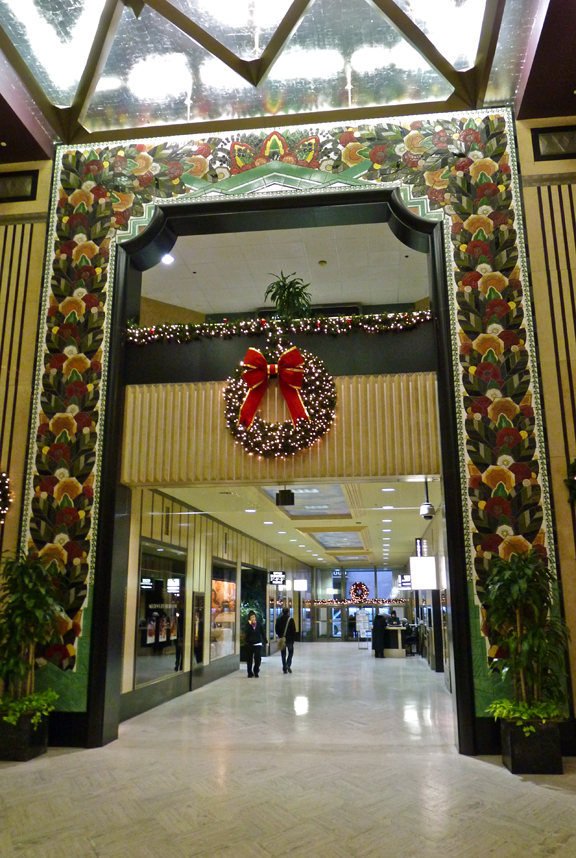
The seahorse, fountain, and Carew Arcade ceramic tile arches were made at the world-renowned Rookwood Pottery studio located atop Mt. Adams, one of the seven hills surrounding Cincinnati. The magnificent floral arches are located on the east and west ends of the Carew Tower Arcade and are one of the largest installations of art pottery in the world. Because of their highly visible location they are one of the most publicly accessible. The tiles are the work of William E. Hentschel and are based on a repeating motif designed by the French metalsmith and armaments designer Edgar Brandt, establishing a link between Hentschel’s Arts and Crafts movement heritage and Brandt’s influence in the French Arts Décoratifs et Industrials Modernes of the mid-1920s. Although not ever directly acknowledged by the developer, builder, or architect, Brandt is considered the “decorative artist in absentia,” particularly of the Netherland Hotel. The appropriation of knock-offs of Brandt’s signature themes such as the frozen fountains, sunflower patterns, rams’ horns, and antelopes into the complex filled an immediate need for a decorative vocabulary in the massive building on the developer’s fast-track schedule.
Hilton Netherland Plaza Cincinnati Ohio


The wall lighting in the Netherland Plaza was considered ground breaking design because the light bulbs were not visible through the silver and nickel sconces.

Hilton Netherland Plaza Cincinnati Ohio

Hilton Netherland Plaza Cincinnati Ohio

Hilton Netherland Plaza Cincinnati OhioLotus-shaped Light Crowning the Seahorse’s Coronet


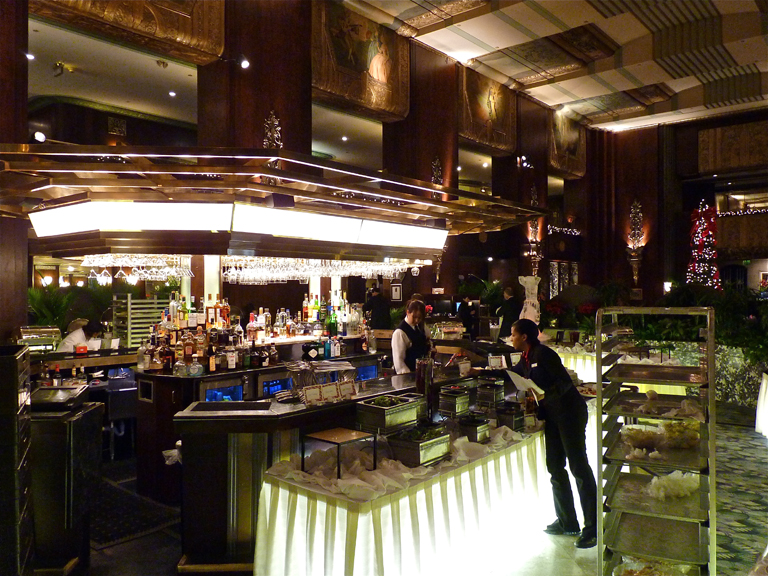
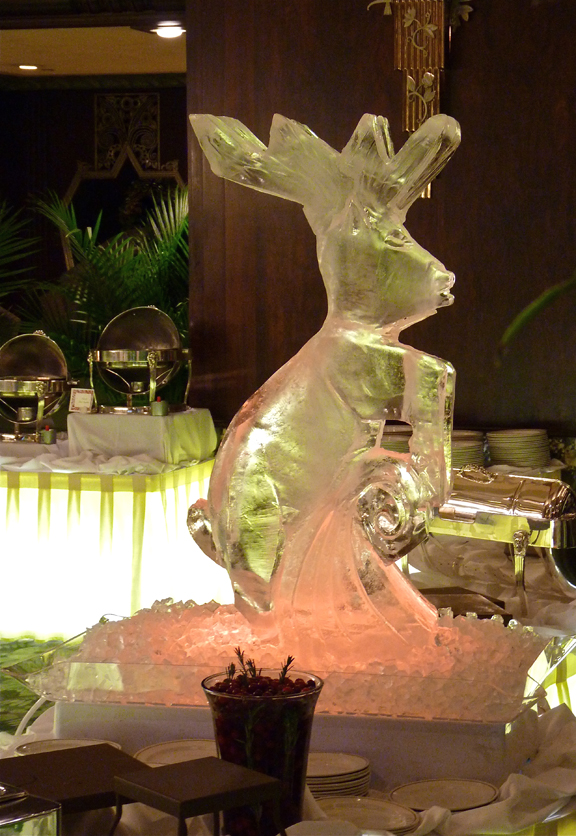
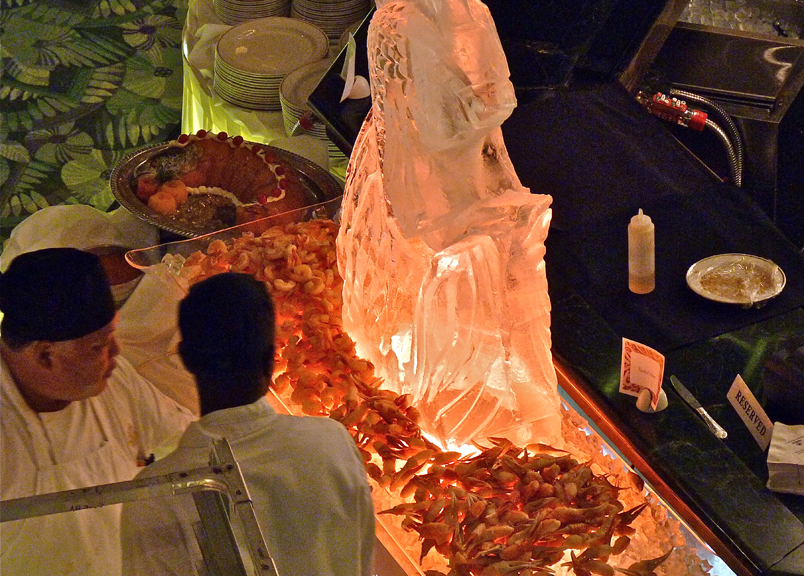
Preparations Underway for the Grand Christmas Dinner Feast at the Palm Court!

Hilton Netherland Plaza Cincinnati Ohio Christmas

Hilton Netherland Plaza Cincinnati Ohio Christmas

Hilton Netherland Plaza Cincinnati Ohio Christmas

Hilton Netherland Plaza Cincinnati Ohio Christmas

Hilton Netherland Plaza Cincinnati Ohio Christmas

Hilton Netherland Plaza Cincinnati Ohio Christmas

A quiet morning after…

Hilton Netherland Plaza Cincinnati Ohio Christmas

Hilton Netherland Plaza Cincinnati Ohio Christmas


Hilton Netherland Plaza Cincinnati Ohio ChristmasConfections created by hotel staff

The Hilton Cincinnati Netherland Plaza is an Historic Hotel of America and in 1985 earned National Historic Register and National Landmark Status.

End Note: Breche marbles are a category of marbles that are of similar composition: the pressure and distortions at the time of the geological formation of the stone created a marble with large elements. See photo below and photo of the ram’s head statue surround.

Hilton Netherland Plaza Cincinnati Ohio Christmas

Christmas in Cincinnati

Hilton Netherland Plaza Cincinnati Ohio

Christmas in Beautiful Cincinnati

We spent the holidays with my husband Tom’s parents in downtown Cincinnati. Several years ago my in-laws sold their home on Indian Hill and moved to the city, which is located directly on the Ohio River in southwestern Ohio.  They love the close proximity of the new home to their church, offices, cultural institutions, and shops. Surrounded by seven hills, the beauty of the region was not lost on the early German immigrants; one of the oldest neighborhoods is still referred to as Over-the-Rhine. Cincinnati boasts a wealth of museums and performing centers and is a veritable treasure trove of superlative examples of American architecture.

For close to one hundred years the family has celebrated the holidays with an annual Christmas Eve party. The party was originated by Tom’s great grandmother Freida (Mrs. Louis) Hauck in their family home atop one of Cincinnati’s hilltops. Today, members of the “older” generation take turns hosting; this year was my mother and father-in-law’s turn. Comparing family photographs of the gala event from decades past, they have continued with the custom of hosting in the most elegant and lovely of German traditions. Particularly as the family becomes more dispersed with each passing year, the party affords a welcome opportunity to stay in touch.

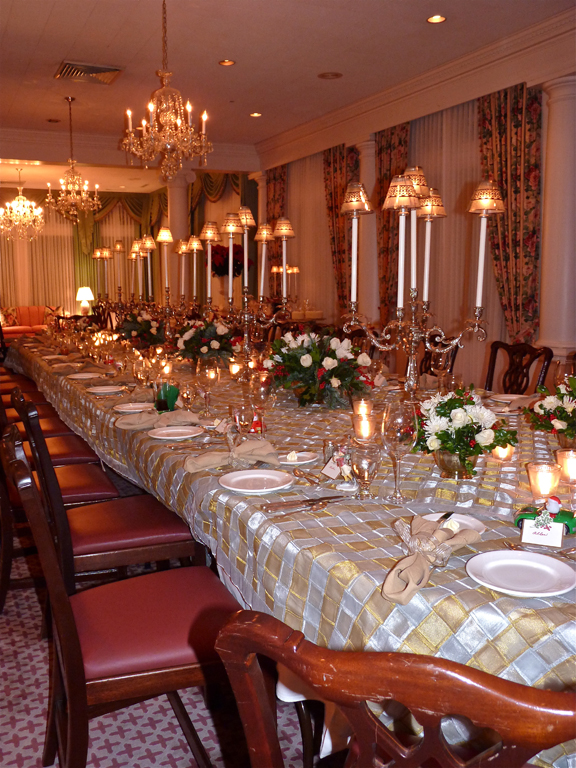
Cincinnati Country ClubGorgeous Table Setting by Janet, my mother-in-law

Cake from The BonBonerieSuper Delicious Cake from The BonBonerie

As guests of my mother- and father-in-law, we were invited to stay at the Westin Hotel, which is located within walking distance of their apartment. The enchanting view from our hotel window:

Fountain Square Cincinnati OhioFountain Square, Cincinnati, Ohio

In search of breakfast on the first morning after arriving we left the lobby of the Westin, crossed Vine Street and entered the fascinating and fantastical French Art Deco world of the Hilton Netherland Plaza Hotel and Carew Tower. We quickly found the luncheonette Hathaways, tucked in amongst the shops, a favorite spot of my father-in-law’s, then wandered the public areas of the Carew Tower, eventually wending our way through the lobby and restaurants of the Palm Court of the Netherland Plaza.

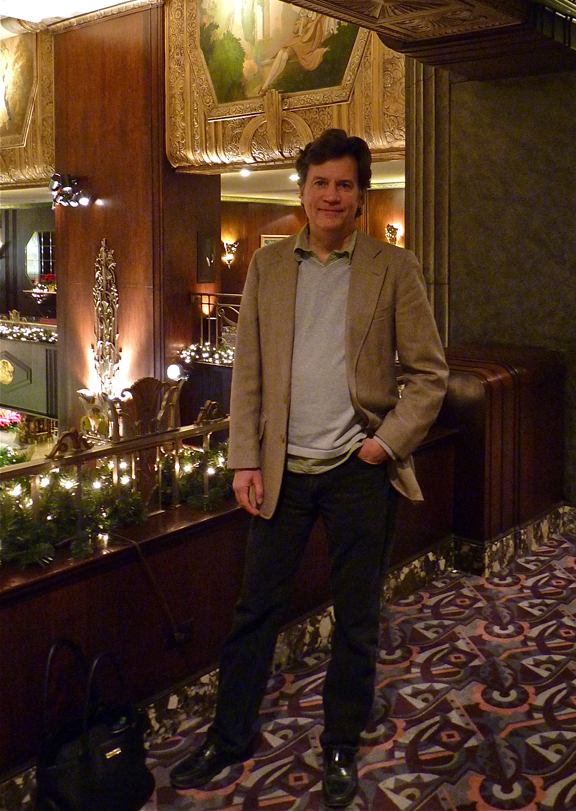
Husband Tom

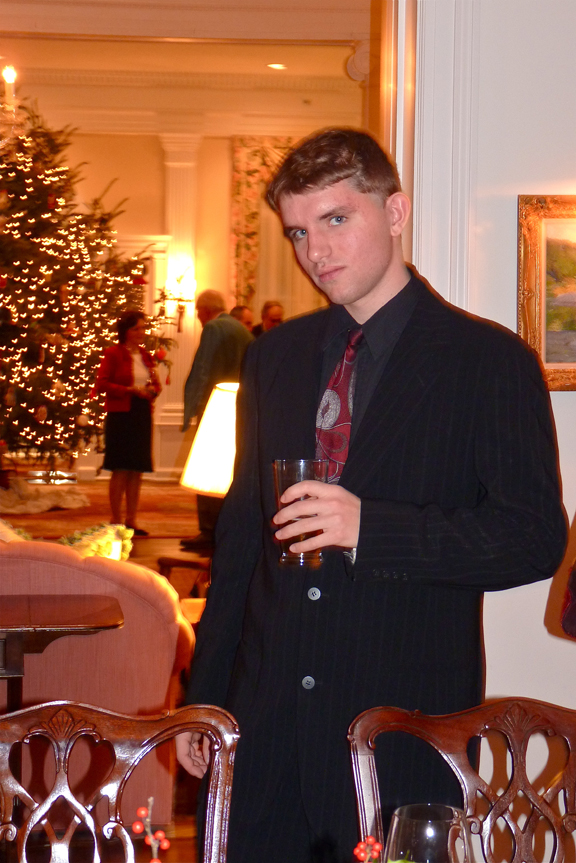
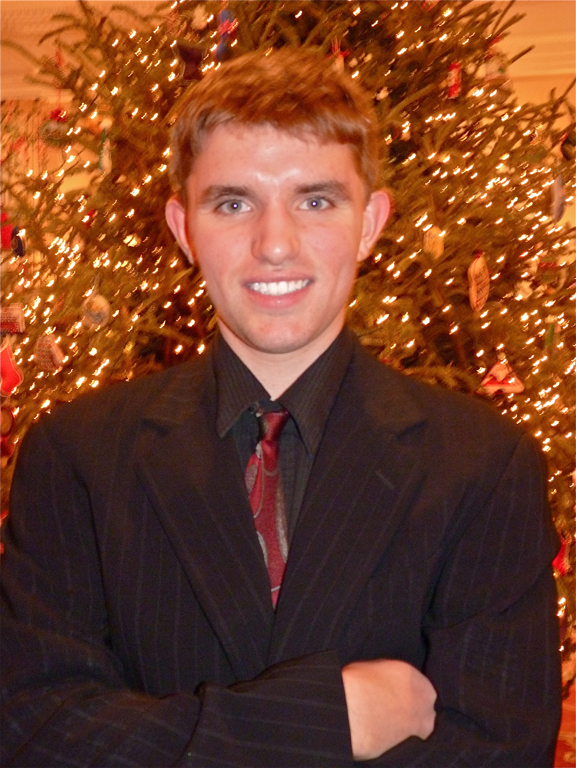
Son Alex

Blanketed by a cold front, the sun shone once during our entire stay; however, that did not deter us from having a grand holiday. Perhaps the next time we visit my mother- and father-in-law in downtown Cincinnati, the weather will be warmer. I plan to bring you additional photos from the gorgeous Hilton Netherland Plaza—the snapshots in this posting and the following are but a modicum of the stunning design elements found there—as well as more photos representative of the beauty that is Cincinnati.

Batsakes Haberdashery Cincinnati OhioBatsakes~ Genuine haberdashery, located around the corner from the Westin, well-stocked with fedoras, pork-pies, et al.–custom gold-leaf monogramming, stamped inside the hat brim, is provided with purchase!

Alex

Sister-in-law Amy and beau Arnold

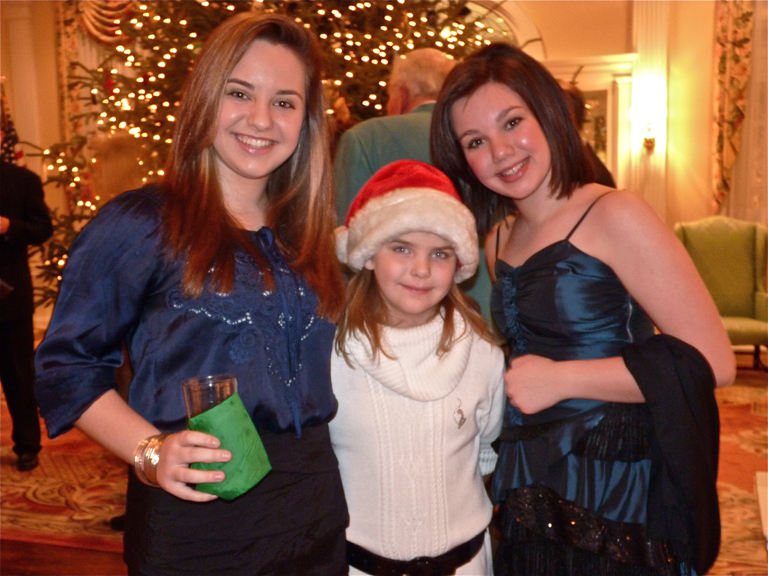
Nieces and cousins Carolyn, Hannah, and Katharine

Rookwood Pottery Overlook


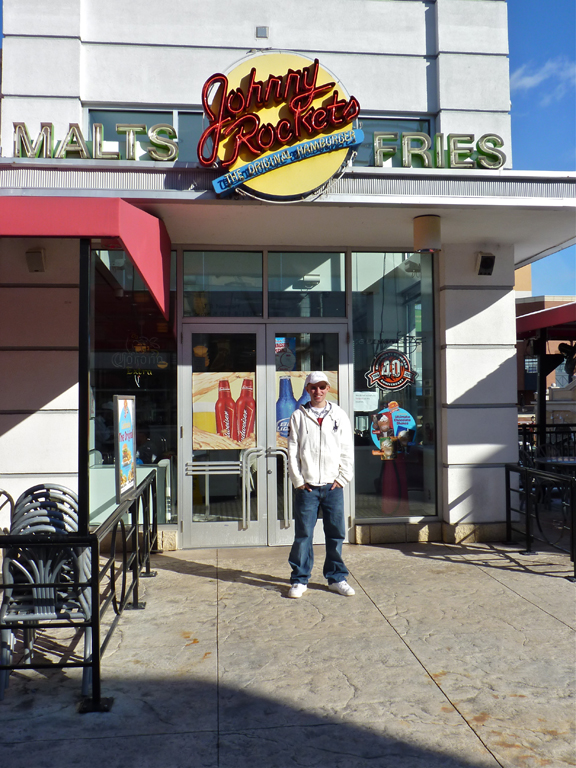
Over the bridge to Newport Kentucky to keep son happy with with burger and shake…we miss you Johnny Rockets!

Johnny Rockets Newport Kentucky

Johnny Rockets Newport Kentucky

Seahorses at the Newport Aquarium

Lined Seahorse (Hippocampus erectus) at the Newport Aquarium of Greater Cincinnati.

Notice the rapidly fluttering dorsal fin and the tiny pectoral fins, which are located above the eyes; seahorses have no caudal fin. Seahorses suck up food through their long snouts, and similarly to chameleons, their eyes can move independently of each other.

Habitat: Atlantic coastal waters from Nova Scotia to Uruguay. Diet: Small shrimp, other small crustacean, plankton, and tiny fish. The female seahorse deposits eggs in the male “brood pouch.” The male carries the eggs until the fry emerge. He expels fully developed miniature seahorses into the water.

“Hippocampus” comes from the Ancient Greek hippos meaning “horse” and kampos meaning “sea monster”.

Butterflies of Ohio

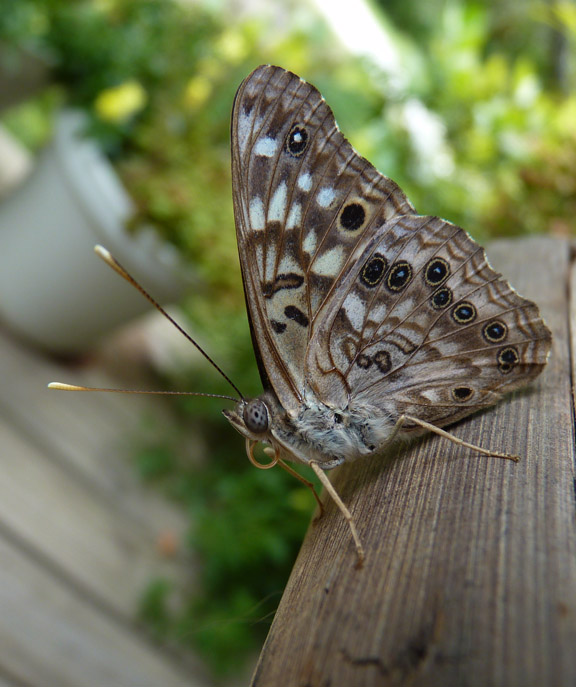
Hackberry EmperorMale Hackberry Emperor


A BUTTERFLY BONANZA!

Recently I returned from a trip to southwestern Ohio to visit my sister-in-law Amy, who is recovering from hip replacement surgery. She is mending beautifully and determined to get back on her feet —only a few days after returning home from the hospital the visiting nurse said she was doing as well as their typical patient at three weeks out!

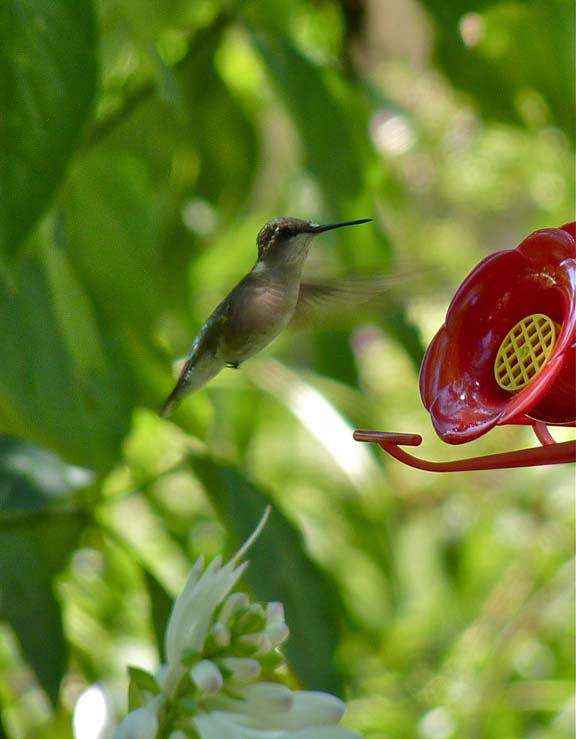
While Amy was resting I would grab my camera and head into her garden and the surrounding fields because here was a Butterfly and Hummingbird Bonanza! I encountered dozens of Ruby-throated Hummingbirds, typically feeding and frolicking in groups of threes and fours, and many differing species of butterflies. For the most part, the butterflies that I photographed are the same species of butterflies that are found on Cape Ann and throughout New England. Having no expectation of encountering myriad butterflies, in both range of species and in legions of each, I had not planned accordingly and only packed my Panasonic Lumix. I love this camera, but like all cameras it does have certain limitations. Lesson learned—that is to say—always travel prepared for anything to happen!

Spicebush Swallowtail at Rose of SharonMale Spicebush Swallowtail Dusted with Pollen

Amy is a working architect and, as time and her work schedule have permitted, she has (along with her recently deceased dear husband Tim) redesigned and restored her lovely old farmhouse and gardens. There are several cozy porches and a deck under construction in which to sit and observe the wildlife dramas that play out almost daily.

Ohio Farmhouse

What makes Amy’s garden so inviting to the pollinators? The old farmhouse is approached by traveling down a crushed limestone driveway. On either side of the drive are fields, either overgrown with wildflowers, or maintained as mowed grass. The fields meet the forest edge. There are several neighboring houses along the drive but privacy is afforded because the houses are sited a fair distance apart and because there are naturalized arrangements of native trees and shrubs. Flower borders are planted in close proximity to her home and also further afield. Beyond the flower borders is a large vegetable garden, approximately twenty feet deep by sixty feet long, with a row of sunflowers bordering the back length and a cheerful patch of zinnias running along the fore edge. Beyond the vegetable garden is a vigorous crop of blackberries and beyond that is a clump of wildflowers, including common milkweed (Asclepias syriaca), which were covered in Monarch caterpillars, and the tall growing New York Ironweed (Veronia noveboracensis), which was in full bloom. All of these elements provide clues as to why Amy’s garden is a haven for the butterflies and hummingbirds. Additionally, adjacent to the house is an old peach tree, which bears great quantities of fruit. Because Amy has been under the weather from her hip injury she was not able to maintain the peach tree this past season. The peaches were falling to the ground and rotting—not really a bad thing as you will soon see—imagine the not intolerable odor of vinegary peach juice.

Yellow Sulphur Butterfly Zinnia elegansYellow Sulphur

The combination of the atypically lengthy stretch of hot, sultry weather, punctuated by soaking rain storms, along with the salt and mineral-rich limestone driveway, flowering plants, wildflowers, surrounding woodlands that provide shelter and larval food for caterpillars, hummingbird feeders, and rotting peaches—all work in tandem to create a paradise for the pollinators—bees, butterflies, and hummingbirds.

Female Ruby-throated HummingbirdFemale Ruby-throated Hummingbird

In the morning I would find Buckeyes, Question Marks, and Red-spotted Purples drinking salts and minerals from moist patches in the driveway. Hungry families of Ruby-throated Hummingbirds were noisily nectaring from the flowers and feeders; one feeder is sited beneath the peach tree and the other about twenty feet away, under the lilacs, a hummingbird superhighway of sorts, with inviting nectar flowers along the route. The male and female hummingbirds are both territorial and, when encountering anything out of the ordinary (my camera and I, for example) will threaten by whizzing  and whirling, albeit harmlessly, close to your head.

Common Buckeye ButterflyCommon Buckeye

By mid-day the hummingbird and butterfly scene was full underway. Spicebush Swallowtails at the Rose-of-Sharon, tiger swallowtails, yellow sulphurs, Eastern Tailed-Blues, Monarchs, checkerspots, and angelwings nectaring at the zinnia patch, phlox, and lobelia, and most remarkable of all, were the number of butterflies that were drawn to the pungent lure of rotting peaches. By late afternoon dozens of Hackberry Emperors, Red-spotted Purples, Question Marks, and Red Admirals were to be found intently imbibing from the fermenting peaches, and by day’s end, I believe they were drunken butterflies, making extraordinarily easy subjects to photograph. I would be down on my hands and knees with the lens held so closely it was nearly touching them, and several times that did happen as they fluttered or hopped onto the camera’s lens. In the lingering remnants of late day’s light, the hummingbirds were there again at the feeders and flowers, and all manner of swallowtails in the wildflower meadow were nectaring from the New York Ironweed.

Spicebush Swallowtail at Rose of SharonSpicebush Swallowtail Nectaring at Rose of Sharon


Pipevine Swallowtail Butterfly Pipevine Swallowtail Nectaring at Phlox

Red-spotted Purple ButterflyRed-spotted Purple

The three different species of butterflies in the above group of photographs have a unique relationship. The Red-spotted Purple and Spicebush Swallowtail (both palatable to predatory birds) are thought to have evolved to mimic the Pipevine Swallowtail (center photograph), which is highly toxic and foul tasting.

I was sad to say goodbye to my sister-in-law but glad to return home to my family. My unexpected yet welcome encounter with the butterflies of Southwest Ohio reminded me once again that butterflies are a symbol of transformation, joy, and beauty throughout cultures the world over. Perhaps Amy’s butterflies mirror the transformative journey to which she has embarked.

Eastern Tailed-Blue ButterfliesEastern Tailed-Blues

Red Admiral ButterflyRed Admiral Mimicking Peach Tree Bark

Milkweed and IronweedIronweed and Milkweed

 Tiger Swallowtail at IronweedTiger Swallowtail Nectaring at Ironweed

Cicada lying in waitMale Cicada Disguised Amongst Rose of Sharon Buds

Ohio Vegetable gardenVegetable Garden

Farmhouse road