Such great news to share – the young family at the Salt Island end, the area we call #1, has a nest with (currently) three eggs!! We’re keeping our hopes up for a fourth egg. We now have two pairs of Plovers nesting at Good Harbor.
This morning Essex Greenbelt’s Dave Rimmer and his assistant Adam Phippen installed the wire exclosure around the nest. Exclosures protect shorebird eggs from 95 percent of avian and terrestrial predators, as well as from stray balls, pets, and people walking through the symbolically roped off areas. We can all breathe a collective sigh of relief once the exclosures are installed. We’re so fortunate that Dave and his Greenbelt crew make themselves available to help protect the Piping Plover nests. Thanks, too, to Gloucester’s DPW crew who are always looking our for the PiPls.
Dave and Adam installing the exclosure at Salt Island
Would you like to be a Piping Plover ambassador? You’ll join a great group of wildlife enthusiasts and kind citizens. We are having an informational meeting on Sunday, June 6th, at 5pm at Good Harbor Beach, near the nest next to the #3 boardwalk. If you would like to help keep an eye on adorable Plover chicks at Gloucester’s most popular beach, please contact me by leaving a comment or at kimsmithdesigns@hotmail.com. We would love to have you!
The beautiful pale Mom PiPl and her first egg
Dad fearlessly brandishing his wings at Dave and Adam during the installation
Dad back on the nest within two minutes after the exclosure was installed
With gratitude to my generous community, we have raised over $15,000.00! We are more than one quarter of the way toward our goal of $51,000.00, which will enable us to distribute Beauty to the national public television audience.
We had our first contribution from Mexico, too. Thank you Fernando!
Last week, I had the joy to present Beauty on the Wing to the O’Maley Innovation School students. See post here.
Thank you to all for your very generous donations and kind, thoughtful comments.
Lauren Mercadante, James Masciarelli, Sally Jackson, Marion Frost (Ipswich), Karrie Klaus (Boston), Joy Van Buskirk (Florida), Lillian and Craig Olmstead, Suki and Fil Agusti (Rockport), Janis Bell, Nina Groppo, Nubar Alexanian, Marguerite Matera, Claudia Bermudez, Thomas Hauck, Judith Foley (Woburn), Jane Paznik-Bondarin (New York), Paul Vassallo (Beverly), Stella Martin, Liv Hauck (California), Julia Williams Robinson (Minnesota), Cynthia Dunn, Diane Gustin, Heidi Shiver (Pennsylvania), John Ronan, Karen Maslow, Fernando Arriaga (Mexico City), Holly Nipperus (Arizona), Kristina Gale (California), Maggie Debbie, Kate and Peter Van Demark (Rockport), Mia Nehme (Beverly), Chicki Hollet, Alice Gardner (Beverly), Therese Desmarais (Rockport)
For more information about the film and how to donate, please see the following links:
I love the above photo because it shows how Common Milkweed supports so many many species of wildlife. There is a Monarch and a honey bee drinking nectar and also, adjacent to the single floret on the upper right, you can see a spider trapped a moth in its web. Smart spider to spin its web where so many insects may be found!
Last week I had the joy of presenting my Monarch documentary Beauty on the Wing to a wonderful bunch of sixth, seventh, and eighth grade O’Maley students. I was invited by the school’s Spanish teacher Heidi Wakeman. Ardis Francour’s library media classes participated as well. The kids were wonderfully engaged and asked the best questions!
Heidi shared their thank you notes. I am so impressed by the kids expressive notes and drawings. Here are just some of their thoughts : Olivia writes, “…The documentary was super interesting and informed me on a topic I didn’t know much about…, ” and Brady writes, ” My favorite part was when you showed the butterfly escaping the chrysalis.” I shared the notes with my husband this morning and we both enjoyed Cassidy’s comment, …”It is crazy that it took ten years to make, that must take a lot of dedication and patience.” Yes, Cassidy it does take a lot of dedication and patience, and YES, it is a bit crazy!
Thanks so much again O’Maley students, Heidi, Ardis, and the Gloucester Cultural Council! it was My Joy!
Oh Happy Day! Our amazing Mom and Dad Plover have done it once again. Despite raging wave and wind storms that brought super high tides all the way to the base of the dunes, along with cold wet weather, we have a nest with two beautiful eggs!!!
The pair nesting at area #3 are our original Mom and Dad; the two have nested in nearly exactly the same spot for six years. They are super experienced parents and because it is not too late in the season and if all goes well, the chicks will be approximately 2 to 3 weeks old by July 4th, which will increase their odds of surviving exponentially.
Over the course of the next several days, we hope the pair will lay two more eggs. They will continue to mate during the egg laying period. Please do not hover by the edges of the roped off area; this only serves to disrupt the Plovers reproductive behavior and attracts gulls and crows. Thank you!This morning Dave Rimmer, Essex County Greenbelt’s director of land stewardship, along with his assistant Adam Phippen, placed the wire exclosure around the nest. Encircling the nest with an exclosure is a simple, yet extremely effective way to help protect eggs from predators, including gulls, crows, and small mammals such as skunks and foxes. The spacing between the wires of the exclosure is just large enough for PiPl parents to run in and out, but too small for most other creatures.
Papa feigning a broken wig
I was so proud of our Papa Plover during the installation. After six years of nesting at GHB, he’s familiar with the routine, but installing the exclosure is still a dramatic event for a Plover parent. Papa piped vigorously and valiantly did his broken wing display, trying with all his tiny self to distract. At one point he fearlessly stood right next to Dave!
Within less than sixty seconds of Dave and Adam walking away from the completed installation, Papa was back on the nest!
We owe tremendous thanks to Dave and to Greenbelt. This is the sixth year in a row he and his Greenbelt crew have installed the exclosures and provided expert advice and assistance to the City of Gloucester and Piping Plover Ambassadors. Greenbelt gives this assistance absolutely free of charge!
Would you like to volunteer to be a Piping Plover Ambassador? The shifts are one hour long, seven days a week, for approximately five weeks, from the day the chicks hatch til they fledge completely. We have a great team of Ambassadors and would love to have you join. Please email me at kimsmithdesigns@hotmail.com if you would like to volunteer. We are looking for people to commit to cover the 1 to 2pm, 2 to 3pm, and 3 to 4pm shifts. Thank you 🙂
I have the most wonderful, exciting news to share. Our documentary Beauty on the Wing: Life Story of the Monarch Butterfly has been accepted for distribution by the American Public Television Exchange market, which means that within the year, you will be watching Beauty from your living room, on your local public television station!
American Public Television Exchange is the largest source of free programming to US public television stations, covering virtually every market in the country (nearly 350 stations). APT writes that they expect the documentary “to engage and delight public television viewers of all ages who are interested in nature, conservation, and our planet’s amazing ecosystems.”
What happens next? Beauty on the Wing needs underwriters and donors! The total distribution cost to bring the documentary to public television is just over $51,000.00. We only have several months to raise the funds. Please consider donating to the distribution of Beauty through my tax deductible online fundraiser at Network for Good. The link is here.
If you have donated previously to the fundraiser for the post-productions costs, I am so grateful for your generosity. Because of your kind contribution, Beauty on the Wing is doing exceptionally well at film festivals and has received a number of awards. If the distribution phase of the project is of interest, please consider a second donation.
Film screenings and awards to date include:
Winner Best Documentary Boston International Kid’s Film Festival
Winner Best Feature Film Providence International Children’s Film Festival
Environment Award Toronto International Women Film Festival
Outstanding Excellence Nature Without Borders Documentary Film Festival
Outstanding Excellence Women’s International Film Festival
New Haven Documentary Film Festival
Montreal Independent Film Festival
Flicker’s Rhode Island International Film Festival
Docs Without Borders International Film Festival
The names of supporters contributing $10,000.00 and over will be promoted in the film’s underwriting credit pod. What does it mean to be an underwriter? As an example, when you watch a show on public television and the announcer says, “This show was brought to you by Katherine and Charles Cassidy, by The Fairweather Foundation, by Lillian B. Anderson, and by The Arnhold Family, in Memory of Clarisse Arnhold,” that’s where your name, or the name of your foundation, will appear. APT allows for up to 30 seconds per film and your name or promo will appear at both the beginning and at the end of the film.
Please write and let me know if you would like more information about underwriting, including a complete budget, along with APT’s underwriting guidelines. Email at kimsmithdesigns@hotmail.com.
All donors, no matter how large or small the donation, will be listed on the film’s website and on APT’s website. Any amount contributed is tremendously appreciated!
Thank you for being part of launching Beauty on the Wing: Life Story of the Monarch Butterfly onto the national television stage!
With gratitude,
Kim
A brief overview of the film – Beauty on the Wing: Life Story of the Monarch Butterfly is a 56-minute narrated documentary film that takes place along the shores of Cape Ann and in the heart of Mexico’s forested volcanic mountains. Filmed in Gloucester, Massachusetts and the Monarch Butterfly Biosphere Reserves at Estado de México and Michoacán, the film illuminates how two regions, separated by thousands of miles, are ecologically interconnected. See more at monarchbutterflyfilm.com
Earlier in the week, our PiPl pair were zooming up and down the beach nest scraping hither and thither. They appear to be a bit calmer the past few days. Perhaps they are settling on a nesting location?? Wouldn’t that be wonderful!
Dad taking a much needed siesta
Our hope is Mom and Dad will have an early nest, which will give their babies the greatest chance of surviving. A second family of Plovers that I am documenting this year has laid their second egg. This pair arrived in Massachusetts the same day as did our GHB pair. It will be interesting to compare and contrast as the season progresses.
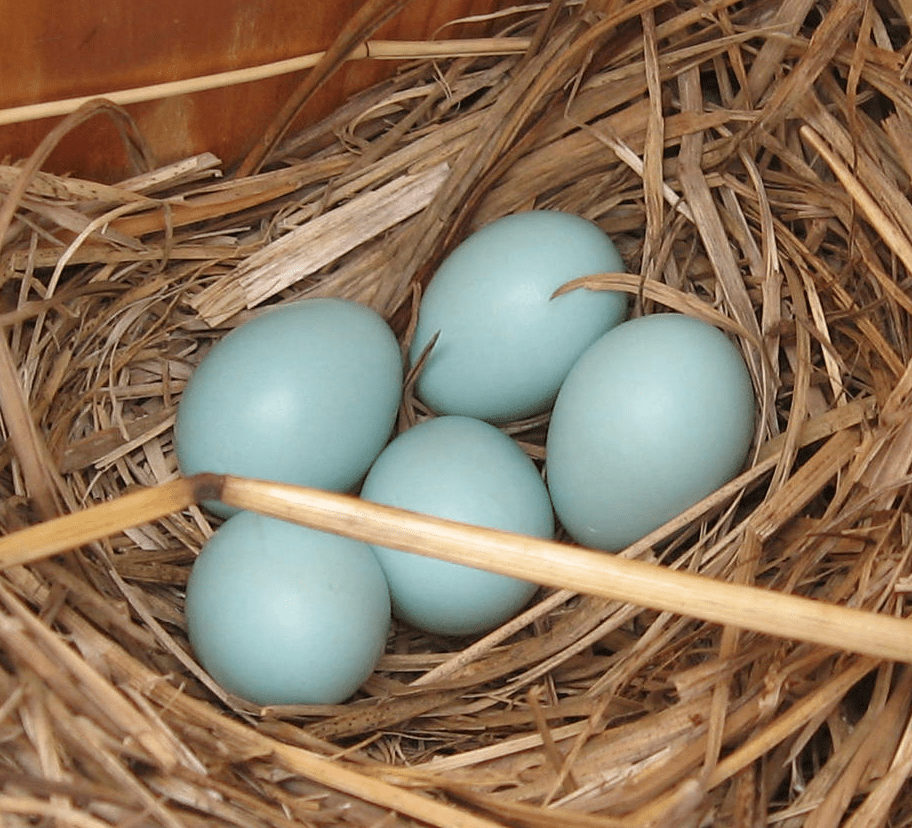
Please note – The eggs pictured are NOT at Good Harbor Beach, just making sure everyone understand this 🙂
Sanderlings are migrating northward and there are many currently foraging along our local beaches. Folks often confuse Sanderlings with Piping Plovers. The above sanderling is in non-breeding plumage, with somewhat similar coloring to Piping Plovers. You can faintly see some of the rusty breeding plumage coming in. Sanderlings have much longer bills and both bills and legs are black.Piping Plovers in breeding plumage have stout, orange bills that are tipped black, striking black collar and neck bands, a yellow orange ring around the eye, and orangish legs. As the PiPls plumage fades later in the season, from a distance especially it can be hard for people to to tell the two apart.
I hope you are doing well on this blustery morning, with temperatures hovering around 32 degrees and wind chill at 19. I imagined these temperatures were behind us and am worried about that one little PiPl egg. Will it be viable after this cold snap??
This morning in my inbox there was yet another awesome email from Greenbelt, this time featuring Greenbelt’s commitment to conserving farmland, with a short video of the Grant Family Farm at Brown Spring.
Chris Grant was able to purchase the farm at Brown Springs because of Greenbelt’s Land Trust program and great use of West Newbury’s Community Preservation Act funds (CPA). The land can never be developed and will stay a working farm forever through Chris and Greenbelt’s diligent work to put it under an Agricultural Preservation Restriction.
I am so looking forward to visiting the farm stand when open in June! For the latest updates from the Grant Family Farm, visit their Facebook page here and website here.
I can’t mention Greenbelt without giving thanks to Gloucester’s Piping Plover advisor-in-chief Dave Rimmer, director of land stewardship at Greenbelt. Greenbelt does not, nor has ever, requested a fee from the City for their Piping Plover assistance. As you may recall, Dave is also Greenbelt’s Osprey program director – so there you have it, a multitude of reasons for supporting Greenbelt!!
EBSCO and the Law Office of Donald M. Greenough have generously offered to match, dollar for dollar, the first $5,000 raised in celebration of Earth Day.
Beautiful Ospreys are returning to Massachusetts nesting sites. Annie and Squam, Cape Ann’s resident pair, are actively re-establishing their bond, arranging the nest and courting. Their nest is located in the marsh behind Lobstaland and when driving past, you can often catch sight of the pair’s nesting activity. Annie and Squam’s nest is managed by Essex Greenbelt’s director of land stewardship, Dave Rimmer.
Lobstaland Osprey nest
Osprey courtship is wonderfully fun to observe. Pairs typically mate for life and seem to simply enjoy hanging out together in the nest. They return each year to an established nest site, which is always near water and may be at the top of a dead tree, cliff, rocky outcropping, or manmade structure including Osprey nesting platforms, telephone poles, channel markings, and even church rooftops (see last photos)! By reusing the same nest from year to year a ready-made nest allows for earlier egg laying, which generally leads to greater success. And if the first nest fails, there may be time to try again.
This past week I had the unexpected joy to observe close up a pair of Osprey reuniting. The two flew to a phone pole adjacent to their established nest after which the male took off, quickly returning with a large stick. He placed the stick on the phone pole near to where the female was perched, repeating this behavior half a dozen times. The pair called to each other frequently during the stick placement bonding, when they both suddenly flew to their nest and mated. Osprey mating is very brief, lasting only seconds. The female positions her self higher on the rim of the nest while the male jumps on her back. During this extraordinarily brief cloacal kiss, sperm is transferred. I have read pairs will mate frequently during the few days before she begins laying eggs, her most fertile time.
After mating, the lovebirds stayed in their nest for several hours, continuing to “talk” to each other, housekeeping, and what appeared to be simply doing nothing more than hanging out together.
I didn’t see the male delivering fish to the female or the Osprey’s famous courtship flight; hopefully another day 🙂
Goin’ to the chapel
How to tell the difference between male and female Osprey. The female of a pair is oftentimes, but not always, larger than the male, by as much as twenty percent in some instances. But unless you see them side-by-side from exactly the same angle, that can be difficult to compare. Females may also have a more prominent ” necklace,” sometimes referred to as “freckling,” around the neck. Her feather necklace patterning is usually more pronounced. You can see the difference in the photo below.
Female Osprey right, male Osprey left
Fun facts about Osprey
Osprey are one of the largest birds of prey, with a wingspan of five feet.
Osprey are found worldwide, in every continent except Antarctica.
The oldest Osprey lived to be 30 years old.
Osprey are recovering from the use of the pesticide DDT, which caused breeding failure from eggshell thinning. DDT was banned in 1972.
Ospreys are piscivorous, with fish comprising 99 percent of their diet.
When an Osprey catches a fish, it arranges the fish head first, reducing aerodynamic drag.
Cape Ann lobstermen and fishermen held a protest boat parade Wednesday afternoon. The parade was organized to show support for local lobstermen in light of the recent temporary closure of lobstering grounds and new requirements to purchase special gear. The grounds are closed until May 1st, possibly until May 15th, to prevent gear entanglements during the endangered Right Whale migration through Massachusetts waters.
Under overcast skies, the lobster boats gathered at Ten Pound Island and headed in the direction of the State Fish Pier. The parade circled the inner harbor several times to the cheering and honking of supporters lining the shore. After a good showing of lobster boats, fishing boats, and supporters, the parade ended under clearing skies.
Did you ever wonder why some birds, such as Bluebirds and Robins, lay blue or bluish green eggs? And just as interesting why, in some cases, Bluebirds which generally lay blue eggs, a nest may comprise eggs that are almost white?
The earliest avian eggshells probably lacked color, or pigmentation. Over time, most likely to protect the eggs from predators, birds evolved a diverse range of colored shell markings from mottled brown, gray and beige to rainbow hues from pure white to pale pink, lavender, yellow, aqua, orange, blue, born and even black.
The molecules that cause pigmentation in bird eggs are biliverdin (the blue-green shades) and protoporphyrin (red and brown colors and speckles) but we can talk about blue eggs without getting too technical.
Basically, blue and blue-green strikes a balance between white and very dark colored eggs. Darker eggs are predicted in moderate light to shield the embryo from intense light, including harmful UV radiation. If when eggs are in an exposed nest and the shells are too dark, it can cause the interior to heat up, similar to a “dark car effect.” Simply stated, blue eggs regulate the effects of sunlight on the developing chick (embryo).
This doesn’t explain entirely why Eastern Bluebird eggs range from white to blue green. Many cavity nester’s eggs are white because the adults need to see the eggs in the dark. Wood Ducks are an example of cavity nesters with white eggs. American Robins generally nest in trees or a semi-exposed site and their eggs are blue, affording both protection from dangerous UV light and low risk from heating up. Eastern Bluebirds are cavity nesters but only about 4 to 5 percent of their eggs are white. Oftentimes when learning about a topic, myriad more questions come to mind!
In reading about blue eggs I thought readers would enjoy seeing the amazing speckled and pear-shaped brilliant blue egg of the Common Murre, from USFWS
Some birds with blue eggs that nest locally include Red-winged Blackbird, Gray Catbird, Snowy Egret, Great Blue Heron, Little Blue Heron, House Finch, Bluejay, Goldfinch, European Starling, Eastern Bluebird, and American Robin.
American Robin nest at a friend’s home
Both Bluebird nest egg photos courtesy Google image search
Just a brief note to let you know the first nest scrape of the season was spotted in Area #3 (Creekside) and even though the following two days were stormy and windy, the pair scraped in the exact location three days later. They are settling in and it is happy news!
Many have written and phoned about the dogs still on the beach. Please, if you are on the beach, and you see a dog, whether on leash, off leash, large, medium sized, or the tiniest most cutest dog you have ever seen, please call the AC officer. The number is 978-281-9746. If we don’t continue to call, there will be no record of the extent of the disturbances. We are very aware of the problem and trying to solve. Thank you. 🙂
On another note, the Massachusett Department of Conservation and Recreation (DCR) installed symbolic roping at the same time as did Gloucester. We are right on par with other north shore communities in providing Piping Plover protections! Again, many thanks to Joe Lucido and Gloucester’s awesome DPW crew!
I hope everyone had a joyful Easter. Happy Easter, Happy Spring, Happy Everything <3
Bluebird courtship is as beautiful as is the bird! Last week my daughter Liv joined me on a film scouting mini adventure. She loves learning about wildlife and living in Southern California as she does, Liv is surrounded by beautiful wild creatures and wild lands. We had a fantastic morning of it. Brant Geese, Piping Plovers, Great Egrets, Tree Swallows, and Eastern Bluebirds were just some of the creatures we observed.
The Eastern Bluebirds were especially stunning in the crisp early morning sunshine. One particular gent had not yet secured his partner’s affections. From tree branches adjacent to nesting boxes, he sang softly and flashed his glorious blue wings to a female that had flown in on the scene.
At first we thought he was preening, but no, the bachelor was clearly enticing his lady friend with lapis lazuli flags, gesturing with quick up and down lifting movements. Called wing-waving, these gestures are part of Eastern Bluebird courtship.
The male first sings loudly from treetops. If a female shows interest, he further shows off his skill sets with wing-waving and soft warbles. He then entices her to join him at a nesting box or cavity, he entering first. After he flies out of the box and if all goes well, she enters the cavity, a sure sign the pair are hitting it off!
Thank you so very much to Gloucester Times Editor Andrea Holbrook and staff writer Michael Cronin for sharing about the fence post installation and the great information provided for the public. We are so appreciative of the ongoing support given by the community and the Gloucester Times.
GLOUCESTER TIMES
By Michael Cronin
Photo by Paul Bilodeau
March 29, 2021
Part of Good Harbor Beach is fenced off to protect some tiny seasonal visitors.
A crew of Public Works personnel began fencing out an area of the beach on Monday to protect migrating piping plovers. The first pair of the threatened shorebirds reportedly landed this weekend.
“They put up the posts today,” said Kim Smith, a local documentarian and advocate for the piping plovers. “The roping will come next and then they’ll put up the signage telling people what’s going on. This is super that they’re doing it early this season. The earlier it goes up, the earlier the chicks hatch which gives them a better chance of survival as the beaches aren’t so busy yet.”
According to Smith, the piping plovers that visit Good Harbor typically nest in the same spot each year.
“One year they nested out in the parking lot because they were pushed out by the dogs on the beach,” she recalled. “But once the ordinance was put in place they were able to return to their usual spot.”
Dog are banned from Good Harbor Beach between April and September. Wingaersheek will remain open to canines on odd numbered days until April 30.
Smith said she’s waiting for the birds to lay their eggs. Once they do, members of the Essex County Greenbelt Association will encapsulate the nest with wire netting.
“Dave Rimmer of Essex County Greenbelt has been guiding us since 2016,” said Smith. “He’s the first one I call when the first egg is laid. The holes in the cage are big enough for the birds to enter and leave, but small enough to keep predators out.”
I hope everyone is doing well. Great news! Piping Plovers are arriving at our local north of Boston beaches. Attached is a photo from this morning, a lone male having a quiet moment above the wrackine. He was a joy to see!!! <3
Our GHB pair have not yet arrived but I imagine it will be soon. If we are so very blessed as to have a family nesting again this year, we will again need Ambassadors. We are requesting volunteers to commit to one hour a day, everyday, for the roughly six weeks of Piping Plover chick rearing At this point we don’t know exactly when that will be but after the nest is established, we can provide a time frame. The hour long time slots are filling, so please let me know if you are interested. We would love to have you! You can get in touch through commenting in the comment section of this post, email me kimsmithdesigns@hotmail.com, or through Facebook or Instagram
Please note that Ambassadors are welcome to share a time slot with a friend if that works best for you.
Just a kind note, we don’t need “floaters,” ie folks with some prior experience who show up now and then. We really need Ambassadors to commit to a time slot. I realize how great a commitment is an hour a day for six weeks during the summer and am so grateful to all of you who have volunteered in the past and are planning to be Ambassadors again this year.
Our message of super positivity, as well as focusing on education, was a great success last year and we are again continuing with these goals at the fore. You’ll meet a terrific bunch of people and if you have never volunteered for anything like this, you will learn so much about the life story of beautiful shorebirds nesting at a New England coastal beach.
I look forward to hearing from you.
Warmest wishes,
Kim
If you are looking to be inspired by creatures and colors of the upcoming season, and what to plant to make your garden a welcoming haven for wildlife, please join me tonight at 7pm. I am super excited to be presenting “The Pollinator Garden” for the Mass Pollinator Network. Because it is a Keynote presentation, I was able to add and collage many more photos. The presentation looks great and is chock full of ideas for your pollinator paradise. I hope to see you there!
Please join me Wednesday evening, March 17th, at 7pm for “The Pollinator Garden” presentation, via Zoom, for the Massachusetts Pollinator Network.
From early spring through winter, I will take you on a journey of understanding the beautiful creatures found in your gardens and how you can create a welcoming haven by planting trees, shrubs, vines, native wildflowers, and non-invasive ornamentals. Some of the wild creatures covered include Ruby-throated Hummingbirds, moths and butterflies, bees, Baltimore Orioles, and much, much more.
This lecture is the second in a three part fundraising series. For more information and to register please go here: MA Pollinator Network: The Pollinator Garden with Kim Smith and please consider making a donation to MA Pollinator Network. Donations of any amount are welcome.
This beautiful pair of Eastern Screech Owl lovebirds has made its nest in the cavity of an ancient maple tree. The tree is on the property of a kindly and very tolerant gent, Ron, who always has a nice word or humorous comment for the many observers and photographers that have visited.
According to neighborhood lore, this is not the first year the pair has nested here. What makes these lovebirds especially wonderful to see and fun for comparing life forms is that one is a gray morph (or phase) and the other a rufous (red) morph. The color has nothing to do with the sex of the owl. There are rufous males and rufous females, and vice versa. There is also a brown morph. The gray and brown morphs are thought to have evolved to better blend with deciduous trees such as maples and oask, whereas the rufous morph is better camouflaged in pine trees.
Rufous Screech Owl at daybreak
Eastern Screech Owls in maple tree
With this pair of lovebirds I am still unsure of who is who. Sometimes you see only the red Screechie sitting in the fore, more often the gray lately, and very rarely now, the pair together. As I suspected, and as was confirmed by Mass Audubon, the male will roost with the female during nesting, which also makes it challenging to determine one from the other. The females are larger but when they are sitting side by side snuggled up against each other as they were at the beginning of courtship, it doesn’t help much in determining size.
Gray Screech Owl
My best guess is the red is the female and the gray the male, because it is the gray one I have seen heading out at night to hunt.
Screech Owls don’t create their own nests; they use abandoned woodpecker homes and other natural cavities.The Screech Owl’s nest is merely the cavity. They don’t add sticks or twigs or any nesting material and simply lay eggs on the substrate. The female lays between three to eight eggs. The male does the better part of hunting for both during incubation. After approximately 26 days the eggs hatch. The owlets grow quickly and will begin to stretch their wings at about one month old.
Screech Owls are nocturnal and are seen hunting mostly in the first hours after nightfall. They eat just about anything they can catch, from small mammals such as mice, bats, squirrels, moles, shrews, and voles to small birds such as finches, as well as doves and quail. Other prey include large insects, earthworms, toads, lizards, snakes, spiders, centipedes, and crawdads.
I haven’t heard this pair make the “screeching” sound for which they are famous, instead they make the most beautiful gentle tremolo trilling at dusk. I tried to record it and if it came out well and when I have a few spare minutes, I will post.
The tree provides food and habitat for many species of songbirds. All these birds photographed are aware of the owl’s presence and some, like the Tufted Titmice, Bluejays, and Nuthatches make it their business to harass on a daily basis.
Please join me Wednesday evening, March 17th, at 7pm for “The Pollinator Garden” presentation, via Zoom, for the Massachusetts Pollinator Network.
From early spring through winter, I will take you on a journey of understanding the beautiful creatures found in your gardens and how you can create a welcoming haven by planting trees, shrubs, vines, native wildflowers, and non-invasive ornamentals. Some of the wild creatures covered include Ruby-throated Hummingbirds, moths and butterflies, bees, Baltimore Orioles, and much, much more.
This lecture is the second in a three part fundraising series. For more information and to register please go here: MA Pollinator Network: The Pollinator Garden with Kim Smith and please consider making a donation to MA Pollinator Network. Donations of any amount are welcome.
Consistently when out in fields, I see Bluebird pairs that appear strongly committed to each other. I wondered, do Bluebirds mate forever? In our region, we see Eastern Bluebirds. Ornithologists found from a long term study of Western Bluebirds that the great majority stay together for life. No such studies exist for Eastern Bluebirds however, field observations suggest that about 95 percent mate for life when both are still alive.
Eastern Bluebird female, left, male, right
Interestingly though, mating for life does not exclude extra pair copulations. Genetic studies of broods show that about twenty percent of nestlings are sired by more than one male.
Pairs softly warble to each other early in the morning, the male brings nesting material to a chosen site, and once she has entered his nesting cavity, she will begin to bring nesting material and he will bring food to her to “seal the deal.” In our north of Boston region, you can see the courtship behavior beginning as early as February and March.
Eastern Bluebirds re-mate with another partner if one dies.
In the photos below, it’s very easy to see the difference between a male and female Bluebird. The female’s blue is a more subdued grayish hue while the male’s blue feathers are brilliantly hued.
For a second year in a row, the Monarch numbers are plummeting.
“World Wildlife Fund Mexico in collaboration with CONANP and the Monarch Butterfly Biosphere Reserve (MBBR) announced the total forest area occupied by overwintering monarch colonies today. Nine (9) colonies were located this winter season with a total area of 2.10 hectares, a 26% decrease from the previous season (2.83 ha).” – Monarch Watch
Call to Action! Create wildlife sanctuaries by planting flowering native trees, shrubs, vines, and wildflowers that bloom throughout the growing season.
For nearly two decades I have been sharing information on how we can all help all pollinators, not just Monarch Butterflies. Learn more by joining me virtually on March 17th for my program “The Pollinator Garden” that I am presenting to the Massachusetts Pollinator Network.
For Monarchs specifically, we in the northeast need plant milkweed for Monarch caterpillars and asters and goldenrods for the southward migrating adult butterflies. Creating habitats for Monarchs has a cascading effect that helps myriad pollinators and songbirds.
All along the Monarch’s migratory corridors, climate change, loss of habitat, and the use of pesticides are the greatest threats to the butterflies. Because of climate change, the life cycle of wildflowers are often out of synch with the time the butterflies are traveling through a region. Examples include last September’s drought in the Texas Funnel (2020) and the cold Arctic blast in Texas this past February (2021). When the Monarchs migrated through Texas last fall, there were few if any wildflowers still in bloom to help fuel their journey. Followed by the unusually deep freeze in Texas that killed emerging milkweed shoots (food for the next generation’s caterpillars), this double whammy of sorts does not bode well for this year’s already reduced population traveling along the Monarch Highway.
On a damp overcast day, a cloud of of Robins descended on our garden. The Dragon Lady hollies provided an abundance of food for the traveling flock. Their beautiful birdsongs filled the neighborhood as they went from tree to tree, devouring any remaining winter fruits.
This young Red Fox was spotted early one recent morning, hungrily scraping the ground for food. Perhaps he was hunting a small rodent or digging for grubs. How have the Red Foxes that were born in our neighborhoods last spring adapted to survive winter’s harsh temperature and snowy scapes?
Red Fox have evolved with a number of strategies and physiological adaptations. Their fur coats grow thick and long, up to their footpads, which aid in heat insulation. Adult Fox begin to moult, or shed, their winter coat typically in April. Young Red Fox do not moult at all the first year but continue to grow fur until their second spring.
Red Fox tails are extra thick and when not cozily curled up in a snow bank, they will lay on the ground with their tail wrapped around for extra warmth.
Red Fox have relatively small body parts including their legs, ears, and neck, which means less body surface is exposed to frigid temperatures allowing them to conserve body heat. During the winter, Red Fox are less active than during the summer months. Decreased activity also helps to conserve body heat.
The Red Fox’s diet varies according to seasonal abundance. In the summer their diet is supplemented with berries, apples, pears, cherries, grapes, grasses, and acorns. All year round they feed on grubs and insects as well as small mammals such as rabbits, rodents, and squirrels. Red Fox have extraordinarily sharp hearing largely because their ears face outward. They can detect a mouse a football field away, under cover of snow!
I am overjoyed to share that Beauty on the Wing received the Best Feature Film award at the Providence Children’s Film Festival. Thank you friends for voting!I am so appreciative of your ongoing support.Thank you for taking the time to watch and to vote.
It is not easy to host a film festival during the pandemic. Without doubt, it takes enormous amounts of work and professionalism. Festival organizer Eric Bilodeau created a fantastic event, and managed to do all with grace and a wonderful sense of humor. I looked forward to Eric’s communications, for instance, when he requested stills from the film, I sent a batch of photos. He wrote back, did I have anything more colorful? I was taken aback at first before realizing he was kidding. And when he announced Beauty had won, writing -“the Monarch is King!” I think I will use that in the future 🙂
I was able to view many of the films and they were wonderfully interesting and inspiring. I am so proud Beauty on the Wing was a part of the Providence Children’s Film Festival! This was mentioned previously but two of my favorites were Microplastic Madness and The Last Lightkeepers. I hope you have a chance to see if you haven’t already done so.
Thank you so very much again for your kind support.
Beauty on the Wing is playing through tomorrow, Saturday, and I will be part of a Q and A at 3:00pm on February 20th, Saturday afternoon. If you would, please share the link with friends and please vote for Beauty on the Wing after watching the film. Thank you! Here is the link if you would like to sign up to participate in the Q and A. All the films in the festival are geoblocked to Massachusetts, Rhode Island, and Connecticut.
All this school vacation week, the virtual Providence Children’s Film Festival has been airing an outstanding collection of wonderfully educational and interesting films for families and kids of all ages. Tickets are only $12.50 per film for the entire family. Or you can do as I did and purchase a pass, which allows for viewing all films all week long.
Some of the outstanding documentaries I have had the chance to view this week are First We Eat, Microplastic Madness, and The Last Lightkeepers. I think everyone would enjoy all the films in the festival but especially, we on Cape Ann will love The Last Lightkeepers.
Do you know why Thacher Island has not one, but two lighthouses? At about ten minutes into the documentary, local lighthouse historian and president of the Thacher Island Association Paul St. Germain reveals why. Thacher Island’s Twin Lights are featured prominently in the film as are a number of familiar New England lights.
The Last Lightkeepers is filmed beautifully, telling different aspects of the history of lighthouses as well as current status. A quote from one of the interviewees, author Eric Jay Dolan (Brilliant Beacons), especially resonated, “Lighthouses are there to benefit everyone regardless of where they come from, their race, nationality, their creed, their beliefs. Lighthouses are a manifestation of a government’s desire to make navigation for Everyone safer. In today’s turbulent political times, I especially like to think about lighthouses being a beacon for the world, a welcoming embrace for those that are choosing to come to our country…”


 The beautiful pale Mom PiPl and her first egg
 Dad fearlessly brandishing his wings at Dave and Adam during the installation
 Dad back on the nest within two minutes after the exclosure was installed