Category Archives: Fujifilm x100

Native Flowering Dogwood

You could say I have an obsession with spring flowering trees, especially our native dogwoods. Is it a mystery why? 

cornus florida rubra

I adore flowers, and branches shrouded with tree-flowers are even more romantic, perhaps because we are seeing repeating flower shapes, en masse.

Native Flowering Dogwood ~ Cornus florida

Even with only the tiniest bit of space, I encourage everyone to plant a tree-garden. Contact me if you need help in finding the perfect tree for your garden.

Tulip Orama

This is a view into the courtyard garden I designed for Willowdale Estate. The tulips are at their peak. I call this mix of colors my ‘Bridal Mix,’ because it provides a symphony of watercolor hues for the April and May weddings. Don’t you think too that the satiny sheen of the tulip petals looks like the silk satin gowns of wedding parties?

spring flowering tulipsSpring Flowering Tulips Willowdale Estate 

Click photo to view larger image. More from Willowdale spring to come.

Best Magnolias

Number Three is Magnolia ‘Forrest’s Pink’

Forrest’s Pink Magnolia

Forrest’s Pink is new to our garden. I purchased it several years ago through the mail and it arrived as nothing more than a stick with several side branches. FP is coming along beautifully and I was thrilled when last fall its very first bud had formed. Forrest’s Pink purportedly flowers slightly later, which is ideal for our predictably unpredictable New England spring. I also found very appealing its descriptions of delicious shell pink blooms, without a hint of purple. Although, what is most appealing is knowing that it’s parentage is that of the Lily Tree, or Yulan Magnolia (Magnolia denudata, synonomous with M. heptapetala)–the most dreamily scented of all the magnolias.

I was excited to show you a photo of its first flower but some devilish creature chewed the bud to the base of the tree. The bud had formed very low to the ground—perhaps it made a great bunny feast. The list of critters who eat magnolia flowers is long and includes snakes, deer, squirrels, moles, mice, and opossums. In China, the sweet citrus-scented flowers of the Lily Tree are pickled and used as a flavoring for rice. The lovely ornamental seed heads of many species of magnolias provide food for a wide range of birds. Hopefully by next year at this time we will have more than one bud to gaze upon and to photograph.

Newly developing seed head of Magnolia ‘Alexandrina’

Nearly the moment the fruits of our magnolia trees ripen, they are devoured by the Catbirds and Mockingbirds.

Image of Forrest’s Pink Magnolia courtesy Google image search

Flowering Dogwood ~ Cornus florida ‘Rubra’

Is there a tree more lovely in flower than the North American native dogwood?

Whether flowering with the classic white bracts, the stunning rubra bracts, or the less often seen pale, creamy rose-tinted bracts, our native dogwood (Cornus florida) never ceases to give pause for beauty given.

NATIVE TREES SUPPORT NATIVE POLLINATORS!

At this time of year when traveling along southern New England roadways we are graced by the beauty of the dogwood dotting sunny roadside borders where meets the woodland edge. The bracts and flowers emerge before the leaves, serving only to heighten their loveliness. The fresh beauty of the bract-clad boughs is offset by the impressionistic symphony of tree foliage unfurling, shimmering in hues of apple green, chartruese, moss, and lime peel.

*Bract – A bract is a leaf-like structure surrounding a flower or inflorescence. The colorful bracts of poinsettias, the hot pink bracts of bougainvillea, and the bracts of dogwoods are often mistaken for flower petals.

The open florets (pea-green colored) and unopened buds are surrounded by the rose red-shaded bracts.

Read about how to help prevent an attack by the lethal dogwood anthracnose.

Continue reading

Some Favorite Jonquils and Narcissus

‘Minnow’ and Greigii Tulips 

The first photo is of the petite and scented jonquil ‘Minnow,’ offset by the coral red Greigii species tulip. Both are low-growing, which makes them ideal for rock gardens, and both varieties reliably return annually. The second photo is an ever-increasing little patch of narcissus and I know not the cultivar’s name. It was a spring gift that had been purchased as a potted plant from the grocery market, then planted in the garden in early summer.

The third photo is perhaps my all time favorite and consider it the very best for several reasons. ‘Geranium’ is divinely scented—sweet with a hint of fresh lemon blossom; its color and shape meld beautifully with a wide range of spring flowering bulbs; and ‘Geranium’ not only reliably returns each spring, it also increases in number.

Narcissus tazetta ‘Geranium’

For more information about narcissus and jonquils, including a list of the most sweetly scented varieties, see my book Oh Garden of Fresh Possibilities! ~ Notes from a Gloucester Garden, page 178.


Instagram App

Before Liv retuned to school last month, she installed Instagram on my iPhone so that we could easily share photos. Instagram is very simple to understand–spoken by a techno-challenged person (although my friend Joey from GMG blog recently pointed out that for someone my age, I am not too horribly technologically challenged). There has been much in the news about Instagram recently as the app was purchased by Mark Zuckerberg, for one billion dollarstwice its estimated worth.

Instagram with Kelvin Filter  ~ Good Harbor Beach Sunrise

Original Photo 

Cherry Blossom Time

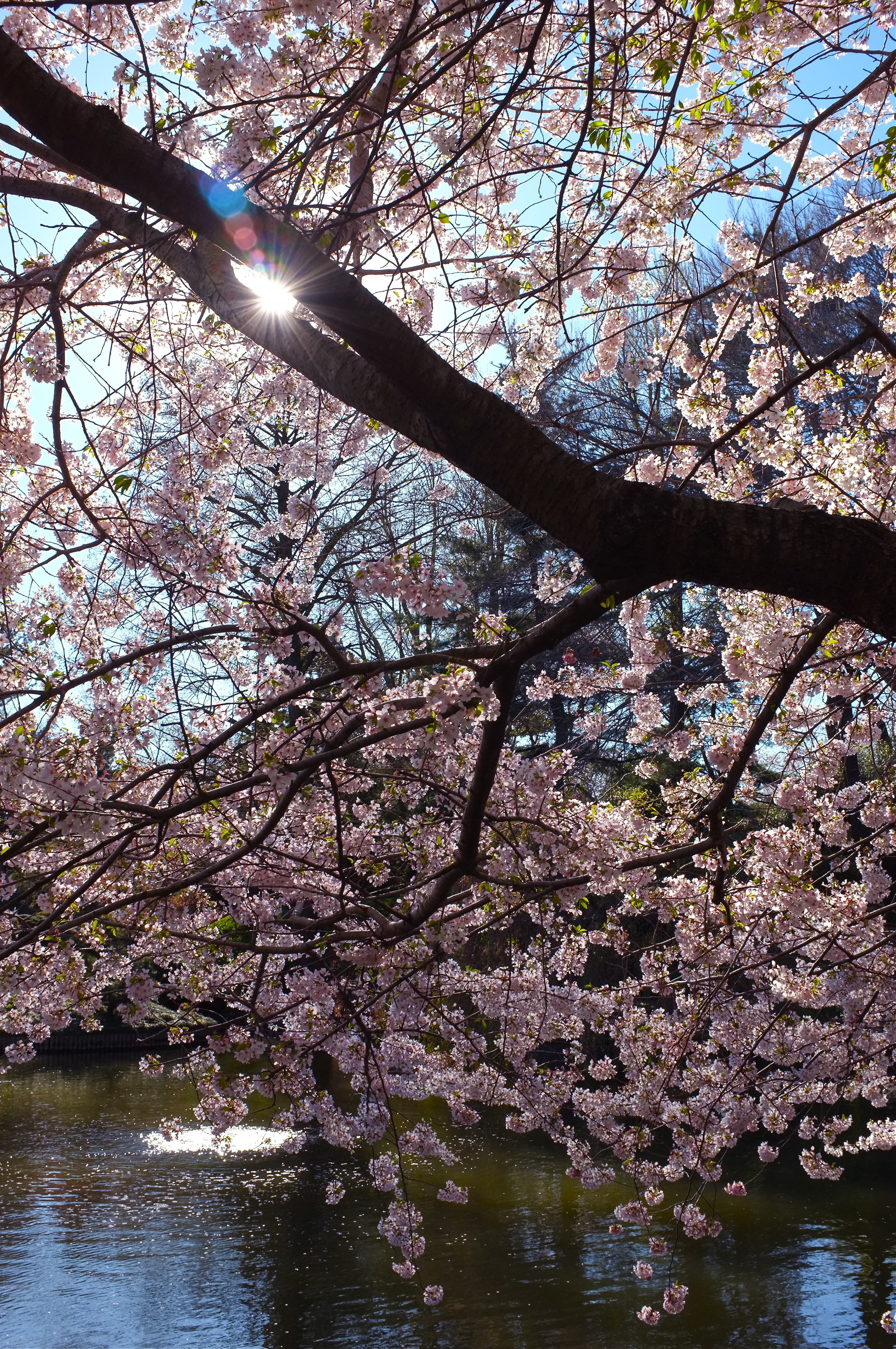
Native to Japan, the Yoshino cherry (Prunus x yedoensis) is cultivated extensively and is also found growing wild on plains and mountains countrywide. For more than ten centuries, and continuing with no less enthusiasm today, cherry blossom time has been cause for joyful celebration that is deeply integrated in the Japanese culture.

When cherry blossoms begin to fall heavily, the flurry of blossoms is called “cherry snowstorm.” The following is a traditional Japanese song that has been passed down for generations.

Sakura

Cherry blossoms, cherry blossoms

As far as you can see.

Across yayoi skies

Is it mist? Is it clouds?

Ah, the fragrance!

Let us go, Let us go and see!

To see a cherry blossom snowstorm:

In the Japanese language the cherry is called “sakura,” which is generally believed to be a corruption of the word “sukuya” (blooming). Poets and artists strive to express the loveliness of its flowers in words and artistry. Called the flower of flowers, when the Japanese use the word “hane” (flower) it has come to mean sakura, and no other flower. Since the Heian period “hanami” has referred to cherry blossom viewing; the term was used to describe cherry blossom parties in the Tale of Gengi. Aristocrats wrote poetry and sang songs under the flowering trees for celebratory flower viewing parties. The custom soon spread to the samurai society and by the Edo period, hanami was celebrated by all people.

From ancient times, during early spring planting rituals, falling blossoms symbolized a bounteous crop of rice. Beginning with the Heian period (794–1185), when the imperial courtiers of Kyoto held power, the preference for graceful beauty and the appreciation of cherry blossoms for beauty’s sake began to evolve. The way in which cherry petals fall at the height of their beauty, before they have withered and become unsightly, and the transience of their brief period of blooming, assumed symbolism in Buddhism and the samurai warrior code.

The delicacy and transience of the cherry blossom have poignant and poetic appeal, providing themes for songs and poems since the earliest times. The motif of the five petal cherry blossoms is used extensively for decorative arts designs, including kimonos, works in enamel, pottery, and lacquer ware. Cherry tree wood is valued for its tight grain and is a lustrous reddish brown when polished. The wood is used to make furniture, trays, seals, checkerboards, and woodblocks for producing color wood block prints.

In modern times the advent of the cherry blossom season not only heralds the coming of spring, but is also the beginning of the new school year and the new fiscal year for businesses. Today families and friends gather under the blooms and celebrate with picnicking, drinking, and singing. The fleeting beauty of the blossoms, scattering just a few days after flowering, is a reminder to take time to appreciate life. In the evening when the sun goes down, viewing the pale-colored cherry blossoms silhouetted against the night sky is considered an added pleasure of the season.

The tradition of celebrating cherry blossom season began in the United States when, on Valentine’s Day in 1912, Tokyo mayor Yukio Okaki gave the city of Washington, D.C., 3,000 of twelve different varieties of cherry trees as an act of friendship. First Lady Helen Taft and the wife of the Japanese ambassador, Viscountess Chinda, planted the initial two of these first cherry trees in Potomac Park. Today cherry blossom festivals are celebrated annually not only in Wash- ington, D.C., but in Brooklyn, San Francisco, Seattle, and Macon, Georgia.

It is said that the true lover of cherry blossoms considers the season is at its height when the buds are little more than half open—for when the blossoms are fully opened there is already the intimation of their decline.

Giant Silk Moth Cocoon

I am so excited to tell you about this wonderful find. I was walking my pooch Rosie on our usual route down to the harbor and, dangling at eye level from a tree that I have passed a hundred times this winter , there was this structure. Thinking it was what it is, I ran home and checked my Lepidoptera books, and it is the cocoon of a member of the Giant Silk Moth Family, Saturniidaee (not to be confused with the oriental silk moth, Bombyx mori, from which silk fabric is spun).

 Hanging from the tip of the American White Birch branch you could easily mistake it for a dry withered leaf, and that is exactly what the caterpillar has done, weaving the leaf around itself to pupate within. The cocoon is quite a good size, approximately two inches in length by one inch in width. The caterpillar pupates during the summer, overwinters in the cocoon stage, then emerges sometime in May or June. Giant Silk Moths live only for about a week. They mate soon after eclosing and then perish. Giant Silk Moths do not have mouth parts; all eating is done during the caterpillar stage.

Giant Silk Moth Cocoon

Several members of the Giant Silk Moth family of caterpillars eat birch leaves.  I am hoping (and it looks a great deal like) it is the cocoon of the simply stunning Luna Moth, however it could also be the beautiful Polyphemus Moth.

Luna Moth ~ Images courtesy Google

Polyphemus Moth ~ Image courtesy wiki

Birthday Fun ~ Talk About Spoiled!

Last Saturday for my birthday my husband Tom treated me to a beautiful and fabulous dinner at Duckworth’s. The following morning I met my Good Morning Gloucester friends for brunch at Passports–talk about spoiled–Duckworths and Passports are two of my very favorite restaurants and two of the very finest restaurants on the North Shore.

I had only my iPhone camera with me at Duckworths and don’t like the way most of the photos turned out–too little light for the iPhone’s tiny  image sensor .

Nicole Duckworth’s Fabulous Desert ~ Gingerbread with Marscapone and Poached Pears 

Brunch at Passports

Joey and Susan  -Fujifilm x100 photo

Susan and Paul -Fujifilm x100 photo

Ed and Rick  -iPhone 4S photo

Donna and Greg  -iPhone 4S photo

Greg and Joey  -iPhone 4S photo

Japanese Flowering Quince ‘Toyo-Nishiki’

Come join me Wednesday, March 14,  at 10:30 for my lecture The Pollinator Garden, presented by the Arlington Garden Club.

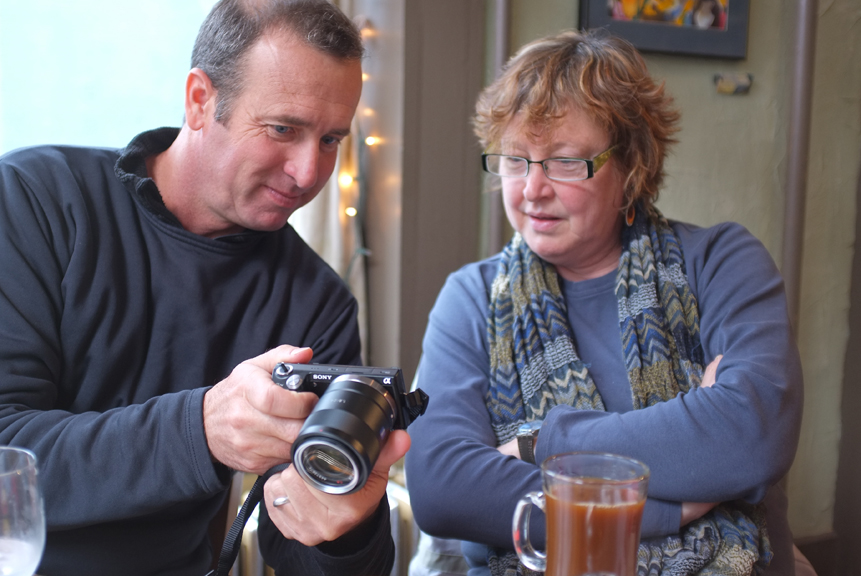
I am in the process of organizing photos for my upcoming season of garden design lectures and am enjoying looking over the past year in photos. This was my first year with the Fujifilm x100 and the photo of the flowering quince below was one of the first photos I took with the x100. I do love my camera!

Chaenomeles speciosa ‘Toyo-Nishiki’

Coaxing Winter Blooms

From mid-February on is the recommended time to prune members of the copious Roseaceae (Rose family) and their cut branches create stunning arrangements. The bare limbs dotted with five-petalled blossoms are particularly evocative juxtaposed against the cool, low light of winter. I am picturing the plum rose of Prunus cerasifera‘Thundercloud,’ the vivid pink of peach blossoms, the elegant sparkling white blossoms of apricot trees (Prunus armeniaca), and the brilliant fiery red-orange ‘Texas Scarlet’ Japanese flowering quince illuminating the rooms in which they are placed. I have to say my favorite of favorites is Chaenomeles speciosa ‘Toyo-Nishiki,’ with buds swollen and ready to burst by mid-winter and flowering in multiple hues of white, rose, and apricot pink, the beauty of their blossoms emphasized by the sharply zigzagging branches.

Note: Flowering quince provides nectar for northward migrating hummingbirds. It is not too early to put out your hummingbird feeders.

More information about Chaenomoles ‘Toyo-Nishiki’ may be found in Chapter Three, “Planting in Harmony with Nature,” Oh Garden of Fresh Possibilities!

Think Pink!

 Chasing Away the Winter Doldrums

The stem I always manage to snap when unpacking the tulips-

Kay Tompson sings Think Pink! in Funny Face (1957, starring Audrey Hepburn and Fred Astaire)

Think pink! when you shop for summer clothes.

Think pink! if you want that quel-que chose.

Red is dead, blue is through,

Green’s obscene, brown’s taboo.

And there is not the slightest excuse for plum or puce

—or chartreuse.

Think pink! forget that Dior says black and rust.

Think pink! who cares if the new look has no bust.

Now, I wouldn’t presume to tell a woman

what a woman oughtta think,

But tell her if she’s gotta think: think pink—!

-Music by George Gershwin with Lyrics by Roger Edens

Why the sudden interest in the Jodrey State Pier

There is beautiful assortment of waterfowl inhabiting the harbor. While there filming the birds and trying to get closer (ever closer!), I’ve become fascinated with the graphic industrial compositions from atop and from below the pier. For example, the above snapshot of Gloucester’s iconic Paint Factory, through the piling’s grid.

Snapshot from Jodrey State Pier

The Jodrey State Pier is named after Everett R. Jodrey, a barber by trade and activist sympathetic to the fishing industry. Jodrey envisioned a changing waterfront and eventually won support to construct a state fish pier in Gloucester. The money was appropriated in 1931; the pier opened for business in 1938.

Special Events at Willowdale Estate

Happy Birthday Briar!

As many know from reading my posts, my dear friend, and one of my favorite design clients, is Briar Forsythe, proprietor of Willowdale Estate, located in Topsfield. I was delighted to attend Briar’s birthday party, which was a wine and food tasting event, and held in the new conservatory at Willowdale. Usually when there I am up to my elbows in design projects so it was a real pleasure to get a sense of how it feels to be a guest.

The party started at 4:00 and the late afternoon sunlight streaming through the conservatory windows lent a warm and welcoming glow to the event. The service was absolutely impeccable (do you find that is not often easy to say?). Chef Joe Joyce and staff had prepared simply the most elegant and divine tasting courses, paired with wines that perfectly complemented each dish. All the wines were delicious and I can imagine they would be great paired with any number of meals.

Unfortunately, I did not take a snapshot of the first course, which was a  Duxbury Oyster with Champagne Foam and Blood Orange Caviar, served with a sparkling Dibon Cava Brut. I love sparkling wines and found this perfectly not overly sweet. I am not going to go on and on telling you how super delicious was all–it was–and hope the photos give an idea. The wines were provided by Geoffrey Fallon.

Sweet Pea Agnolotti, Lobster Tail, Vanilla Aioli and Pea Shoots Paired with Lamoreaux Chardonnay

 Crispy Pork Belly, Poached Apple, Celeriac Puree, Micro Dijon Greens Paired with Arabanta Rioja
 Seared  Tenderloin of Beef, King Oyster Mushroom, Bone Marrow Cracker, and Bordelaise Paired with Pietrantonj Montepulciano d’Abruzzo
Braised Lamb Shank, Grilled Polenta, Mustard Greens and Baby Turnip Paired with Armandiere Cahors 

Visit Willowdale’s website—they are a full service special events venue, specializing in their own in-house fabulous catering. Tours are offered throughout the year and many Gloucester companies do business with Willowdale, including several of our local florists and photographers.

Click last photo to see slideshow of all party pics.

Think Spring!

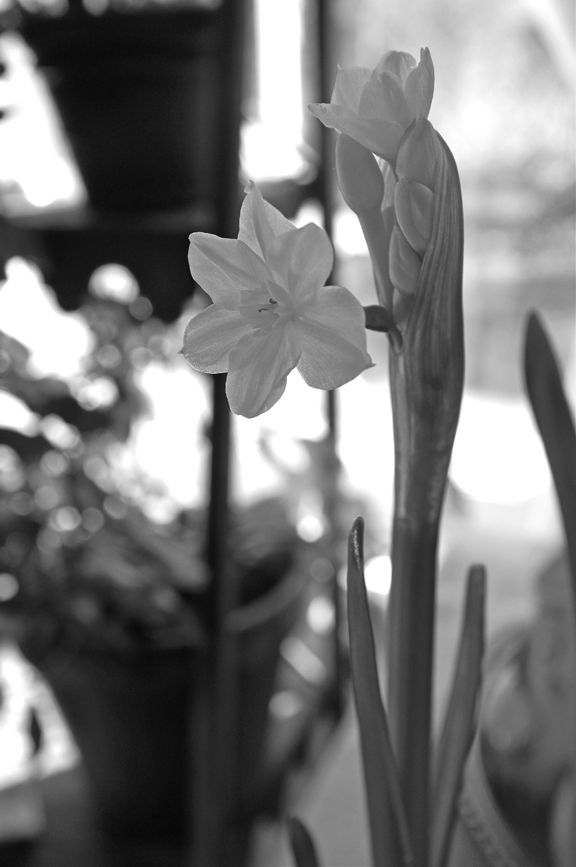
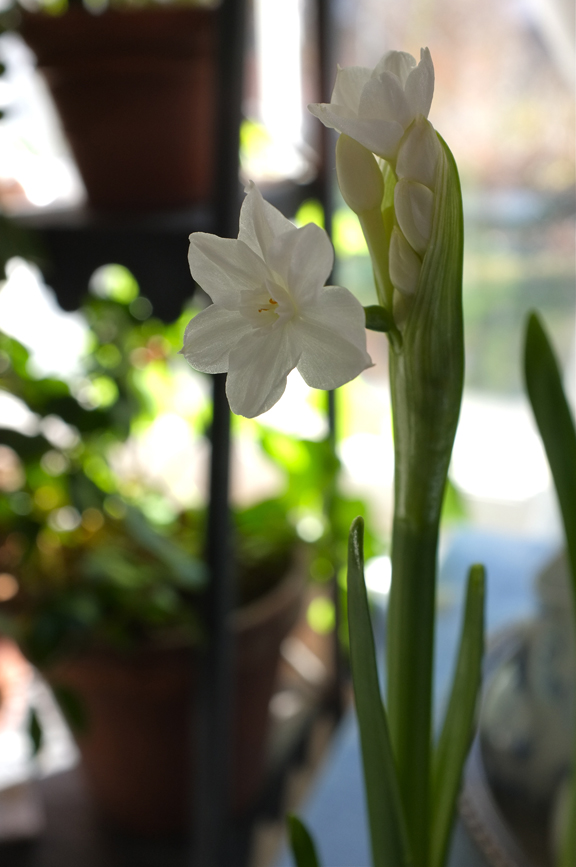
Narcissus ‘Ziva’

Which version do you prefer, black and white or color?

Beginning in November, we maintain a continuous flow of blooming narcissus by planting a new batch every two weeks or so. Paperwhites ‘Ziva’ blooms before the first of the year and ‘Galilee’ just after the holiday season. The ‘Chinese Sacred Lily’ (Narcissus tazetta var. orientalis) is almost as easy to force and has a sweeter, though no less potent fragrance. The scent is a dreamy blend of orange and honeysuckle. They are also a member of the tazetta group bearing multiple blossoms atop slender stalks, with white petals and cheery yellow cups. The ‘Chinese Sacred Lily,’ brought to this country by Chinese immigrants in the late 1800s, is traditionally forced to bloom for New Year’s celebrations.

With both paperwhites and ‘Chinese Sacred Lilies,’ place the bulbs in bowl or pot and cover with stones. The emerging green tips should be poking though the stones. Water up to the halfway point of the bulb and place in a cool dark room; an unheated basement is ideal. Water periodically and within a week or so, new growth will be visible. Then place the bulbs in the room away from strong light, continue to water as needed, and once in bloom, they will flower and scent your home for a week or more. Illustrations of paperwhites and the Chinese Sacred Lily, as well as the complete chapter, can be found in Oh Garden of Fresh Possibilities! Notes from a Gloucester Garden (David R. Godine, Publisher).

The narrowest strip of land between a body of freshwater and of seawater

Niles Pond

My favorite places and time of day to walk our sweet terrier Miss Rosie Money Penny (also know as Rosie, Rosa, Rosalicious, Rosalita, Rosebud, Rose-Muffin, Rosie-Pie…) is at sunset and all around my East Gloucester neighborhood and water’s edge of Eastern Point. The above photo was taken from the narrow strip of land that separates Niles Pond from Brace Cove. It is believed that at one point, not too long ago, Niles Pond was a lagoon, which was sealed off by rising sand and rock. Over time, it became a fresh water pond, fed by springs and rainfall.

Surrounded by reflected light from the sea, sunsets are gorgeous from nearly any Cape Ann vantage point. Luminous light is made all the more atmospheric from moisture in the air; combine that when seen through the golden lambent glow of sun’s low slanting rays– I call that heaven on earth!   Click photo to see full size image.

Wonson’ Cove Rocky Neck

Simply Stunning Work in Progress

Gloucester: A Community of Neighborhoods

Juni and Maggie Rosa discuss design elements of the Eastern Point panel.

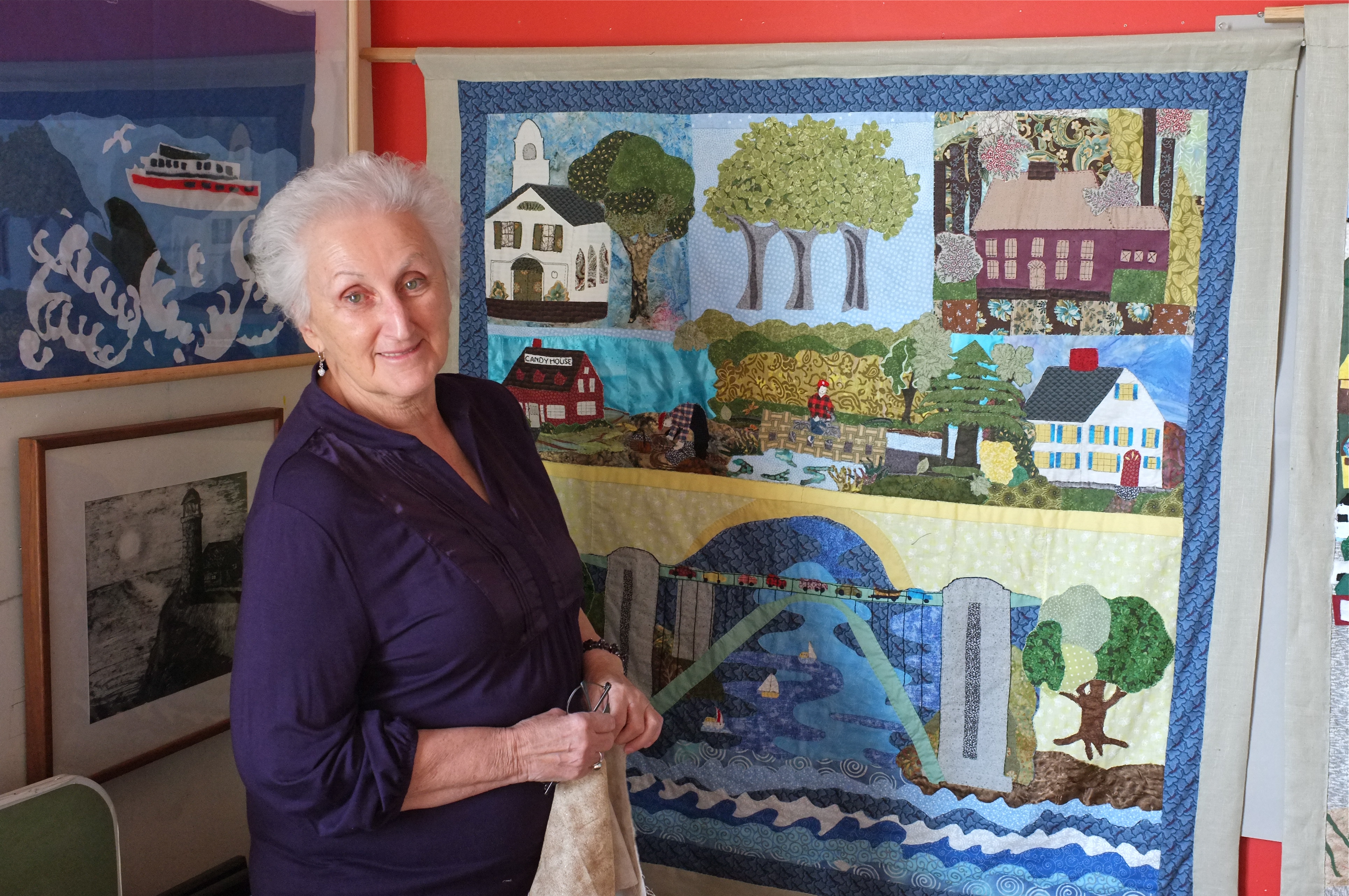
Yesterday I had the joy to meet Juni Van Dyke and several members of the Rose Baker Senior Center art class. Juni and her students are working on a project titled Gloucester: A Community of Neighborhoods. Each fabric panel measures approximately five-foot square and illustrates through iconic imagery characteristics unique to Gloucester neighborhoods. The banner’s design in it’s entirety, along with the individual artist’s whimsical designs and choice of fabrics, is utterly captivating and a vibrant visual feast.

Maggie’s extraordinary interpretation of the archetypical Beauport window. The window mullions frame a collection of antique glass in varying shades of lavender to deep grape.

This is not the first grand scale project of it’s kind created by Juni and the fiber artists at the Senior Center. The banner titled From Sea to Shining Sea: Celebration of the American Landscape that is currently on view at the Senior Center lunchroom was also exhibited at the Lexington Heritage Center for six months, and it measures nine feet in height by thirty feet in width.

Lois Stillman’s elegant rendition of the birch tree clump at Niles Pond

Eastern Point panel detail with Mother Ann and butterflies.

I am honored to have been invited to create a butterfly for the Eastern Point panel although I think they have it beautifully covered. The whimsical swirl of butterflies in the upper left corner was created by students at the Eastern Point Day School and the beautifully detailed Monarchs fluttering around Beauport by Maggie Rosa.

Lois stands in front of the panel she designed. Note her genius interpretation of the Abram Piatt Andrew Bridge, replete with cars (click photo to see larger version) and including Nichols Candy House. Her deep love of trees is apparent in the beautiful and skilled manner she has stitched and pieced many different species of trees created for the panels.

As the work on Gloucester: A Community of Neighborhoods unfolds we’ll bring you more stories and detailed photos about this vibrant and captivating work of art in progress–there are simply too many beautiful tales to tell in one post!

Juni and Priscilla ~ Sunlight streams through the large picture windows of the second floor art room at the Rose Baker Senior Center.

Pauline, Juni, and Maggie

Juni and Maggie

Life Story of the Black Swallowtail Butterfly

Coming Soon: Life Story of the Black Swallowtail Butterfly tells the story of the ubiquitous and stunning Black Swallowtail butterfly.

Black Swallowtail Butterfly

My new documentary film captures the beauty and mystery of the Black Swallowtail, through all its life stages, and in it’s surrounding habitats. I think you will be amazed and captivated by this garden-variety and seemingly ordinary, extraordinary butterfly!

From Egg to Caterpillar to Chrysalis to Adult

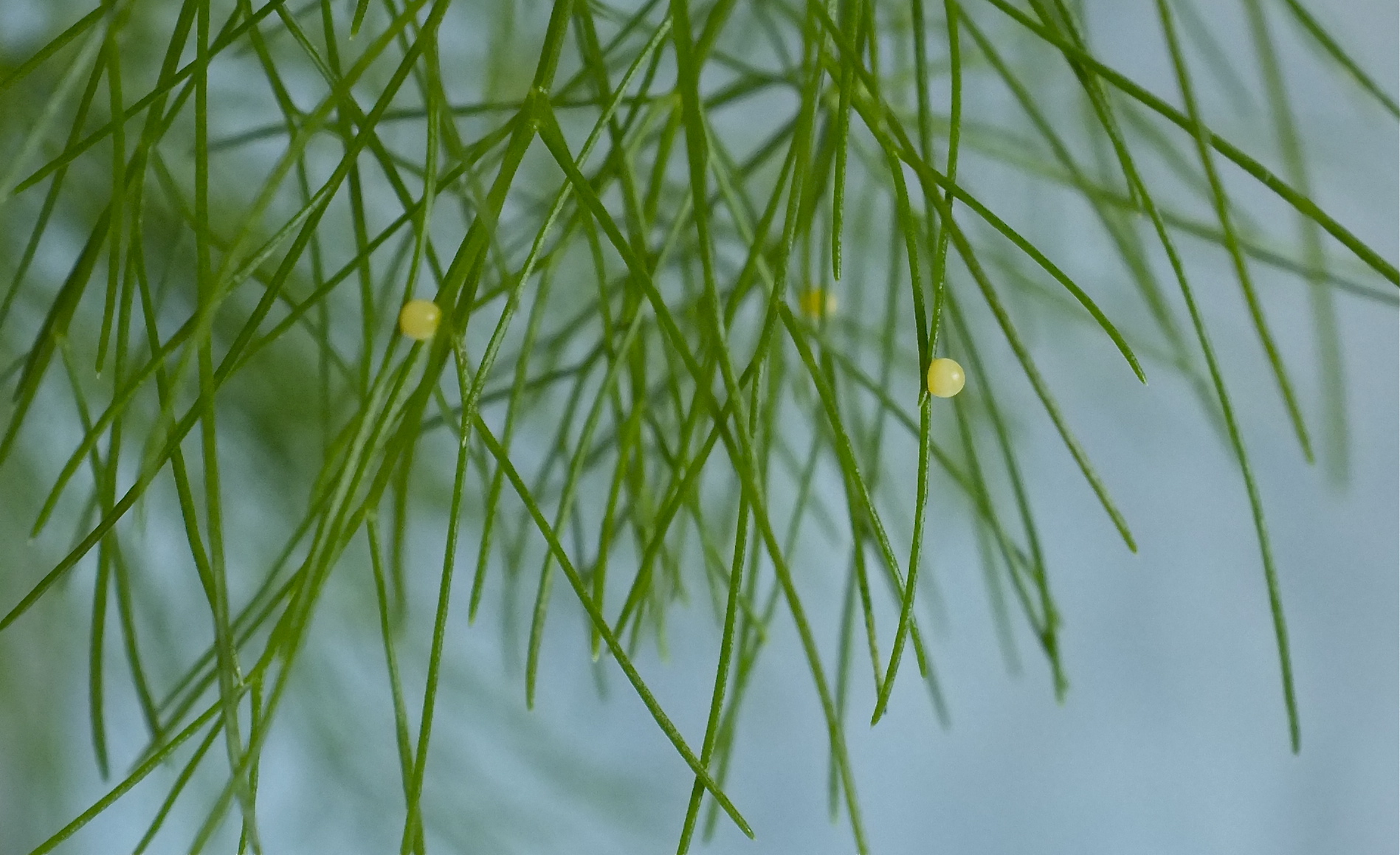
Black Swallowtail Eggs

 Black Swallowtail Caterpillar Everting Osmeterium

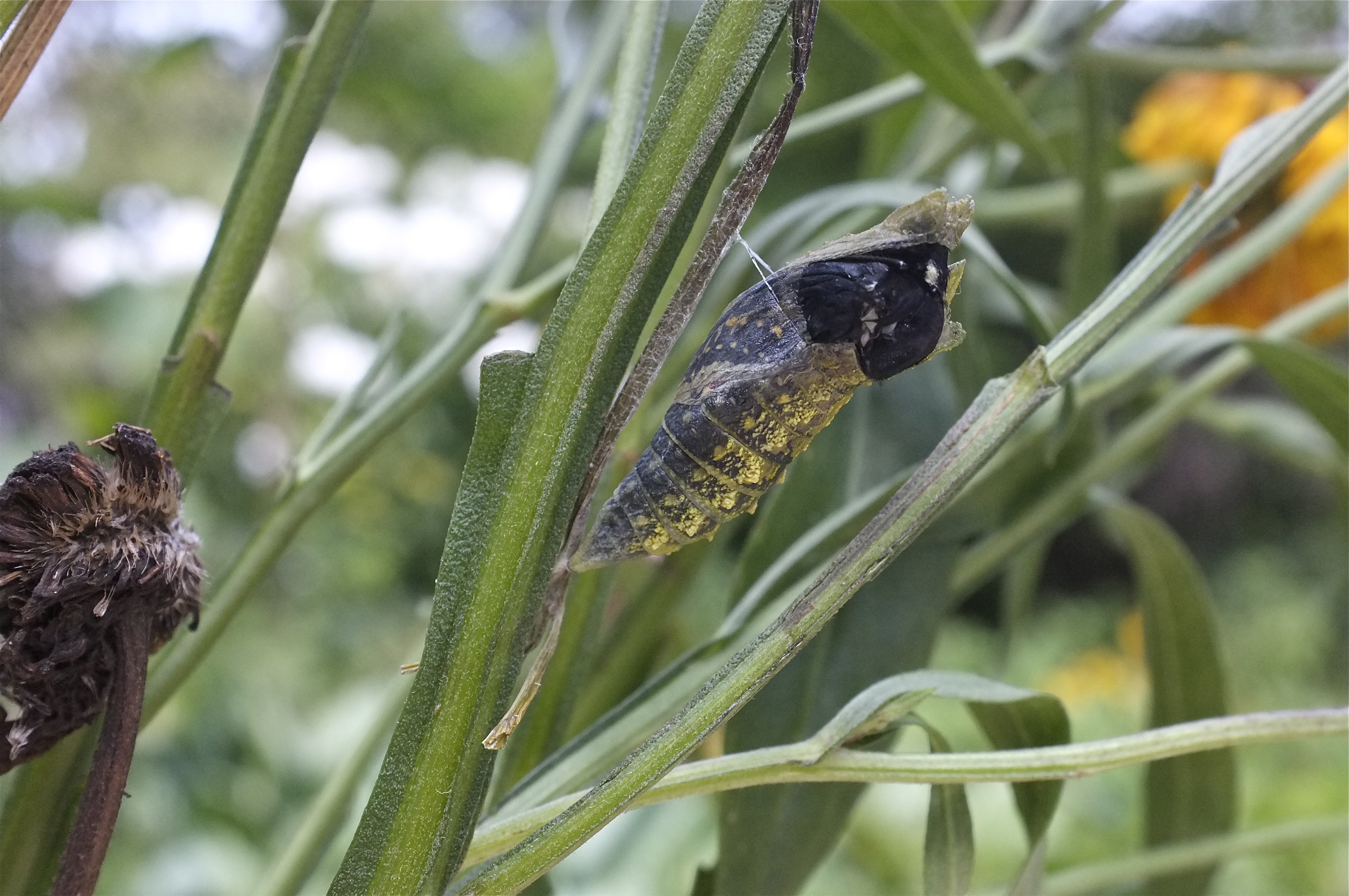
Black Swallowtail Emerging from Chrysalis

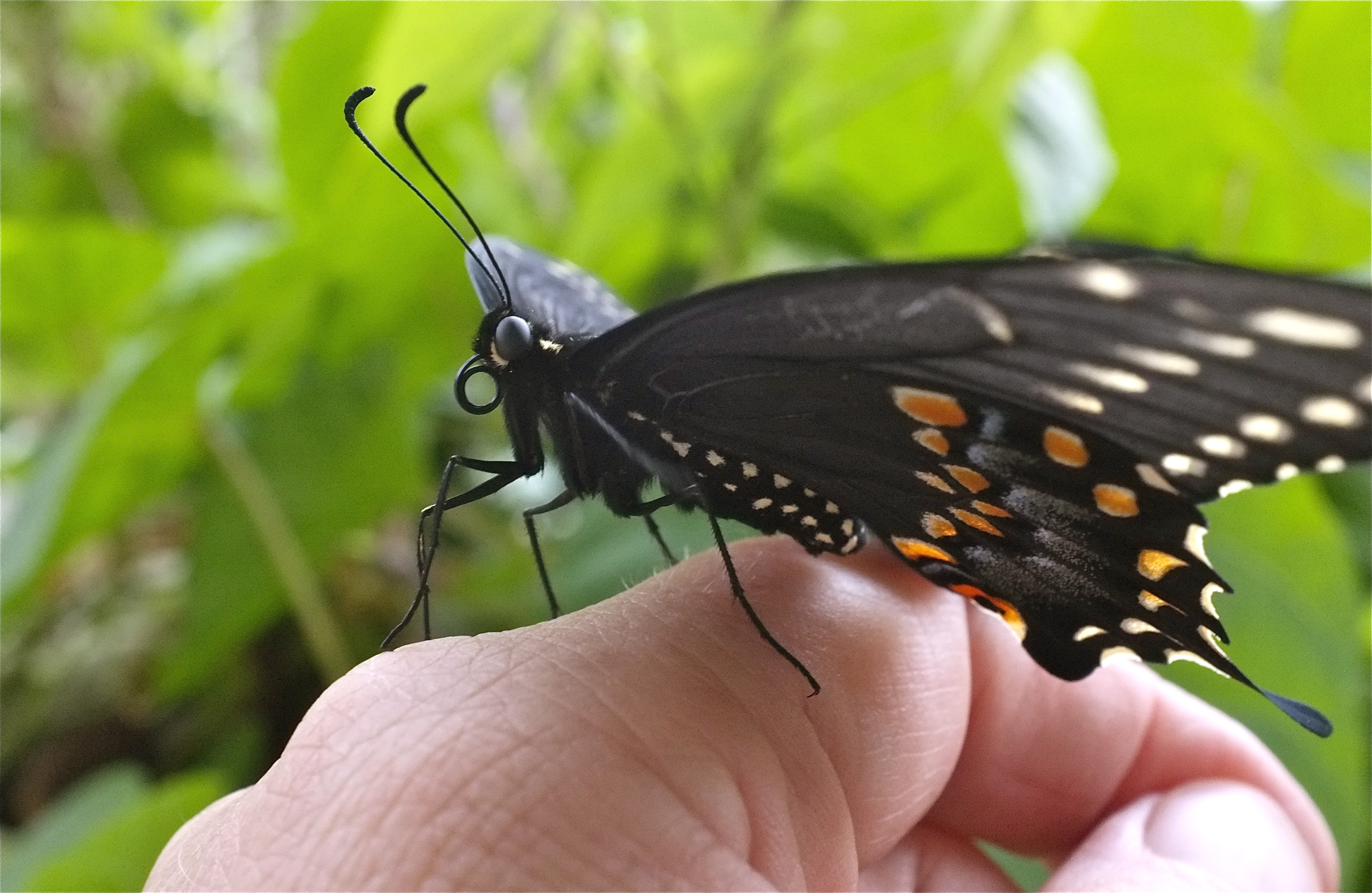
Newly Emerged Black Swallowtail Butterfly

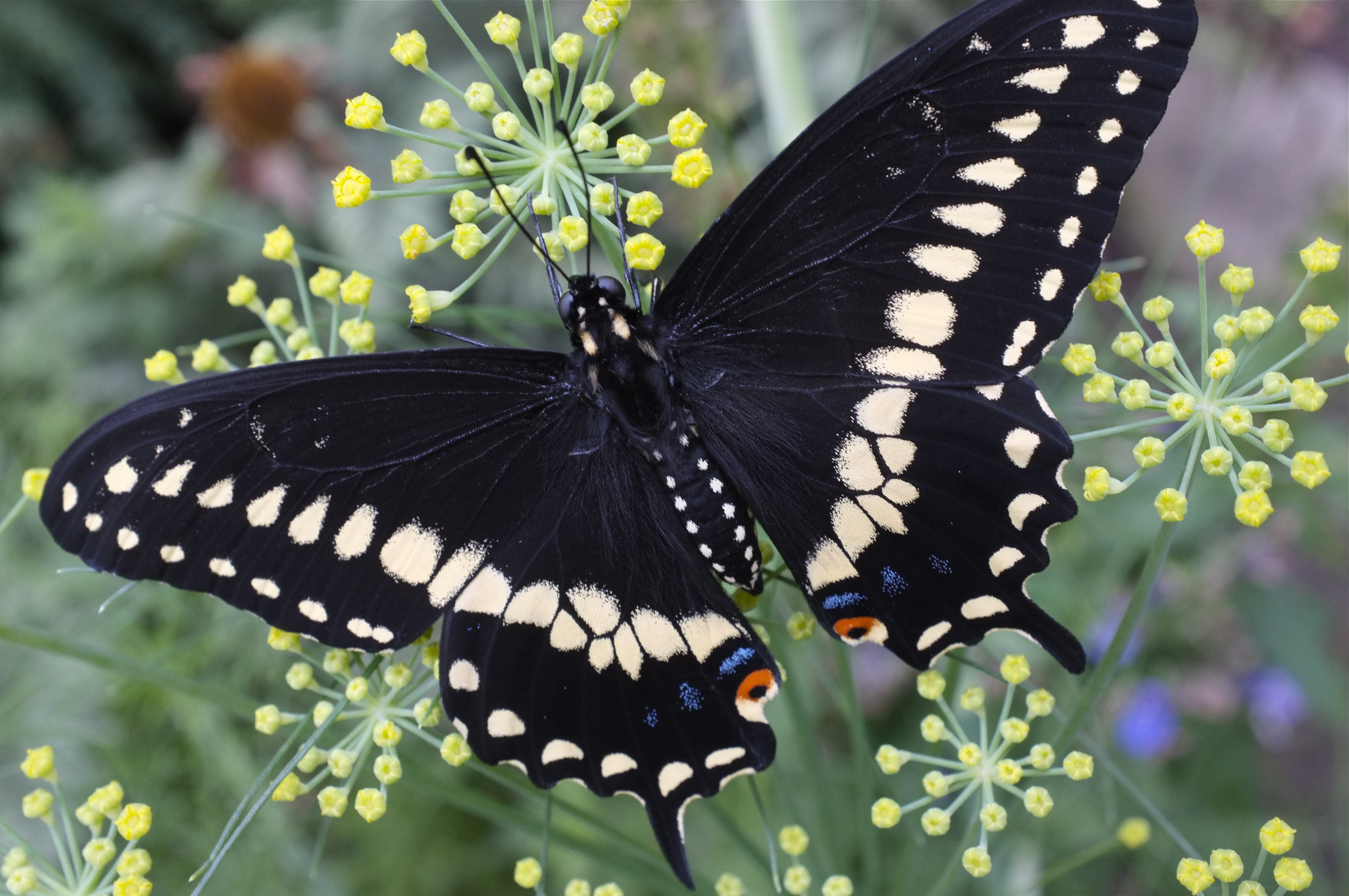
Male Black Swallowtail Butterfly Nectaring at Fennel

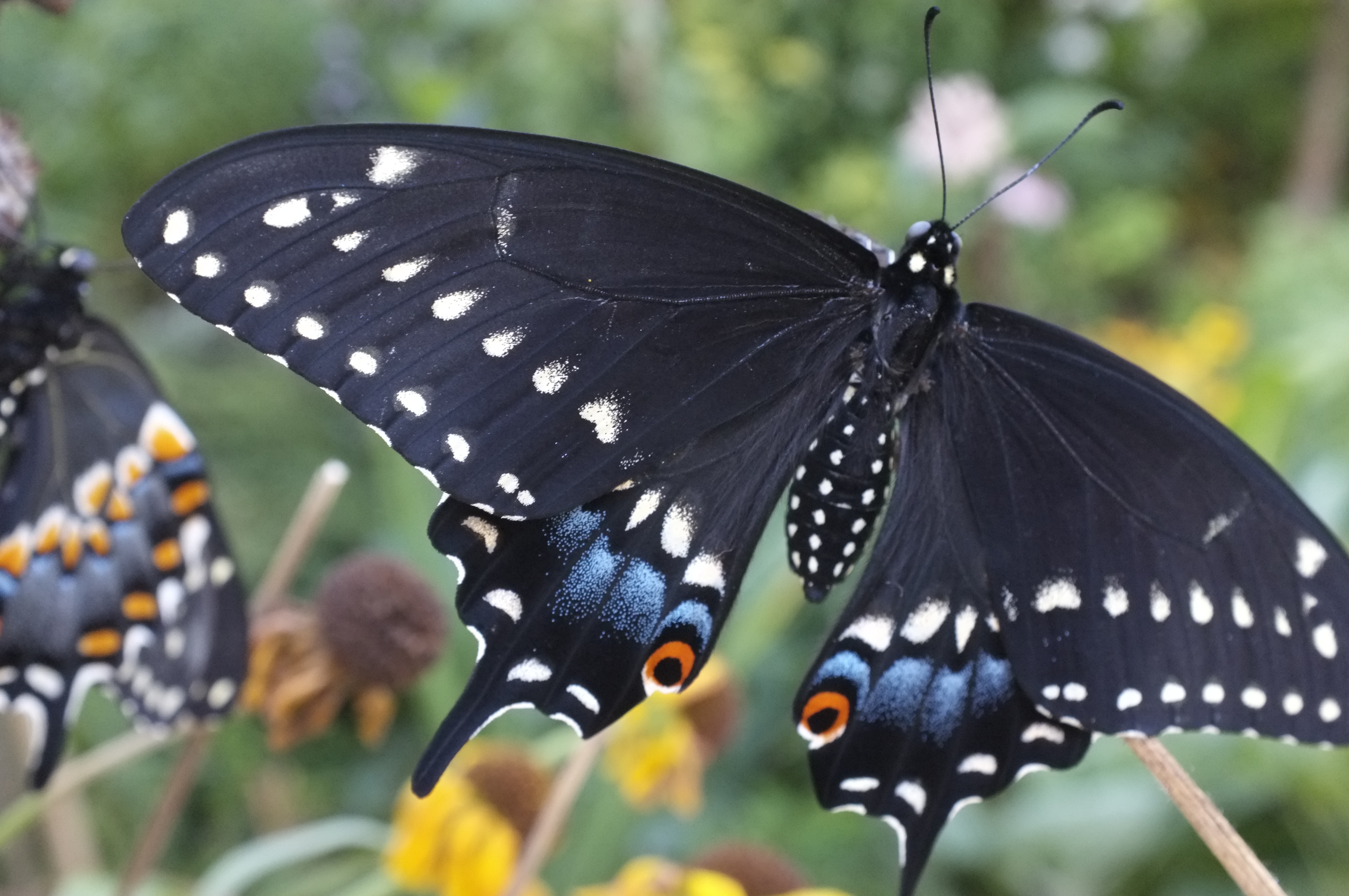
Female Black Swallowtail Butterfly

One of several preferred Black Swallowtail habitats—Gloucester’s sandy wildflower meadow at Good Harbor Beach. The milkweed provides nectar for swallowtails on the wing and Queen Anne’s Lace is a food plant of the Black Swallowtail caterpillars.

Shocking Pink

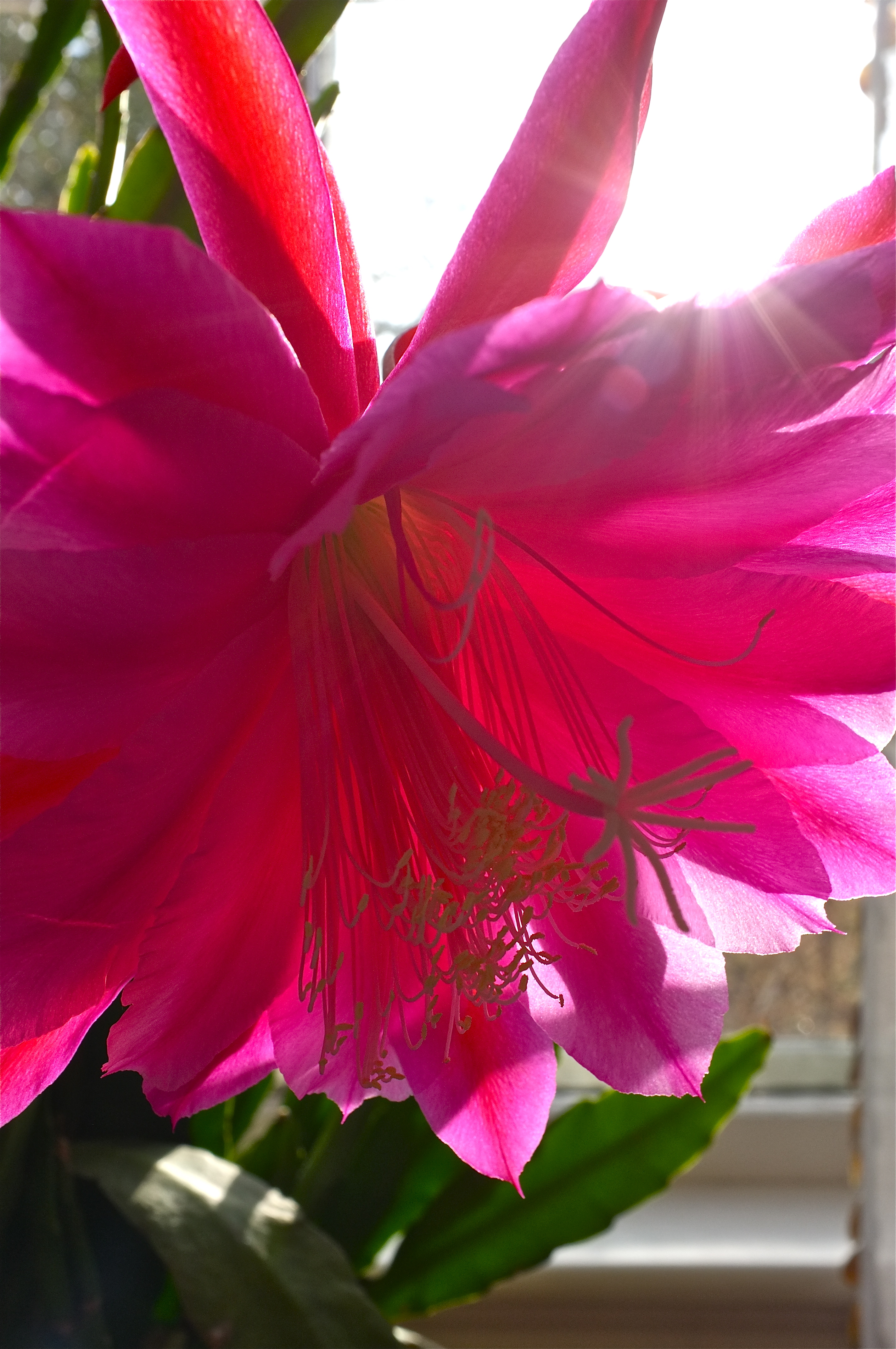
Blooming in my office today and, with it’s “shocking pink” color and fabulous fragrance, making work all that much more pleasant.

Epiphyllum

Shocking pink was fashion designer Elsa Schiaparelli’s (1890- 19730) signature color and she described it as “life-giving, like all the light and the birds and the fish in the world put together, a color of China and Peru but not of the West.”

Marcel Vertes 1940 watercolor ad for Schiaparelli’s Shocking perfume, which shows a bottle of Shocking  reclining in a pink hammock with a floating couple above and Cupid below.

Marcel Vertes and Elsa Schiaparelli jointly won the British Academy Film award in 1952 for Best Costume Design for the original Moulin Rouge film, about the life and times of artist Toulouse-Lautrec.

Antennae for Design

Depression Era Quilts

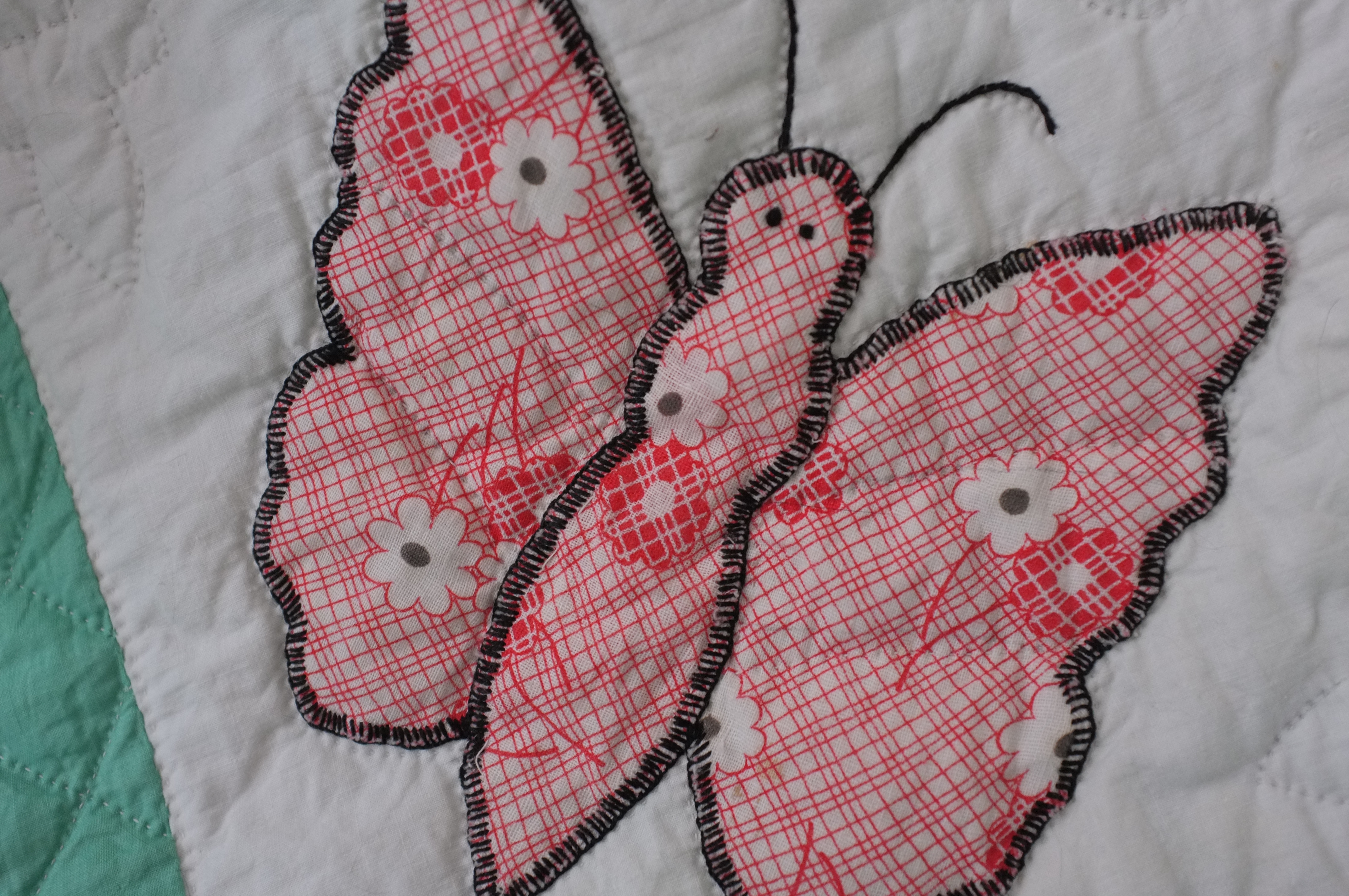
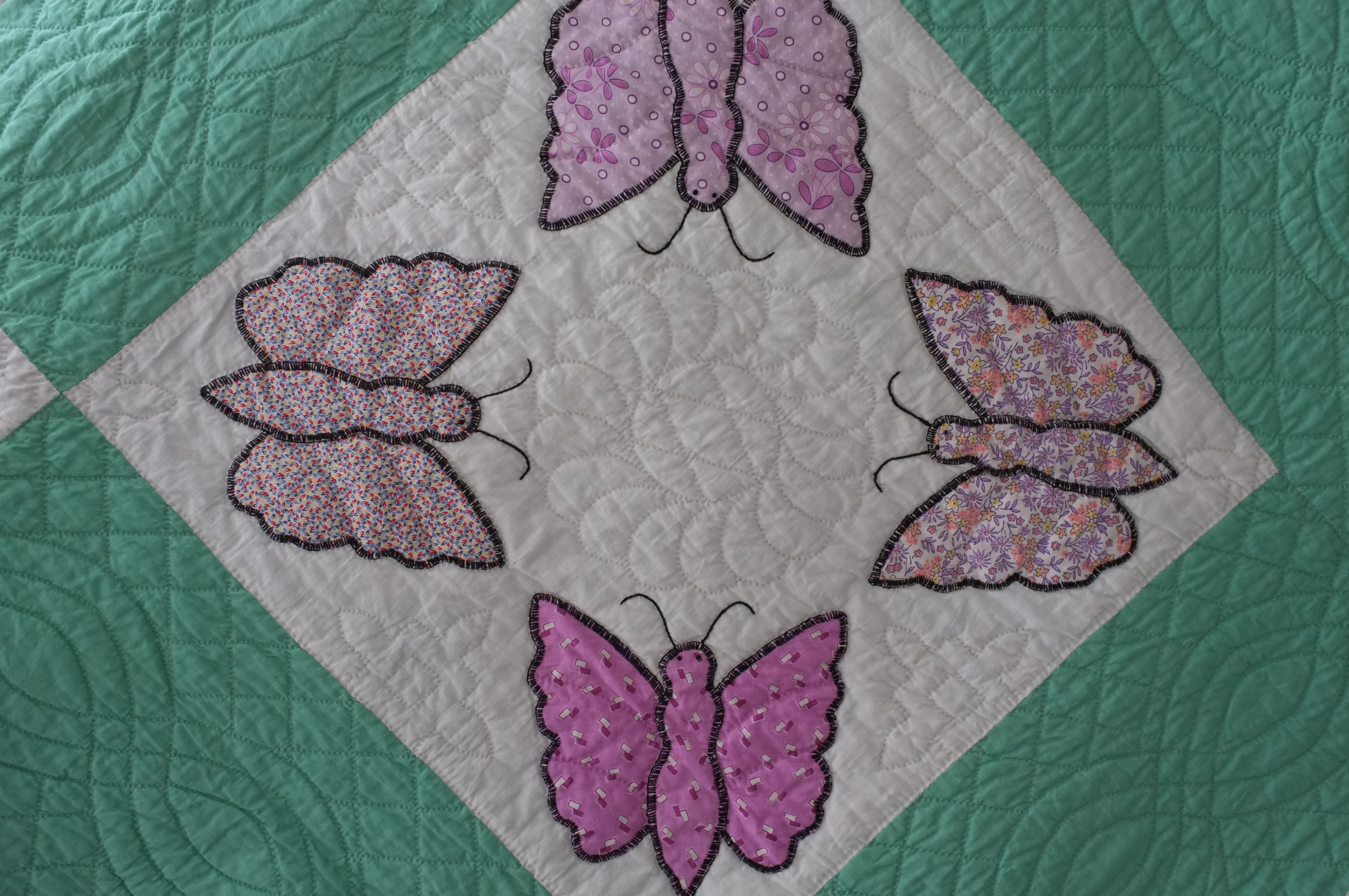
Depression Era Butterfly Buttonhole Appliqué Quilt 

For the first installment of Antennae for Design I wanted to share with you a very special gift that my mother- and father-in-law gave me this Christmas past. My husband’s family lives in Cincinnati, Ohio, a beautiful city sited along the Ohio River. The landscape so reminded early German settlers of the Rhine River and valley, that to this day there is an older area of the city still referred to as ‘Over the Rhine.’ The above butterfly buttonhole appliqué quilt was made in Fostoria, Ohio and Ohio’s long quilt making heritage is similar to that of many states throughout America.

Quilts and quilt making techniques are a reflection of the life and times of the women who made the quilts. The technique of quilting (encasing an insulating fabric between two layers of an outer fabric and stitching firmly in place) has existed throughout history. Quilted garments have been discovered in ancient Egyptian tombs and quilted garments and bedding began to appear in Europe after the return of the Crusaders from the Middle East. The medieval quilted gambeson and aketon were garments worn under, or instead of, armor of maille or plate armor. The oldest American quilts in the Smithsonian date from approximately 1780.

Thinking about the fascinating history of quilts and quilt making in this country, one of my very favorite periods of quilt making was after WWI and through the early 1940’s. Quilts made during this period are commonly referred to as Depression Era quilts; although to look at their cheery colors and patterns, you would never know the women who created them were living in the midst of a depression. Magazines needed to be resourceful during this period of extreme economic hardship, and they were, by selling fashion and optimism. Another way to survive was by including quilt patterns and tips in their publications. Quilting was an activity that women could do to fulfill their creativity while still making something practical for their families. The quilts were typically made from sewing scraps, out-grown clothing, and feed sacks. Part of the war reparations agreement with Germany after the First World War mandated Germany provide the US with their formulas for aniline dyes, which allowed for an explosion in color depth and hues, as well as stability in dyes; purple finally became reliable, as did black.  Charming and sweet prints along with lovely pastels served in stark contrast to the depressive economy. A particular shade of green, now referred to as “thirties green,” was so popular amongst quilters, that the strips that were used to bind the quilt edges came packaged in a can!

Dating quilts is fascinating. If you have a question about a quilt or would like to share information about a family heirloom, please write.

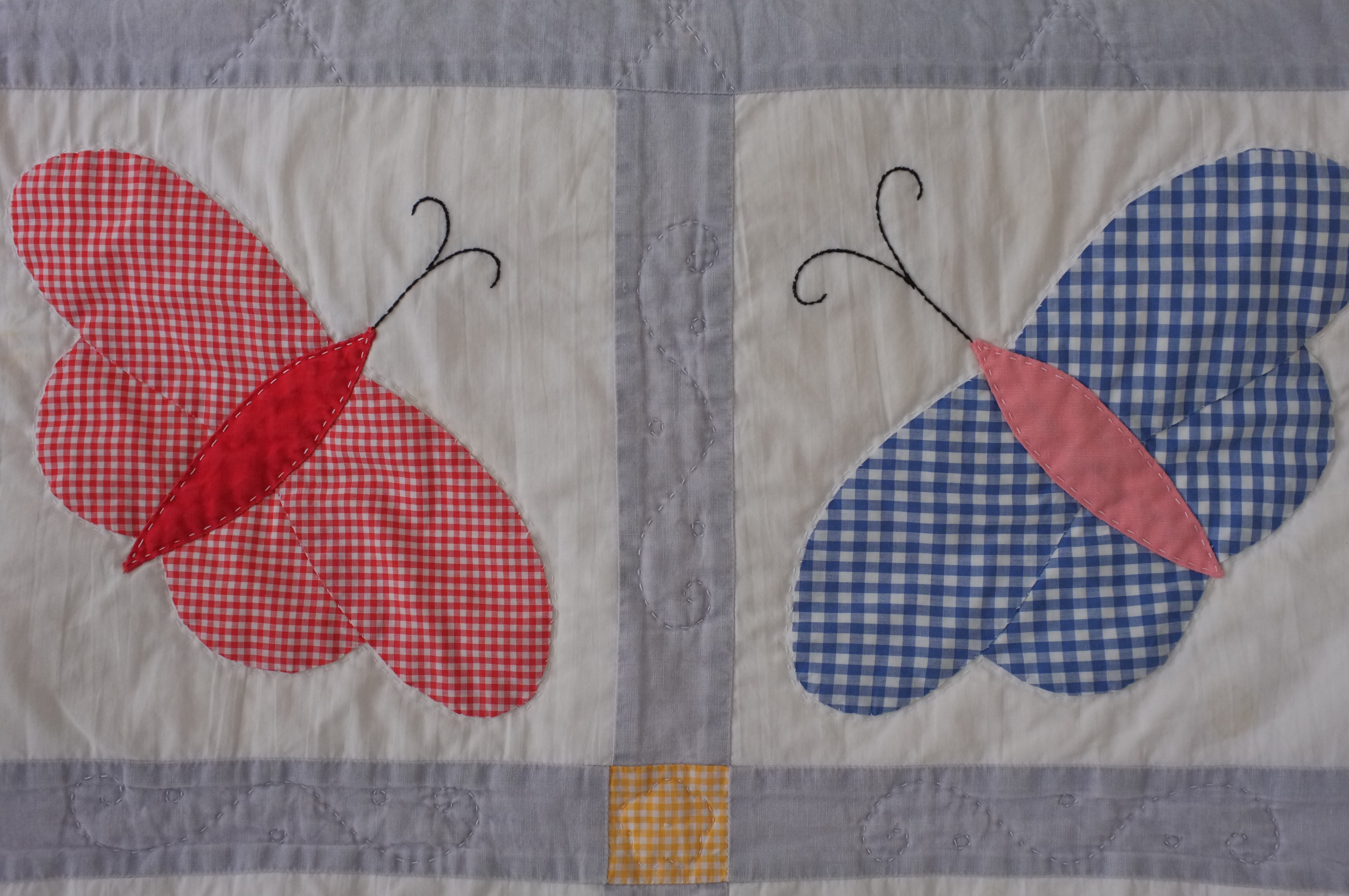
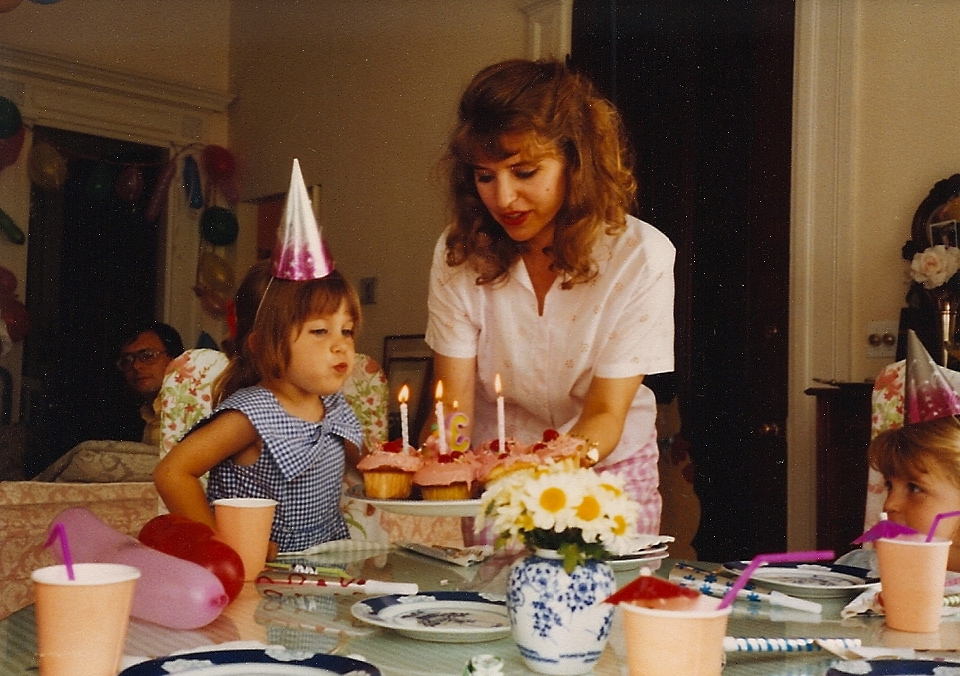
The above quilt was my interpretation of a 1930′s butterfly quilt, which I made for our daughter when she was three. Following in the depression era practice of using what was on hand, you can see the dress scraps from which the quilt was made in her blue gingham dress in the old photo below.

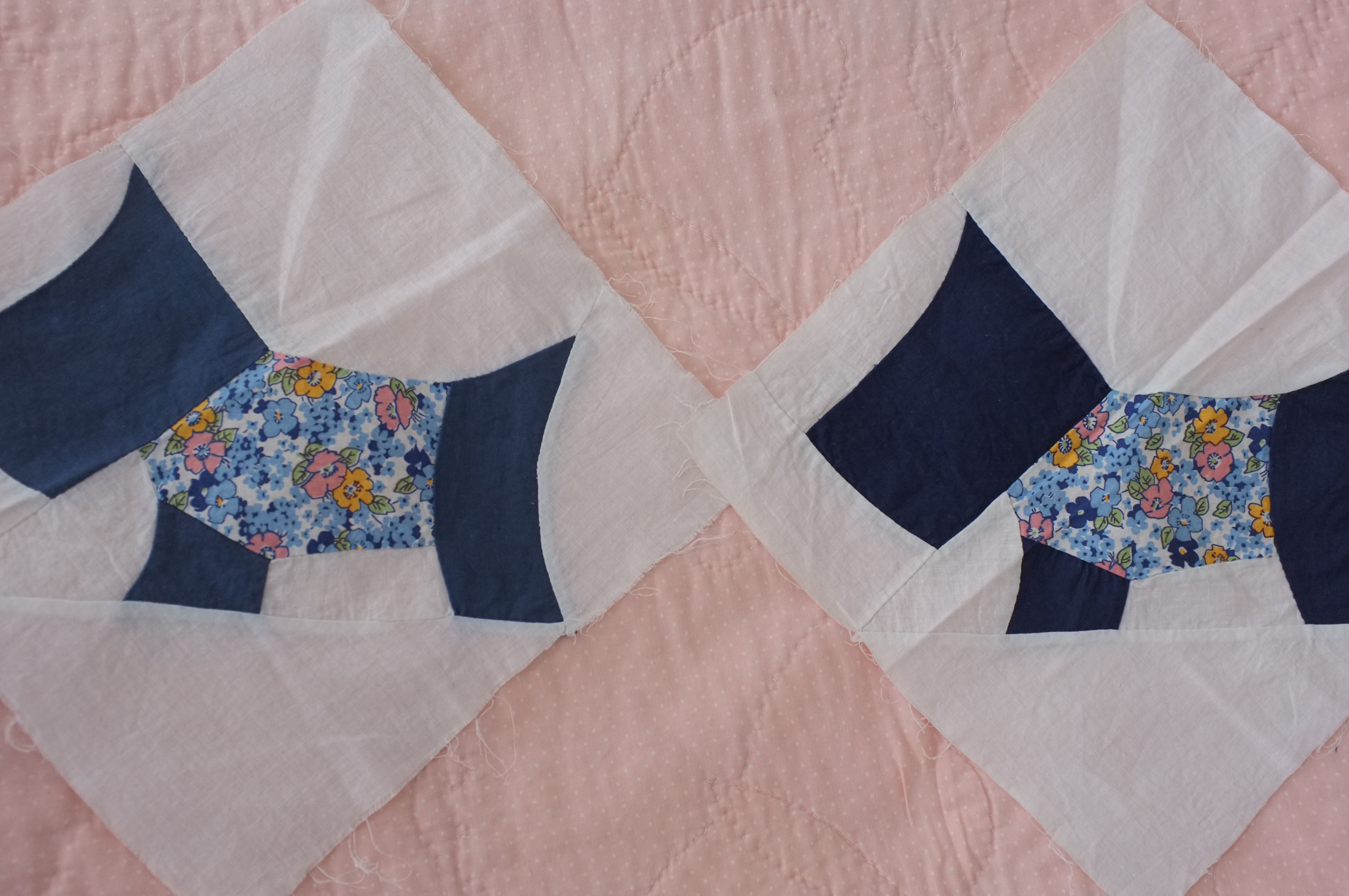
I found a basket full of Scotty dog squares at a yard sale last summer. Scotty dogs were a popular design motif during the first half of the 20th century and this particular Scotty pattern was created in 1940. When I have some spare moments, I’ll look for fabric to back the quilt. Purchasing quilt squares or an unfinished quilt top is a great way to acquire a depression era quilt because, if the squares or top have been properly stored, the fabrics will come back to life with cleaning and pressing, and will not have been used.

Antennae for Design

January, February, March, and for we who dwell in New England, oftentimes well into April, are ideal months for interior home improvements. During these more homebound months I am actively looking for home and garden design inspiration. And, too, with projects that were shelved during the summer months because of seasonal work and summer guests, winter is a great time of year to focus on home improvements. I was inspired to write this weekly series after a recent visit to our home from Joey, Jill, and their two darling daughters. The family stopped by for hot chocolate and story time and Joey was non-stop with investigative questions and curiosity. It got me thinking about the impetus for writing my book, Oh Garden of Fresh Possibilities!, which was originally conceived as a guide for young couples and new home owners (and someday, hopefully, for my children when they will one day have gardens of their own). My book grew to be more than that, but I am again thinking of the couples with young children that have recently moved to our East Gloucester neighborhood.

Plaster Ceiling Medallion

To think of it, we are following in an old Gloucester and northern seacoast tradition by tending to the interior of our homes during these winter months, in that of “house-pride.” The town’s carpenters, many of whom were master shipbuilders and shipwrights, would have had more free time during the winter months. Fine carpentry details are evident throughout our house, which was built in 1851. And, like many of Gloucester’s older houses, our home is graced with details created by the skilled plasterers that emigrated from Italy and settled on Cape Ann. Although a modest house, particularly by today’s “starter castle” standards, I wouldn’t trade our lovely 19th century home, with its quirky and elegant details (along with it’s many foibles) for all the world’s McMansions.

I propose Antennae for Design will encompass home and garden design inspiration, home improvement tips, feature interviews with local business owners who specialize in art and design, and after visiting local well-tended homes and gardens, sharing information found there.  Let me know through the comment section or by emailing at kimsmithdesigns@hotmail.com of your thoughts and any topic that you may find particularly relevant or of interest.

Living in a Fitz Henry Lane Landscape

Wonsons’ Cove

Click photo to see larger image

Locally found treasures ~ a pair of hand-painted Czechoslovakian lamps

A recent find for one of my design clients is this pair of sweetly hand-painted Czechoslovakian lamps, with coordinating shades trimmed in blue silk cord, discovered at a local vintage shop.

Forget-me-nots and Roses

I love the challenge of searching for and finding one of a kind (or in this case, a pair of) treasures for my design clients. And I partuclarly love one of my ongoing design jobs for a simply delightful family, with three lovely and lively daughters, each with their own very distinct personality and style preference. The eldest daughter is zippy and lighthearted with a definite flair for the modern; the second daughter is gently refined and ethereal (I think of watercolor hues for her); and the third daughter is possessed of a warm and sunny character—a radiant sunflower. The pair of Czechoslovakian lamps will add a charming touch to the middle daughter’s bedroom. Whether you are searching for special plants for the garden (the most highly scented specimens, for example) or rare and/or out-of-the-ordinary objects of art and decoration for the home, thoughtfully selected accents create the most welcoming sort of home.

Important Safety Note: Although these lamp bases are in near-perfect vintage condition, the cords are not. Judging from the overall poor condition of the cords, I would guess they were last wired in the late 1950’s or 1960’s. We will re-wire the lamps with soft gold-colored cord, which will better blend with the décor, as opposed to the dark brown or stark white wire. Always, and always very thoroughly, check the wiring when purchasing vintage lighting—for obvious reasons, I cannot stress this enough.


2012 Rocky Neck Plunge

2012 Rocky Neck Plunge with a pre-plunge breakfast hosted by Passports Restaurant. Featuring The Ciaramitaro Family, Donna Ardizzoni and her daughter Erica, E.J., Ed, Mayor Kirk, Nicole, Alicia, Paul, the van Ness Family, and too many more brave souls to mention all by name. Cathy McCarthy and friends set up boxes by the entry to the beach and a truckload of food was collected and donated to The Open Door Food Pantry.

Included is a postlude video short titled New Year’s Day Bath ~ Swan Style. 

HAPPY NEW YEAR!

Filmed at Flynn’s Beach on Oakes Cove Gloucester, Massachusetts.

Beethoven Symphony No. 6 in F Major, Opus 68 Pastoral

Beethoven Symphony No. 9 in D Minor, Opus 125 Choral Finale (Ode to Joy)

Performed by the London Symphony Orchestra

Hippeastrum

A Note about Hippeastrum 

Living in New England the year round, with our tiresomely long winter stretching miles before us, followed by a typically late and fugitive spring, we can become easily wrapped in those winter-blues. Fortunately for garden-makers, our thoughts give way to winter scapes of bare limbs and berries, Gold Finches and Cardinals, and plant catalogues to peruse. If you love to paint and write about flowers as do I, winter is a splendid time of year for both, as there is hardly any time devoted to the garden during colder months. I believe if we cared for a garden very much larger than ours, I would accomplish little of either writing or painting, for maintaining it would require just that much more time and energy.

Coaxing winter blooms is yet another way to circumvent those late winter doldrums. Most of us are familiar with the ease in which amaryllis (Hippeastrum) bulbs will bloom indoors. Placed in a pot with enough soil to come to the halfway point of the bulb, and set on a warm radiator, in several week’s time one will be cheered by the sight of a spring-green, pointed-tipped flower stalk poking through the inner layers of the plump brown bulbs. The emerging scapes provide a welcome promise with their warm-hued blossoms, a striking contrast against the cool light of winter.

Perhaps the popularity of the amaryllis is due both to their ease in cultivation and also for their ability to dazzle with colors of sizzling orange, clear reds and apple blossom pink. My aunt has a friend whose family has successfully cultivated the same bulb for decades. For continued success with an amaryllis, place the pot in the garden as soon as the weather is steadily warm. Allow the plant to grow through the summer, watering and fertilizing regularly. In the late summer or early fall and before the first frost, separate the bulb from the soil and store the bulb, on its side, in a cool dry spot—an unheated basement for example. The bulb should feel firm and fat again, not at all mushy. After a six-week rest, the amaryllis bulb is ready to re-pot and begin its blooming cycle again. Excerpt from Oh Garden of Fresh Possibilities! ~ Coaxing Winter Blooms

Click above photo to see slide show

The taxonomy of the genus Hippeastrum is complicated. Hippeastrum is a genus of about 90 species and over 600 hybrids and cultivars, native to topical and subtropical regions of the Americas from Argentina north to Mexico and the Caribbean. For some time there was confusion amongst botanists over the generic names Hippeastrum and Amaryllis, which led to the application of the common name “amaryllis” when referring to Hippeastrum. The genera Amaryllis refers to bulbs from South Africa.