Category Archives: Fujifilm x100

Baby Joe

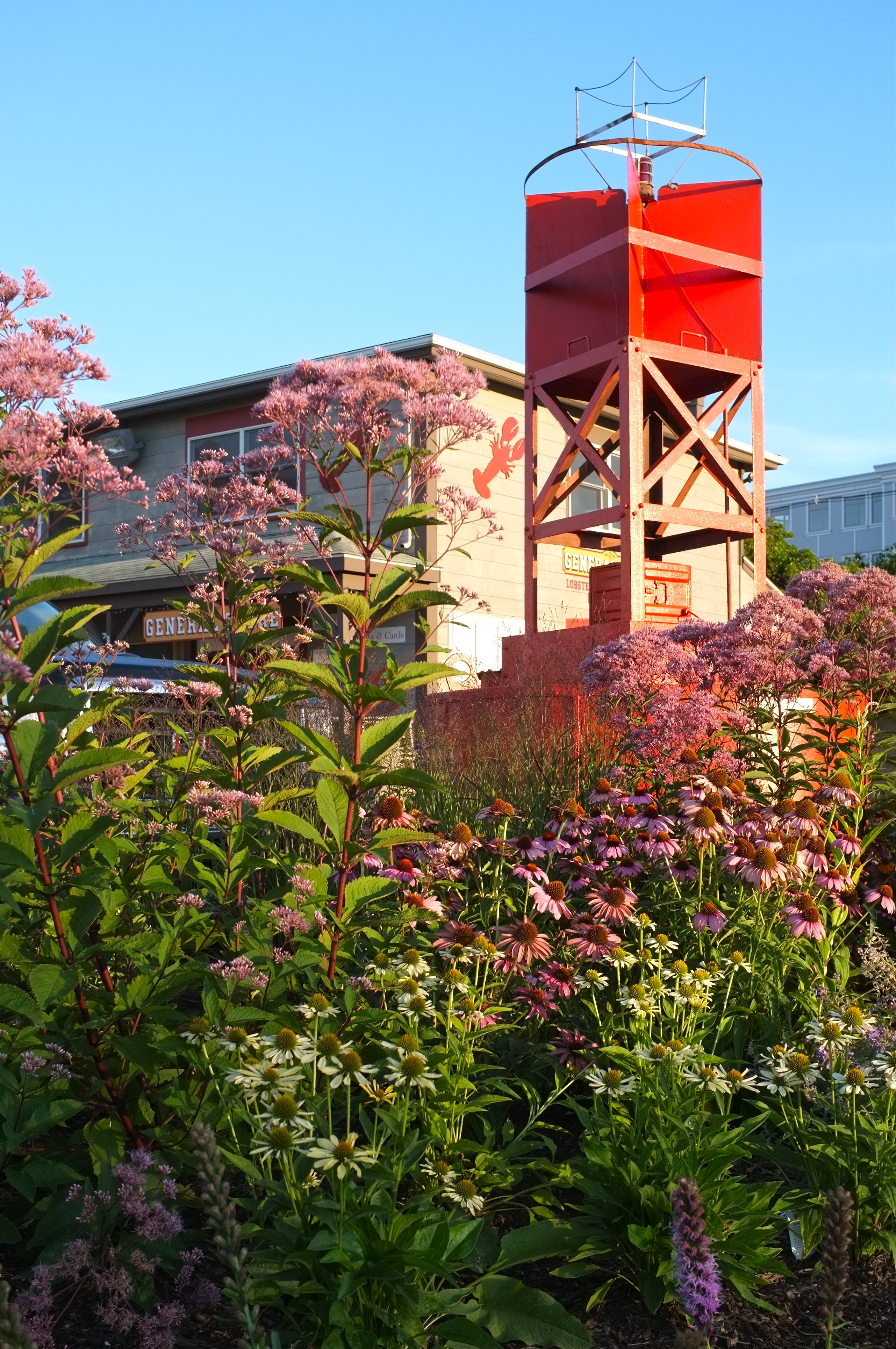
In full bloom this month at the Harbor Walk is the fabulous North American native ‘Baby Joe’ (Eupatorium). While maintaining the Harbor Walk gardens, Jay Ramsey of Farm Creek Landscaping reported seeing no less than half a dozen species of butterflies nectaring simultaneously at the ‘Baby Joe’ on a warm sunny morning this past week. Given your average warm sunny summer day, butterflies are typically on the wing throughout the day; I find the very best time of day to see the very most is between 10:00 am until 12 noon.

Gloucester Harbor Walk Gus Foote Dedication Sunday

Tomorrow, Sunday, at noon, is the dedication of the Gus Foote Park. Following the dedication, I will be giving a mini-talk about the butterfly gardens along the walk.  A yummy clam chowder tasting is planned, provided by the Gloucester House Restaurant. At 12:45, we’ll Walk the Walk with Mayor Kirk. The theme of Sunday’s walk is Gloucester’s maritime heritage.

Sunny skies are predicted for tomorrow–perfect weather for strolling through the gardens while listening to sea stories. I hope you’ll come join us!

Cambridge Seven Associates Gloucester Harbor Walk Team

From left to right Peter Sollogub, Principal; Ethan Lacy, Chris Muskopf, Tim Mansfield, and Rosie Weinberg.

~

Gus Foote, now 82 years young, is a retired Gloucester City Councilman. He represented Ward 2 for more than three decades. In 2011, Gus was reappointed by Governor Deval Patrick to serve another five-year term on the Gloucester Housing Authority .

Gus Foote Image Courtesy GMG 2009

Before and After Photos of the Gloucester Harbor Walk

Yesterday was the grand opening ribbon cutting ceremony of the Gloucester Harbor Walk. I designed the pollinator gardens that you see along the walk. While there photographing, deadheading, and weeding in preparation of the big event, not only did I see myriad species of butterflies and bees, a flock of goldfinches flew into the scene and were dining on the seed heads of the Echinacea. Needless to say, I didn’t do much dead heading of the coneflowers!

Helenium autumnale ~ a bee and butterfly attracting magnet

A  few ‘before’ and ‘after’ photos of the area know as I4-C2. The before photos were taken only a few short months ago, in May of this year. The after photos were shot in August. Click photos to view larger images.

I4-C2 May 2012

Gloucester Harbor Walk August 2012

How to Tell the Difference Between a Male and Female Monarch Butterfly

For Devera, who wrote in asking how to tell the difference between a male and female Monarch Butterfly ~

Click photos to view large.

The first photos shows all male Monarch Butterflies necatring at Seaside Goldenrod. Notice the pair of little black pockets, or dots, on the inner vein of the hind wings. These are pockets of pheromones, or what scientists actually refer to as “love dust,” which the male sprinkles on the female during courtship.

The female Monarch Butterfly lacks the the black pockets on her hind wings. Notice too that her wing veination is thicker and smokier.


During courtship, male and female join, and he carries her to higher ground. This photo shows the male and female mating, with the male above.

Stained Glass Butterflies

Click to view enlarged images. 

From our garden ~ Newly emerged female Monarch Butterfly drying her wings. Monday a male emerged, Wednesday a female–looks promising for another batch of Monarchs before summer’s end!

Newly Emerged Female Monarch Butterfly

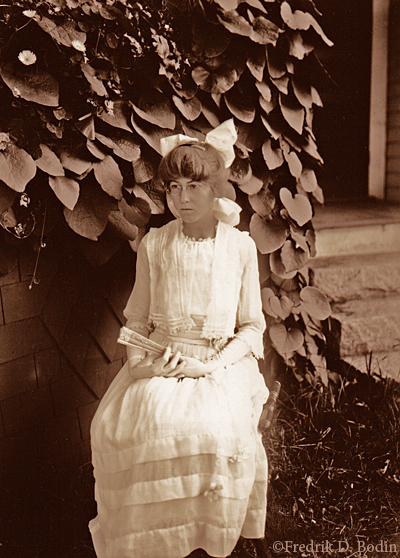
Dutchman’s Pipevine Photo from 1915

Look what Fred Bodin from Bodin Historic Photo shared!

Julia Lane, later Julia Wheeler, posed for Alice M. Curtis on August 12th, 1915, in Gloucester.

Fred read my post about Dutchman’s Pipevine and Pipevine Swallowtail Butterflies that originally appeared on Good Morning Gloucester, titled Plant, and They Will Come!  I mentioned in that post that the Dutchman’s Pipevine had it’s heyday in gardens in the previous two centuries. Pipevine was planted  to climb porches and arbors in pre-airconditioning days, providing  shade and cooling the rooms within. The Pipevine Swallowtail Butterfly is rarely seen in our region today because the Dutchman’s Pipevine is rarely planted.

Thank you Fred for taking the time to find this delightful vintage photo showing the Dutchman’s Pipevine growing on the porch in the background!

Dutchman’s Pipevine is the host plant for the Pipevine Swallowtail Butterfly and makes a wonderful addition to the garden. Back when it was in vogue (and practical) to plant Dutchman’s Pipevine, Pipevine Swallowtail Butterflies were a regular occurrence in the northeast.

 4-day old Pipevine Swallowtail caterpillars, recently molted. Notice their spiny discarded skins.

Note: the flower in the second photo of the Dutchman’s Pipevine is a Rose of Sharon, not the flower of the vine.

Plant! and They Will Come

Nearly five years ago in late September 2007, I photographed a male Pipevine Swallowtail Butterfly (Battus philenor) nectaring in my garden. I found mesmerizing its dark beauty, with black wings punctuated by brilliant orange spots and shimmering iridescence. The wings flashed electric blue in the fading late day sunlight and I became completely captivated!

Although the Pipevine Swallowtail is not rare in its southern range, this exotic looking butterfly is an unusual occurrence in the northeast, and even more rarely found on the eastern outer reaches of Cape Ann. Mine was a stray, carried in on a southerly breeze. I imagined that if a male can drift into our garden, so can a female. And if a visiting female found in my garden her caterpillar food plant, she would deposit her eggs. The following spring we planted the Dutchman’s Pipevine (Aristolochia macrophylla). Four years later, and our pipevine has grown well. With emerald green enormous heart-shaped leaves, she is quite a showstopper clambering over the back fence. The plant is named for its flower, which resembles a Dutchman’s pipe, although when ours flowers, the blooms are so small, so few, and so lost in the foliage, I barely know when it is in bloom. Our pipevine took several years to become established, but once firmly rooted, it grew vigorously, but not invasively. At the end of the growing season, or the beginning of the next, I cut the vine hard, down to the ground. Dutchman’s Pipevine grows in full sun and partial shade and is hardy in zones 4 to 8.

Aristolochia macrophylla had its glory days in gardens during the two previous centuries, prior to the invention of air conditioning. It was planted to cover porches and treillage; cooling and shading the rooms within. When looking through old photos you can easily spot the porches and arbors that are embowered with pipevine because of the distinctive heart-shaped foliage. I imagine Fred Bodin may even have a few pictures of pipevine shrouded porches in his treasure trove of vintage photographs.

 Pipevine Swallowtail Egg Clutch

While doing chores in our backyard, about a week ago Saturday, I noticed the rapid movements of a dark butterfly investigating the pipevine. I immediately paused because say, for example, if it was the more common Eastern Black Swallowtail, which deposits eggs only on members of the carrot family, it would not show the least bit of interest in the pipevine. Upon close investigation, it was a Pipevine Swallowtail and, without doubt, it was a she! After first zooming in and out of the house to grab my camera, I observed her as she fluttered from tendril to tendril. She deliberately chose the tenderest leaves, pausing briefly several times to curl her abdomen to the underside to deposit her eggs. After she departed I ran in the house to tell anyone who would listen of the Great News. In our household my butterfly news is pretty much the family joke, although my husband kindly offered to get the tallest ladder from the basement. He held tight while I climbed to the top rung in search of eggs. I struck gold! Unlike the female Monarch and Eastern Black Swallowtail butterflies, which deposit eggs singularly, the Pipevine Swallowtail oviposits eggs in clusters. I counted somewhere between 25-30 eggs (very approximately) in the clutch we cut from the plant. I hope we have enough pipevine to feed this many hungry Pipevine Swallowtail caterpillars!

Pipevine Swallowtail Caterpillars Several Hours New

One Day New Pipevine Swallowtail Caterpillars

Range Map of Pipevine Swallowtail (Battus philenor)

 ~ Map courtesy NABA

Gloucester Harbor Walk ~ What a Difference! Construction Phase Accomplished in Only a Few Months!

Congratulations and thank you to Mayor Kirk,  Sarah Garcia, Chris Muskopf, Jay Ramsey, and including everyone involved (there are many, many more than named here–these are the people I have had the pleasure to work with on the project) for having the vision, courage, tenacity, and talent to create Gloucester’s Harbor Walk.

Gloucester Harbor Walk ~  View of Gus Foote Park

The Harbor Walk is nearing completion. Despite the plethora of unforeseeable problems with the landfill at I4-C2, and current drought, the walk looks gorgeous. Come, take a stroll!

Gus Foote Park Last Year at this Time. What a difference–the build phase of the project was accomplished in only a few short months!

I will be bringing you more ‘before and after’ photos, as well as information about the native plants habitat gardens (and how you can translate that information to your own garden), in the coming months.

Baltimore Checkerspot Butterfly

This striking Baltimore Checkerspot was photographed last week in a field of Common Milkweed (Asclepias syriaca). The field is located in Ipswich’s town center.

Notice the Baltimore Checkerspot’s vivid orange antennal clubs and white and orange dotted abdomen. The caterpillar’s food plant, or host plant, is mainly turtlehead (Chelone glabra) in low lands and gerardias upland, e.g., Smooth False Foxglove (Aureolaria flava).

Baltimore Checkerspot (Euphydryas phaeton) Ventral

I find absolutely the most interesting creatures in fields where grows Common Milkweed, which tells us that the plant provides a wealth of nourishment for a diverse range of organisms.

Note: The underside of butterfly wings are referred to as ventral; the upper surface as dorsal. An easy way to remember the difference between the terms dorsal and ventral is to think of the dorsal fin of a dolphin.

Chasing Rainbows (and Storm Clouds)

The beautiful double rainbow late Saturday afternoon had faded, but I did see this on my way home.

Rainbow over Bass Rocks

The sky was so gorgeous I next stopped at Smith’s Cove to catch the end of the setting sun. The hues quickly changed from vivid yellow-orange to orange-violet-pink.

Smith’s Cove East Gloucester

Click photos to view larger-more dramatic looking!

Polyphemus Moth

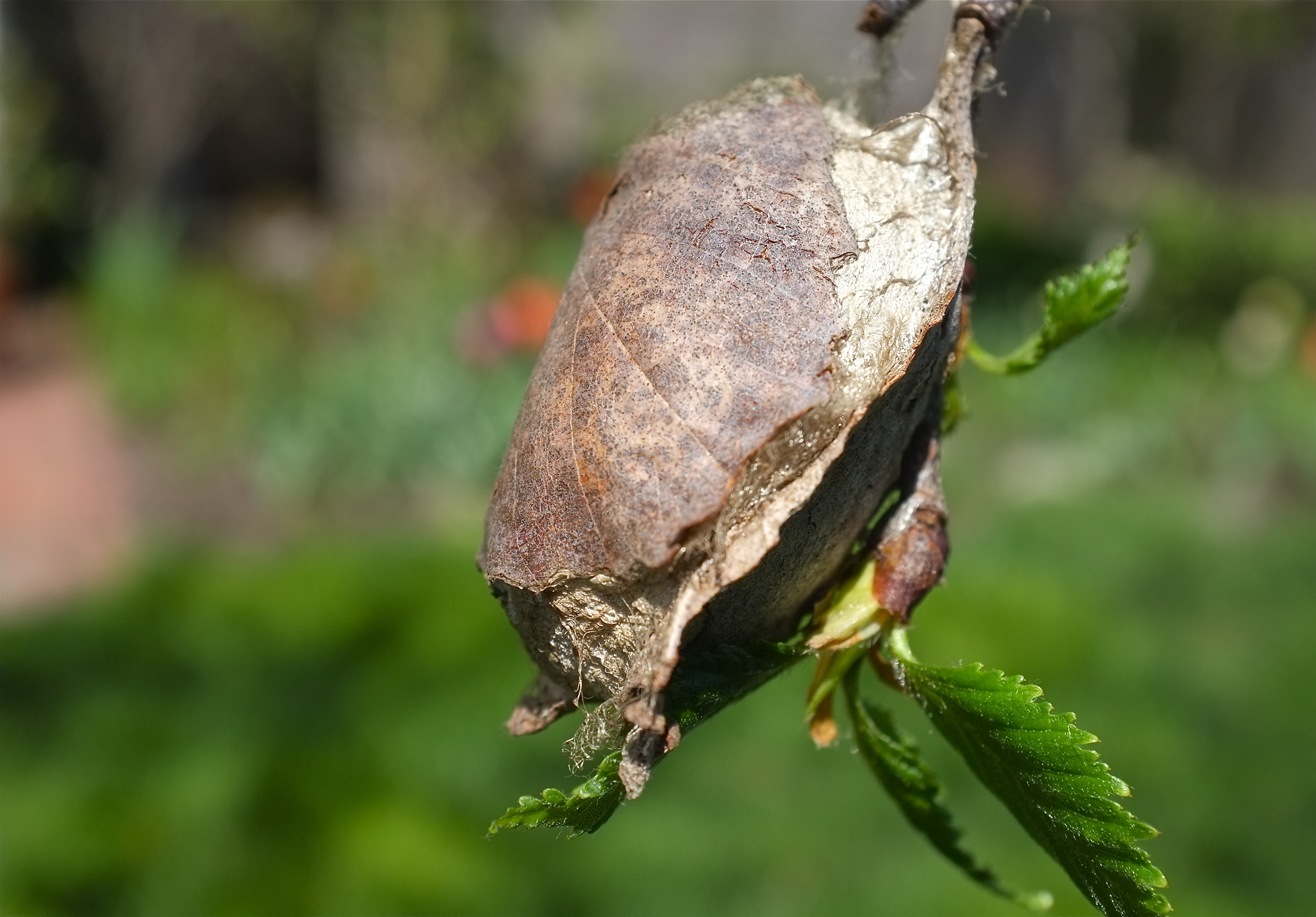
Perhaps you may recall the photo of the wild silkworm cocoon that was posted back in April. I was becoming a little discouraged at the lack of activity and wondered if we should place the cocoon, which was housed in a terrarium and protected from the sun by our shaded porch, into full sun. My worries were for nothing because during the heat wave Thursday, sometime in the mid-morning hours, a gorgeous female Polyphemus Moth (Antheraea polyphemus) emerged from her cocoon.

Female Polyphemus Moth (Antheraea polyphemus)

The Polyphemus Moth is so named because of the giant eyespots ringed with yellow, blue, and black on the hindwings. In Greek mythology Polyphemus is the one-eyed Cyclopes and son of Poseidon and Thoosa; the name means “much spoken of” or “famous.”

The Polyphemus Moth has also transparent spots on the forewings. Antheraea polyphemus is one of North America’s largest moths with a wingspan of four to six inches. Like the Luna Moth and Cecropia Moth, the Polyphemus Moth belongs to the Giant Silkworm Family or Saturniidae.

Male Polyphemus Moth (Antheraea polyphemus). Note the comb-like feathery antennae of the male, which are nearly double the size of the female. The large antennae can more easily detect pheromones released by the female. 

I was hoping a female would emerge, knowing that she would release pheromones, which would attract a male. Thursday night we set up the terrarium outside in a sheltered area around back. The following morning, sure enough, I discovered a perfect male specimen clinging to the back door. They don’t fly very well when their wings are not warmed sufficiently so he was easy to capture. I placed him into the terrarium with the female. Her abdomen is bursting with eggs and she had already begun to deposit unfertilized eggs everywhere—on leaves, her old cocoon, and the glass walls of the terrarium. That night I woke up every hour on the hour to try to photograph their mating, but I don’t think a pairing took place.

Female Polyphemus Moth with abdomen swollen with eggs.

She is continuing to deposit eggs each evening. Her abdomen is still quite swollen. I am keeping my hopes up that they will get it together so the male will fertilize her eggs and we can then rear the caterpillars! Both male and female emerge without mouthparts; they do all their eating in the caterpillar stage.

Polyphemus Moth Cocoon found on White Birch  (Betula papyrifera) April 1, 2012.

Sunset Swim

We’re having a heat wave,

A tropical heat wave,

The temperature’s rising,

It isn’t surprising,

She certainly can-can.

Niles Beach

First day of summer and first swim of the season!  Last night we packed a picnic and went for a swim–the perfect antidote to a heat wave. Tonight–more of the same!! We’re so fortunate to live in Gloucester, moments away from any number of beautiful beaches.

Snowy Egret Niles Beach

“Heat Wave” ~ Irving Berlin, from the musical “There’s No Business Like Show Business.”

Madeline Sings What a Wonderful World

What a Wonderful World, sung by five-year old Madeline Ciaramitaro at her great-grandmother’s memorial. Surrounded by her loving family, Madeline does’t miss a lyric, despite the baby crying (on cue) and a great deal of background noise. I think Madeline’s world is pretty wonderful!

Smiths Cove Sunset

Smiths Cove East Gloucester

Neighbor Dave eating lobster on his boat and watching the setting sun. He very generously offered Rosa several bites of lobster–something she never gets at home because her owners are too stingy when it comes to sharing lobster!

A Hummingbird’s Perspective

Hummingbirds can easily distinguish red contrasted against green.

Trumpeting the Trumpet

Early blooms are an important feature for the vine planted to lure hummingbirds. You want to provide tubular-shaped flowers in shades of red and orange and have your hummingbird feeders hung and ready for the earliest of the northward-migrating scouts. If nothing is available, they will pass by your garden and none will take residence. Hummingbirds can easily distinguish red contrasted against green. We go so far as to plant vivid Red Riding Hood tulips beneath our hummingbird feeders, which hang from the bows of the flowering fruit trees. Although hummingbirds do not nectar from the tulips, the color red draws them into the garden and the flowering fruit trees and sugar water provide sustenance for travel-weary migrants.

Lonicera sempervirens, also called Trumpet and Coral Honeysuckle, is a twining or trailing woody vine native to New England. Trumpet Honeysuckle is not at all fussy about soil and is drought tolerant. Plant in full sun to part shade. If Trumpet Honeysuckle becomes large and ungainly, prune hard to the ground—it grows rapidly and a vigorous pruning will only encourage more flowers.

Lonicera sempervirens John Clayton

‘Major Wheeler’ flowers in a deeper red than that of the carmine of ‘Dropmore Scarlet.’ ‘John Clayton’ is a cheery, cadmium yellow, a naturally occurring variant of Lonicera sempervirens, and was originally discovered growing wild in Virginia. The blossoms of ‘Mandarin’ are a lovely shade of Spanish orange.

Trumpet Honeysuckle has myriad uses in the landscape. Cultivate to create vertical layers, in a small garden especially. Plant Lonicera sempervirens to cover an arbor, alongside a porch pillar or to weave through trelliage. Allow it clamber over an eyesore or down an embankment. Plant at least one near the primary paths of the garden so that you can enjoy the hummingbirds that are drawn to the nectar-rich blossoms. I practically bump into the hummingbirds as they are making their daily rounds through the garden flora. Did you know they make a funny squeaky sound? I began to take notice of their presence in our garden, when at my office desk one afternoon in late summer, with windows open wide, I heard very faint, mouse-like squeaks. I glanced up from my work, fully expecting to see a mouse, and was instead delighted to discover a female Ruby-throat outside my office window, nectaring at the vines. Trumpet Honeysuckle not only provides nectar for the hummingbirds, it also offers shelter and succulent berries for a host of birds.

While planting the summer gardens at Willowdale this past week we observed dozens of Ruby-throated Hummingbirds nectaring at the Trumpet Honeysuckle embowering the courtyard doors.

Lonicera sempervirens is a caterpillar food plant for the Snowberry Clearwing moth.

Fragrant Daylilies

Oftentimes well-meaning hybridizers neglect fragrance, instead favoring a particular color or over-sized blooms. Hemerocallis dumortieri is a species daylily, which means the plant you see growing in the garden is exactly as you would find it growing in fields of wildflowers in Manchuria, eastern Russia, Korea, and Japan. The golden yellow-orange flowers have a scent to match their color; the fragrance is a heavenly combination of orange blossoms and honeysuckle.

H. dumortieri  is one of the earliest daylilies to flower, beginning to bloom in May in eastern Massachusetts.  The plants are compact, with narrow, arching leaves and the copper-hued buds open to warm marigold-yellow, star-shaped flowers; the backs of the tepals are washed with reddish brown striations.

Adored


This past week at Willowdale we planted the stunning tree peony ‘Keiko’, which means “adored.” Briar’s favorite color is pink so I am always on high alert for rose-hued blossoms. I took one look at this drop dead gorgeous plant and just had to have it for Willowdale. Don’t you find in nature there are seemingly infinite shades of pink? The beautiful blowsy blossoms of  ‘Keiko’  possess myriad.

Did I mention ‘Adored’ is delightfully fragrant? The fragrance is sweet, but not cloying–very light and fresh.

The Friendly Red Admiral Butterfly

I am receiving a mountain of emails about the beautiful butterfly with underwings of mottled brown and upper surface banded brilliant fiery orange-red.

The Red Admiral butterfly is having an “irruptive” year and millions are streaming northward through gardens from Texas to Canada. An irruption for a species of butterfly can best be described as a sudden sharp increase in the relative numbers of a population.

This has been an amazing spring for butterflies, not only because they emerged earlier, but because they are present in much greater numbers than is usual. I have also been filming many more Question Mark and Painted Lady butterflies than is typical for this time of year.

The following is excerpted from an article about the Red Admiral that I wrote several years ago. Click here to read the complete text.

Red Admirals are Holarctic, a term used by zoologists to define the ecozone covering much of North America and Eurasia, which share many faunal characteristics. In our region Red Admirals are a migratory species that cannot withstand cold winter temperatures. Their numbers in any given year vary, from uncommon to abundant, and their abundance depends on the nature of that year’s migration and the success of the resulting breeding season. In the first week of May, Red Admirals begin to appear from overwintering populations in North Carolina and southward. Males perch from advantageous lookouts and will dart out to investigate passersby— prospective mates, other insects, and humans. Famously friendly, the Red Admiral readily alights on people, attracted by the salts in perspiration. They are on the wing almost continuously from May to October. The second, and quite possibly third generation,  from the initial spring flight, begins the southward migration in late August to October.

Red Admiral Nectaring at Common White Lilac (Syringa vulgaris)

The caterpillar’s primary food source is nettles—in New England these include Stinging, Tall, False, and Wood Nettles, all of which are unsuitable for the garden, particularly a small garden. The caterpillars “sew” the edges of the nettle leaves together with their silk and feed from within the shelter. The adults nectar at a wide variety of plants and are attracted to sap flows, rotting fruit, bird droppings, and wet soil.

Nabokov referred to V. atalanta as the Red Admirable and they appear several times in his novels to foreshadow death. “Its coloring is quite splendid and I liked it very much in my youth. Great numbers of them migrated from Africa to Northern Russia, where it was called ‘The Butterfly of Doom’ because it was especially abundant in 1881, the year Tsar Alexander II was assassinated, and the markings on the underside of its two hind wings seem to read 1881.”

Read More: The Red Admirable ~ Vanessa atalanta rubria


North Shore Wedding Magazine

Click any photo to view slideshow-

For weeks I had planned to photograph the tulips in bloom at Willowdale, but only in the late afternoon sun. Each afternoon I headed out, the sky grew overcast. Last Monday the sun shown gloriously the entire day.

Fortunately I caught the tail end of North Shore Wedding Magazine photographing their Premier Issue in the gardens at Willowdale. North Shore Wedding Magazine is a brand new biannual publication featuring quality North Shore wedding professionals and venues, and is the sister publication to New Hampshire Wedding Magazine.

Sarah Boucher’s (Willowdale’s Planning Manager) lovely table styling for the North Shore Wedding Magazine photo shoot.

Kristina Hathaway with model

I hope this does not sound boastful however am mentioning because I just love it when people understand the design intention of a project. Kristina Hathaway remarked that she loved the feminine quality of the garden’s design juxtaposed against the masculine architecture of the stone mansion—music to my ears! The design challenges at Willowdale are multifold, yet rewarding, and from April 1st to until the first week of November you will find the gardens in bloom!

Tuesday evening, June 12, at 7:00 pm come join me in the gardens at Willowdale Estate. Enjoy refreshments and a tour of the garden, followed by a showing of my film “The Butterfly Garden at Willowdale Estate.”  RSVP to Info@Willowdale Estate.

Click any photo to view slide show-

Super Moon Photos

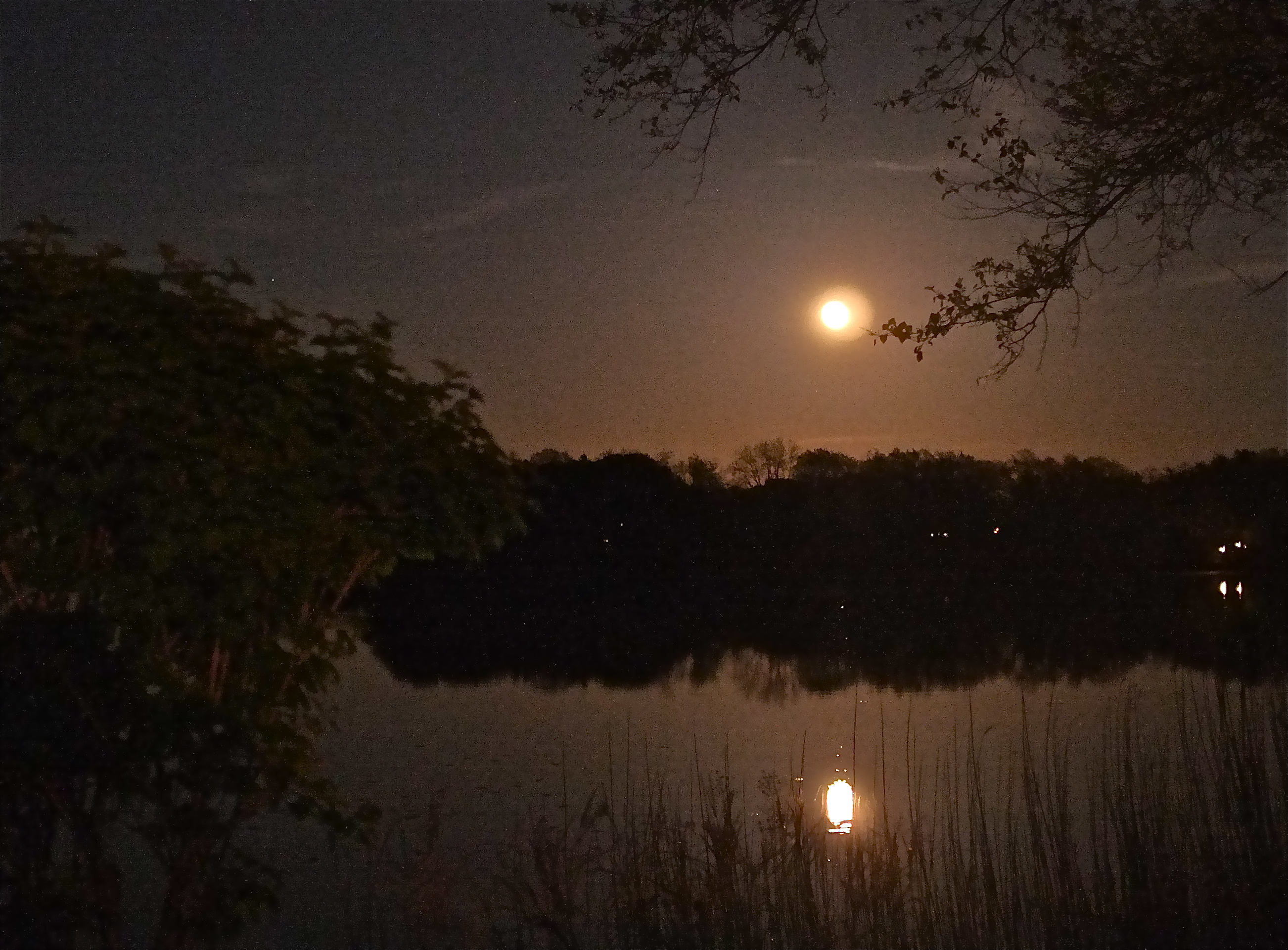
I am a little behind in posting my Super Moon May 2012 photos. I thought I hadn’t anything worth posting and didn’t bother uploading. Unfortunately, I broke my tripod taking the first shot. Photographing in the dark is not my specialty and the venture was my usual comedy of disasters.

Perigree Moon at Niles Pond

Birch Trees at Niles Pond for Maggie Rosa

I arrived at the Good Harbor foot bridge early and waited for the moon to rise, and waited, and waited. Nothing. Had I read the time incorrectly? Impatiently I left and as I was coming around the crest of the hill on the back shore, there was the perigree moon , in full glorious orange rising across sea. I hadn’t gotten the timing wrong, only the location. In my hurriedness to set up, I parked poorly and almost got run over getting out of the car. Struggling with my tripod in the dark I tripped and crashed and snapped off a leg; tripod is now a monopod. After all that, I was surprised to see the night wasn’t a complete waste of time. Note to self–bring flashlight and go with a friend when photographing late at night!

Meet Chris Muskopf

Chris Muskopf and the newly planted Tulip Trees at St. Peter’s Square

Friday late afternoon I took a stroll along the Harbor Walk to have a look at the newly planted gardens. I heard a friendly hello from behind and there was Chris Muscopf, primary architect and project manager for the Harbor Walk, stopping by to check on the gardens, too. Chris was later meeting JD MacEachern and they were on their way to a running race at Good Harbor Beach.

Chris Muskopf and JD MacEachern

Chris lives in Jamaica Plain with his wife and young daughter Beatrix and rides his bike, or runs, to his job at Cambridge Seven Associates nearly everyday, rain or shine. I’ve gotten to know Chris a little bit over the past year and he is an all around great guy, with a wonderful sense of humor. Chris is working tirelessly, and always with much enthusiasm, to make the Harbor Walk a success. Stop in and see the work in progress. I think you’ll agree, the Harbor Walk is coming along beautifully!

Winter King Planted in the Harbor Walk Gardens

Jay Ramsey with his crew Mauriocio Tuquerres and Mike Rogers planting hawthorn Crategus viridis ‘Winter King’ at Gus Foote Park.

Last week Jay Ramsey and his crew planted the garden at I4-C2 and two trees at Gus Foote Park. Jay (Farm Creek Landscaping) suggested the hawthorn ‘Winter King’ and project architect Chris Muskopf and I agreed it was a great suggestion. Jay has had good success with ‘Winter King;’ notably with the several he planted along a windswept bank of the Annisquam River. ‘Winter King’ is relatively disease and pest free (atypical for members of the Rose Family) and is noted for its profusion of white flowers in May and tight clusters of bright red fruits that persist through the winter. The fruits are usually not eaten by birds until late winter. Crategus viridis is tolerant of poor soils and urban conditions. Crataegus means strength and viridis refers to the greenish bark of the species, however ‘Winter King’s’ bark is more silvery.

More ‘Living in a Fitz Henry Lane Landscape’

Smith’s Cove last evening after the sun set and as the fog rolled across Rocky Neck.

Love and Other Anxieties

My friend Lyda Kuth’s film Love and Other Anxieties played to a packed house yesterday at the Independent Film Festival Boston. Beautiful and heartfelt, Love and Other Anxieties is a personal exploration about the meaning of love and long-term commitment.

Click photo to view a larger image.

You can see in the above photo the line for Love and Other Anxieties stretched the length of a city block, wrapping around the corner, and ending behind the theatre.

Arriving early allowed a few minutes to have fun with street photography. My x100 is terrific for photographing people without being noticed and for the most part, passers-by don’t mind even if they do notice. Davis Square was teeming with people and the restaurants were jam packed.

Somerville Theatre

Somerville Theatre

With 98 films playing over the course of a week, and the greatest number of films shown during the weekend, I was impressed with how well organized is the festival–run entirely by volunteers.

Somerville Theatre

I was hoping to take a snapshot of Lyda with her family after the film, but we were hurried out of the theatre to make way for the next film. Lyda was surrounded by a throng of well-wishers and friends and I was so happy to see her happiness. Congratulations to Lyda for the successful launch of her beautiful and touching film, first of many I hope!

Love and Other Anxieties Trailer 

Interview with Lyda from New England Film

Sweet Scents of Spring

Flowering Crabapple

Fragrant Snowball Viburnum (Viburnum x carlecphalum)

Narcissus’ Geranium’

Dwarf fothergillaFothergilla ‘Mount Airy’