Category Archives: #ploverjoyed

CELEBRATING EARTH DAY FROM GOOD HARBOR BEACH!

Despite the wind and chilly temperatures, this morning a wonderful multi-generational group of dedicated Earth-stewards met at GHB to clean the beach and to celebrate our beautiful Earth in kind thoughts and prayers. The clean-up was organized by Reverend Sue from the Annisquam Village Church and sponsored by the Cape Ann Climate Coalition Interfaith Group, Clean the Creek, The AVC Creation Care Team, and the Plover Ambassadors.

Thank you to Everyone who attended and for your deep love of Good Harbor Beach. Captioned where possible

Reverend Sue in the red coat

Rory McCarthy (left) grassroots Clean the Creek organizer

Three Generations of Sibley Earth Stewards

399 cigarette butts found in one small stretch of Nautilus Road

Good Harbor Beach Earth Stewards

CELEBRATING EARTH DAY!

Please join us tomorrow, Saturday, at 9am at Good Harbor Beach <3


Reflections on Earth Day from Town Green founder Dick Prouty

Dear Friends,

When we started TownGreen in 2015, the level of understanding of the threat of climate change was not widespread. Yes, TownGreen had some good Sustainability Fairs with large attendance, and we had a nice solarize campaign in 2017-2018 with well over 100 roof installations at discounted prices. But was there a general awareness that our very existence on the coast was threatened by sea level rise, extreme heat, and more severe climate threats? Not really.

Now, eight short years later, the tide of public opinion is quickly changing. I am heartened by the rapid growth of support for climate action. TownGreen’s community education programs, informed by the valuable research from Harvard’s Graduate School of Design, brings climate change home to our local neighborhoods and beloved icons of Cape Ann, such as Good Harbor Beach. Our programs are resulting in a heightened community awareness of climate impacts and increasing threats to our region. The challenge now is to identify and implement mitigation and adaptation strategies as best we can.

I am thankful for the large numbers of people who have made a difference by supporting TownGreen. There are literally hundreds of you who have contributed to our annual fund, who regularly attend TownGreen webinars and in-person events, and lend your hearts and minds to concrete climate action. Thank you. There is no greater mission than being in this climate fight to save our Cape Ann community for future generations. We are grateful to be working alongside such a wonderful group of friends.

All the best on Earth Day 2023!
Dick Prouty, Chair, TownGreen Board of Directors

Watch how handicapped Piping Plover Super Mom has adapted in how she gets around

Lots of folks are asking, “how does Piping Plover Super Mom manage with her missing foot?” She has adapted beautifully however, you can see from these short clips, that it takes much more effort to get around.

If you see Plovers on the beach know that one may be Super Mom. Plovers need minimal disruption as they are becoming established at their nesting sites and Super Mom even more so.

Thank you for giving the Plovers all the space that they need!

In the summer of 2021, one of the Good Harbor Beach Piping Plover’s foot became entangled in dried seaweed and monofilament. Over the winter she lost all the toes on her right foot. She returned to GHB in 2022. Piping Plover Super Mom has adapted in how she walks, runs, forages, preens, and even in how she mates. Over the summer of 2022 she and her long time partner, Super Dad, successfully raised four chicks to fledge. She has again returned to her nesting site in the spring of 2023. She is healthy, foraging well, and nest scraping with her mate!

FROM THE GLOUCESTER TIMES – MASS AUDUBON TO HELP PROTECT PLOVERS

We’d like to send a heartfelt thank you to the Gloucester Daily Times staff writer Ethan Forman and editor-in-chief Andrea Holbrook for writing about our Good Harbor Beach Plovers. We friends of Cape Ann Plovers appreciate so much your thoughtful writing and taking the time to get the story straight!

Mass Audubon to help protect threatened plovers

By Ethan Forman

The sighting of the one-footed piping plover Super Mom, and others like her on Good Harbor Beach during the last week in March, coincides with human activity there meant to help preserve and protect coastal shorebirds during the busy summer beach season.

That includes the installation of symbolic fencing made up of metal posts and yellow rope around the dunes with signs letting beachgoers know the “Restricted Area” is “a natural breeding ground for piping plovers.”

“These rare birds, their nests and eggs are protected under Massachusetts and federal laws,” the signs read.

The nation’s oldest seaport is taking extra steps this year to monitor and minimize disturbances to Super Mom and others of her threatened species of small, stocky migratory birds that have made the popular beach their summer home in recent years.

On Monday, the city announced it had entered into an agreement with Mass Audubon to help with the monitoring and management of coastal nesting birds, including piping plovers, on the city’s public beaches, according to a press release.

READ THE FULL STORY HERE

WONDERFUL NEWS – HANDICAPPED PIPING PLOVER SUPER MOM AND SUPER DAD REUNITED!!!

Dear PiPl Friends,

We are overjoyed to share that our Super Mom and Dad have reunited!

Early last week while checking on Plovers, it appeared as though one of the sets of Plover tracks was our Super Mom. The day was very windy and the tracks were disappearing as I was filming however, they looked like tracks made by a peg leg. Later in the week, I spotted the pair we have been seeing since the last week in March. Because of the cold and wind they had been laying low. But sure enough, as soon as the female moved, it was clear she was our handicapped Mom!

Handicapped Mom’s tracks

I think it’s truly extraordinary that our handicapped Mom has twice been able to make the round trip migration south to north and north to south, despite her missing digits. With her missing toes, she has had to totally adapt in how she walks, runs, stands, forages, nests, preens and even how she mates.

Wildlife can be remarkably resilient. I am reminded of the Great Lakes Old Man Plover, one of the oldest Plovers on record. When he was about 11 years old, he lost the toes on his left leg, just like our Super Mom has lost hers on her right leg. He continued to return to Sleeping Bear Dunes until 2017, when he disappeared.He was fifteen years old when last seen.

Super Mom

We also have a handsome bachelor who is actively calling for a mate. Hopefully his loud piping will entice a migrating female to check out GHB!

One Plover has been spotted at Cape Hedge by Plover Ambassador Paula. The weather was cold and windy and the PiPl was difficult to see  from a distance whether male or female.

Piping Plovers are extremely vulnerable to disturbance while trying to establish their nests. If you see them on the beach, give them a nod, but please give them lots and lots of space. We all thank you for your kind consideration!

Nest-making – Dad on the left, our Mom with her missing foot on the right

If you would like to join our Piping Plover Ambassador group, please email me at kimsmithdesigns@hotmail.com, or leave a comment in the comment section and I will get back to you. Thank you.


SAVE THE DATE FOR THE GOOD HARBOR BEACH CLEAN-UP AND EARTH DAY CELEBRATION!

Reverend Sue from the Annisquam Village Church writes

The Cape Ann Climate Coalition Interfaith group is hosting our 2nd Annual Earth Day event on Saturday, April 22nd at 9 a.m. We will begin with a beach clean-up and then gather at 9:30 for an interfaith ritual.  The event is being co-sponsored by the AVC Creation Care Team, Clean the Creek and the Piping Plover Ambassadors.  A flyer is attached.  If you would like to help lead the event, please let me know.
Peace, Sue


I hope you can join us!

HOW WE CAN ALL HELP CAPE ANN PLOVERS SETTLE IN FOR THE NESTING SEASON

Dear Friends,

A friendly reminder that after March 31st,  pets are not permitted at Good Harbor Beach until after September 30th. Thank you!

At this time each year, we receive many reports of, and are sent photos of, dog owners not adhering to the seasonal change in policy regarding pets on the beach. If you see a dog on the beach, the best way to help is to please take a photo and call the Gloucester PD Animal Control phone line at 978-281-9746. If no one answers, please leave a message with the time and location.

We are hoping the no pets sign at the Salt Island end of the beach will be installed soon and that the flashing sign will again be put to good use. Our Animal Control Officers Jamie and Teagan work very hard patrolling the beach and chasing after scofflaws, but they can’t be there 24/7. For the common good of the community, it’s up to us as individuals to follow the signage and respect wildlife that makes their home on the beach.

Every community in Massachusetts that is home to nesting shorebirds has both a legal and principled obligation to share the share with wildlife. To say nothing of the joy to be found in helping vulnerable and endangered creatures. Please try to understand that if dog owners continue to bring their dogs to the beach and the City does not enforce the pet ordinance, Good Harbor (and any beach) is at risk of shutting down for the summer. NO ONE WANTS THAT. The City and we Ambassadors work very hard to be in compliance with Massachusetts and Federal regulations to protect nesting shorebirds and other wildlife. Saving the Beaches Equals Protecting our Plovers!

Equally as important as following pet ordinances, please give the birds lots and lots of space. Enjoy that they are here, take a few photos from a distance, and then move on and allow them to do their thing. At this time of year, they are fortifying after the long migration and resting up so they can begin courting, mating, and become excellent parents to their highly energetic and rambunctious chicks.

Please help spread the word about Cape Ann Plovers. If you see a Piping Plover at one of our beautiful Cape Ann beaches, please email me at kimsmithdesigns@hotmail.com, leave a comment in the comment section, or let one of our other Ambassadors know.

For more information and answers to frequently asked questions, which also provides several reasons as to why its so important that pets are off the beach by April first, please go here: The Piping Plover Project

If you would like to join our Piping Plover Ambassador program, please email Kim Smith at kimsmithdesigns@hotmail.com or leave a comment and I will get back to you.

xxKim

Thank you for Giving a Peep About Plovers!!


CAPE ANN PIPING PLOVER UPDATE!

Dear PiPl Friends,

Very Happy News to share – yesterday at GHB I spotted a little smattering of PiPl tracks. I could not locate any Plovers, but the beach has been very busy with dogs and they may just be lying low. Their arrival is right on schedule. The past several years the first sightings have been on the 25th and 26th.

Piping Plover tracks, Good Harbor Beach, March 27, 2023

If anyone is concerned as to why the dog regulations are not yet posted at the footbridge, it is because the old sign and posts were damaged during a winter storm. The DPW is building a new one, the second coat of paint is going on tomorrow, and signs should be posted by the 30th. Keeping our fingers crossed that they do go up before the 31st! The symbolically roped off areas have not yet been installed. Last year this was done prior to April 1st, so we are very much hoping that this job is on DPW’s  agenda for this week as well.

Signage really helps more than many people fully understand. Yesterday was an on-leash day however, there are currently no signs at the footbridge end. At this time of year, the footbridge side of GHB is the main access point to the beach as the parking lot is still closed. I only ever take Charlotte to the beach on on-leash days because although dogs off-leash are supposed to be under voice command, that is simply not the case at any public space in Gloucester where dogs are allowed off-leash. In the forty-five minute time frame that Charlotte and I were there, 14 dogs were on the beach, two on-leash, the other 12 were not on-leash. I thought we were safe as we were up by the dunes looking for tracks while all the dogs were down by the water’s edge. We did not hear the German Shepherd approaching. The dog knocked Charlotte over and left her in hysterics. The owners did nothing to control their dog as it came back around a second time, only shouting that their dog was “friendly.” We walked back to the car through the parking lot as it was the least threatening choice. Charlotte is not prone to hysterics but when you are only three and a half feet tall and an animal twice your size knocks you down, well it just made us both feel terrible. Me, because I let it happen and her because she was so frightened. I don’t want my granddaughter to grow up feeling so terribly afraid of large dogs.

Back to good news – On Boston’s North Shore, Plovers have been spotted at Crane, Plum Island, and Winthrop Beaches. Our Cape Ann Plover Ambassadors are ready for a super summer of Plover monitoring. Rockport has a new conservation agent, John Lopez who, coincidentally, did his thesis on how off road vehicles impact Plovers. Gloucester City Councilors Scott Memhard and Jeff Worthley have been working with the ambassadors this winter on creating Plover awareness and also working with the Clean the Creek grassroots organization to get to the bottom of the Creek contamination. We have many new Ambassadors and are looking forward to meeting them all at our first informational meeting, which will take place when the Plovers are more settled in. If you would like to be a Piping Plover Ambassador this summer, please contact me at kimsmithdesigns@hotmail.com or leave a comment in the comment section. We would love to have you!

Warmest wishes,

xxKim

PIPING PLOVER SPOTTED AT WEST DENNIS!

Hello PiPl Friends!

Cheery news to share from PiPl Ambassador Deb- Friday, March 3rd, a Piping Plover was spotted at beautiful West Dennis Beach, on Cape Cod! It won’t be long 🙂

Thank you so very much to Jonathan and Sally for hosting the PiPl meeting and for organizing and compiling the notes. There’s a great deal to tackle here, but we’ll work away at the list. And many thanks to Jeff for sending the beach regulations, which are also attached. Additionally, Jayne Knot sent along the data from the contaminated Creek reports – very interesting read. I’ve been in touch with Rory McCarthy, who is heading up the Clean the Creek initiative and hope to speak with her this week to see how we can help. She shares lots of great information on her Instagram page at clean_the_creek.

Happy Monday!
Warmest wishes,
Kim

PiPls in a windy March snowstorm several years ago

PIPING PLOVER FAQS FROM THE PIPING PLOVER PROJECT

Thank you Friends for writing in some of your most frequently asked questions. I’ve added the questions to the new website, The Piping Plover Project.

Piping Plover Frequently Asked Question

We’re glad you stopped by to learn more about Piping Plovers! The following are some of the most frequently asked questions about nesting Plovers. If you don’t find an answer to your question here, please write in the comments and let us know. The question you have, others may have as well. Thank you!

Do Plovers really start walking as soon as they hatch?

Yes! Plovers are precocial birds. That is a term biologists use to describe a baby bird’s stage of development at birth. Unlike songbirds, which generally hatch helpless, naked, and blind, Plovers hatch with downy soft feathers and are fully mobile. They can run, peck, and are learning to forage within a few hours after hatching. The one thing they can’t do is regulate their body temperature. Plover chicks feed in short intervals, then run to snuggle beneath Mom or Dad’s warm underwings.

Do they have predators? What is their greatest threat?

Plover chicks are vulnerable to a great number of predators including Herring Gulls, Great Black-backed Gulls, American Crows, Peregrine Falcons, Eastern Coyotes, Red Foxes, and Gray Foxes. The greatest threat to Plovers is when dogs are allowed to run freely through the nesting area, which causes the adults to chase the dogs, which leaves the eggs and chicks vulnerable to avian predators. The second greatest threat to Plovers is the garbage left behind by beachgoers, which attracts crows and gulls, both of which eat chicks and eggs.

How many generally survive?

On average, only 1.3 chicks survive per nesting pair. Most chicks are lost within the first two days.

How long does it take a Plover chick to learn to fly?

By the time a Plover is about 25 days old, it can take very brief test flights. At about 35 days, or five weeks, a Plover is considered fully fledged.

Where do they migrate to when they leave their northern breeding grounds?

We know from Plover banding programs conducted at the University of Rhode Island that the majority of Massachusetts Piping Plovers fly  non-stop to the outer banks of North Carolina. Here they will stage for about a month. After fattening up for the next leg of their journey, many Plovers from the north Atlantic region migrate to the Bahamas, Bermuda, and the Turks and Caicos.

During this staging period, Plovers also undergo a molt, where they lose their old tired feathers and grow new fresh feathers.

Just as Piping Plovers are site faithful to their breeding grounds, so too are they are site faithful to their winter homes.

Do they come back to the same nest site every year?

Remarkably, many mated pairs do return to the very same nesting site. Piping Plovers show tremendous fidelity to each other and to their nesting site.  Even though they may winter-over in different locations, Piping Plover pairs may return to their breeding grounds within days of each other, and sometimes on the very same day. The chicks will  most likely not return to the precise location of their birth, but may return to the same region.

Why are the areas on the beach roped off .

Plovers need a safe haven from dogs and people when they are nesting, especially on busy beach days. Even after the nestlings have hatched and are running on the beach, the Plovers know that it is generally safe from disturbance within the symbolically protected area. The roped off areas also allows beach vegetation to regrow, which provides shelter and food for the chicks and adults. The new growth helps fortify the dunes against future storm damage and rising sea level.

Why don’t Plovers nest in the dunes.

Plovers generally do not nest in the dunes, but in the sand, precisely where beachgoers enjoy sitting. Plovers evolved to nest in sand. For one reason in particular, their eggs are very well camouflaged in sand, so well camouflaged in fact that is is easy for people and pets to accidentally step on them. Prior to the mid-1900s, beaches were not as widely used as the recreational areas they have become today. There was far less interaction with humans. Nesting in dunes poses an even less safe set of challenges, including predation of their eggs by mammals and rodents.

What’s the story with the local organization that is advocating to harm, eat, and/or kill Piping Plovers?

Piping Plovers are listed as a federal and state protected endangered and threatened bird species. Threatened species are afforded the same exact protections as are endangered species. It is illegal to eat, kill, harm, or harass Plovers in any way, and punishable by fines in the tens of thousands of dollars. If humans intentionally create an untenable situation for nesting birds, a beach may become closed for the season

Plovers are very small, only slightly larger than a sparrow, with unfortunately, a history of harassment that in some cases, has led to death. It’s amazing that such a tender tiny bird can elicit the worst behavior in some humans while also evoking the best in people who recognize their vulnerability.

Fortunately for the Plovers, conservation groups, volunteers, and an ever increasingly aware beach-going population of educated and kind hearted citizens are working toward helping folks better understand that by sharing the shore, we not only allow for our own enjoyment by keeping the beach open to the public, we are protecting and promoting the continuation of a species.

Can’t we just capture the Plovers and take them to a less trafficked beach, or build the birds a nest in a tree?

Plovers do not nest in trees. If the Plovers were removed from the beach, they would very likely return. Plovers will rebuild a nest up to five time during a single season. With continual disturbance to the birds, the end result would be no eggs and no chicks. The purpose of the Endangered Species Act and shorebird conservation programs is to rebuild the population to return the Plovers to safe numbers where we know the species will survive.

Do volunteers come every day?

Yes, PiPl Ambassadors are on the beach everyday, seven days a week, from sunrise until sunset. If you would like to be a Piping Plover volunteers, please contact Kim Smith at kimsmithdesigns@hotmail.com or leave a comment.


Piping Plovers arriving soon :)

Dear PiPl Friends,

Looking out the window at snow covered scapes, it’s hard to imagine that in just about a month little feathered friends will be arriving at our local beaches. For the past several years our original Piping Plover pair at #3 have arrived on March 25th. It’s very possible they may have flown directly from their wintering sites, hundreds of miles, if not over a thousand (we know this from banding programs at URI). The pair are usually weary and in need of quiet rest, at least for the first several days… then comes the business of courting and establishing a nest. I am so hopeful our handicapped Mom will be returning for a second summer after losing her foot. It’s unlikely we will see HipHop, not because he wasn’t strong enough to return, but because offspring don’t usually return to their exact birth location. We may see HipHop though at area beaches.

As usual, we will be providing Plover updates in emails, on our new website, Facebook, and Instagram. We are so appreciative of the Gloucester Daily Times’s Andrea Holbrook and Ethan Forman for their recent article highlighting the upcoming Plover season and helping to get the word out about our Ambassador program!

Welcome to our new friends and possible volunteers, George, Meah, Susan, Leslie, and Terry! Thank you so much for offering to volunteer and/or support us in other ways through getting the word out about our Ambassador program.

At our recent Plover organizational meeting, hosted by Jonathan and Sally, we decided our areas of focus are: Safety, Education, Volunteers, and City Support (thank you for organizing the topics Sally!) Jonathan added April/May strategies, which as we seasoned volunteers know, poses a different set of challenges. City Councilor Jeff Worthley was in attendance, and it was a huge help to have someone who can provide insights into what can be accomplished through working with the City. Jeff shared that in the 90s he worked at Good Harbor Beach for five summers and he was also the chairperson of Beach Parking and Traffic Committee that brought us the advance ticket reservation system, so he also has great historical perspective on the ongoing issues at GHB.

The Creek is still closed due to storm/sewage runoff and it appears the City is no closer to determining the exact source. The fecal matter levels are 14,000 times what is acceptable. This may not seem like a Plover matter (so far, it does not appear to affect their well-being) but it often falls upon the Ambassadors to let people know how unsafe it is to swim there. The high levels are frequently reported on in the GDTimes, but if the City posted the actual levels on the signs at the beach, people might not be so quick to dismiss the warnings. We also discussed that it is probably not safe for swimmers at the mouth of the Creek either as a bunch of surfers that were recently surfing there are reportedly ill. We’d like to thank Councilors Scott Memhard and Jeff Worthley for addressing the contamination at the Creek issue, including walking the beach to let people know, and ensuring the warning signs are in place.

Here is a link to our new website – The Piping Plover Project. Many thanks to PiPl Ambassadors Paula and Alexa for sending along their most frequently asked questions, it was super helpful in putting the list together (link to FAQs). Please let me know if you have any FAQs you would like added to the list.

Happy Sunday and warmest wishes,
Kim

CHECK OUT TODAY’S GLOUCESTER TIMES “TALK OF THE TIMES!” Ambassadors sought to watch over Plover chicks

GLOUCESTER DAILY TIMES

TALK OF THE TIMES/ All Hands

Saturday, February 18, 2022

A Gloucester group is seeking volunteers to help look after the piping plovers when they nest at Good Harbor Beach, and setting up a website, pipingploverproject.org, offering information on the birds.

“We have received a number of inquiries regarding the upcoming plover season,” said Gloucester resident and Piping Plover Ambassador Kim Smith of the website. “And we wanted to have a page ready where people could find sign up information.”

“I envision this site as a place where we can not only get information, updates, and stories about our Cape Ann plover families, but to also learn more about plovers in general, other shorebirds, habitat conservation, and how climate change is impacting all,” said Smith in an email.

READ THE FULL “TALK’ HERE!


FAR FLUNG NORTHERN LAPWING IN OUR MIDST – AND A PIPING PLOVER RELATION!

This beautiful Northern Lapwing has been residing in Ipswich; it is thought at least since the violent storm of December 22nd.

The Lapwing was so interesting to watch as it foraged in the pasture using the same foot tamping technique that we see Piping Plovers exhibit when hunting for mini mollusks and sea worms at the beach. The Lapwing was using its feet to instead stir up worms in the muddy field.

Also called the Green Plover, the Lapwing is very elegant looking, with glossy green plumage (when caught in the right light), and a fine crest accented with long wispy feathers.  It’s quite a bit larger than the Piping Plover, several inches larger than even a Killdeer.

The adorable chicks look like a cross between Killdeer, PiPl, and Semi-palmated Plover chicks! Chick images courtesy Wiki Commons media

Typically, the wind in the North Atlantic flows in a positive phase from west to east. We occasionally see Lapwing vagrants when the wind in the North Atlantic changes its pattern to a negative east to west flow.

To better understand why New England, Newfoundland, and Labrador are occasionally “invaded” by Northern Lapwings, read this easy to comprehend article by author Amy Davis here:

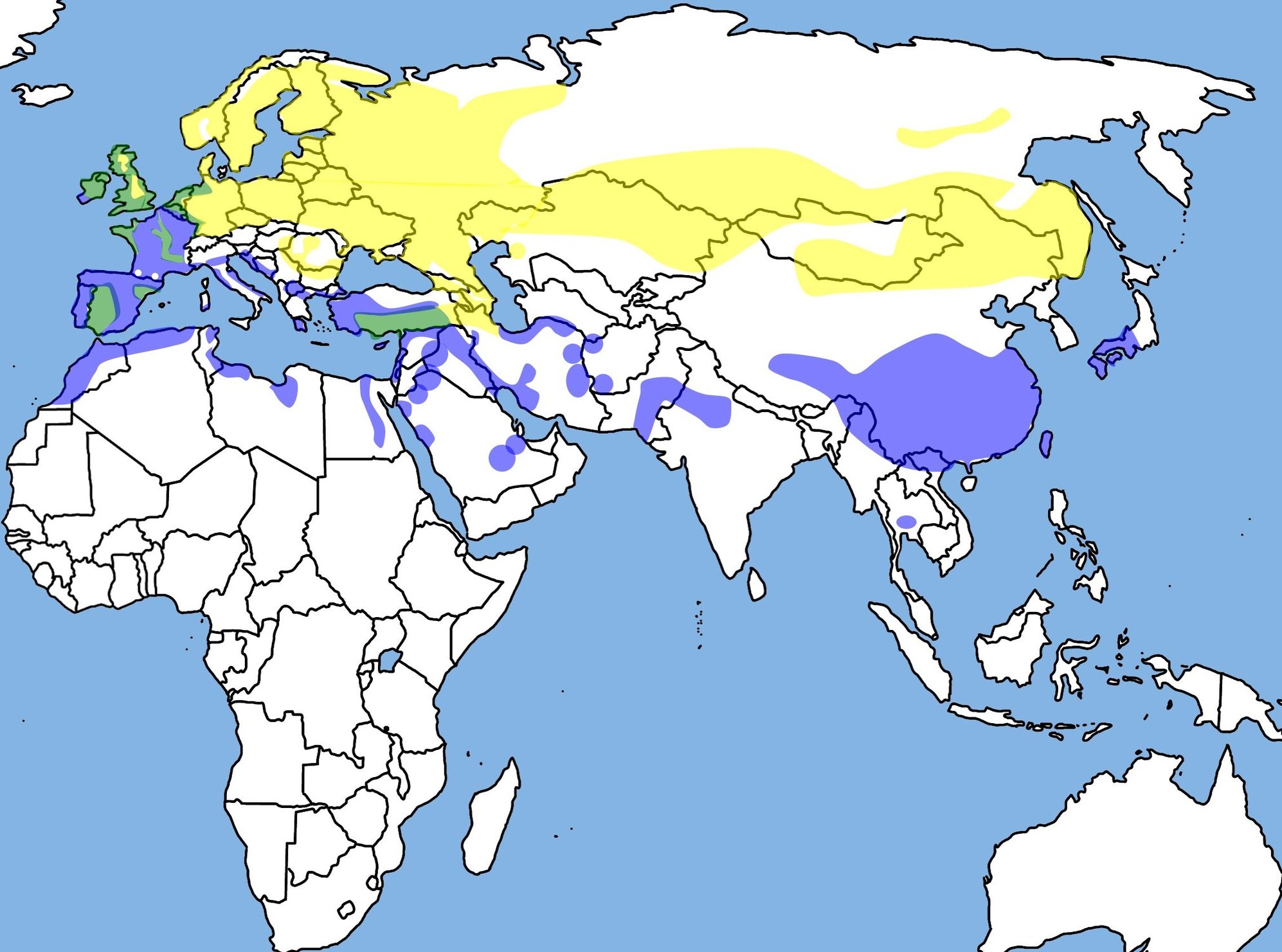
Lapwing distribution: yellow breeding range; purple wintering range; green year-long resident.

Lapwing distribution: yellow breeding range; purple wintering range; green year-long resident.

The map below shows where Northern Lapwings have been observed in the US and Canada.

Lapwings are sensitive to climate change, which is thought to explain a northward expansion of its range.

December 22nd storm damage to the berm that separates freshwater Niles Pond from the Atlantic Ocean.

LINK TO WCVB CHRONICLE PIPING PLOVER AND MONARCH EPISODE! #ploverjoyed #sharetheshore #plantandtheywillcome

New England residents and nonprofits work to save threatened species

https://www.wcvb.com/article/new-england-residents-and-nonprofits-work-to-save-threatened-species/41915984

Climate concerns growing for the future of many migratory species.

We travel all over coastal Massachusetts to learn about a few local “indicator species,” which can help explain the impact of climate change. Award-winning documentarian Kim Smith tells us the story of piping plovers breeding in Massachusetts.

The City of Cambridge raises monarch butterflies for release.

Every year, hundreds of sea turtles are stranded on the Cape. The New England Aquarium’s sea turtle hospital comes to the rescue.

Meanwhile, terrapin turtles on the Cape are struggling to survive.

In Plymouth at Manomet, researchers monitor coastal health, tag songbirds, and study the presence of a mighty migratory shorebird – the whimbrel.

And scientists at Nature and students at Bristol Aggie examine the health of river herring in the Taunton River watershed.

WILD MUSTANG BEAUTY, MONARCH MIGRATION, AND HIP HOP!

Dear Friends,

While I began writing this note yesterday morning and was looking out my office window, there were Monarchs drinking nectar from the Zinnias in the front flower border and Monarchs nectaring at the New England Asters around back. The migration is underway, with small assemblages here and there. I’m keeping my hopes up that we will see a greater influx in the coming days. And hopefully, too, the drought has not too badly harmed the Monarchs as there seems to have been enough moisture in the air that native wildflowers such as goldenrods and asters are blooming.

It was a good year for many species of butterflies in our garden. Here is a short video set to Camile Saint-Saens “Carnival of the Animals,” organized for a request for footage by a news organization:Monarchs and Friends in the Summer Garden #plantforthepollinators

On another note, the Shalin Liu and the Boston Film Festival are screening a new film titled Wild Beauty: Mustang Spirit of the West on Friday evening. This screening is free and open to the public. Here is a link to the trailer: Wild Beauty: Mustang Spirit of the West. The footage of the wild horses looks stunning. The film documents that wild horses are disappearing. You can find more information on my website here, too much for an email.

Our sweet little Hip Hop has not been seen for several days (as of this writing), but as Piping Plover Ambassador Deb writes, he has a Houdini-like way of disappearing and reappearing. Hopefully, he has departed. I am not sure if I sent this along to you – Ethan Forman from the GTimes wrote a fantastic article about our GHB Plovers. You can find the story here: Best Year Ever for Plovers at Good Harbor Beach.

I was so happy to read in the Gloucester Times that Mayor Verga’s new beach reservation system is a success, not only for the City, but because an interesting outcome is that I think the reservation system also helped the PiPls. Folks with reservations weren’t desperate to get to the beach by 7am and took their time arriving. The net result was that the wildlife that finds shelter and sustenance on the beach was less disturbed and could forage in relative peace. The new system appears to be a win for all!

In the sixties with mostly sunny skies this weekend. There are many creatures migrating along the coast and through New England currently. I believe I saw a pair of American Golden Plovers but haven’t had time to check my footage to verify 100 percent. I hope you have a chance to get out and enjoy the predicted beautiful weather and see some wildlife.

Warmest wishes,

Kim

Charlotte’s first day of kindergarten with a newly emerged Monarch to send her off – her idea to accessorize 🙂

PIPLS IN THE GLOUCESTER TIMES – BEST YEAR EVER!

Good morning PiPl Friends!

Please check out today’s Gloucester Times for a terrific article about our GHB PiPls, written by Ethan Forman. https://www.gloucestertimes.com/news/best-year-ever-for-plovers-at-good-harbor-beach/article_cba646a6-32d4-11ed-ba55-1fc4ad06ff8b.html

Ethan, Paul Bilodeau (the Times photographer), and I met last week at GHB. PiPl Ambassador Susan was out looking for HipHop that morning, too, and she stopped by during the interview. Ethan mentioned years ago he had written articles about the Plovers on Plum Island. He asked lots of great questions about our GHB Plovers and he’s such an excellent writer, I felt very good about the interview. Carolyn Mostello, our Massachusetts state waterbird biologist, provided a very thoughtful quote for the article. I was hoping to show Ethan and Paul Hip Hop that day, but he was doing his invisible act. Everyday I am hopeful he has departed however, as of yesterday, he was still here.

Hip Hop eleven weeks old September 12

I couldn’t find Hip Hop this morning feeding with the Semipalmated Plovers and Killdeers at the Creek, or at the front of the beach. The wind was blowing in great gusts and he knows where all the best locations are to get out of the wind. Hoping for the possibility that he joined the many travelers during last night’s massive migration

Semipalms at the Creek this morning

Thank you to all our super Ambassadors. We could not have had our “Best Year Ever” without each and every one of you and your tremendous gifts of time and patience. 
Have a super day and enjoy this exquisite weather!
xxKim

‘Best year ever’ for plovers at Good Harbor Beach

Efforts to protect piping plovers nesting at the popular Good Harbor Beach this summer paid off: Between two pairs nesting, there were seven eggs. Of those, six chicks hatched, and five chicks fledged.

“It’s our best year ever,” said Kim Smith, who heads up the group Piping Plover Ambassadors at the beach.

And the success here of the piping plovers — a threatened species — this summer revolved around the storyline of two handicapped shorebirds, a mom who had lost her foot but still successfully hatched a clutch of four eggs, and her chick dubbed “Hip Hop”, who had a lame right foot and was slow to develop.

FIND THE COMPLETE ARTICLE HERE

https://www.gloucestertimes.com/news/best-year-ever-for-plovers-at-good-harbor-beach/article_cba646a6-32d4-11ed-ba55-1fc4ad06ff8b.html

PIPING PLOVER HIP HOP UPDATE!

Dear PiPl Friends,

Happy ten-week old birthday to the irrepressible Good Harbor Beach Piping Plover Hip Hop! Monday marked Hip Hop’s 10 week, or 70 day, old birthday.

He spends his days alternating between resting well-camouflaged in depressions in the sand and robustly feeding, oftentimes off on his own, and occasionally with migrating shorebirds.

We don’t have experience with lone Plovers lingering this long into the summer. Despite his limping gait, he looks beautiful, healthy, and ready to migrate.

Massachusetts is at the fore of Piping Plover recovery. We have approximately 700 pairs nesting on Massachusetts beaches. It’s also great to hear about how well other states are doing. Maine has 140 nesting pairs and fledged a record number number of chicks, 252, to be precise (a record for Maine). Read more here, story shared by PiPl Ambassador Duncan Todd.

The water has been walk-in warm and perfect for swimming this past week. Enjoy these last days of August!

xxKim

WONDERFULLY GENEROUS DONATION TO THE GOOD HARBOR BEACH PIPING PLOVERS FROM THE BROOKLINE BIRD CLUB!

The Good Harbor Beach Piping Plover Ambassadors, and the entire community of Cape Ann’s Plover friends, would like to thank the Brookline Bird Club and board member John Nelson for the kind and very generous donation to help purchase signs and badges to help protect the Piping Plovers at Cape Ann beaches. We have such an amazing group of PiPl Ambassadors and to be recognized by the BBC is truly an honor.

The Brookline Bird Club, the largest and most active bird club in Massachusetts, is pleased to donate money to support the Piping Plover Ambassadors in their volunteer efforts to protect the Piping Plovers at Good Harbor Beach, to educate the public about this wonderful and endangered shorebird, and to help many people in Gloucester and beyond to experience the delight of watching these birds and following their story as they breed and raise their young on the beach. On behalf of the birding community and plover lovers everywhere, we thank you.” The Good Harbor Beach Plover Ambassadors (missing a few) Paula, Alexa, Jennie, Jonathan, Duncan T., Susan, Lisa, Duncan H, Jill, Sharen, Barbara, Deborah 

For more information about the Brookline Bird Club, please go here.

For more information about John Nelson, author of the beautiful book Flight Calls: Massachusetts Through Birds, please go here.

PPP (POSITIVELY PRO PLOVER!) AND PIPING PLOVER HIP HOP UPDATE

Tree Swallows currently coming in waves and massing at Good Harbor Beach

Good Morning PiPl Friends!

Our little Hip Hop is still present at Good Harbor Beach. We’re hopeful that he will depart to begin his southward migration at some point soon but in the mean time, please know that he is foraging with great gusto, finding lots and lots of good food at the various habitats at GHB. In addition to his usual PiPl diet, the storm last week brought in great amounts of seaweed and that has become one of his favorite foraging locations. Piping Plovers eat a wide range of invertebrates, including insects, mini mollusks, and sea worms.

Piping Plover Hip Hop turned nine weeks old on Monday. Here he is at 60 days old.

Where do Plovers go in winter? is a question often asked of we Ambassadors. We know from banding programs at the University of Rhode Island that many Plovers from southern New England first head to the barrier beaches at Cape Lookout and Cape Hatteras. Here they will stay for about 45 days, foraging and storing up their lipid reserves for the next leg of the migration. Most will then continue on to the Bahamas, Turks and Caicos, and remote islands in the Caribbean, where they will stay until early March.

Thank you to all in our community who have taken the time to write and to call in support of the Plovers, to our PiPl Friends and to new friends who have been prompted to write. We so very much appreciate your kind words and good wishes for the Plovers. We’d like everyone to understand how vulnerable is this tiny threatened bird however, not all people have the capacity nor vision to see the beauty and joy in conserving our wild creatures and wild spaces, for the protection of life on Earth as we know it, and for future generations to come.

We are keeping our messaging PPP – Positively Pro Plover! 

MONARCHS AND PIPING PLOVER INTERVIEW WITH HEATHER ATWOOD AND KIM SMITH AT 1623 STUDIOS!

Thank you Heather Atwood and 1623 Studios!

I so appreciate Heather taking the time to talk about Piping Plovers and Monarchs both. She asked tons of great questions and in a short period of time, we got in lots of information! Please see our interview below <3 !

For more about Hip Hop and the Good Harbor Beach Piping Plovers, see here –

And, please join me Thursday, August 18th, at 10am at Essex’s T.O.H.P. Burnham Library for a free  all ages (5 plus) Monarch Butterfly event, The Marvelous Magnificent Migrating Monarch. To register, GO HERE


Monarch Butterfly and Whorled Milkweed (Asclepias vericillata)

THE MOVIE – THE GOOD HARBOR BEACH PIPING PLOVERS #ploverjoyed

The story of a tiny pair of birds that arrived on the shores of Cape Ann, and the remarkable community that came together to help provide safe harbor for the pair to nest and to raise their young.

Excerpt from the film’s introduction – In 2016, a young pair of Piping Plovers began nesting at Good Harbor Beach, Cape Ann’s most popular seaside destination. The first several years were difficult for the Plovers. The community was neither prepared nor knowledgeable in how to manage a pair of highly vulnerable nesting shorebirds.

There were so many dog disturbances on the beach that the Plovers were driven into the beach parking lot…

I hope you enjoy this short film! Stay for the Epilogue <3

SHOUT OUT TO GLOUCESTER FISHERMEN FOOTBALL TEAM AND COACHES! #sharetheshore

One very important reason as to why we had a successful year with the Good Harbor Beach Piping Plovers is because of the consideration afforded to the Plovers by Coach Lattof, Coach Craig, and all the Gloucester Fishermen football team members. Early on in the the first years of the Plovers being at GHB, Coach Lattof made a point of bringing the guys over to the Plover’s restricted area and talking to them about threatened and endangered species.

We are so appreciative of the consideration given. The boys are awesome and the parents, teachers, and coaches of these great bunch of kids are doing an amazing job!

Thank you!

PIPING PLOVER HIP HOP AND FAMILY UPDATE

Dear PiPl Friends,

Truly a milestone for our Good Harbor Beach PiPl fledglings, today marks their seven week old birthday, or 49 days. Five chicks fledged and that in and of itself is also a milestone. Hip Hop isn’t the best of flyers as of this writing. Dad and one of the siblings are still with him, which is also remarkable. Every morning finds the three cozily snoozing within close proximity to one another, while the three super flyers are zooming around the beach.

Dad, Hip Hop, and sibling

This past week, several of we GHB PiPl Ambassadors attended the annual Northeast Coastal Waterbird Cooperators Meeting. Representatives from the Massachusetts seven coastal regions, along with coastal waterbird conservation leaders from Maine, New Hampshire, Connecticut, Rhode Island, New Jersey, New York, and the Great Lakes provided data and stories from their respective shorebird conservation programs. Not only are Piping Plovers covered, but also Least Terns, Common Terns, Roseate Terns, and American Oyster Catchers.

We all should be very proud that Massachusetts is once again at the fore of Piping Plover conservation. There are about 700 breeding pairs in Massachusetts. Does that sound like a great number? Not really. There are only about 8,000 Piping Plovers worldwide. Compare that number to Snowy Owls; the population of Snowy Owls is thought to be around 28,000. There is still much work to be done in Piping Plover conservation.

Here are some local good news numbers shared at the meeting. The data was collected approximately two weeks ago. In 2022, the north of Boston region has so far fledged 135 chicks, with 54 chicks still on beaches for a possible total of 189 chicks! Five of which are from Good Harbor Beach!

I submitted a short film for the Coastal Waterbird meeting, titled The Good Harbor Beach Piping Plovers, and am in the process of adding a few scenes. It should be ready to share with the community by the end of the week.

One of my favorite moments from this season, of all four siblings thermosnuggling under Dad.

CELEBRATING FIVE CHICK’S FIVE WEEK BIRTHDAY MILESTONE! #ploverjoyed

Dear PiPl Friends,

Happy five weeks old to our Good Harbor Beach Piping Plover chicks! Today marks the day that all five are now five weeks old. The four Plover chicks from area #3 turned five weeks on Monday and the singleton from the Salt Island area #1 turns five weeks today. This is a milestone for both the Plovers and for the Cape Ann community!

The two Plover families have combined forces, or I should say the chicks are a unit; Super Dad is still reminding One Dad who is boss.

Hip Hop spends much of his time alone on the beach foraging. This is nothing new; we just have to keep our eyes peeled because Dad isn’t around quite as much to voice piping commands for him to get out of the way of foot traffic.

How long will the family stay together as a little unit? I have seen at other locations where I am filming, at the most, 49 days. Wouldn’t that be wonderful if they did stay, or at least Super Dad, because it would surely give Hip Hop a better chance of surviving.

The Squadron

Every year we have high hopes to successfully fledge chicks. This is most definitely our best year ever however, next year could be a complete bust. We know some things that contributed without a doubt to this year’s happy story. A tremendously dedicated group of round-the-clock Piping Plover Ambassadors is at the top of the list. If you see one of these kind-hearted PiPl Ambassadors, please let them how much you appreciate their efforts – Susan Pollack, Paula and Alexa Niziak, Marty Coleman, Jennie Meyer, Ann Cortissoz, Mary Keys, Sharen Hansen, Deb Brown, and Sally and Jonathan Golding. We also have a group of dedicated substitutes who are always willing to step in, even on a moment’s notice – Jill Ortiz, Barbara Boudreau, Duncan Hollomon, Karen Thompson, Lisa Hahn, Sarah Carothers, and Duncan Todd.

Working with our partners and PiPl Friends has provided a safe habitat for the Plovers.  Mark Cole and the DPW’s early actions in symbolically roping off nesting areas, placing important signage, and the decision not to rake the beach certainly contributed to this year’s success. Allowing the wrack to remain creates an abundance of foraging opportunities. Thank you to the entire DPW beach crew for keeping eyes on the chicks while working on the beach and for your always friendly demeanors  and interest in the Plover’s development.

Daily diligence and ticketing on the part of Gloucester’s Animal Control Officers Jamie Eastman and Tegan Dolan helped keep dogs off the beach after the March 31st date. We also want to thank the GPD and Mayor Verga for temporarily placing the large flashing light sign at Nautilus Road to let people know to keep pets off the beach, and the fine levied if caught.

Many thanks to Dave Rimmer, Essex County Greenbelt’s Director of Land Stewardship. For the past seven years, on a volunteer basis, Dave and his assistants have installed the wire exclosures that protect the Piping Plover’s eggs from avian and mammalian predation.

We’d also like to thank Carolyn Mostello, the Massachusetts Division of Fisheries and Wildlife Coastal Waterbird Biologist, for her thoughtful actions and continued excellent advice.

We are grateful for the help and timely actions taken by City Councilors Jeff Worthley and Scott Memhard who have taken an active interest in the Plovers and also Good Harbor Beach in general, particularly in the case of the contaminated Creek and getting swimmers out of the water.

We are so appreciative of the time and care Coach Lattof and the Gloucester Fishermen football team take in their attitude toward the Plovers. It has been a great teaching moment for the kids and the Coaches have developed and fully encouraged the kids’ tremendous positive outlook toward the birds.

Hip Hop and sibling, five-weeks-old

We also want to give a shout out to the GHB volleyball players who without fail, every evening pause their games to give the chicks the space they need to migrate back to their nighttime sleeping quarters.

We are so appreciative, too, of all the help given by the Plover’s community of well wishers, the early morning walkers including Pat and Delores, John Burlingham, Jan Bell, and Betty, to name only some, and who always jump in to lend a hand when needed. Thank you also to the Good Harbor Beach residential neighbors Sue and Donna who are always on alert, watching over the Plovers and sharing their concerns from their perspective as local residents.

The new beach reservation system has helped the Plovers in an unexpected way. Good Harbor Beach does not fill up as early and as frantically as it has on hot summer days in previous years. Early morning is an essential time of day for birds. They are extra hungry after the night long fast and need lots of space to forage undisturbed.

A heartfelt acknowledgement to all our PiPl Ambassadors, partners, and friends. The “it takes a village” adage has never been more true than in the case of Piping Plovers nesting at Cape Ann’s most popular seaside destination. Thank you!

xxKim

HIP HOP CATCHING UP! #ploverjoyed

Tiny handicapped Piping Plover chick Hip Hop, although developmentally challenged in comparison to his siblings, is nonetheless steadily growing. You can compare in the photos and video footage that he looks to be at about the same stage of development as were his siblings two weeks ago. His wings muscles are gaining in strength and fluffy tail feathers are beginning to grow.

Hip Hop is also wonderfully independent and forages far and wide along the length of the beach. If you see him on the beach, please remember that Hip Hop can’t yet fly to escape danger as can his siblings. Please give him lots and lots of space and please don’t try to take a close-up photo with your cell phone. The more he is able to forage without being disturbed, the more quickly he will grow.

This morning a scofflaw dog owner brought her dog to Good Harbor Beach. Fortunately, early morning daily GHB walkers P and D caught up with her to remind her of the dog ordinance. Hip Hop was only a few feet away, hunkered down in a divot, and could have so very easily been squished by a bouncy, enthusiastic off leash dog. Thank you P and D for your help this morning <3

Hip Hop’s sibling, photo taken about two weeks ago.

Hip Hop today