Happy Valentine’s Day!

*
 Fujifilm multiple exposure created from the Big Rose Heart window display at Common Crow. I wonder who made all the beautiful paper roses?

*
Fujifilm multiple exposure created from the Big Rose Heart window display at Common Crow. I wonder who made all the beautiful paper roses?

From Monday night’s snowstorm, Smiths Cove, Gloucester

Several weeks ago I posted experiments taken with the new Fujifilm X-E1 multiple exposure setting. I really like this feature although I received some flack from a photographer friend reminding me that double exposures can be created in Photoshop. Of course I know that, I just like the immediacy of composing in the camera and in the moment and think the feeling that is achieved is reminiscent of accidental effects in film photography. These photos were all shot in very low light indoors and I am looking forward to playing more with this feature outdoors on a warm sunny spring day, with butterflies and other living creatures for muses, rather than imaginative Christmas fairies!
Click photos to view images full size.


 Fujifilm X-E1 Multiple Exposures


To create a double exposure select the Multiple Exposure mode in the shooting menu. Take your first shot, and if acceptable, press ok. The first photo is now visible in both the viewfinder and the LCD monitor, which allows you to easily compose the finished photo. Take the second shot and press ok to exit. If you do not like the second shot, you have the option to retry.
 Multiple Exposure shooting mode allows you to change focal length, degree of focus, and aperture between shots. I absolutely adore this feature and can think of a hundred thousand images. Creating double exposures is always possible post production although I prefer the ephemerality of composing in the moment.


Over the past several months I have spent many mornings at Eastern Point trying to film the resident swans in their pre-dawn flight. My hope was to capture 20-30 seconds of swans silhouetted against the red rising sun. For the most part I have been unsuccessful and have only managed a mere snippet or two. The swans eye me warily and then head to the far side of the pond. Yesterday morning I went to my usual observation point to experiment with the Fujifilm X-E1 multiple exposure shooting mode. Perhaps because I was so focused on my exposure experiment and wasn’t paying a lick of attention to them or perhaps because I did not have my tripod with me (I am convinced now more than ever after today that the swans think my tripod is a rifle), but for whatever reason, two decided to groom themselves within arms reach.

In this image you can see the typical first photo from my little experiment.

While filming B-roll of gorgeous herons, ducks, geese, and gulls this morning, the homies were particularly cooperative. Click images to view larger.

Come to think of it, the sunbeams, the herons, the pearly pink-hued surf caught in the dawn light, and sand turned-brilliant-gold were also cooperating. It must be my good fortune! Several nights ago on my way home from work I purchased my first ever lottery ticket and, although unfortunate in that I did not win the half billion dollars, I feel fortunate everyday, for our shared beauty that is Gloucester.

 Good Harbor Beach November 29, 2012
Stills from my B-roll. Click images to view larger.
 Niles Pond October Sunrise
One of the most gorgeous, interesting, and enjoyable aspects of filmmaking I find is shooting B-roll. I am swamped with design work, organizing lecture programs, and hoping to finish the edits on my Black Swallowtail film very soon, but there is no better time of year to shoot B-roll for my Monarch film than autumn in Gloucester; the light is simply stunning, and what I like to refer to as “atmospheric.”
 Niles Pond September Sunrise

B-roll further tells the story in a beautifully subtle, and alternatively not so subtle, manner and gives the project a sense of place. While filming and waiting, for example, for birds to take flight (whether swans or homies) I have my still camera readily available.
 Salt Island Sunrise
The most extraordinarily beautiful things occur spontaneously. I feel so very fortunate to see, and in turn share, the natural world through the camera lens. Only several weeks ago while filming a spider’s web in a tree, capturing the filaments of silky webbing dancing in the light of the setting sun (with the pinky schooner Ardelle and the Dog Bar Breakwater in the background!), the web’s maker came cavorting through the scene, with a capture of her own!
 Eastern Point
 Native Flowering Dogwood ~ Cornus florida rubra
I am so excited to be teaching my photography workshop. I’ve created an over arching superstructure for the class, from covering camera and photography basics, relevant to close-up photography, onto very specific techniques for capturing wildlife, and even more specific tips for individual species of butterflies.
I’ve been pouring over thousands upon thousands of photos and with over one hundred photos for the slide presentation, each technique will be comprehensively illustrated.
Several of the students have emailed and I am looking forward to meeting everyone. I hope to see you there. Nature in Focus.

Eastern Tailed-blues ~ Everes comyntas
The Eastern Tailed-blue is a relatively small species of butterfly with a total wingspan of approximately one inch. It was at first very surprising to find a little group, of about a dozen or so, wandering around this pink zinnia. Eastern Tailed-blues are very skittish and generally a challenge to photograph well. I quickly realized that they had all recently emerged from their pupal cases. Butterflies emerge from their chrysalides with wet crumpled wings and generally cannot fly until their wings are thoroughly dry. I took advantage of this fact and just snapped away while this unique opportunity presented itself.

Registration is still open however, my close-up photography workshop, Nature in Focus, is nearly full. The workshop will be will beheld at the Arnold Arboretum of Harvard, at the Hunnewell Building, on Sunday September 3oth, at 9:00 am. I especially love teaching at the Arnold Arboretum. The facilities are beautiful, the staff wonderfully helpful, and September is a particularly gorgeous month to visit the gardens of the Arboretum. I hope you can join me!

| Nature in Focus: Taking Great Close-ups Kim Smith, Photographer and Filmmaker1 Session: Sunday, September 30, 9:00am–NoonLocation: Hunnewell BuildingLearn tips for taking great close-up photographs from celebrated butterfly and garden photographer Kim Smith. Through slides and hands on demonstrations, Kim will guide you in capturing the beauty of the flora and fauna found in nature. Bring your camera and questions, and a tripod if you have one. You will gain more from the class if first you familiarize yourself with your camera’s manual. (Note: This is not a macro-photography class.) See examples of Kim’s great images.
Fee $40 member, $55 nonmemb |


Painted Lady–never a more aptly named butterfly! Although ubiquitous, the sheer number of Painted Ladies found in gardens this summer is simply astonishing.
 Painted Lady (Dorsal)
This morning in our postage-stamp-of-a-lot, there were quite possibly over one hundred newly emerged Painted Ladies nectaring from the Joe-pye, Baby Joe, zinnias, butterfly bushes, phlox, and Rudbeckia.

Introducing ‘Henry Eiler’s’ Quilled Sweet Coneflower ~

New to our garden this year is the Quilled Sweet Coneflower. The finely quilled sunny yellow petals are simply lovely, as is the overall shape of the plant. The wildflower is a North American native and bears the name of the southern Illinois horticulturist and prairie restoration specialist who found it growing in a railroad prairie remnant.
When lightly rubbed, the leaves of Rudbeckia subtomentosa reveal their sweet vanilla scent. I’ll let you know if it attracts bees, butterflies, and songbirds when the center florets open.
Railroad Prairie Remnants
“…the only remnant of any virgin, unplowed prairie that remains is along railroad tracks. When the railroads were originally built in the 1800′s, if they were going over a natural prairie, all they had to do was lay down the wooden crossties, pack in bed fill, and lay the rails….the remaining right-of-way remained essentially undisturbed. In many locales, a road also was constructed parallel to new tracks, so that the few hundred feet of railroad right-of-way trapped between the tracks and the road remained unplowed to this day, and in many areas has reserved a remarkable diversity of prairie species. In most areas, accidental fires happen fairly regularly, which enhances the vigor of the prairie vegetation.” Larry Lowman, Arkansas nurseryman and native plants specialist.
 ‘Henry Eiler’s’ Sweet Coneflower (Rudbeckia subtomentosa)
Registration is now open for my close-up photography workshop, Nature in Focus, which will be held at the Arnold Arboretum of Harvard, at the Hunnewell Building, on Sunday September 3oth, at 9:00 am. I especially love teaching at the Arnold Arboretum. The facilities are beautiful, the staff wonderfully helpful, and September is a particularly gorgeous month to visit the gardens of the Arboretum. I hope you can join me!
| Nature in Focus: Taking Great Close-ups Kim Smith, Photographer and Filmmaker1 Session: Sunday, September 30, 9:00am–NoonLocation: Hunnewell BuildingLearn tips for taking great close-up photographs from celebrated butterfly and garden photographer Kim Smith. Through slides and hands on demonstrations, Kim will guide you in capturing the beauty of the flora and fauna found in nature. Bring your camera and questions, and a tripod if you have one. You will gain more from the class if first you familiarize yourself with your camera’s manual. (Note: This is not a macro-photography class.) See examples of Kim’s great images.
Fee $40 member, $55 nonmemb |
 Male and Female Monarch Butterflies

Tomorrow, Sunday, at noon, is the dedication of the Gus Foote Park. Following the dedication, I will be giving a mini-talk about the butterfly gardens along the walk. A yummy clam chowder tasting is planned, provided by the Gloucester House Restaurant. At 12:45, we’ll Walk the Walk with Mayor Kirk. The theme of Sunday’s walk is Gloucester’s maritime heritage.

Sunny skies are predicted for tomorrow–perfect weather for strolling through the gardens while listening to sea stories. I hope you’ll come join us!
 Cambridge Seven Associates Gloucester Harbor Walk Team
From left to right Peter Sollogub, Principal; Ethan Lacy, Chris Muskopf, Tim Mansfield, and Rosie Weinberg.
~
Gus Foote, now 82 years young, is a retired Gloucester City Councilman. He represented Ward 2 for more than three decades. In 2011, Gus was reappointed by Governor Deval Patrick to serve another five-year term on the Gloucester Housing Authority .

Gus Foote Image Courtesy GMG 2009
 Click to view enlarged images.
From our garden ~ Newly emerged female Monarch Butterfly drying her wings. Monday a male emerged, Wednesday a female–looks promising for another batch of Monarchs before summer’s end!


 Newly Emerged Female Monarch Butterfly
Nearly five years ago in late September 2007, I photographed a male Pipevine Swallowtail Butterfly (Battus philenor) nectaring in my garden. I found mesmerizing its dark beauty, with black wings punctuated by brilliant orange spots and shimmering iridescence. The wings flashed electric blue in the fading late day sunlight and I became completely captivated!
Although the Pipevine Swallowtail is not rare in its southern range, this exotic looking butterfly is an unusual occurrence in the northeast, and even more rarely found on the eastern outer reaches of Cape Ann. Mine was a stray, carried in on a southerly breeze. I imagined that if a male can drift into our garden, so can a female. And if a visiting female found in my garden her caterpillar food plant, she would deposit her eggs. The following spring we planted the Dutchman’s Pipevine (Aristolochia macrophylla). Four years later, and our pipevine has grown well. With emerald green enormous heart-shaped leaves, she is quite a showstopper clambering over the back fence. The plant is named for its flower, which resembles a Dutchman’s pipe, although when ours flowers, the blooms are so small, so few, and so lost in the foliage, I barely know when it is in bloom. Our pipevine took several years to become established, but once firmly rooted, it grew vigorously, but not invasively. At the end of the growing season, or the beginning of the next, I cut the vine hard, down to the ground. Dutchman’s Pipevine grows in full sun and partial shade and is hardy in zones 4 to 8.
Aristolochia macrophylla had its glory days in gardens during the two previous centuries, prior to the invention of air conditioning. It was planted to cover porches and treillage; cooling and shading the rooms within. When looking through old photos you can easily spot the porches and arbors that are embowered with pipevine because of the distinctive heart-shaped foliage. I imagine Fred Bodin may even have a few pictures of pipevine shrouded porches in his treasure trove of vintage photographs.
 Pipevine Swallowtail Egg Clutch
While doing chores in our backyard, about a week ago Saturday, I noticed the rapid movements of a dark butterfly investigating the pipevine. I immediately paused because say, for example, if it was the more common Eastern Black Swallowtail, which deposits eggs only on members of the carrot family, it would not show the least bit of interest in the pipevine. Upon close investigation, it was a Pipevine Swallowtail and, without doubt, it was a she! After first zooming in and out of the house to grab my camera, I observed her as she fluttered from tendril to tendril. She deliberately chose the tenderest leaves, pausing briefly several times to curl her abdomen to the underside to deposit her eggs. After she departed I ran in the house to tell anyone who would listen of the Great News. In our household my butterfly news is pretty much the family joke, although my husband kindly offered to get the tallest ladder from the basement. He held tight while I climbed to the top rung in search of eggs. I struck gold! Unlike the female Monarch and Eastern Black Swallowtail butterflies, which deposit eggs singularly, the Pipevine Swallowtail oviposits eggs in clusters. I counted somewhere between 25-30 eggs (very approximately) in the clutch we cut from the plant. I hope we have enough pipevine to feed this many hungry Pipevine Swallowtail caterpillars!
 Pipevine Swallowtail Caterpillars Several Hours New
 One Day New Pipevine Swallowtail Caterpillars
 Range Map of Pipevine Swallowtail (Battus philenor)
~ Map courtesy NABA
 Hummingbirds can easily distinguish red contrasted against green.
Trumpeting the Trumpet
Early blooms are an important feature for the vine planted to lure hummingbirds. You want to provide tubular-shaped flowers in shades of red and orange and have your hummingbird feeders hung and ready for the earliest of the northward-migrating scouts. If nothing is available, they will pass by your garden and none will take residence. Hummingbirds can easily distinguish red contrasted against green. We go so far as to plant vivid Red Riding Hood tulips beneath our hummingbird feeders, which hang from the bows of the flowering fruit trees. Although hummingbirds do not nectar from the tulips, the color red draws them into the garden and the flowering fruit trees and sugar water provide sustenance for travel-weary migrants.
Lonicera sempervirens, also called Trumpet and Coral Honeysuckle, is a twining or trailing woody vine native to New England. Trumpet Honeysuckle is not at all fussy about soil and is drought tolerant. Plant in full sun to part shade. If Trumpet Honeysuckle becomes large and ungainly, prune hard to the ground—it grows rapidly and a vigorous pruning will only encourage more flowers.
 Lonicera sempervirens John Clayton
‘Major Wheeler’ flowers in a deeper red than that of the carmine of ‘Dropmore Scarlet.’ ‘John Clayton’ is a cheery, cadmium yellow, a naturally occurring variant of Lonicera sempervirens, and was originally discovered growing wild in Virginia. The blossoms of ‘Mandarin’ are a lovely shade of Spanish orange.
Trumpet Honeysuckle has myriad uses in the landscape. Cultivate to create vertical layers, in a small garden especially. Plant Lonicera sempervirens to cover an arbor, alongside a porch pillar or to weave through trelliage. Allow it clamber over an eyesore or down an embankment. Plant at least one near the primary paths of the garden so that you can enjoy the hummingbirds that are drawn to the nectar-rich blossoms. I practically bump into the hummingbirds as they are making their daily rounds through the garden flora. Did you know they make a funny squeaky sound? I began to take notice of their presence in our garden, when at my office desk one afternoon in late summer, with windows open wide, I heard very faint, mouse-like squeaks. I glanced up from my work, fully expecting to see a mouse, and was instead delighted to discover a female Ruby-throat outside my office window, nectaring at the vines. Trumpet Honeysuckle not only provides nectar for the hummingbirds, it also offers shelter and succulent berries for a host of birds.
 While planting the summer gardens at Willowdale this past week we observed dozens of Ruby-throated Hummingbirds nectaring at the Trumpet Honeysuckle embowering the courtyard doors.
Lonicera sempervirens is a caterpillar food plant for the Snowberry Clearwing moth.
Oftentimes well-meaning hybridizers neglect fragrance, instead favoring a particular color or over-sized blooms. Hemerocallis dumortieri is a species daylily, which means the plant you see growing in the garden is exactly as you would find it growing in fields of wildflowers in Manchuria, eastern Russia, Korea, and Japan. The golden yellow-orange flowers have a scent to match their color; the fragrance is a heavenly combination of orange blossoms and honeysuckle.

H. dumortieri is one of the earliest daylilies to flower, beginning to bloom in May in eastern Massachusetts. The plants are compact, with narrow, arching leaves and the copper-hued buds open to warm marigold-yellow, star-shaped flowers; the backs of the tepals are washed with reddish brown striations.

This past week at Willowdale we planted the stunning tree peony ‘Keiko’, which means “adored.” Briar’s favorite color is pink so I am always on high alert for rose-hued blossoms. I took one look at this drop dead gorgeous plant and just had to have it for Willowdale. Don’t you find in nature there are seemingly infinite shades of pink? The beautiful blowsy blossoms of ‘Keiko’ possess myriad.

Did I mention ‘Adored’ is delightfully fragrant? The fragrance is sweet, but not cloying–very light and fresh.
Love the ever-changing view from our Smith’s Cove!

Click any photo to view slideshow-

For weeks I had planned to photograph the tulips in bloom at Willowdale, but only in the late afternoon sun. Each afternoon I headed out, the sky grew overcast. Last Monday the sun shown gloriously the entire day.

Fortunately I caught the tail end of North Shore Wedding Magazine photographing their Premier Issue in the gardens at Willowdale. North Shore Wedding Magazine is a brand new biannual publication featuring quality North Shore wedding professionals and venues, and is the sister publication to New Hampshire Wedding Magazine.

Sarah Boucher’s (Willowdale’s Planning Manager) lovely table styling for the North Shore Wedding Magazine photo shoot.

Kristina Hathaway with model
I hope this does not sound boastful however am mentioning because I just love it when people understand the design intention of a project. Kristina Hathaway remarked that she loved the feminine quality of the garden’s design juxtaposed against the masculine architecture of the stone mansion—music to my ears! The design challenges at Willowdale are multifold, yet rewarding, and from April 1st to until the first week of November you will find the gardens in bloom!

Tuesday evening, June 12, at 7:00 pm come join me in the gardens at Willowdale Estate. Enjoy refreshments and a tour of the garden, followed by a showing of my film “The Butterfly Garden at Willowdale Estate.” RSVP to Info@Willowdale Estate.
Click any photo to view slide show-

I am a little behind in posting my Super Moon May 2012 photos. I thought I hadn’t anything worth posting and didn’t bother uploading. Unfortunately, I broke my tripod taking the first shot. Photographing in the dark is not my specialty and the venture was my usual comedy of disasters.
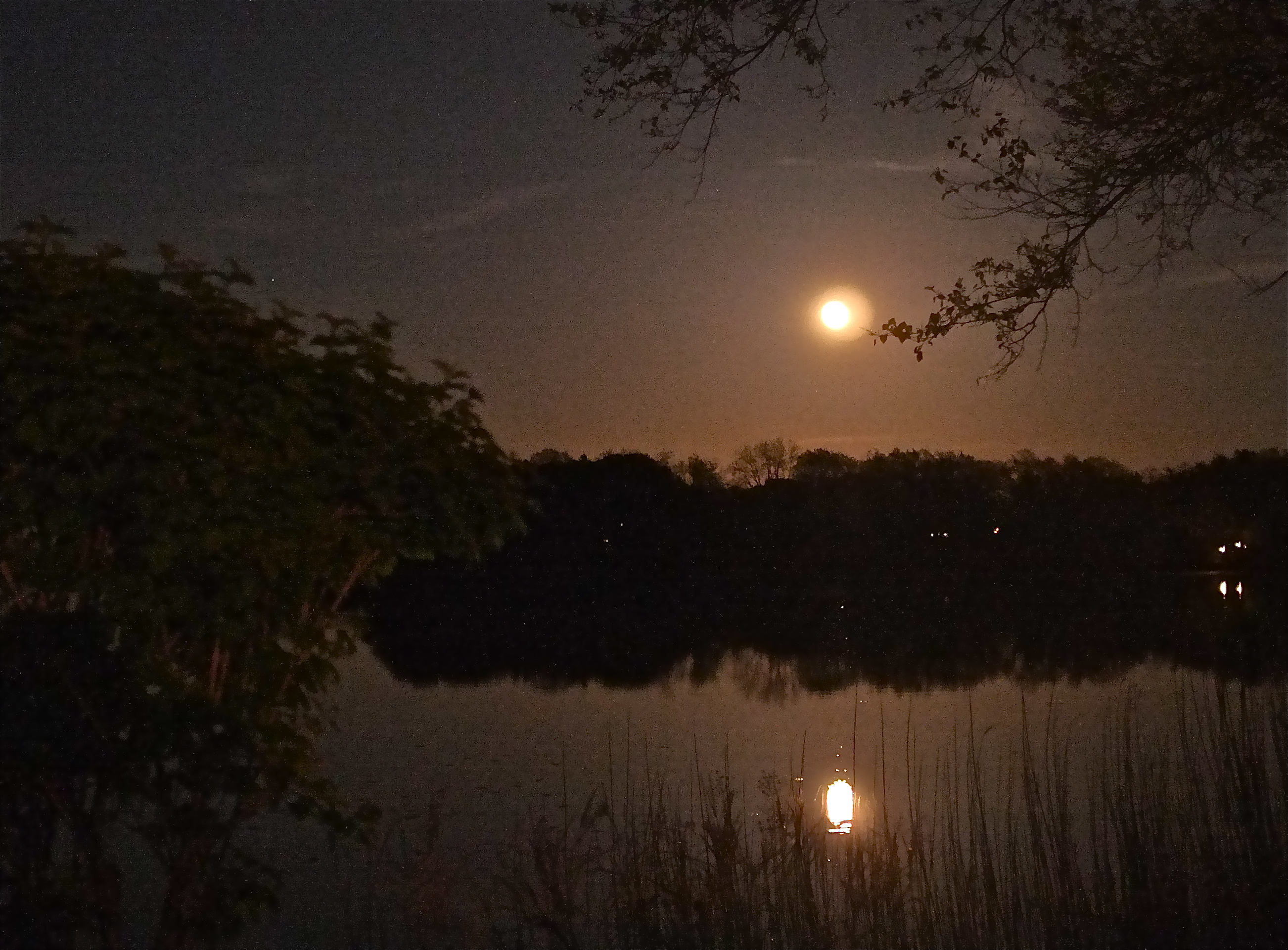 Perigree Moon at Niles Pond

 Birch Trees at Niles Pond for Maggie Rosa
I arrived at the Good Harbor foot bridge early and waited for the moon to rise, and waited, and waited. Nothing. Had I read the time incorrectly? Impatiently I left and as I was coming around the crest of the hill on the back shore, there was the perigree moon , in full glorious orange rising across sea. I hadn’t gotten the timing wrong, only the location. In my hurriedness to set up, I parked poorly and almost got run over getting out of the car. Struggling with my tripod in the dark I tripped and crashed and snapped off a leg; tripod is now a monopod. After all that, I was surprised to see the night wasn’t a complete waste of time. Note to self–bring flashlight and go with a friend when photographing late at night!


Chris Muskopf and the newly planted Tulip Trees at St. Peter’s Square
Friday late afternoon I took a stroll along the Harbor Walk to have a look at the newly planted gardens. I heard a friendly hello from behind and there was Chris Muscopf, primary architect and project manager for the Harbor Walk, stopping by to check on the gardens, too. Chris was later meeting JD MacEachern and they were on their way to a running race at Good Harbor Beach.


Chris Muskopf and JD MacEachern
Chris lives in Jamaica Plain with his wife and young daughter Beatrix and rides his bike, or runs, to his job at Cambridge Seven Associates nearly everyday, rain or shine. I’ve gotten to know Chris a little bit over the past year and he is an all around great guy, with a wonderful sense of humor. Chris is working tirelessly, and always with much enthusiasm, to make the Harbor Walk a success. Stop in and see the work in progress. I think you’ll agree, the Harbor Walk is coming along beautifully!

 Camilla Jerome
Before heading out to dinner last Saturday night my husband Tom and I stopped in briefly at the Monsterrat College of Art annual fundraiser, Artrageous! 26. Tom had donated several paintings, as are all the works of art donated, and we had a great time looking at the paintings, prints, photos, mixed media, and sculpture. My favorite piece in the show was a self portrait by a young artist from Wenham, Camilla Jerome.
 Camilla Jerome’s Weigh Me Down -Click to view larger image
 Panorama Monsterrat Artrageous! 26 -Click to view larger.
Smith’s Cove last evening after the sun set and as the fog rolled across Rocky Neck.

Before Liv retuned to school last month, she installed Instagram on my iPhone so that we could easily share photos. Instagram is very simple to understand–spoken by a techno-challenged person (although my friend Joey from GMG blog recently pointed out that for someone my age, I am not too horribly technologically challenged). There has been much in the news about Instagram recently as the app was purchased by Mark Zuckerberg, for one billion dollars, twice its estimated worth.
 Instagram with Kelvin Filter ~ Good Harbor Beach Sunrise

Original Photo
Last Saturday for my birthday my husband Tom treated me to a beautiful and fabulous dinner at Duckworth’s. The following morning I met my Good Morning Gloucester friends for brunch at Passports–talk about spoiled–Duckworths and Passports are two of my very favorite restaurants and two of the very finest restaurants on the North Shore.
I had only my iPhone camera with me at Duckworths and don’t like the way most of the photos turned out–too little light for the iPhone’s tiny image sensor .
Nicole Duckworth’s Fabulous Desert ~ Gingerbread with Marscapone and Poached Pears

Brunch at Passports
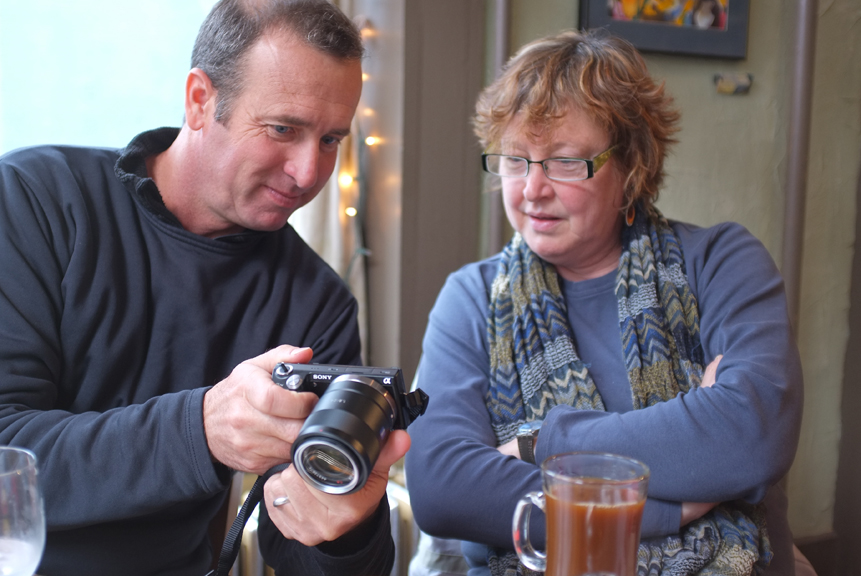
Joey and Susan -Fujifilm x100 photo
 Susan and Paul -Fujifilm x100 photo
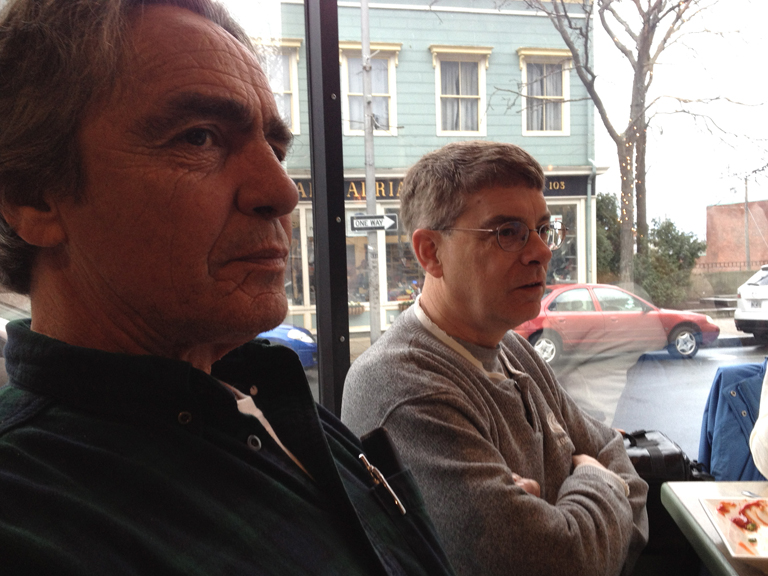 Ed and Rick -iPhone 4S photo
 Donna and Greg -iPhone 4S photo
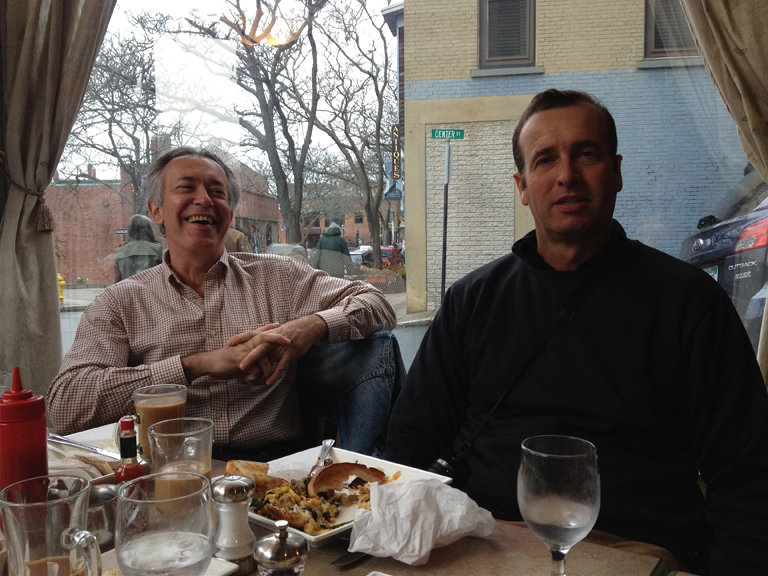 Greg and Joey -iPhone 4S photo