Tag Archives: #pipingplover

Huge Shout Out to the Gloucester High School Gender Equity in STEM Club!!

Early this week I had the absolute joy of presenting The Piping Plovers of Moonlight Bay to the Gender Equity in STEM Club at GHS. The students were amazing! The film is an hour long and despite the fact that the program was held after school and after a long day of classes and activities, they were fully engaged and asked many astute questions during the QandA following the screening.  Student advisors to the Club, GHS biology teacher Eric Leigh and coordinator Roseann Vidal are a pleasure to work with. Thank you to the students and advisors for making the screening of The PPOMB a very rewarding experience for this filmmaker!

With deep gratitude to Applied Materials, who, along with the Gloucester Educational Foundation, supports the Gender Equity in STEM Club. The presentation of The Piping Plovers of Moonlight Bay was also funded by a generous grant from Applied Materials.

To learn more about the Gender Equity in STEM Club, read the following article by Gloucester High student, Ruby McElhenny.

The Gender Equity in STEM Club: Why it matters

Happy Mom’s Day!

Happy Mother’s Day to all the Moms, Aunties, Grandmoms, Sisters, Friends, and Dads who are Mom’s, too. Thank you for being you <3 Wishing you joy and happiness on this sunniest of Mother’s Day. xoKim

Our Good Harbor Beach footless Super Mom

One of ten clutches of eggs that Super Mom has laid at GHB since she and her mate first arrived in 2016.

In 2021, Super Mom’s right foot became very tightly wound with seaweed and fishing line. The following year, she returned to Good Harbor Beach footless. Yet despite that, her handicap does not prevent her from doing all the usual things Plovers do daily.

Piping Plovers, and many species of shorebirds, have a foot tamping technique, where they rapidly shake their feet in the sand to stir up invertebrates. Also called foot trembling, the action brings invertebrates to the surface where the Plover sees and catches the prey. Watch how Super Mom expertly forages for tiny mollusks and in this case, appears not hindered by her missing foot. Not all is great for our footless Mom, though. Occasionally I see her legs become very tired and she does a series of spazzy movements across the sand, as though she is having some sort of leg cramping going on.

The first clip is in slow motion so that you can see the technique; the second clip is in real time.


Piping Plovers Coming to France! Les pluviers siffleurs de Moonlight Bay

Our Piping Plovers are crossing the Atlantic Ocean! The Piping Plovers of Moonlight Bay will be featured at the splendid Festival de l’Oiseau et de la Nature on April 18th and 19th.

This annual festival takes place at the Bay of Somme and is not only a film festival but a magnificent celebration of the natural world. There are over 400 guided walks, photo and art exhibits, screenings of the best nature documentaries, activities dedicated to children such as workshops and shows, debates, and conferences.

Our documentary has been translated into French for the exhibition and the festival organizers have created a new trailer, also in French, which you can watch here: https://www.festival-oiseau-nature.com/film/les-pluviers-siffleurs-de-moonlight-bay/

Les pluviers siffleurs de Moonlight Bay

Un film de KIM SMITH 

Ce documentaire raconte l’histoire de pluviers siffleurs, des petits oiseaux menacés. Ses héros sont un couple courageux et leurs turbulents petits.

Elever des poussins de la taille d’un marshmallow sur une plage urbaine très prisée n’est pas de tout repos et la famille doit faire face à de nombreux obstacles. Les pluviers siffleurs sont des indicateurs qui montrent comment humains et faune peuvent cohabiter, en particulier dans le cadre de la réduction de leur habitat. Ces oiseaux très résilients sont bien adaptés à la vie sur la plage, cependant, sans mesures de protection adéquates, ils ne pourront résister à la pression causée par les humains et les prédateurs.

Google Translate

This documentary tells the story of piping plovers, endangered little birds. Its protagonists are a courageous couple and their boisterous young.

Raising marshmallow-sized chicks on a popular urban beach is no easy task, and the family faces many obstacles. Piping Plovers are indicators of how humans and wildlife can coexist, especially in the face of shrinking habitats. These highly resilient birds are well adapted to beach life; however, without adequate protection measures, they will be unable to withstand the pressures caused by humans and predators.

Piping Plovers of Moonlight Bay to Air in LA on Tuesday April 15th at 8pm

See what Los Angeles PBS has to say about our film!

The Piping Plovers of Moonlight Bay airs Tuesday, April 15 at 8 PM

“Against the ever-changing tides of the Atlantic, a tiny but mighty family fights for survival. The Piping Plovers of Moonlight Bay follows a devoted pair of these rare shorebirds as they raise their marshmallow-sized chicks on a bustling urban beach. Every day is a test of their resilience—avoiding predators, braving unpredictable weather, and navigating a world where humans and wildlife collide. Will their fragile brood make it to adulthood?

This heartwarming and visually stunning special takes you inside the incredible journey of one of nature’s most determined parents. Witness breathtaking moments of survival and the deep bonds that keep these feathered families together. A story of hope, adaptation, and the delicate balance of our ecosystems.

Tune in for an unforgettable look at one of nature’s most compelling underdog stories. Sometimes, the smallest creatures have the most powerful stories to tell.”

California Friends, please check listings as The Piping Plovers of Moonlight Bay is airing at your local stations – KCET, KOCE, KVCR, KPJK, KQED, KQEH, KRCB, and KVPT.

California Friends, please check listings as The Piping Plovers of Moonlight bay is airing at the following California stations – KCET, KOCE, KVCR, KPJK, KQED, KQEH, KRCB, and KVPT.

The Piping Plovers of Moonlight Bay Now Airing Nationwide on PBS!

Hello PiPl Friends!

Checkout this lovely graphic created for us at American Public Television for our release on PBS!  Beginning today, April 1st, The Piping Plovers of Moonlight Bay is airing on public television. Please check your local listings for times.

As a Passports member, you can stream the film at anytime. We find our family’s membership to PBS invaluable; the programming is stellar and costs a fraction of any other streaming service, just $5.00 per month. We are members of New Hampshire PBS, which is also one of the 290 stations nationwide airing The Piping Plovers of Moonlight Bay. Here is the link on how to join: https://nhpbs.org/watchmore/ 


Plover Love Story for the Ages #ploverjoyed

Dear Friends,

We have wonderful news to share. Our Gloucester Plovers are returning! Not only that, but the original pair that have been nesting at GHB since 2016 were the first to arrive. Both Mom and Dad appeared on the very same day, March 19th, the earliest date ever.  At this time of year, my husband and I check the beach daily so that we can track from year to year when Plovers begin arriving. Last year I believe it was March 25th.

Super Dad and Handicapped Mom, March 19, 2025

A Plover love story for the ages is how my friend Todd describes it when Plover pairs nest together for many years. These two sweet Plovers must be at a minimum of 11 years old because Plovers don’t begin breeding until they are at least one year old. Eleven years is quite a ripe old age for Plovers as most live on average only five years. We wait with a combination of fear and excitement each spring, hoping and praying our Plover family makes it through another winter, especially now that Mom’s right foot is missing. She lost her foot several years ago after nylon fishing line and seaweed became tightly wound around her lower leg.

When you think about it, we have been through so much with this little Mom and Dad. The first several years especially were extremely challenging. Beachgoers did not yet understand how to help protect the birds and pets had the run of the beach. In fact, conditions were so bad on the beach that in 2018 Mom and Dad decided ‘enough with dog disturbances,’ and the safest place to nest was the GHB parking lot. Because of this, Massachusetts State and US Federal wildlife officials became heavily involved with helping to protect Gloucester Plovers and the local government began to take Plover protections more seriously. Little by little, things began to change for the better.

I remember our tender little handicapped Plover, nicknamed HipHop for his gimpy walk. It was Mom’s first season breeding without her right foot and she was extremely clumsy when transitioning to get in and out of the nest and when she was snuggling the chicks. I think she must have injured HipHop somehow because his injury manifested itself when he was about ten days old. Mother and chick were quite the pair with their hip hopping gaits. We thought HipHop would never grow to the size of his siblings and wondered if he would ever be able to fly. Mom departed early as is not unusual for females to begin migrating before their mates. Our Super Dad stayed with HipHop for many weeks after and throughout the entire summer. Both departed around the beginning of September, but not until HipHop was flying just as well as his siblings.

Dean Horne, Brian Watson, John Trupiano, and Adam Kelley installing Piping Plover protections

Thank you to the Gloucester DPW crew for installing the symbolic ropes and Plover signs. We appreciate everything the DPW does to keep Plovers safe and our local beaches looking beautiful!

If you happen to see Plovers on the beach, please give them lots and lots of space. Know that they are weary from the long migration and need to rest and refuel before ‘setting up house.’

Piping Plovers are returning to beaches all along the Atlantic Coast. The addendum to this note is for several new Plover friends from beaches in Maine and New Jersey who have written to ask how they can better help their community’s Plover families successfully fledge chicks.

Happy Spring from Ploverville!

Warmest wishes,

Kim

Actions that communities and beachgoers can take early in the season to help Plovers successfully breed include the following. I can not stress ‘early in the season’ enough. The earlier the Plovers nest without disturbances, the earlier they will begin laying eggs, and the earlier the chicks will fledge and begin migrating.

1) Disallow all pets on the beach, ideally beginning March 15th, April 1st at the latest.

2) Install symbolic roping around known Plover nesting areas by March 15th.

3) Install informational signage on beaches where Plovers nest by March 15th.

4) Do not permit off-road vehicles on beaches where shorebirds are nesting.

5) Do not rake the beach. Beach raking destroys a vital food source and machines can scoop up and kill chicks that can’t yet fly out of the way of danger.

6) Respect symbolically roped off areas. Do not play ball close to the roping. It is against state and federal law to run into the nesting area to retrieve a ball or for any other reason. Do not allow pets to run through the roped off areas and do not cross the roped off areas to take shortcuts through the dunes.

FAR FLUNG NORTHERN LAPWING IN OUR MIDST – AND A PIPING PLOVER RELATION!

This beautiful Northern Lapwing has been residing in Ipswich; it is thought at least since the violent storm of December 22nd.

The Lapwing was so interesting to watch as it foraged in the pasture using the same foot tamping technique that we see Piping Plovers exhibit when hunting for mini mollusks and sea worms at the beach. The Lapwing was using its feet to instead stir up worms in the muddy field.

Also called the Green Plover, the Lapwing is very elegant looking, with glossy green plumage (when caught in the right light), and a fine crest accented with long wispy feathers.  It’s quite a bit larger than the Piping Plover, several inches larger than even a Killdeer.

The adorable chicks look like a cross between Killdeer, PiPl, and Semi-palmated Plover chicks! Chick images courtesy Wiki Commons media

Typically, the wind in the North Atlantic flows in a positive phase from west to east. We occasionally see Lapwing vagrants when the wind in the North Atlantic changes its pattern to a negative east to west flow.

To better understand why New England, Newfoundland, and Labrador are occasionally “invaded” by Northern Lapwings, read this easy to comprehend article by author Amy Davis here:

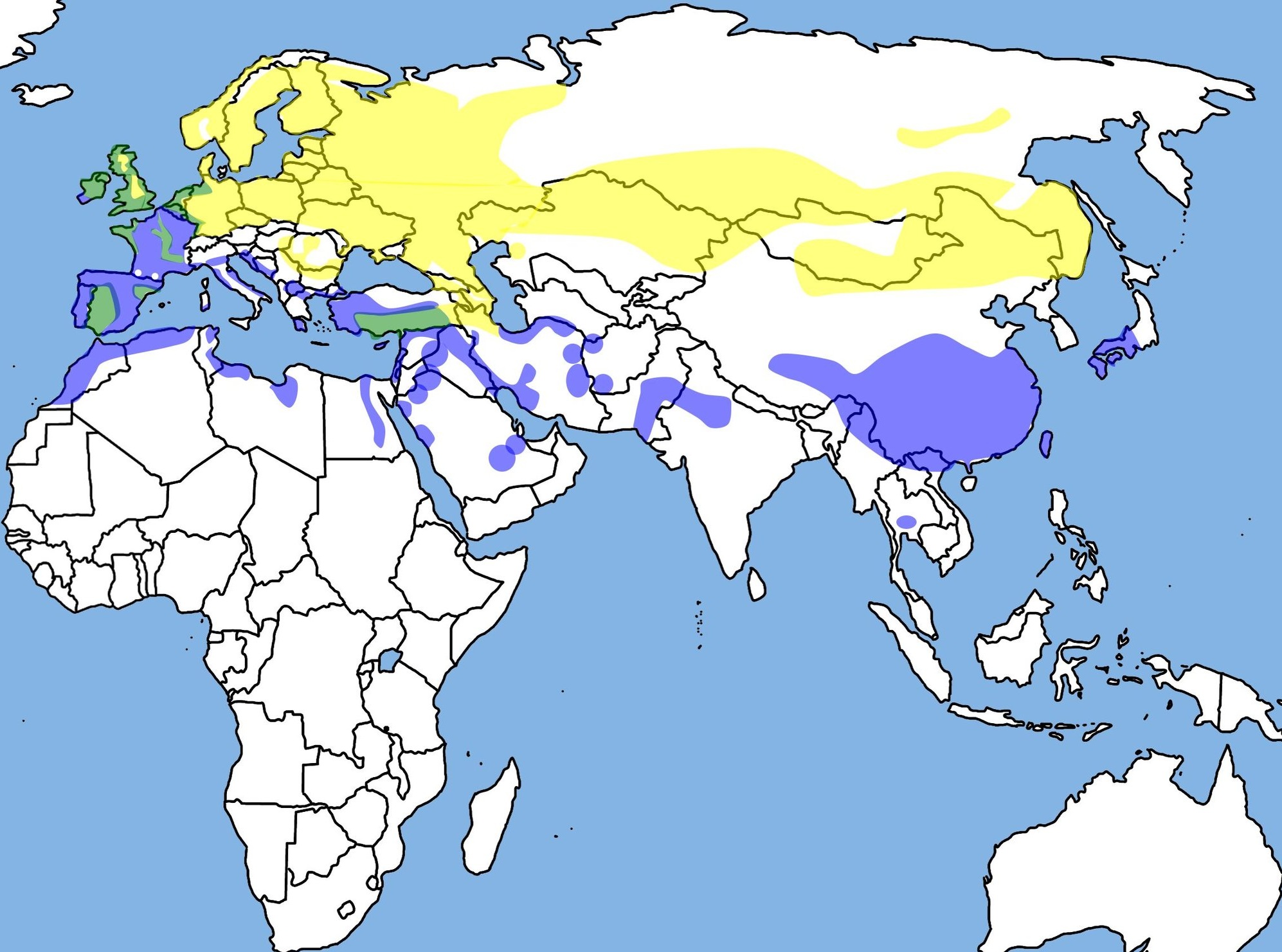
Lapwing distribution: yellow breeding range; purple wintering range; green year-long resident.

Lapwing distribution: yellow breeding range; purple wintering range; green year-long resident.

The map below shows where Northern Lapwings have been observed in the US and Canada.

Lapwings are sensitive to climate change, which is thought to explain a northward expansion of its range.

December 22nd storm damage to the berm that separates freshwater Niles Pond from the Atlantic Ocean.

SHOUT OUT TO PIPING PLOVER HELPERS DJ AND JOHN BURLINGHAM!

This morning I found the corner post at Piping Plover area #1 buried in the sand from last night’s high tide. There’s a super nice gentleman, retired Coast Guard officer John Burlingham, who daily walks GHB in the summer. He’s an avid naturalist and always keeps his eyes out for the PiPls. He righted the post and continued on his walk.

John Burlingham

As I was leaving GHB, I asked DJ, one of the nice gentlemen working on the water and gas pipes on Salt Island Road, if he happened to have a sledge hammer in his truck box. No, but he had something nearly as good. He whacked the pole into the sand.

Hopefully the poles will stay put but it was great to have such kind hearted caring people at Good Harbor Beach to lend a hand. Thank you John and DJ so very much for your kind assistance!

DJ

UPDATE ON OUR GOOD HARBOR BEACH NESTING PAIR OF PIPING PLOVERS

Dad was sitting sleepily on the nest this morning. The pair has adapted comfortably to the wire exclosure installed by Greenbelt’s Dave Rimmer and Gloucester DPW’s Joe Lucido.

I didn’t see Mom, but wasn’t able to spend that much time. Last we checked there were three eggs, we’ll see if a fourth is laid 🙂


WE NOW HAVE THREE EGGS AT #3! THANK YOU ESSEX GREENBELT’S DAVE RIMMER AND MIKE GALLI AND GLOUCESTER’S JOE LUCIDO FOR INSTALLING THE WIRE EXCLOSURE THIS MORNING!

Great morning at Good Harbor Beach with Dave Rimmer and his intern Mike Galli along with Gloucester’s DPW Joe Lucido installing the wire exclosure at #3. The guys were in an out hammering in the exclosure and after completing, before they had walked thirty feet, Dad PiPl was back on the nest!

One of the chief risks of installing an exclosure is the birds may reject the nest after placing the exclosure. Dave shared that in all his years of experience (and he has been helping Piping Plovers on the North Shore since 1986 when they were first declared threatened) only once did the nesting birds reject the exclosure. He waited forty five minutes for the birds to return and then removed the exclosure.

For friends who may not recall what an exclosure is – an exclosure is a six foot in diameter wire cage placed over a nest and held securely with metal stakes. The openings in the exclosure are large enough to allow PiPl sized birds to go in and out of the cage, but small enough to prevent most small mammals and larger birds such as crows, gulls, hawks, and owls from entering and eating the eggs. Exclosures don’t work in all circumstances but are very practical at busy town beaches such as ours. Bear in mind that over the course of four years, 15 eggs have been laid at Good Harbor Beach by one Piping Plover pair. All fifteen eggs survived and hatched because of the use of an exclosure.Mom sitting on the nest prior to the exclosure installation

PIPING PLOVERS ARE ON TONIGHTS’ CITY COUNCIL MEETING AT 6 PM AND WHY EXCLOSURES (the wire cages) ARE IMPERATIVE TO THE SURVIVAL OF THE GOOD HARBOR BEACH PIPLS

EDITED NOTE: Carolyn from Mass Wildlife just shared that Dave has been asked to install the exclosure!!!!!!!

Piping Plovers are on the City Council’s agenda tonight. Despite the fact the wire exclosures have been used with tremendous success the previous four years, there is resistance to using them this year, we can’t imagine for what reason other than the City’s conservation agent was denied a permit for lack of training. The exclosures are still needed without doubt.

The meeting is tonight, Tuesday, at 6pm and can be viewed live. I am trying to find the link and will post that as soon as it is located 🙂

Here is the link: https://us02web.zoom.us/j/84416635156

Please bear in mind ALL FIFTEEN OF THE FIFTEEN EGGS that were laid at Good HarborBeach over the past four years hatched. The success of eggs hatching would not have been possible without the use of the exclosures. Read more below and thank you so much for taking the time to read.

Dear Friends of Gloucester’s Piping Plovers,

I hope you are well, staying safe, and taking care.

As you may have heard, we have a nest with two eggs! at Good Harbor Beach (there may be a third egg as of this writing). The nest is only mere feet from the location of the nest of the four previous years. The attached photo was taken Sunday night at around 7pm.

In the past, within hours of phoning Essex County Greenbelt’s Director of Land Stewardship, Dave Rimmer, to report a nest with eggs, Dave and an assistant would arrive to install the exclosure.

Dave and assistant Fionna installing a wire exclosure in 2019

For friends who may not recall what an exclosure is – an exclosure is a six foot in diameter wire cage placed over a nest and held securely with metal stakes. The openings in the exclosure are large enough to allow PiPl sized birds to go in and out of the cage, but small enough to prevent most small mammals and larger birds such as crows, gulls, hawks, and owls from entering and eating the eggs. Exclosures don’t work in all circumstances but are very practical at busy town beaches such as ours for the reasons outlined below. Also, please bear in mind that over the course of four years, 15 eggs have been laid by one Piping Plover pair. All fifteen eggs survived and hatched because of the use of an exclosure. There simply is no denying that.

Installing an exclosure is tricky and can be disruptive to the birds. In the past, Dave  and his assistants did the installation with lightening speed and the birds returned to the nest within a few moments. Exclosures can only be installed by a trained, certified person. Certification is issued by Mass Wildlife.

It is our understanding that the conservation agent may not wish to install the exclosure. It is also our understanding that she applied for a permit and was told she could obtain a permit if she received training from Greenbelt, as Audubon offices were closed due to the pandemic. She opted not to receive training and was subsequently denied a permit. Because of these choices and set of events, it would be a tragic mistake to deny the birds the protections they need to survive at Good Harbor Beach.

Why exclosures are imperative to the survival of Piping Plovers at Good Harbor Beach.

The use of exclosures is imperative to the survival of Piping Plover eggs at Good Harbor Beach. Over the previous four years Piping Plover eggs have been protected by exclosures. Why are they used? Because exclosures are extremely effective in safeguarding the birds from dogs, crows, seagulls, stray balls, unwitting people, foxes, coyotes, and all manner of small predatory mammals, from eating or stepping on the eggs.

In 2016, the use of an exclosure to protect eggs at Good Harbor Beach was determined necessary by Mass Wildlife’s John Regosin and Essex Greenbelt’s Dave Rimmer.

Because of the use of exclosures, all 15 Piping Plover eggs that have been laid at Good Harbor Beach have hatched.

The critical survival challenge facing our PiPl population happens after the chicks hatch and they are running around on the beach; dangers include gulls, crows, and off-leash dogs, as has been documented.

Exclosures protect shorebird eggs from:

1)   Gulls and crows are attracted to Good Harbor beach in great numbers because of the garbage left behind on the beach.

2)   Off-leash dogs running through the nesting area. Please see attached photo from the evening of May 24th from 7:00pm to 7:30pm when there were four dogs on the beach during that half hour. Dogs are at Good Harbor Beach during off hours regularly. The large yellow No Dog signs have not yet been installed in the parking lot or at the Whitham Street end of GHB. Even when the signs are posted, people still bring pets to GHB after hours. Signage helps, but it doesn’t prevent everyone from disregarding the rules. Suggestion: A brief period of enforcement (ticketing) during off hours would help get the word out No Dogs allowed.


3)   Beachgoers regularly cut through the nesting area, especially by #3, where the nest with eggs is located. It is the most private area of the dunes, which they use as a bathroom, and it is a short cut to their car if they are parked at creek end of the beach.

4)   Volleyball games are played adjacent to where the nest is located. Soccer tournaments are also set up next to the nesting area. People bring all kinds of balls to the beach and they often end up in the nesting area.

5)   Foxes, which love to eat shorebird eggs.

Thank you so very much for taking the time to read the above.

We are grateful for your consideration.Please take care and be well.

Kind regards,

Kim

AND WE HAVE TWO PIPING PLOVER EGGS

Two perfect and beautiful PiPl eggs at Good Harbor Beach <3

Now the next giant hurdle is to get the much needed protective exclosure installed!

A BANNER YEAR FOR MAINE’S PIPING PLOVERS

Piping Plover Fledgling

With 128 fledglings this year, Maine is still meeting its conservation targets for gradually restoring the species of tiny beachcombers.

PORTLAND PRESS HERALD

BY GILLIAN GRAHAM

September 4, 2018

A record number of the endangered shorebirds nested on beaches from Ogunquit to Georgetown and produced a record number of fledglings, according to Maine Audubon. Maine beaches hosted 68 nesting pairs that fledged 128 birds, continuing a decade of steady growth in their population.

“That’s the most we’ve had in Maine since we began monitoring in 1981,” said Laura Minich Zitske, who leads the Maine Coastal Birds project for Maine Audubon.

After winter and spring storms left beaches in southern Maine in rough shape, there was some concern about how it would impact the tiny beachcombers that arrive in Maine in late April to early May to nest in the sand near dunes.

“We lost a lot of prime nesting habitat. Beaches like Ogunquit did look pretty rough at points, but thankfully the birds were adaptable and able to find spots to raise their young,” Zitske said.

Ogunquit Beach ended up seeing the most fledglings, with 24 produced by 11 nesting pairs. There were 15 fledglings each at Wells Beach and at Scarborough‘s Western Beach.

Zitske said the success of the plovers this year is due in large part to partnerships between Maine Audubon, the Maine Department of Inland Fisheries and Wildlife, the U.S. Fish and Wildlife Service and the landowners, volunteers and municipalities that create safe nesting conditions and educate the public about the endangered birds.

In 2005, just 27 chicks fledged on Maine beaches after nests and birds were wiped out by a combination of stormy weather and increased predation. While the numbers fluctuate year to year, the trend in Maine has shown consistent growth since then. Last year, 64 nesting piping plovers yielded 101 chicks.

The 100-plus fledglings – the stage at which chicks can evade predators or other dangers on their own – means Maine is still meeting its conservation targets for gradually restoring a diminutive species of shorebird that nests on Maine’s relatively few sandy beaches at the height of the summer tourism season.

Roughly 2,000 piping plover pairs nest on beaches from North Carolina to Newfoundland. The tiny birds can be spotted skittering at the ocean’s edge or on mudflats searching for worms, bugs and other invertebrates. When they aren’t foraging, plovers can be found nesting in the transition area between dunes and the sandy beach. Plover chicks are so small they are often described as cotton balls walking on toothpick legs.

Maine Audubon works closely with the state wildlife department and towns from Ogunquit to Georgetown to monitor the beaches for breeding pairs beginning in the spring and then advising the public about the birds’ presence. Nests with eggs are often protected by mesh fencing that allows the birds to skitter in and out of the area while keeping out predators. Volunteers and some paid beach monitors advise beachgoers and dog owners on how to avoid disturbing the sensitive birds.

READ MORE HERE

Piping Plover adult in the foreground, fledgling in the background. Note the lack of headband and should epaulettes on the fledgling, compared with the adult PIPL.