Category Archives: #gloucesterplover

1033 PAIRS OF PLOVERS WITH 1,330 CHICKS FLEDGED!!!

We have received outstanding news from our Massachusetts Coastal Waterbird Biologist, Carolyn Mostello. She shared the “Summary of the 2022 Massachusetts Piping Plover Census.” The grand total for Massachusetts breeding pairs of Plovers is a whopping 1033, up 6.8 percent relative to 2021. A total of 1,330 chicks was reported fledged for an overall productivity of 1.31 fledglings per pair.

The summary is prepared each year by the Natural Heritage and Endangered Species Program, a division of Mass Wildlife. The Summary is in pdf form and I am happy to email anyone the report if you are interested. Please leave a comment in the comment section and your email will pop up on my end. Thank you for your interest!

The following are some highlights from the Summary –

ABSTRACT

This report summarizes data on abundance, distribution, and reproductive success of Piping Plovers (Charadrius melodus) in Massachusetts during the 2022 breeding season. Observers reported breeding pairs of Piping Plovers present at 209 sites; 150 additional sites were surveyed at least once, but no breeding pairs were detected at them. The population increased 6.8% relative to 2021. The Index Count (statewide census conducted 1-9 June) was 1,013 pairs, and the Adjusted Total Count (estimated total number of breeding pairs statewide for the entire 2022 breeding season) was 1,033 pairs. A total of 1,330 chicks was reported fledged in 2022, for an overall productivity of 1.31 fledglings per pair, based on data from 98.6% of pairs.

INTRODUCTION

Piping Plovers are small, sand-colored shorebirds that nest on sandy beaches and dunes along the Atlantic Coast from North Carolina to Newfoundland. The U.S. Atlantic Coast population of Piping Plovers has been federally listed as Threatened, pursuant to the U.S. Endangered Species Act, since 1986. The species is also listed as Threatened by the Massachusetts Division of Fisheries and Wildlife pursuant to the Massachusetts’ Endangered Species Act.

Population monitoring is an integral part of recovery efforts for Atlantic Coast Piping Plovers (U.S. Fish and Wildlife Service 1996, Hecht and Melvin 2009a, b). It allows wildlife managers to identify limiting factors, assess effects of management actions and regulatory protection, and track progress toward recovery. In this report, we summarize data on abundance, distribution, and reproductive success of Piping Plovers breeding in Massachusetts in 2022, as observed and reported by a coast-wide network of cooperators.

METHODS

Monitoring and management of Piping Plovers and other coastal waterbirds in Massachusetts is carried out by wildlife biologists, seasonal shorebird monitors, beach managers, researchers, and volunteers affiliated with over 20 federal and state agencies, local municipalities, local and regional land trusts, private conservation organizations, and universities. Cooperators monitored 359 sites in Massachusetts in 2022 for the presence of breeding Piping Plovers.

 *     *     *

Long term trends in breeding Piping Plover population size and productivity are shown in Figure 5. The five-year running average of productivity has declined overall since 1995; however, there is a noticeable increase since reaching a low point in 2013. Since 2018, the five-year average of productivity has been above the approximately 1.2 fledglings per pair thought to be necessary to maintain a stable population (Melvin & Gibbs 1996) 2, and the breeding population has increased dramatically over that period. In fact, since state-wide monitoring began, this is the first year where the estimated number of territorial pairs has exceeded 1,000 in the state of Massachusetts, far exceeding the goal of 625 pairs throughout New England identified in the Piping Plover Atlantic Coast Population Recovery Plan. Although the New England Piping Plover population has exceeded the population recovery goal, that is not the case for other regions along the Atlantic Coast.


CHECK OUT TODAY’S GLOUCESTER TIMES “TALK OF THE TIMES!” Ambassadors sought to watch over Plover chicks

GLOUCESTER DAILY TIMES

TALK OF THE TIMES/ All Hands

Saturday, February 18, 2022

A Gloucester group is seeking volunteers to help look after the piping plovers when they nest at Good Harbor Beach, and setting up a website, pipingploverproject.org, offering information on the birds.

“We have received a number of inquiries regarding the upcoming plover season,” said Gloucester resident and Piping Plover Ambassador Kim Smith of the website. “And we wanted to have a page ready where people could find sign up information.”

“I envision this site as a place where we can not only get information, updates, and stories about our Cape Ann plover families, but to also learn more about plovers in general, other shorebirds, habitat conservation, and how climate change is impacting all,” said Smith in an email.

READ THE FULL “TALK’ HERE!


NEW WEBSITE HOME FOR OUR PIPING PLOVER PROJECT!

Dear Friends,

Our new website, The Piping Plover Project, is under construction nonetheless, I wanted to get it up and running. We’ve received a number of inquiries regarding the upcoming Plover season (just around the corner if you can believe it!) and we wanted to have a page ready where people could find sign up information.

I envision this site as a place where we can not only get information, updates, and stories about our Cape Ann Plover families, but to also learn more about Plovers in general, other shorebirds, habitat conservation, and how climate change is impacting all. If you come across a story or article you would like to see posted here, please forward along. Or if you have a story of your own you would like to share, please, by all means we would love to read it. If you would like to follow this site, move your cursor in the lower right corner and a “follow” box should appear.

Link to website: The Piping Plover Project

Still to come is the FAQs page, which you can help me write if you would like. If an Ambassador is reading this, please let me know what questions you are frequently asked. If a PiPl Friend, please write if you have a question you would like answered. Thank you!

More about becoming a Piping Plover Ambassador

What are the responsibilities of a Plover Ambassador? Plover management is as much about people management as it is about caring for the Plovers. We believe we play an important role in not only representing the Plovers, but it is equally as important to represent Gloucester and Rockport in a positive light. We are there to answer questions, share information, point out the location of the Plovers to interested beachgoers, and direct foot traffic away from the chicks when they are on the beach foraging and resting. Many of our Ambassadors even share their binoculars to better help visitors enjoy watching the chicks.

We begin watching over the chicks on their first day, the day they hatch. The shifts are roughly an hour long, everyday, for about five weeks. We provide coverage from sunrise until sunset. Each person signs up for a specific time ie., 7 to 8, 8 to 9, etc. Several of our Ambassadors like to share their shift with a friend and switching your times around with a fellow Ambassador is okay, too.

If you have any questions or would like to learn more about becoming a Piping Plover Ambassador, please contact Kim Smith at kimsmithdesigns@hotmail.com or leave a comment in the comment section

We are also planning to link this site to a QR code to help folks on the beach who are curious and want to learn more about Cape Ann Plovers.

Thank you for reading. I look forward to being in touch during this upcoming season of Piping Plover chronicles.

Warmest wishes,

xxKim

Link to website: The Piping Plover Project

Hours-old Piping Plover chick, with egg tooth

FAR FLUNG NORTHERN LAPWING IN OUR MIDST – AND A PIPING PLOVER RELATION!

This beautiful Northern Lapwing has been residing in Ipswich; it is thought at least since the violent storm of December 22nd.

The Lapwing was so interesting to watch as it foraged in the pasture using the same foot tamping technique that we see Piping Plovers exhibit when hunting for mini mollusks and sea worms at the beach. The Lapwing was using its feet to instead stir up worms in the muddy field.

Also called the Green Plover, the Lapwing is very elegant looking, with glossy green plumage (when caught in the right light), and a fine crest accented with long wispy feathers.  It’s quite a bit larger than the Piping Plover, several inches larger than even a Killdeer.

The adorable chicks look like a cross between Killdeer, PiPl, and Semi-palmated Plover chicks! Chick images courtesy Wiki Commons media

Typically, the wind in the North Atlantic flows in a positive phase from west to east. We occasionally see Lapwing vagrants when the wind in the North Atlantic changes its pattern to a negative east to west flow.

To better understand why New England, Newfoundland, and Labrador are occasionally “invaded” by Northern Lapwings, read this easy to comprehend article by author Amy Davis here:

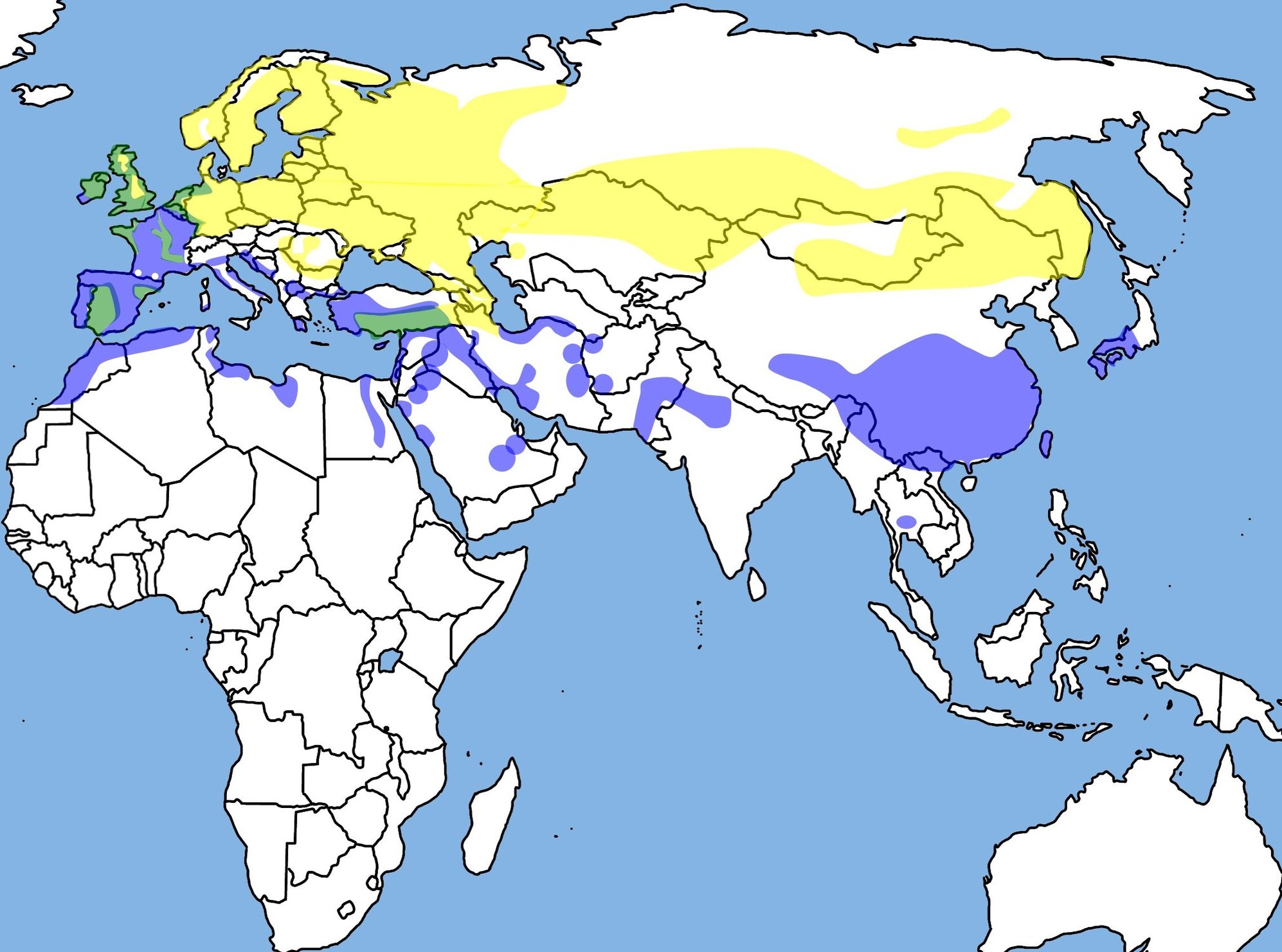
Lapwing distribution: yellow breeding range; purple wintering range; green year-long resident.

Lapwing distribution: yellow breeding range; purple wintering range; green year-long resident.

The map below shows where Northern Lapwings have been observed in the US and Canada.

Lapwings are sensitive to climate change, which is thought to explain a northward expansion of its range.

December 22nd storm damage to the berm that separates freshwater Niles Pond from the Atlantic Ocean.

MERRY CHRISTMAS EVE AND A JOYOUS NEW YEAR!

Dear Friends,

Wishing you a very Merry Christmas and a New Year filled with good health, captivating wild creatures, peace, love, and happiness. I am thankful for our shared love of wildlife great and small, but most especially for your love of  Monarchs, Piping Plovers, and beautiful wild life habitats.

xoKim

Hip Hop (left) and sibling, tucked under Dad’s warming wings


SECOND GOOD HARBOR BEACH WORKSHOP TONIGHT – Protecting and Preserving the Good Harbor Beach Ecosystem for Current and Future Generations

Jayne Knot from TownGreen conservation group writes,,

“Hello,

Town Green is hosting its second workshop/webinar in the series focusing on the Good Harbor Beach ecosystem: Protecting and Preserving the Good Harbor Beach Ecosystem for Current andFuture Generations. The Good Harbor Beach ecosystem includes Good Harbor Beach, Salt Island, the marsh, and the surrounding connected ecosystem.

The second workshop/webinar, to be held on Wednesday, November 30th from 6:30-8:30pm on Zoom (register here: https://towngreen2025.org/good-harbor-webinars/11-30-2022-webinar), will address climate adaptation approaches and solutions.  A Press Release for the event is attached.  For those of you who attended the first workshop/webinar, the format for this one will be a little different.  We will have presentations on adaptation during the first hour and then a panel discussion with questions and comments from the attendees during the second hour.  We hope you can make it.

Event: The second of a three-part workshop/webinar series focusing on the Good Harbor

Beach ecosystem: Protecting and Preserving the Good Harbor Beach Ecosystem for Current

and Future Generations; Adaptation: Is It Possible?

When: Wednesday, November 30th from 6:30-8:30pm on Zoom (register here)

What: A workshop/webinar focusing on adaptation solutions for the Good Harbor Beach

ecosystem with interactive audience participation.

Regarding Save Salt Island, please remember that the Salt Island RDA is on the schedule for the December 21, 2022 Gloucester Conservation Commission meeting.  Please mark your calendars.

Best,

Jayne”

LINK TO WCVB CHRONICLE PIPING PLOVER AND MONARCH EPISODE! #ploverjoyed #sharetheshore #plantandtheywillcome

New England residents and nonprofits work to save threatened species

https://www.wcvb.com/article/new-england-residents-and-nonprofits-work-to-save-threatened-species/41915984

Climate concerns growing for the future of many migratory species.

We travel all over coastal Massachusetts to learn about a few local “indicator species,” which can help explain the impact of climate change. Award-winning documentarian Kim Smith tells us the story of piping plovers breeding in Massachusetts.

The City of Cambridge raises monarch butterflies for release.

Every year, hundreds of sea turtles are stranded on the Cape. The New England Aquarium’s sea turtle hospital comes to the rescue.

Meanwhile, terrapin turtles on the Cape are struggling to survive.

In Plymouth at Manomet, researchers monitor coastal health, tag songbirds, and study the presence of a mighty migratory shorebird – the whimbrel.

And scientists at Nature and students at Bristol Aggie examine the health of river herring in the Taunton River watershed.

KIM SMITH FILMS ON CHRONICLE, WCVB CHANNEL 5, “WILDLIFE WORRIES” NOVEMBER 9TH, TONIGHT!

Hello Friends,

Our beloved Piping Plovers and Monarchs are going to be featured on an episode of Chronicle this evening. “Wildlife Worries” is devoted entirely to indicator species including not only Monarchs and PiPls, but also Whimbrels, tiny terrapins, and more. The show airs tonight at 7:30pm on Chronicle, WCVB, channel 5.

Several months ago, I met with the outstanding Chronicle producer, Sangita Chandra, and the show’s stellar videographer, Jennifer Platt-Ure. Originally Sangita was looking for footage of Monarchs and PiPls, but then decided to include an interview from a filmmaker’s perspective. The interview was filmed at Winthrop Shores Reservation as it was a convenient location, and also the charming cafe, Piccolo Piatti. It was a joy working with Sangita as she has a keen interest in wildlife conservation. The show promises to be wonderfully educational. I can’t wait to watch the part about the whimsical Whimbrels and turtles, in addition to the PiPls and butterflies!

Chronicle writes, “New England wouldn’t be New England without the shore birds, butterflies, and turtles that spend part of the year here. These and other local creatures are considered ‘indicator species’ that also help us understand the impact of habitat loss and climate change. Tonight we get up close to giant sea turtles and tiny terrapins, whimbrels and piping plovers, and meet the people committed to protecting them.” 
.
Included in that group – a park ranger who raises butterflies, a documentary filmmaker, and high schoolers studying river herring. Many thanks to our videography team – Bob Oliver, Jennifer Platt-Ure, and Rich Ward and to editor Ellen Boyce. Hope you enjoy the program! 

Thank you so much for watching!

Warmest wishes, xxKim


GLOUCESTER TIMES TERRIFIC WRITE-UP FOR ALEXA NIZIAK “CAPE ANNER STARS IN LATEST STEPHEN KING FILM”

Thank you to Taylor Ann Bradford and the Gloucester Times for the excellent story about local Rockport resident Alexa Niziak (who is also one of our wonderful Piping Plover Ambassadors) <3

CAPE ANNER STARS IN LATEST STEPHEN KING FILM

Time – and piping plovers – fly when you are having fun.

And for Cape Ann resident Alexa Niziak, that fun is found on the beach with the tenacious fledglings and on the big screen.

“It is too fun for it not to fly,” she said of being on the set of the newest Stephen King film. “At the end of the day, you are wishing you would be called back the next day because it is addictive in a way.”

Piping Plover Ambassador Alexa Niziak, 21, is starring in John Lee Hancock and Stephen King’s “Mr. Harrigan’s Phone,” a horror film that follows a young boy who begins to receive text messages from his dead friend.

The film, which came out earlier this month on Netflix, is an adaptation of King’s previously unpublished short story that was released in 2020. The film showcases the talent of Academy Award winning Donald Sutherland and “Knives Out” star Jaeden Martell.

Niziak got the phone call that she had landed the job after just one self tape her manager had submitted.

READ THE COMPLETE ARTICLE HERE


CLIMATE CHANGE ON THE GOOD HARBOR BEACH ECOSYSTEM UPCOMING PRESENTATION

Dear Friends of Good Harbor Beach and Save Salt Island,

Jayne Knot shares the following –

“Given your interest in Salt Island, we are inviting you to attend an upcoming workshop/webinar that will focus on climate impacts to the Good Harbor Beach ecosystem. We think you will find this workshop/webinar engaging, informative, and specific to an area of Gloucester that we all love and want to preserve. 

We have been involved in the planning of this event and Jayne will be one of the speakers. We’ve attached a flier and the press release for more information, and are happy to answer any questions you may have.

We hope to see you on October 26th for this important event.  Please share this invitation with your networks, friends, and family. Thank you.

 Kind regards,

Jayne and Andy”

Here is more information:

Event: The first of a three-part workshop/webinar series focusing on the Good Harbor Beach ecosystem: Protecting and Preserving the Good Harbor Beach Ecosystem for Current and Future Generations

When: Wednesday, October 26th from 6:30-8:30pm on Zoom (register here) (https://bit.ly/3RBEa3v)

What: An online workshop/webinar with several small group breakout sessions for participants to discuss the issues raised and reflect on the changes that have already happened

Speakers include:

  • Professor Charles Waldheim from the Harvard Graduate School of Design
  • Jayne Knott, TownGreen board member and founder of HydroPredictions
  • Denton Crews from Friends of Good Harbor
  • Mary Ellen Lepionka, local historian

You will learn about:

  • The history of Good Harbor Beach
  • The Good Harbor Beach ecosystem and current climate threats
  • Incremental sea level rise, flooding, ecosystem adaptation, and vulnerable infrastructure
  • The Great Storm scenario based on research from Harvard Graduate School of Design

 The first workshop will be followed by a Good Harbor Beach field trip on October 27th to tour vulnerable areas identified in the workshop. The second and third workshop/webinars will address adaptation options and project planning for the Good Harbor Beach area. The Good Harbor Beach ecosystem workshop/webinar series is a pilot public education program that TownGreen will replicate to focus on climate impacts in Essex, Manchester-by-the-Sea, and Rockport.

Jayne F. Knott, Ph.D.

JFK Environmental Services LLC

https://HydroPredictions.com

jfknott@hydropredictions.com

508-344-2831

PIPING PLOVER MIGRATING THROUGH CAPE ANN! #ploverjoyed

Very late  in the day Thursday, September 29th, while checking on Monarchs, and other travelers, a new friend pointed out a Piping Plover foraging in the seaweed at Brace Cove. I zipped down to the beach and sure enough, there was a very shy PiPl foraging alongside Semipalmated Plovers and sandpipers of several different species. He/she had a fairly steady gait so I am certain it wasn’t Hip Hop, although it was a little challenging to see in the super thick seaweed. And, too, this PiPl was extremely skittish of larger birds flying overhead, displaying an usual way of crouching its upper body and holding its tail end up high, a behavior not shared with Hip Hop.

I returned to Brace Cove early the following morning and the traveling PiPl had departed overnight.

I am posting this information especially for fans of Hip Hop to show that it is not unheard of for stragglers to have not yet left our region. It’s evolution and nature’s way for creatures to remain and depart over a period of time, to ensure survival of the species. If all the Monarchs and all the PiPlovers migrated at precisely the same time, one storm could wipe out the entire species.

Safe travels to all our little migrating friends. Hopefully they are finding shelter from the storm.

WILD MUSTANG BEAUTY, MONARCH MIGRATION, AND HIP HOP!

Dear Friends,

While I began writing this note yesterday morning and was looking out my office window, there were Monarchs drinking nectar from the Zinnias in the front flower border and Monarchs nectaring at the New England Asters around back. The migration is underway, with small assemblages here and there. I’m keeping my hopes up that we will see a greater influx in the coming days. And hopefully, too, the drought has not too badly harmed the Monarchs as there seems to have been enough moisture in the air that native wildflowers such as goldenrods and asters are blooming.

It was a good year for many species of butterflies in our garden. Here is a short video set to Camile Saint-Saens “Carnival of the Animals,” organized for a request for footage by a news organization:Monarchs and Friends in the Summer Garden #plantforthepollinators

On another note, the Shalin Liu and the Boston Film Festival are screening a new film titled Wild Beauty: Mustang Spirit of the West on Friday evening. This screening is free and open to the public. Here is a link to the trailer: Wild Beauty: Mustang Spirit of the West. The footage of the wild horses looks stunning. The film documents that wild horses are disappearing. You can find more information on my website here, too much for an email.

Our sweet little Hip Hop has not been seen for several days (as of this writing), but as Piping Plover Ambassador Deb writes, he has a Houdini-like way of disappearing and reappearing. Hopefully, he has departed. I am not sure if I sent this along to you – Ethan Forman from the GTimes wrote a fantastic article about our GHB Plovers. You can find the story here: Best Year Ever for Plovers at Good Harbor Beach.

I was so happy to read in the Gloucester Times that Mayor Verga’s new beach reservation system is a success, not only for the City, but because an interesting outcome is that I think the reservation system also helped the PiPls. Folks with reservations weren’t desperate to get to the beach by 7am and took their time arriving. The net result was that the wildlife that finds shelter and sustenance on the beach was less disturbed and could forage in relative peace. The new system appears to be a win for all!

In the sixties with mostly sunny skies this weekend. There are many creatures migrating along the coast and through New England currently. I believe I saw a pair of American Golden Plovers but haven’t had time to check my footage to verify 100 percent. I hope you have a chance to get out and enjoy the predicted beautiful weather and see some wildlife.

Warmest wishes,

Kim

Charlotte’s first day of kindergarten with a newly emerged Monarch to send her off – her idea to accessorize 🙂

PIPLS IN THE GLOUCESTER TIMES – BEST YEAR EVER!

Good morning PiPl Friends!

Please check out today’s Gloucester Times for a terrific article about our GHB PiPls, written by Ethan Forman. https://www.gloucestertimes.com/news/best-year-ever-for-plovers-at-good-harbor-beach/article_cba646a6-32d4-11ed-ba55-1fc4ad06ff8b.html

Ethan, Paul Bilodeau (the Times photographer), and I met last week at GHB. PiPl Ambassador Susan was out looking for HipHop that morning, too, and she stopped by during the interview. Ethan mentioned years ago he had written articles about the Plovers on Plum Island. He asked lots of great questions about our GHB Plovers and he’s such an excellent writer, I felt very good about the interview. Carolyn Mostello, our Massachusetts state waterbird biologist, provided a very thoughtful quote for the article. I was hoping to show Ethan and Paul Hip Hop that day, but he was doing his invisible act. Everyday I am hopeful he has departed however, as of yesterday, he was still here.

Hip Hop eleven weeks old September 12

I couldn’t find Hip Hop this morning feeding with the Semipalmated Plovers and Killdeers at the Creek, or at the front of the beach. The wind was blowing in great gusts and he knows where all the best locations are to get out of the wind. Hoping for the possibility that he joined the many travelers during last night’s massive migration

Semipalms at the Creek this morning

Thank you to all our super Ambassadors. We could not have had our “Best Year Ever” without each and every one of you and your tremendous gifts of time and patience. 
Have a super day and enjoy this exquisite weather!
xxKim

‘Best year ever’ for plovers at Good Harbor Beach

Efforts to protect piping plovers nesting at the popular Good Harbor Beach this summer paid off: Between two pairs nesting, there were seven eggs. Of those, six chicks hatched, and five chicks fledged.

“It’s our best year ever,” said Kim Smith, who heads up the group Piping Plover Ambassadors at the beach.

And the success here of the piping plovers — a threatened species — this summer revolved around the storyline of two handicapped shorebirds, a mom who had lost her foot but still successfully hatched a clutch of four eggs, and her chick dubbed “Hip Hop”, who had a lame right foot and was slow to develop.

FIND THE COMPLETE ARTICLE HERE

https://www.gloucestertimes.com/news/best-year-ever-for-plovers-at-good-harbor-beach/article_cba646a6-32d4-11ed-ba55-1fc4ad06ff8b.html

PIPING PLOVER HIP HOP UPDATE!

Dear PiPl Friends,

Happy ten-week old birthday to the irrepressible Good Harbor Beach Piping Plover Hip Hop! Monday marked Hip Hop’s 10 week, or 70 day, old birthday.

He spends his days alternating between resting well-camouflaged in depressions in the sand and robustly feeding, oftentimes off on his own, and occasionally with migrating shorebirds.

We don’t have experience with lone Plovers lingering this long into the summer. Despite his limping gait, he looks beautiful, healthy, and ready to migrate.

Massachusetts is at the fore of Piping Plover recovery. We have approximately 700 pairs nesting on Massachusetts beaches. It’s also great to hear about how well other states are doing. Maine has 140 nesting pairs and fledged a record number number of chicks, 252, to be precise (a record for Maine). Read more here, story shared by PiPl Ambassador Duncan Todd.

The water has been walk-in warm and perfect for swimming this past week. Enjoy these last days of August!

xxKim

PPP (POSITIVELY PRO PLOVER!) AND PIPING PLOVER HIP HOP UPDATE

Tree Swallows currently coming in waves and massing at Good Harbor Beach

Good Morning PiPl Friends!

Our little Hip Hop is still present at Good Harbor Beach. We’re hopeful that he will depart to begin his southward migration at some point soon but in the mean time, please know that he is foraging with great gusto, finding lots and lots of good food at the various habitats at GHB. In addition to his usual PiPl diet, the storm last week brought in great amounts of seaweed and that has become one of his favorite foraging locations. Piping Plovers eat a wide range of invertebrates, including insects, mini mollusks, and sea worms.

Piping Plover Hip Hop turned nine weeks old on Monday. Here he is at 60 days old.

Where do Plovers go in winter? is a question often asked of we Ambassadors. We know from banding programs at the University of Rhode Island that many Plovers from southern New England first head to the barrier beaches at Cape Lookout and Cape Hatteras. Here they will stay for about 45 days, foraging and storing up their lipid reserves for the next leg of the migration. Most will then continue on to the Bahamas, Turks and Caicos, and remote islands in the Caribbean, where they will stay until early March.

Thank you to all in our community who have taken the time to write and to call in support of the Plovers, to our PiPl Friends and to new friends who have been prompted to write. We so very much appreciate your kind words and good wishes for the Plovers. We’d like everyone to understand how vulnerable is this tiny threatened bird however, not all people have the capacity nor vision to see the beauty and joy in conserving our wild creatures and wild spaces, for the protection of life on Earth as we know it, and for future generations to come.

We are keeping our messaging PPP – Positively Pro Plover! 

MONARCHS AND PIPING PLOVER INTERVIEW WITH HEATHER ATWOOD AND KIM SMITH AT 1623 STUDIOS!

Thank you Heather Atwood and 1623 Studios!

I so appreciate Heather taking the time to talk about Piping Plovers and Monarchs both. She asked tons of great questions and in a short period of time, we got in lots of information! Please see our interview below <3 !

For more about Hip Hop and the Good Harbor Beach Piping Plovers, see here –

And, please join me Thursday, August 18th, at 10am at Essex’s T.O.H.P. Burnham Library for a free  all ages (5 plus) Monarch Butterfly event, The Marvelous Magnificent Migrating Monarch. To register, GO HERE


Monarch Butterfly and Whorled Milkweed (Asclepias vericillata)

THE MOVIE – THE GOOD HARBOR BEACH PIPING PLOVERS #ploverjoyed

The story of a tiny pair of birds that arrived on the shores of Cape Ann, and the remarkable community that came together to help provide safe harbor for the pair to nest and to raise their young.

Excerpt from the film’s introduction – In 2016, a young pair of Piping Plovers began nesting at Good Harbor Beach, Cape Ann’s most popular seaside destination. The first several years were difficult for the Plovers. The community was neither prepared nor knowledgeable in how to manage a pair of highly vulnerable nesting shorebirds.

There were so many dog disturbances on the beach that the Plovers were driven into the beach parking lot…

I hope you enjoy this short film! Stay for the Epilogue <3

SHOUT OUT TO GLOUCESTER FISHERMEN FOOTBALL TEAM AND COACHES! #sharetheshore

One very important reason as to why we had a successful year with the Good Harbor Beach Piping Plovers is because of the consideration afforded to the Plovers by Coach Lattof, Coach Craig, and all the Gloucester Fishermen football team members. Early on in the the first years of the Plovers being at GHB, Coach Lattof made a point of bringing the guys over to the Plover’s restricted area and talking to them about threatened and endangered species.

We are so appreciative of the consideration given. The boys are awesome and the parents, teachers, and coaches of these great bunch of kids are doing an amazing job!

Thank you!

PIPING PLOVER HIP HOP AND FAMILY UPDATE

Dear PiPl Friends,

Truly a milestone for our Good Harbor Beach PiPl fledglings, today marks their seven week old birthday, or 49 days. Five chicks fledged and that in and of itself is also a milestone. Hip Hop isn’t the best of flyers as of this writing. Dad and one of the siblings are still with him, which is also remarkable. Every morning finds the three cozily snoozing within close proximity to one another, while the three super flyers are zooming around the beach.

Dad, Hip Hop, and sibling

This past week, several of we GHB PiPl Ambassadors attended the annual Northeast Coastal Waterbird Cooperators Meeting. Representatives from the Massachusetts seven coastal regions, along with coastal waterbird conservation leaders from Maine, New Hampshire, Connecticut, Rhode Island, New Jersey, New York, and the Great Lakes provided data and stories from their respective shorebird conservation programs. Not only are Piping Plovers covered, but also Least Terns, Common Terns, Roseate Terns, and American Oyster Catchers.

We all should be very proud that Massachusetts is once again at the fore of Piping Plover conservation. There are about 700 breeding pairs in Massachusetts. Does that sound like a great number? Not really. There are only about 8,000 Piping Plovers worldwide. Compare that number to Snowy Owls; the population of Snowy Owls is thought to be around 28,000. There is still much work to be done in Piping Plover conservation.

Here are some local good news numbers shared at the meeting. The data was collected approximately two weeks ago. In 2022, the north of Boston region has so far fledged 135 chicks, with 54 chicks still on beaches for a possible total of 189 chicks! Five of which are from Good Harbor Beach!

I submitted a short film for the Coastal Waterbird meeting, titled The Good Harbor Beach Piping Plovers, and am in the process of adding a few scenes. It should be ready to share with the community by the end of the week.

One of my favorite moments from this season, of all four siblings thermosnuggling under Dad.

HIP HOP CATCHING UP! #ploverjoyed

Tiny handicapped Piping Plover chick Hip Hop, although developmentally challenged in comparison to his siblings, is nonetheless steadily growing. You can compare in the photos and video footage that he looks to be at about the same stage of development as were his siblings two weeks ago. His wings muscles are gaining in strength and fluffy tail feathers are beginning to grow.

Hip Hop is also wonderfully independent and forages far and wide along the length of the beach. If you see him on the beach, please remember that Hip Hop can’t yet fly to escape danger as can his siblings. Please give him lots and lots of space and please don’t try to take a close-up photo with your cell phone. The more he is able to forage without being disturbed, the more quickly he will grow.

This morning a scofflaw dog owner brought her dog to Good Harbor Beach. Fortunately, early morning daily GHB walkers P and D caught up with her to remind her of the dog ordinance. Hip Hop was only a few feet away, hunkered down in a divot, and could have so very easily been squished by a bouncy, enthusiastic off leash dog. Thank you P and D for your help this morning <3

Hip Hop’s sibling, photo taken about two weeks ago.

Hip Hop today

HAPPY NEWS TO SHARE FOR OUR JULY 24th PIPING PLOVER UPDATE

Good Morning PiPl People!

A gloriously beautiful sunrise at Good Harbor Beach!

We have a wonderfully interesting new development to share about out GHB PiPl families. Firstly, though, everyone is asking about Hip Hop. He is doing very well, albeit growing very slowly, and is perhaps about two weeks behind developmentally. Fortunately, he has a phenomenal Super Dad, who nurtures and protects him. As long as Dad does not leave to begin migrating before Hip Hop can fly, I am hopeful he will grow well. There have been documented cases where Plovers were on northern beaches into December and January. Hopefully, Hip Hop will not be here for an extended period of time, but if he is, as a community, I think we can keep watch over him.

Hip Hop, 34 days old

The happy news is that the one remaining chick at #1 (we lost the sibling last weekend) has joined Team Plover at #3, so we have a little family of five chicks and two Dads. The Dads just barely tolerate each other, but the kids are all getting along just fine!

Fledglings 34 and 31 days oldFour fledglings in beach camo

Our Good Harbor Beach Plovers are so fortunate to have the Creek, especially when the main beach is so packed full of people. And because the Creek is badly polluted, barely anyone is traveling down there. For some reason, the PiPls can tolerate the bacteria that is so toxic to humans, and are able to forage without disturbance.

Happy Sunday, stay cool, and have a great day! xxKim

Super Dad


STARTING YOUNG – OUR LITTLE WILDLIFE ADVOCATE

So proud of Charlotte this morning! She rose early with me to catch her first ever sunrise and to watch the Plovers. Rising in a dramatic fiery red ball, the sun was all that it could be for a first-ever sunrise experience.

We found the chicks foraging along the water’s edge, while she stood back as still as a statue to give them lots of space. She kept eyes on all four and helped herd a seagull away from my canvas beach bag, but not in the direction towards the chicks. She added more seashells and discarded “sand-shapers” to her collections and was most enamored of all our early morning friends.

The four thirty-day-old chicks at area #3, plus Dad, were all present and accounted for this morning. Little Hip Hop is still undersized, but quite independent.

Hip Hop and sibling at twenty-nine-days old

So very unfortunately, we lost one of the two chicks at area #1 over the weekend. Tomorrow, the one remaining area #1 chick attains the wonderful four week old milestone. Both Moms departed over a week ago so we have five chicks plus two Dads. The five chicks occasionally all forage together, while the Dads stay ever vigilant in watching over their respective chicks (and duking it out between themselves over “foraging rights.”)

HAPPY FOUR WEEKS OLD TO OUR GOOD HARBOR BEACH PIPING PLOVER PLUMPLINGS! #ploverjoyed

Hello Piping Plover Friends,

Today we are celebrating a milestone for our Piping Plover chicks at area #3, their four-week-old milestone. In one more week, the Plover chicks will be fully fledged. The three normally developing chicks are taking brief lift offs several feet above ground. We hope tiny Hip Hop won’t take too long to catch up to his siblings before he too is showing signs of flying.

We’d like to take this opportunity to thank all our wonderful friends and partners who have worked with us to reach this important milestone of FOUR four-week-old chicks. Thank you Mark Cole and the Gloucester DPW beach crew, thank you to ACO officers Teagan and Jamie, thank you to City Councilors Scott Memhard and Jeff Worthley, thank you to the Gloucester football practice kids and coaches, thank you to the GHB volleyball players, and thank you to all the local residents and beachgoers who are watching out for the Plovers when they are at GHB enjoying a beach day. 

Hip Hop and sibling – you can compare in the photos how much more well-developed are the wings of Hip Hop’s siblings. Hip Hop is making great strides though and we have high hopes.

On a more difficult note, our area #1 family has become more elusive and with recent talk about eating Plovers we are concerned that we may be missing a chick after this weekend’s truly unnecessary “stirring the pot.” People don’t understand this kind of cruel talk encourages people to torment and to kill Plovers. They don’t get that this is a thing and that there is a well-documented history of grown men and women killing Plovers and destroying their nests and habitat because they were threatened by the presence of a tiny bird. Many of us hope this way of relating to wildlife died out in the previous century. I believe the great majority has evolved in how we think about protecting wild creatures, particularly in the case of safe guarding threatened, endangered, highly vulnerable and the smallest amongst us.

As has stated been countless times, the mission of the Piping Plover Ambassador program is to share the shore, to keep the beaches open for people and for shorebirds.

If you would like to be a Piping Plover Ambassador next year, please email me at kimsmithdesigns@hotmail.com. Our ambassadors are a wonderful group of kind hearted, funny, sweet, and dedicated people and we have become friends through our stewardship. We have tremendous support from most in the community however, a small handful have labeled us elites and silly bird watchers (not that there is anything wrong with bird watching!). Nothing could be further from the truth. We are an assemblage of hardworking professionals, artists, writers, poets, designers, to name but a few of our careers, who came together to take time out of our professional lives to care for a tiny endangered species that began calling Cape Ann home seven years ago. You don’t need prior “bird watching ” skills to join our Piping Plover Ambassador program and we would love to have you.

Four-week-old Plover plumplings

LIFE GUARD CHAIR FOUND CAUGHT UP IN THE FOOTBRIDGE ROCK PILINGS

This morning we found the lifeguard chair caught in the footbridge pilings. I imagine it is related to July’s full Buck Moon and super high tide. The Creek is still closed to swimming.

HIP HOP ON THE BEACH – INJURED PLOVERS SURVIVING GOOD HARBOR

Please, if you see this little one on the beach, please give him lots of space to forage and to move around. This is our smallest chick, so nicknamed Hip Hop because his right foot does not work well, which causes him to do a sort of hop run. Despite the injury he is growing and moves with much independence, all around the beach.

Parents of young children, do not allow your child to chase the Plovers, any Plover, adult or chick. If you see a Plover on the beach, hold your child’s hand so they don’t lunge toward the bird and then both watch from a quiet distance. You will see so much more, and the bird may even approach you if you are standing still.

Community members, if you see a person(s) chasing Plovers, please alert a Plover Ambassador. Thank you!

Comparing two three-week-old siblings – Because of Hip Hop’s foot injury, he is growing at a slower pace however, he is robust, which gives us hope he will eventually fill out.  Normally developed three-week-old chick stretching its wings

Interestingly, both Super Mom and Hip Hop have right foot handicaps; Mom has lost her foot and Hip Hop sustained an injury approximately during his first week of life.