Category Archives: Antennae for Design

North Shore Wedding Magazine

Click any photo to view slideshow-

For weeks I had planned to photograph the tulips in bloom at Willowdale, but only in the late afternoon sun. Each afternoon I headed out, the sky grew overcast. Last Monday the sun shown gloriously the entire day.

Fortunately I caught the tail end of North Shore Wedding Magazine photographing their Premier Issue in the gardens at Willowdale. North Shore Wedding Magazine is a brand new biannual publication featuring quality North Shore wedding professionals and venues, and is the sister publication to New Hampshire Wedding Magazine.

Sarah Boucher’s (Willowdale’s Planning Manager) lovely table styling for the North Shore Wedding Magazine photo shoot.

Kristina Hathaway with model

I hope this does not sound boastful however am mentioning because I just love it when people understand the design intention of a project. Kristina Hathaway remarked that she loved the feminine quality of the garden’s design juxtaposed against the masculine architecture of the stone mansion—music to my ears! The design challenges at Willowdale are multifold, yet rewarding, and from April 1st to until the first week of November you will find the gardens in bloom!

Tuesday evening, June 12, at 7:00 pm come join me in the gardens at Willowdale Estate. Enjoy refreshments and a tour of the garden, followed by a showing of my film “The Butterfly Garden at Willowdale Estate.”  RSVP to Info@Willowdale Estate.

Click any photo to view slide show-

Some Favorite Jonquils and Narcissus

‘Minnow’ and Greigii Tulips 

The first photo is of the petite and scented jonquil ‘Minnow,’ offset by the coral red Greigii species tulip. Both are low-growing, which makes them ideal for rock gardens, and both varieties reliably return annually. The second photo is an ever-increasing little patch of narcissus and I know not the cultivar’s name. It was a spring gift that had been purchased as a potted plant from the grocery market, then planted in the garden in early summer.

The third photo is perhaps my all time favorite and consider it the very best for several reasons. ‘Geranium’ is divinely scented—sweet with a hint of fresh lemon blossom; its color and shape meld beautifully with a wide range of spring flowering bulbs; and ‘Geranium’ not only reliably returns each spring, it also increases in number.

Narcissus tazetta ‘Geranium’

For more information about narcissus and jonquils, including a list of the most sweetly scented varieties, see my book Oh Garden of Fresh Possibilities! ~ Notes from a Gloucester Garden, page 178.


Antennae for Design

More About Depression Era Quilts ~

Reader Sandra G recently wrote: Thank you for Sharing the Antennae For Design Article and Photo. I recently acquired a Vintage Butterfly Quilt Top, that has me puzzled as to what the fabrics are and dating it ? The Butterflies appear to be very similar to your Photo. I am clueless about this Quilt Top and any help would be greatly appreciated. You have a great Website and Blog!

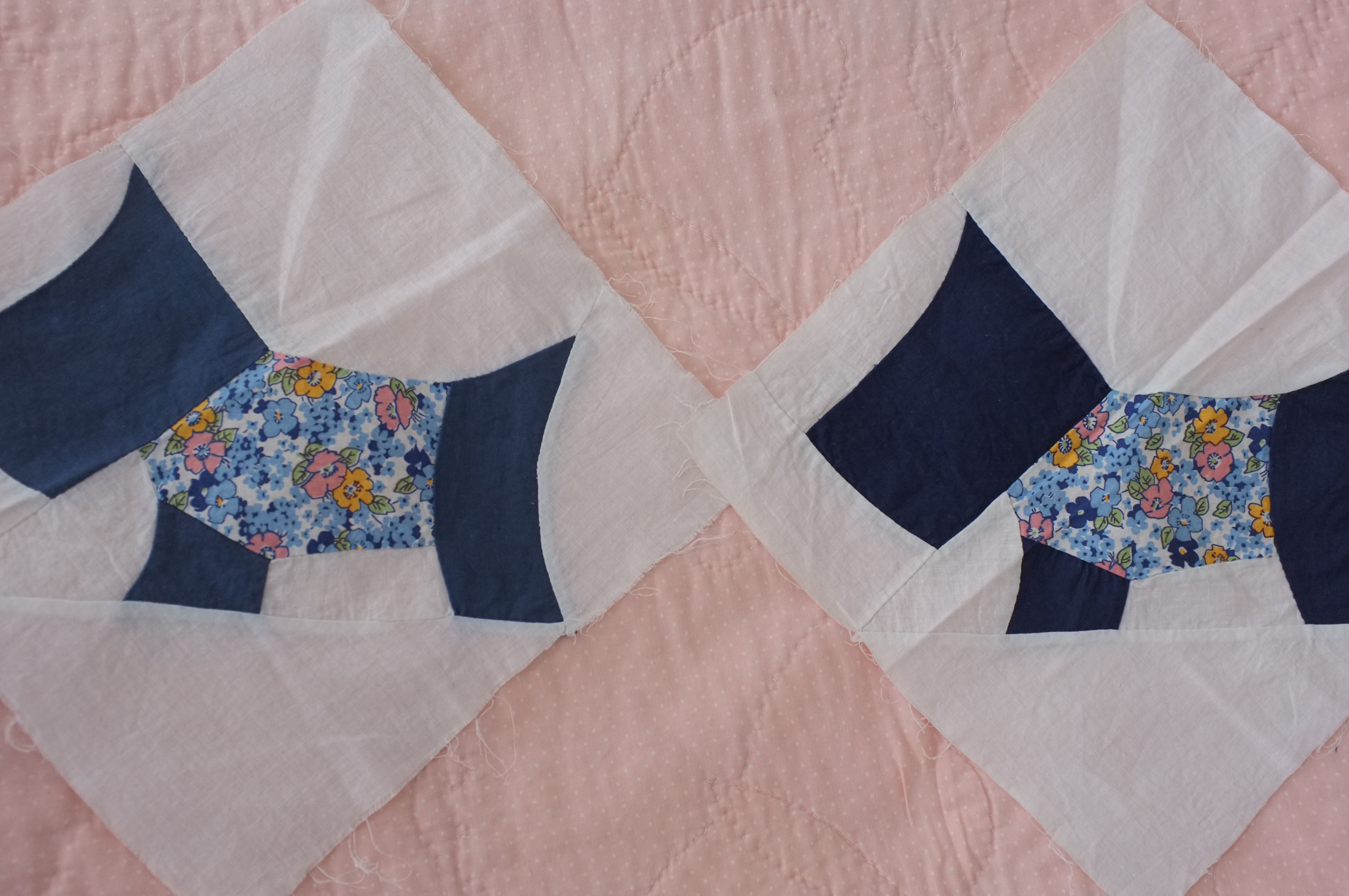
Depression Era Butterfly Quilt Top

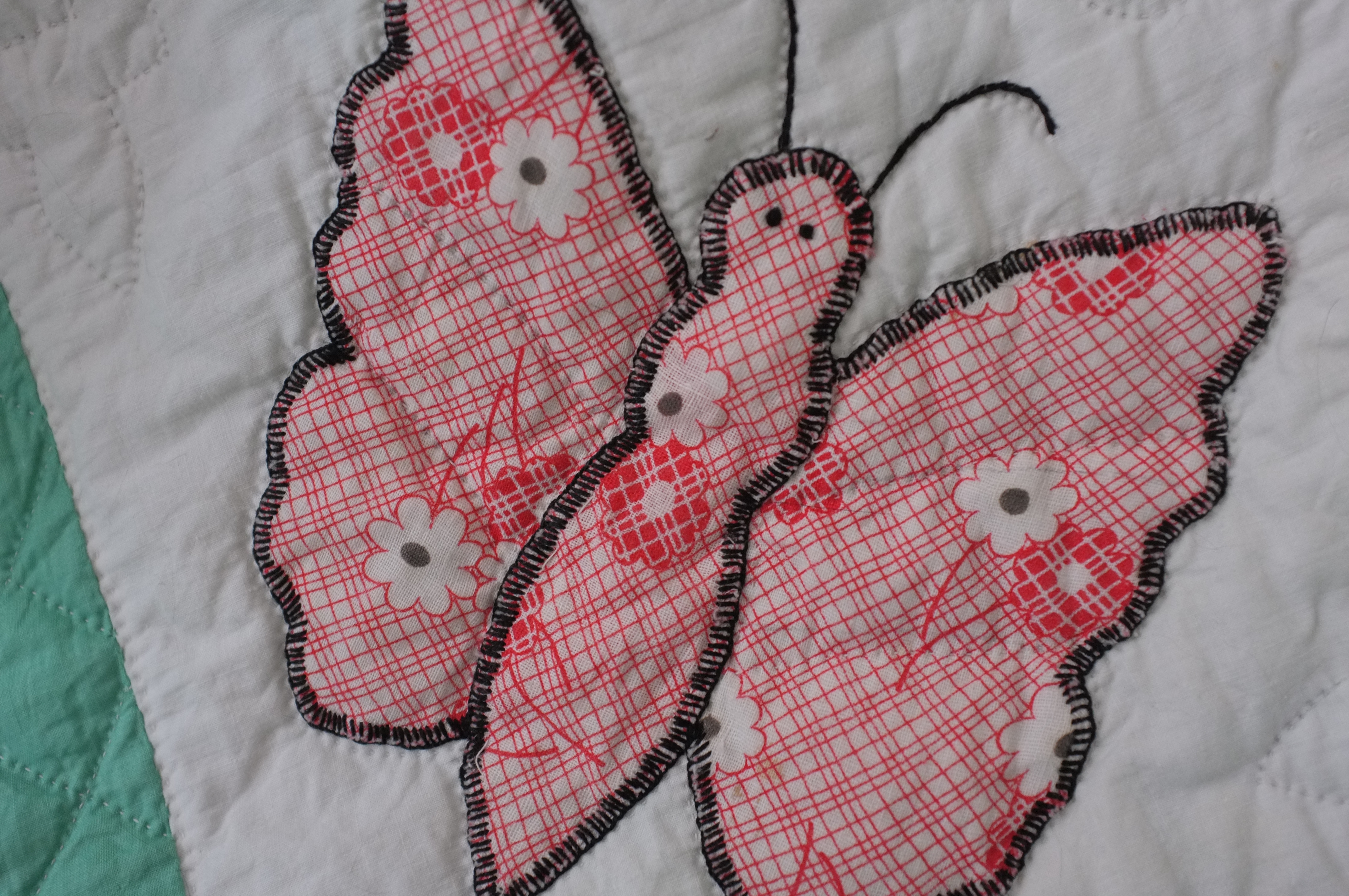
Butterfly Quilt Top Detail 

I asked her to send photos and she did send several. I do think this is a Depression era quilt for several reasons. The red butterfly especially, with the cheery cherry printed over the red and white polka dot fabric, looks very 1930s-1940s. All the butterflies are hand-embroidered, which also leads me believe the top is from the Depression era. It’s really a charming quilt top, and beautifully made. I love the design placement of the butterflies. The colors are so vibrant–the finished quilt will make any room sing. What a great find Sandra G.!

* Note ~ a quilt top is just that; the top only. Quilt tops are a wonderful way to acquire a vintage quilt. For some reason or other, the quilt was never completed. Ideally the quilt top would have been tucked away and stored out of direct sunlight–just waiting for some industrious- type to complete the job! If stored properly, you’ll find the vintage fabrics in their original vibrant colors as sunlight and repeated washings are most damaging to textiles.

Butterfly quilt top hand embroidered detail

Special Events at Willowdale Estate

Happy Birthday Briar!

As many know from reading my posts, my dear friend, and one of my favorite design clients, is Briar Forsythe, proprietor of Willowdale Estate, located in Topsfield. I was delighted to attend Briar’s birthday party, which was a wine and food tasting event, and held in the new conservatory at Willowdale. Usually when there I am up to my elbows in design projects so it was a real pleasure to get a sense of how it feels to be a guest.

The party started at 4:00 and the late afternoon sunlight streaming through the conservatory windows lent a warm and welcoming glow to the event. The service was absolutely impeccable (do you find that is not often easy to say?). Chef Joe Joyce and staff had prepared simply the most elegant and divine tasting courses, paired with wines that perfectly complemented each dish. All the wines were delicious and I can imagine they would be great paired with any number of meals.

Unfortunately, I did not take a snapshot of the first course, which was a  Duxbury Oyster with Champagne Foam and Blood Orange Caviar, served with a sparkling Dibon Cava Brut. I love sparkling wines and found this perfectly not overly sweet. I am not going to go on and on telling you how super delicious was all–it was–and hope the photos give an idea. The wines were provided by Geoffrey Fallon.

Sweet Pea Agnolotti, Lobster Tail, Vanilla Aioli and Pea Shoots Paired with Lamoreaux Chardonnay

 Crispy Pork Belly, Poached Apple, Celeriac Puree, Micro Dijon Greens Paired with Arabanta Rioja
 Seared  Tenderloin of Beef, King Oyster Mushroom, Bone Marrow Cracker, and Bordelaise Paired with Pietrantonj Montepulciano d’Abruzzo
Braised Lamb Shank, Grilled Polenta, Mustard Greens and Baby Turnip Paired with Armandiere Cahors 

Visit Willowdale’s website—they are a full service special events venue, specializing in their own in-house fabulous catering. Tours are offered throughout the year and many Gloucester companies do business with Willowdale, including several of our local florists and photographers.

Click last photo to see slideshow of all party pics.

Happy Valentine’s Day! Part Two

Reblogged from Good Morning Gloucester ~

Birth of Pop Art

In 1962 Jim Dine’s (1935- ) work was included, along with Roy Lichtenstein, Andy Warhol, Robert Dowd, Philip Hefferton, Joe Goode, Edward Ruscha, and Wayne Thiebaud in the historically important and ground-breaking New Paintings of Common Objects curated by Walter Hopps at the Norton Simon Museum. This exhibition is considered one of the first Pop Art exhibitions in America. – wiki

Images courtesy Google image search.

Antennae for Design Circa 1930-1940 Dressing Table

Winter is the time of year when I especially enjoy working on interior home improvement projects. This fabulous vintage dressing table and mirror set were found at a local antique shop. I wasn’t planning on a dressing table for my new sewing room/guest bedroom, but after seeing the dressing table —it was going for a song—I made a split second decision and purchased the pair.

Aren’t all the compartments in the drawers wonderfully practical? You can’t find anything made like this in today’s marketplace. I love that it is a very substantial width and height. The original and smaller circa 1930′s dressing table has had a larger custom-made top cut in a curved design. The whimsical glass tabletop lends a Hollywood Regency feel to the piece. The chest of drawers needs a fresh coat of paint (or several), but I will have to wait for spring when the windows can be left open to tackle that part of the project. A new length of fabric is needed for under the glass as well. Perhaps a silk moiré in pale watery green or blue as the thick glass has a greenish cast.

For the new skirt, I had a bolt of Ralph Lauren floral chintz on hand, which gives it a rather Nick and Nora meets summer cottage look, but I think too, in the spring, I’ll make another skirt, perhaps this one in sheer white cotton voile or dotted Swiss.

If I can help you with your interior design project send an email or give me a call. I look forward to hearing for you!

Thanks to Joey for showing me how he creates videos in one take. I couldn’t shoot this video in one take as I had to take the skirts on and off, but this is definitely a super fun and streamlined way of creating videos.

I almost forget to mention that inside one of the drawers was a heavy, solid lead engraved plaque-award given to Mrs. William D. Vogel by the Milwaukee Newspaper Guild for outstanding service to the arts. Doing a very quick Google search, I didn’t find too much about Mrs. Vogel, however her father was Ralph Harman Booth, publisher of a large newspaper chain, Booth Newspapers, and Detroit Institute of Art philanthropist.

Quite possibly this lovely dressing table was Mrs. Vogel’s, or her mother’s, Mrs. Harman, or possibly her daughter’s summerhouse dressing table. I would love to know the provenance of the piece, especially as the table top and chest set appears to be someone’s home-made and creative combination.

Simply Stunning Work in Progress

Gloucester: A Community of Neighborhoods

Juni and Maggie Rosa discuss design elements of the Eastern Point panel.

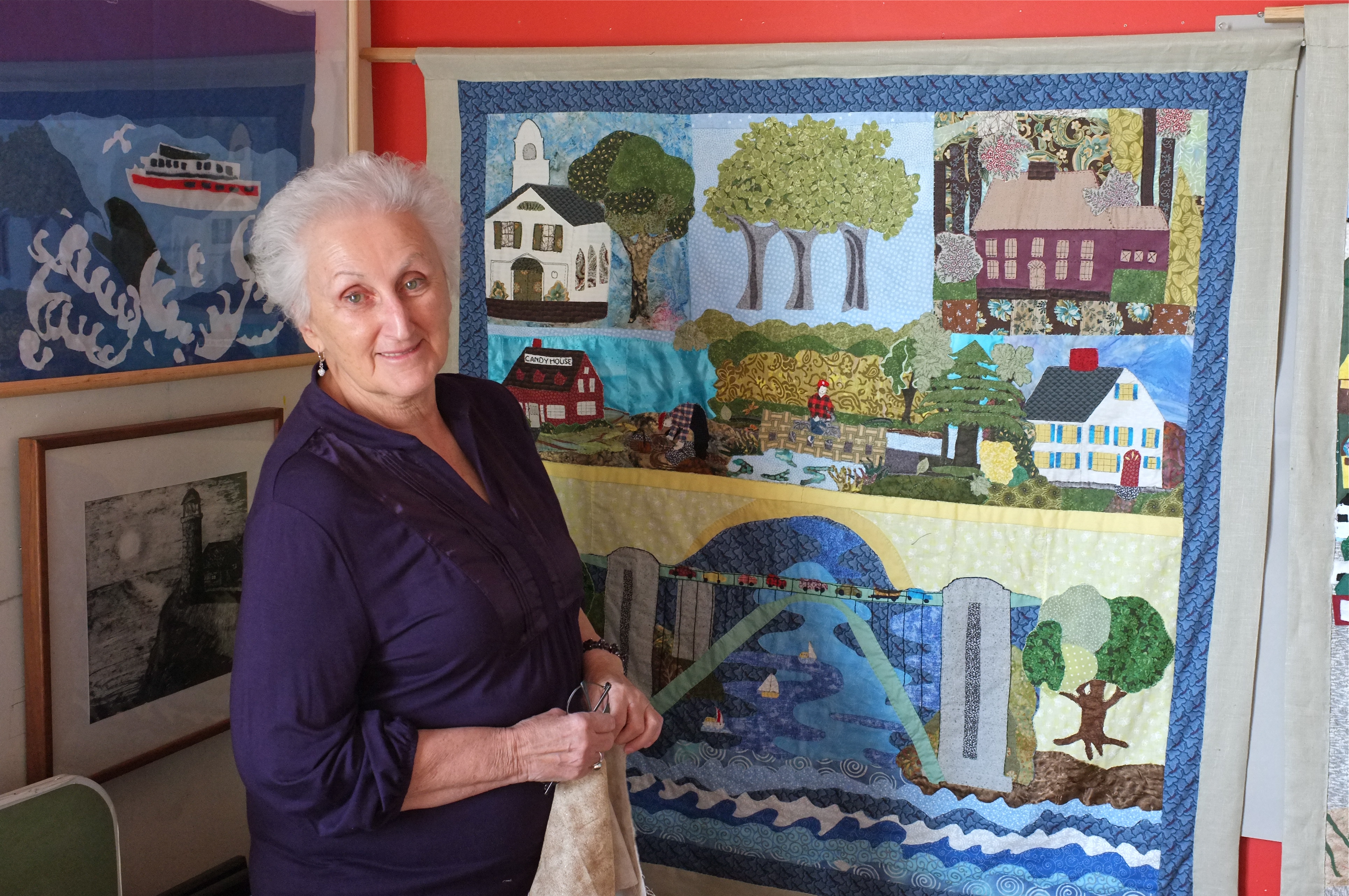
Yesterday I had the joy to meet Juni Van Dyke and several members of the Rose Baker Senior Center art class. Juni and her students are working on a project titled Gloucester: A Community of Neighborhoods. Each fabric panel measures approximately five-foot square and illustrates through iconic imagery characteristics unique to Gloucester neighborhoods. The banner’s design in it’s entirety, along with the individual artist’s whimsical designs and choice of fabrics, is utterly captivating and a vibrant visual feast.

Maggie’s extraordinary interpretation of the archetypical Beauport window. The window mullions frame a collection of antique glass in varying shades of lavender to deep grape.

This is not the first grand scale project of it’s kind created by Juni and the fiber artists at the Senior Center. The banner titled From Sea to Shining Sea: Celebration of the American Landscape that is currently on view at the Senior Center lunchroom was also exhibited at the Lexington Heritage Center for six months, and it measures nine feet in height by thirty feet in width.

Lois Stillman’s elegant rendition of the birch tree clump at Niles Pond

Eastern Point panel detail with Mother Ann and butterflies.

I am honored to have been invited to create a butterfly for the Eastern Point panel although I think they have it beautifully covered. The whimsical swirl of butterflies in the upper left corner was created by students at the Eastern Point Day School and the beautifully detailed Monarchs fluttering around Beauport by Maggie Rosa.

Lois stands in front of the panel she designed. Note her genius interpretation of the Abram Piatt Andrew Bridge, replete with cars (click photo to see larger version) and including Nichols Candy House. Her deep love of trees is apparent in the beautiful and skilled manner she has stitched and pieced many different species of trees created for the panels.

As the work on Gloucester: A Community of Neighborhoods unfolds we’ll bring you more stories and detailed photos about this vibrant and captivating work of art in progress–there are simply too many beautiful tales to tell in one post!

Juni and Priscilla ~ Sunlight streams through the large picture windows of the second floor art room at the Rose Baker Senior Center.

Pauline, Juni, and Maggie

Juni and Maggie

Antennae for Design ~ Three Outstanding Films Not to be Missed

Uggie

We were again transported to another time and place—three fabulous and current films, in three weekends. Our wonderfully transportive film nights began with My Week with Marilyn, which takes place in 1956 and was shot in and around the outskirts of London,The Descendants, filmed in present day Honolulu, and last night we saw The Artist, which takes place in Hollywood, from 1927 to 1932. The Artist is a comedy and drama about George Valentin (Jean Dejardin), a silent film star, and Peppy Miller (Bérénice Bejo), a rising “talkie” star, who meet just as the silent film industry is collapsing. The film is partially silent and filmed to look like a black and white silent film. The costumes are to die for, the interior set designs are predominately Hollywood Regency, and the acting charming and sweet and utterly engaging. Uggie, the terrier, will steal your heart.

From an interview with Michael Hazavanicius, director and writer of The Artist, “I had many deep motivations for wanting to make a silent film. As a member of the audience, I absolutely love the way stories are told to me in a silent movie. It’s not a cerebral response. It’s more a child-like response. Because there’s no spoken language, the way the story engages your heart is special. It’s hypnotic, sensual, not at all cerebral, and I love that sensation as an audience member. My motivations as a director were much more selfish. For me, it was a great experience. It’s what cinema is about, in my opinion. I’m telling a story with images and music. With images, you have the actors, you have the sets, you have the costumes, the lights, everything, and that’s how you’re telling the story. You don’t need words for that. It’s the ultimate experience for a director to make a silent movie. I really wanted to try to do it.”   Link to the full interview with Hazavanicius. 

Jean Dujardin and Uggie 

Techno notes for Joey and Marty: The Artist was made in the 1.33:1 screen ratio commonly used in the silent film era. Though presented in black-and-white, it was shot in color. All the technical details, including lenses, lighting and camera moves, were calibrated to get the look just right. To recreate the slightly sped-up look of 1920s silent films, the film was shot at a slightly lower frame rate of 22 fps as opposed to the standard 24 fps. Courtesy wiki.

Images courtesy Google search.

Hawaiian Quilts

Antennae for Design The Descendants

Saturday night we went to see The Descendants. I found this movie enjoyable on many levels. The cinematography, of lush Hawaiian landscapes, was gorgeous. Lingering close-up shots of the actors and dreamy transitions added to the telling of story. Interesting, too, were the clips of suburban Honolulu neighborhoods. Never having been to Hawaii, the film was an eye opener—I don’t imagine Honolulu neighborhoods as a typical L.A. hillside suburb, nor downtown Honolulu with eight lane highways jammed with choking traffic.

Vintage Hawaiian Quilt

The set designs by Matt Callahan mirrored the story beautifully, and I found much inspiration in the furnishings and fabrics, including vintage rattan furniture, appliqué pillows, and bark cloth curtains. Several authentic Hawaiian quilts added a unique touch, and one quilt in particular played a leading role in the telling of the story. The main characters comprise a modern day family descended from a Hawaiian princess. Early in the film, we see a sunny golden yellow and white, slightly tattered and homey, quilt arrayed over the mom, who is lying in a hospital bed, in a coma and dying. The quilt has been brought from the family home to the hospital to provide comfort. In the final scene, the father and children make their way one by one to the family sofa, and eventually all are cozy under the same Hawaiian quilt, watching television together, and sharing bowls ice cream.

What we think of as the classic Hawaiian quilt is characterized by a bold, radial symmetric design (similar to that of a snowflake) or bold, stylized design drawn from nature. The motifs are often times cut from one piece of cloth, unlike patchwork quilts, which are assembled from many smaller pieces of fabric. The design motif is then appliquéd to a contrasting background. And, unlike patchwork quilts, with quilting stitches worked in parallel diagonal, straight, or circular lines, Hawaiian quilters practice “echo” or outline quilting. The stitches follow the inner and outer contours of the design motif.

Images courtesy of Google search.

The Descendants is based on the book of the same name, written by Kaui Hart Hemmings.

Antennae for Design

Depression Era Quilts

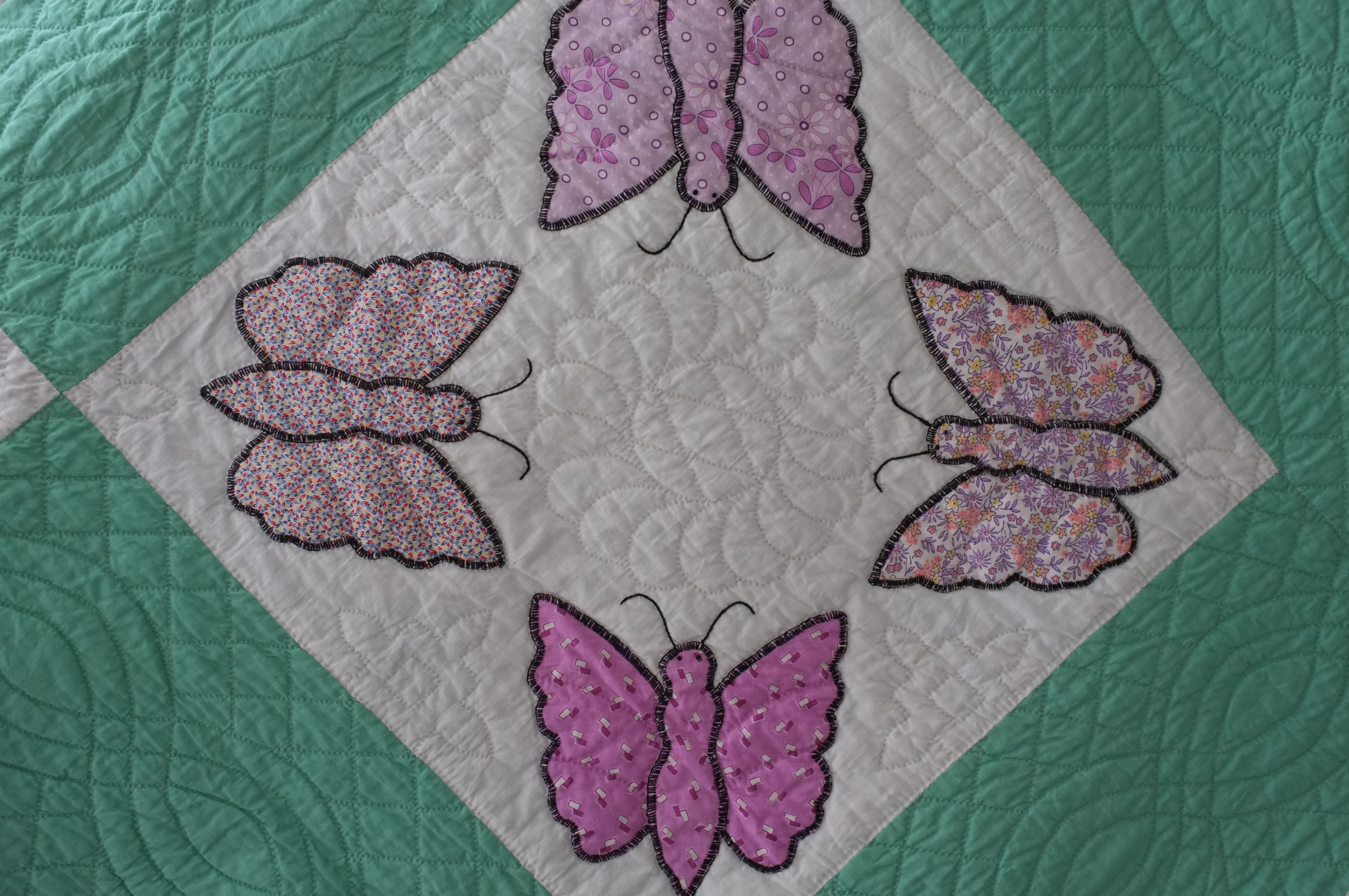
Depression Era Butterfly Buttonhole Appliqué Quilt 

For the first installment of Antennae for Design I wanted to share with you a very special gift that my mother- and father-in-law gave me this Christmas past. My husband’s family lives in Cincinnati, Ohio, a beautiful city sited along the Ohio River. The landscape so reminded early German settlers of the Rhine River and valley, that to this day there is an older area of the city still referred to as ‘Over the Rhine.’ The above butterfly buttonhole appliqué quilt was made in Fostoria, Ohio and Ohio’s long quilt making heritage is similar to that of many states throughout America.

Quilts and quilt making techniques are a reflection of the life and times of the women who made the quilts. The technique of quilting (encasing an insulating fabric between two layers of an outer fabric and stitching firmly in place) has existed throughout history. Quilted garments have been discovered in ancient Egyptian tombs and quilted garments and bedding began to appear in Europe after the return of the Crusaders from the Middle East. The medieval quilted gambeson and aketon were garments worn under, or instead of, armor of maille or plate armor. The oldest American quilts in the Smithsonian date from approximately 1780.

Thinking about the fascinating history of quilts and quilt making in this country, one of my very favorite periods of quilt making was after WWI and through the early 1940’s. Quilts made during this period are commonly referred to as Depression Era quilts; although to look at their cheery colors and patterns, you would never know the women who created them were living in the midst of a depression. Magazines needed to be resourceful during this period of extreme economic hardship, and they were, by selling fashion and optimism. Another way to survive was by including quilt patterns and tips in their publications. Quilting was an activity that women could do to fulfill their creativity while still making something practical for their families. The quilts were typically made from sewing scraps, out-grown clothing, and feed sacks. Part of the war reparations agreement with Germany after the First World War mandated Germany provide the US with their formulas for aniline dyes, which allowed for an explosion in color depth and hues, as well as stability in dyes; purple finally became reliable, as did black.  Charming and sweet prints along with lovely pastels served in stark contrast to the depressive economy. A particular shade of green, now referred to as “thirties green,” was so popular amongst quilters, that the strips that were used to bind the quilt edges came packaged in a can!

Dating quilts is fascinating. If you have a question about a quilt or would like to share information about a family heirloom, please write.

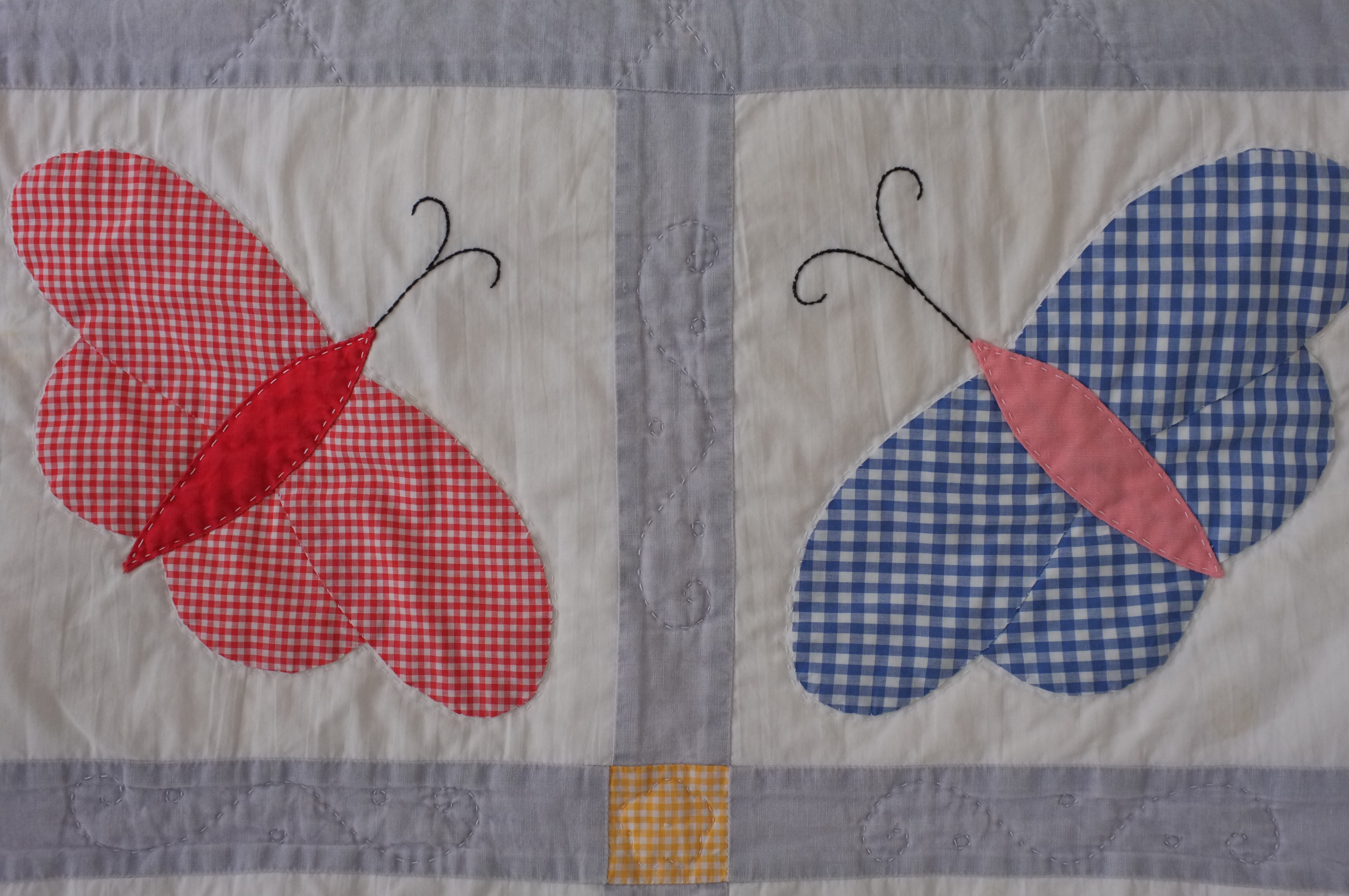
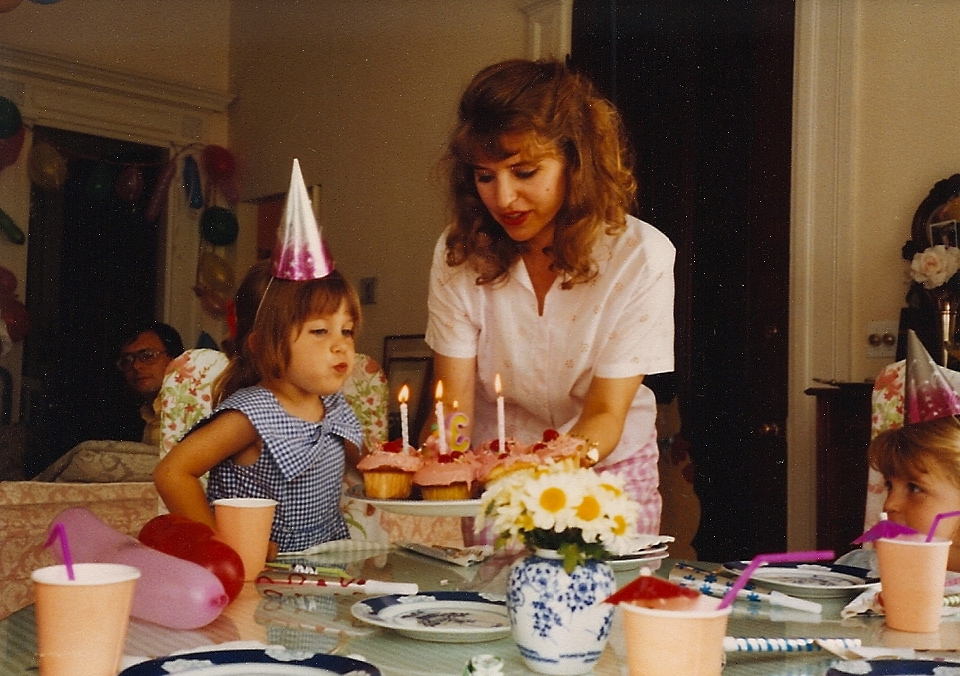
The above quilt was my interpretation of a 1930′s butterfly quilt, which I made for our daughter when she was three. Following in the depression era practice of using what was on hand, you can see the dress scraps from which the quilt was made in her blue gingham dress in the old photo below.

I found a basket full of Scotty dog squares at a yard sale last summer. Scotty dogs were a popular design motif during the first half of the 20th century and this particular Scotty pattern was created in 1940. When I have some spare moments, I’ll look for fabric to back the quilt. Purchasing quilt squares or an unfinished quilt top is a great way to acquire a depression era quilt because, if the squares or top have been properly stored, the fabrics will come back to life with cleaning and pressing, and will not have been used.

Antennae for Design

January, February, March, and for we who dwell in New England, oftentimes well into April, are ideal months for interior home improvements. During these more homebound months I am actively looking for home and garden design inspiration. And, too, with projects that were shelved during the summer months because of seasonal work and summer guests, winter is a great time of year to focus on home improvements. I was inspired to write this weekly series after a recent visit to our home from Joey, Jill, and their two darling daughters. The family stopped by for hot chocolate and story time and Joey was non-stop with investigative questions and curiosity. It got me thinking about the impetus for writing my book, Oh Garden of Fresh Possibilities!, which was originally conceived as a guide for young couples and new home owners (and someday, hopefully, for my children when they will one day have gardens of their own). My book grew to be more than that, but I am again thinking of the couples with young children that have recently moved to our East Gloucester neighborhood.

Plaster Ceiling Medallion

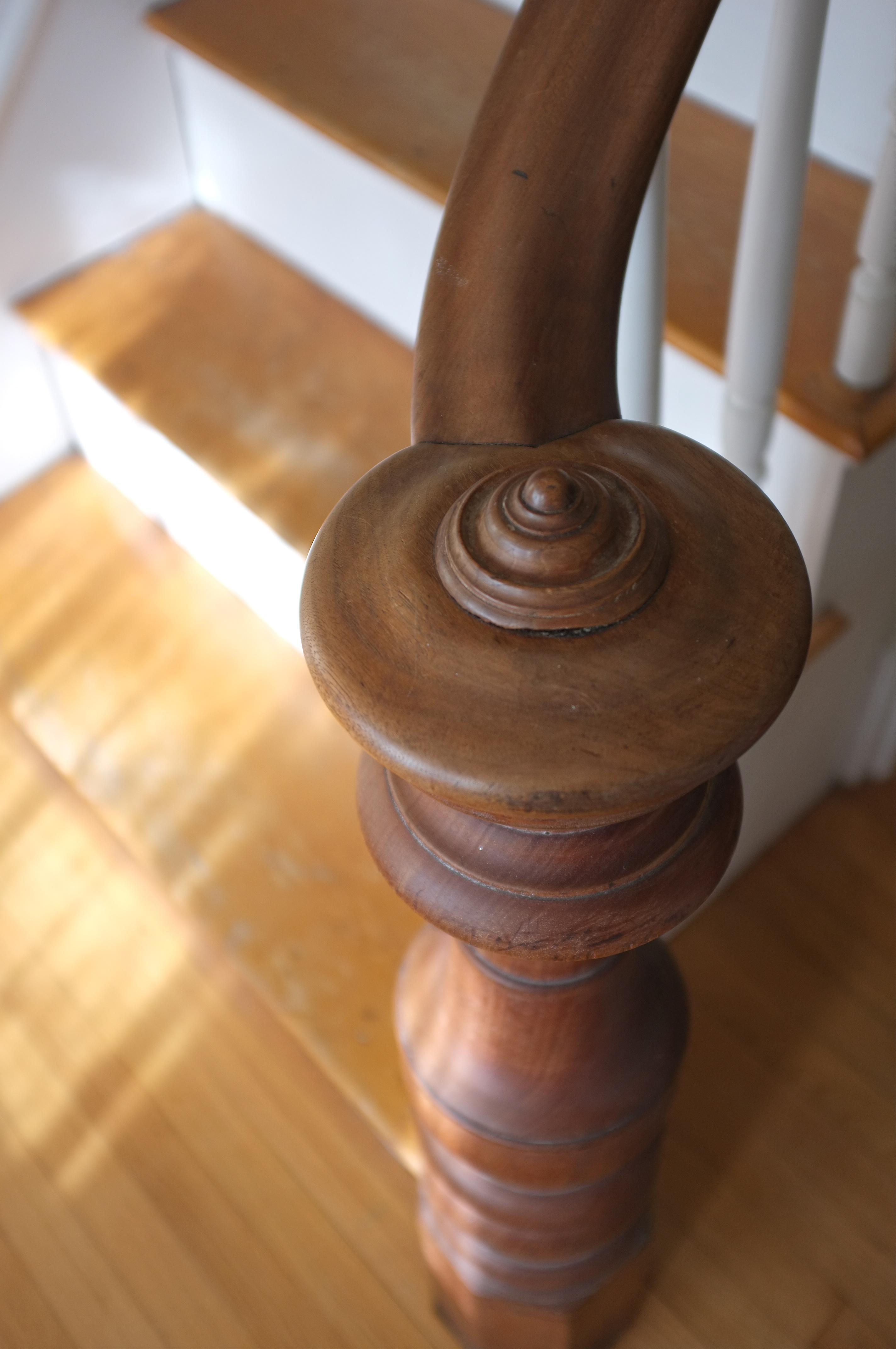
To think of it, we are following in an old Gloucester and northern seacoast tradition by tending to the interior of our homes during these winter months, in that of “house-pride.” The town’s carpenters, many of whom were master shipbuilders and shipwrights, would have had more free time during the winter months. Fine carpentry details are evident throughout our house, which was built in 1851. And, like many of Gloucester’s older houses, our home is graced with details created by the skilled plasterers that emigrated from Italy and settled on Cape Ann. Although a modest house, particularly by today’s “starter castle” standards, I wouldn’t trade our lovely 19th century home, with its quirky and elegant details (along with it’s many foibles) for all the world’s McMansions.

I propose Antennae for Design will encompass home and garden design inspiration, home improvement tips, feature interviews with local business owners who specialize in art and design, and after visiting local well-tended homes and gardens, sharing information found there.  Let me know through the comment section or by emailing at kimsmithdesigns@hotmail.com of your thoughts and any topic that you may find particularly relevant or of interest.

Locally found treasures ~ a pair of hand-painted Czechoslovakian lamps

A recent find for one of my design clients is this pair of sweetly hand-painted Czechoslovakian lamps, with coordinating shades trimmed in blue silk cord, discovered at a local vintage shop.

Forget-me-nots and Roses

I love the challenge of searching for and finding one of a kind (or in this case, a pair of) treasures for my design clients. And I partuclarly love one of my ongoing design jobs for a simply delightful family, with three lovely and lively daughters, each with their own very distinct personality and style preference. The eldest daughter is zippy and lighthearted with a definite flair for the modern; the second daughter is gently refined and ethereal (I think of watercolor hues for her); and the third daughter is possessed of a warm and sunny character—a radiant sunflower. The pair of Czechoslovakian lamps will add a charming touch to the middle daughter’s bedroom. Whether you are searching for special plants for the garden (the most highly scented specimens, for example) or rare and/or out-of-the-ordinary objects of art and decoration for the home, thoughtfully selected accents create the most welcoming sort of home.

Important Safety Note: Although these lamp bases are in near-perfect vintage condition, the cords are not. Judging from the overall poor condition of the cords, I would guess they were last wired in the late 1950’s or 1960’s. We will re-wire the lamps with soft gold-colored cord, which will better blend with the décor, as opposed to the dark brown or stark white wire. Always, and always very thoroughly, check the wiring when purchasing vintage lighting—for obvious reasons, I cannot stress this enough.


Hippeastrum

A Note about Hippeastrum 

Living in New England the year round, with our tiresomely long winter stretching miles before us, followed by a typically late and fugitive spring, we can become easily wrapped in those winter-blues. Fortunately for garden-makers, our thoughts give way to winter scapes of bare limbs and berries, Gold Finches and Cardinals, and plant catalogues to peruse. If you love to paint and write about flowers as do I, winter is a splendid time of year for both, as there is hardly any time devoted to the garden during colder months. I believe if we cared for a garden very much larger than ours, I would accomplish little of either writing or painting, for maintaining it would require just that much more time and energy.

Coaxing winter blooms is yet another way to circumvent those late winter doldrums. Most of us are familiar with the ease in which amaryllis (Hippeastrum) bulbs will bloom indoors. Placed in a pot with enough soil to come to the halfway point of the bulb, and set on a warm radiator, in several week’s time one will be cheered by the sight of a spring-green, pointed-tipped flower stalk poking through the inner layers of the plump brown bulbs. The emerging scapes provide a welcome promise with their warm-hued blossoms, a striking contrast against the cool light of winter.

Perhaps the popularity of the amaryllis is due both to their ease in cultivation and also for their ability to dazzle with colors of sizzling orange, clear reds and apple blossom pink. My aunt has a friend whose family has successfully cultivated the same bulb for decades. For continued success with an amaryllis, place the pot in the garden as soon as the weather is steadily warm. Allow the plant to grow through the summer, watering and fertilizing regularly. In the late summer or early fall and before the first frost, separate the bulb from the soil and store the bulb, on its side, in a cool dry spot—an unheated basement for example. The bulb should feel firm and fat again, not at all mushy. After a six-week rest, the amaryllis bulb is ready to re-pot and begin its blooming cycle again. Excerpt from Oh Garden of Fresh Possibilities! ~ Coaxing Winter Blooms

Click above photo to see slide show

The taxonomy of the genus Hippeastrum is complicated. Hippeastrum is a genus of about 90 species and over 600 hybrids and cultivars, native to topical and subtropical regions of the Americas from Argentina north to Mexico and the Caribbean. For some time there was confusion amongst botanists over the generic names Hippeastrum and Amaryllis, which led to the application of the common name “amaryllis” when referring to Hippeastrum. The genera Amaryllis refers to bulbs from South Africa.


Amaryllis ‘Orange Sovereign’

Amaryllis ‘Orange Sovereign’ will be in full bloom by Christmas Day!

For tips on coaxing winter blooms, including forcing bulbs and flowering tree and shrub branches, see Oh Garden of Fresh Possibilities!  David R. Godine, Publisher.

New Paintings by Jeff Weaver

2011 New Paintings ~ Opening Reception Sunday December 3rd at 2:00


When to Mow Fields for Butterflies and Beneficial Insects

Recently a design colleague wrote inquiring as to the best time to mow her client’s fields as she was concerned about disrupting the breeding cycle of the Monarch butterfly. I am often asked this question and it is well worth considering, not only for the sake of the Monarchs, but for the survival of the myriad species of butterflies, bees, and other pollinating and beneficial insects that find food and shelter in untilled fields.

Newly Emerged Monarch Butterfly

Dear Laurel,

I generally advise my readers and design clients that own similar untilled fields to alternately mow in stages–half a field at a time. The Monarch is a large, charismatic butterfly with an easily observed life cycle.  The typical field comprised of native (and introduced) wildflowers and grasses creates a rich biodiversity, supporting innumerable species of butterflies and beneficial insects. It is hard to know when exactly to mow for each different species and when to mow for even one single species because, from year to year, depending on many variables including temperature and air currents, the insects breeding times are somewhat variable. For example, this year I have had three broods each of both Monarchs and Black Swallowtails, when in a more typical year I may only have two broods.
Monarch Butterfly Caterpillars Attached to Milkweed (Asclepias syriaca)
I think of not too long ago when we were primarily an agrarian society. Farmers then would have mowed different fields at different times during the growing season. A woman in our community, whose field is rife with common milkweed, always mows in late June or early July. Initially I thought that this was perhaps not good practice for the Monarchs, but the thing with Common Milkweed (Asclepias syriaca) is that when mown to the ground in early summer, it shoots right back up again. By the time the late July, early August Monarchs have arrived and are breeding in our region, her milkweed has re-sprouted, grown at least a foot, is lush and green, and flowering.
That your client is interested in caring for the flora and fauna that abounds in her fields is wonderful! We want weeds (wildflowers) growing in our fields–they provide food and shelter for benefiel insects and wildlife and also help to retain moisture in the soil.
The single greatest threat to the Monarch butterfly is the use of Monsanto’s Roundup Ready genetically modified corn and soy bean seed, which are designed to tolerate potent does of Monsanto’s herbicide Roundup, however, Roundup kills all other surrounding plants and all beneficials insects and their larvae. Additional threats include the extreme weather condiitons caused by climate change, overdevelopment in the US, which has led to loss of habitat, and the unrelenting poverty in rural Mexican villages, which is leading to the deforestation of the butterflies habitat in Michoacán
Monarch Butterfly Chrysalids
At a lecture I attended presented by Doug Tallamy, Professor and Chair of Entomology and Wildlife Ecology at the University of Delaware, he also suggested mowing fields in alternate stages, so we are in good company!
An additional suggestion is to give a corner of your field or garden over to a patch of milkweed, which would then insure a steady supply for the Monarchs. We grow both Common Milkweed and Mash Milkweed (Asclepias incarnata) side-by-side. The marsh flowers slightly earlier, attracting earlier Monarchs. The males intently patrol the milkweed patch and after mating, the females flit from flower to leaf, alternatively depositing eggs on both species of milkweeds, while taking sips of nectar from whichever milkweed is in flower.
Kind regards,
Kim
Note form Laurel:
Hello Kim,
I have a new client who has both cultivated ornamental gardens, which I am caring for, and open meadows, which she has mown once or twice per season. There is lots of milkweed in the field, with some seedlings sprouting in the garden. We pulled the seedlings and brought them home to later place in a field near where I live. We had them in jars in water and were surprised and delighted when a few days later we discovered 7 tiny Monarch larvae. We have raised them to the butterfly stage and released them. Fascinating! During the process I did some reading about the Monarch and learned that there are 4 or 5 generations each season, with the final butterflies, in September, making the trek to Mexico for the winter, and then flying north in the spring to start the cycle over again. My question is about the timing of the mowing of the fields. If it is mown at any time during the breeding season (May – September?), isn’t the current generation almost or completely wiped out? Do you  know when the best time is to mow for the butterflies? I assume it is late fall, but since the mowing of meadows has been happening for centuries, is it perhaps ok to mow during the season? (or perhaps this is one contributing reason for the demise of these lovely creatures….) Thank you in advance for any info!

Merry Summer Days!

Dear Gardening Friends,

At this time every year readers write in to inquire about the mysterious and startling “furry shrimp” flying in their gardens. Perhaps you have a Hummingbird Clearwing Moth I write back? They are often seen nectaring at our North American native wildflowers bee balm (Monarda didyma) and white flowering summer phlox ‘David’ (Phlox paniculata), as well as the butterfly bushes and Verbena bonariensis.  Scroll down through several posts to see article..

I find August and September are the very best months for butterflies in our region. Only three days into August and this year is not disappointing. And then there is the resplendent light that surrounds here on Cape Ann. Gorgeous, warm, luminous light–I find, too, that August and September are some of the best months for photographing the natural beauty found on Cape Ann.
We had a wonderful turnout at the Sawyer Free Library for my children’s program Butterflies of the World. Not only did we show and tell about the library’s new collection of Neotropic butterflies, but I (very fortunately) had a batch of a dozen or so Black Swallowtail caterpillars, eggs, and chrysalis to share with the children and Moms. I met some fantastic kids–junior naturalists–and parents. Many thanks to Christy Rosso, the Children’s Librarian for all her help!
To Merry Summer Days!
Warmest wishes,
Kim

Summer Phlox and Towering Lilies

“At this point, it is the summer phlox and, above all, the towering lilies that are providing the scent in our garden in Milton. And very heady it is, too- especially on still, hot days.”  – My friend David Godine writes of his beautiful garden in Milton, Massachusetts.

I am wonderfully fortunate that Mr. Godine is both my publisher and editor for my book Oh Garden of Fresh Possibilities!. Not only does David have a deep love for all things books, he is passionate for gardens and gardening.

 Phlox paniculata ‘David’ and oriental lily, with Hummingbird Clearwing Moth, photographed at the butterfly garden at Willowdale Estate.

Cape Ann TV video tour of our garden

Quickly posting as I am under several deadlines and determined to get all fully underway. I believe I mentioned that this past week, Lisa Smith and her Cape Ann TV After-the Beach Teen Video Club stopped by for a tour of my garden. Here’s a short clip, with a wonderful surprise visit by the friendly Question Mark butterfly, who very conveniently, stole the show.

The teens and Lisa did a great job and all very much enjoyed the beautiful creatures that flew in and out of our story. It is not easy to focus on tiny subjects using a heavy camera attached to a tripod. The full video of the garden tour and interview will air in the near future and we will keep you posted.

Butterflies of Massachusetts

July Butterfly Update

Great Spangled Fritillary Nectaring on Coneflower at Willowdale EstateGreat Spangled Fritillary nectaring at native Coneflower (Echinacea purpurea)

Dear Friends,

Have you noticed the sheer numbers of our winged friends? Returning this evening from a swim at 6:45, I bumped into three Monarchs nectaring and a Red-spotted Purple (all in pristine, newly emerged condition). Early evening is an unusually late time of day for butterflies on the wing, especially when skies are slightly overcast. This, after a day of observing and shooting numerous numbers of butterflies, caterpillars and hummingbirds–and never leaving our garden. I work for a bit, but then the garden calls and I’m out the door with both video and still cameras. If this fabulously warm weather keeps up, I think we are in for another banner year with the butterflies, and skippers too.

Currently, we have 28 Monarchs, in various stages of development, residing in our kitchen, and seven Black Swallowtail caterpillars and chrysalids.

Black Swallowtail CaterpillarBlack Swallowtail Caterpillar–note the fine “girdle” spun by the pupating caterpillar. Attached to the stem by both the girdle and a silky mat in which his last proleg is hooked, the caterpillar is securely latched. The proleg becomes the cremaster during pupation.

Black Swallowtail Chrysalis newly formedNewly formed chyrsalis

Black Swallowtail Chrysalis The darkening chyrsalis–perhaps it will emerge tomorrow! After ten days, the silky girdle and cremaster continue to perfectly support the pupa.

I am often asked why I collect butterfly eggs and don’t simply leave them in the garden. Butterfly larvae have a roughly one in ten chance of survival in the wild. In our kitchen, the odds increase exponentially, with a ten in ten rate of survival. For instance, I have learned, that after observing a butterfly deposit her eggs on a host plant, to gather them up quickly. If I become distracted and wait even only an hour, they often disappear, usually having been eaten or parasitized.

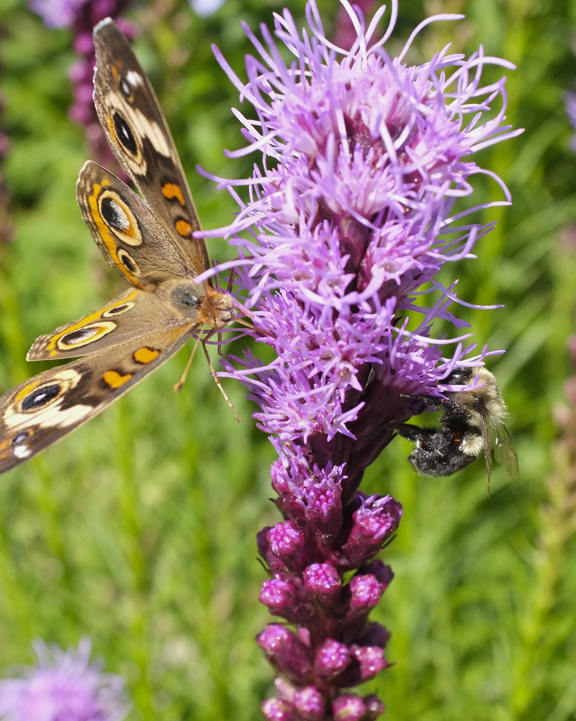
Common Buckeye and bee nectaring at native Gayfeather (Liatris spicata)Common Buckeye and bee nectaring at native Gayfeather (Liatris spicata)

More detailed information on each species will be forthcoming. Much footage to edit…

Question Mark Butterfly and Patrice

Question Mark Butterfly and Patrice ~ My favorite photo of the season (click on the photo to see full size). Yesterday afternoon, Lisa Smith, one of the producers over at Cape Ann TV, with her After the Beach Video Club for Teens, were filming in the garden. While Patrice was interviewing me, this Question Mark alighted briefly on her shoulder several times. I was prepared the second time, with camera ready and adjusted to the appropriate settings. The Question Mark’s cooperation throughout the day’s shoot–nectaring, sunning itself, and taking long sips of sap through the chinks of bark in the weathered old pear tree–was very much appreciated by all; he was the true star of the day!

Oh Joyous July!

Monarch Butterfly Program Presented to the Cape Ann Garden Club

This morning I had the pleasure of presenting my Monarch butterfly program to the Cape Ann Garden Club. The meeting was held at the charming and beautifully maintained Annisquam Village Hall, located in the very heart of Annisquam. Thank you Cape Ann Garden Club members for your enthusiasm and for your interest–it was my joy!

Cape Ann Garden Club Annisquam Village Hall Fujifilm x100

These lovely arrangements are created by the members and then gathered up at the end of the meeting to be distributed to nearby nursing homes.

Cape Ann Garden Club Annisquam Village Hall Fujifilm x100

Cape Ann Garden Club Annisquam Village Hall Fujifilm x100Notice the bare spots on the walls of the Hall. The Margaret Fitzhugh Browne portraits of local villagers are temporarily on loan to the Cape Ann Museum.

Cape Ann Garden Club Annisquam Village Hall fujifilm x100.jpgCarolyn Stewart’s peonies from her garden in Vermont–imagine, fresh peonies in July!

Margaret Fitzhugh Browne: Sixty Years of Portrait Painting

Now through October 9th at the Cape Ann Museum

Margaret Fitzhugh-BrowneMargaret Fitzhugh Browne (1884-1972) Emily “Bonnie” Browne, the Artist’s Sister, c. 1920s.
Oil on canvas. Collection of the Cape Ann Museum.

Margaret Fitzhugh Browne (1884-1972) was an important member of both the Boston and the Cape Ann communities. Locally, she maintained a studio in Annisquam and was an active member of the North Shore Arts Association and the Gloucester Society of Artists.

The walls of the second floor of the Annisquam Village Hall seemed naked without Margaret Browne’s strikingly beautiful portraits. In addition to paintings borrowed from the Hall, on exhibit at the Cape Ann Museum are Browne’s paintings in the museum’s collections, and paintings borrowed from private collections. A special Margaret Browne walking tour of Annisquam is scheduled for this coming Saturday, July 16th.

Saturday, July 16, from 10:00 a.m. – 2:00 p.m.
Margaret Fitzhugh Browne’s Annisquam Walking Tour

Take an historical stroll through the artist’s Annisquam neighborhood. Offered in conjunction with the special exhibition, Margaret Fitzhugh Browne: Sixty Years of Portrait Painting. $20 members, $30 nonmembers. Cape Ann Museum Exhibits and Programs

Northward Migrating Monarch Butterflies Arrive to Good Harbor Beach and to Our Garden!

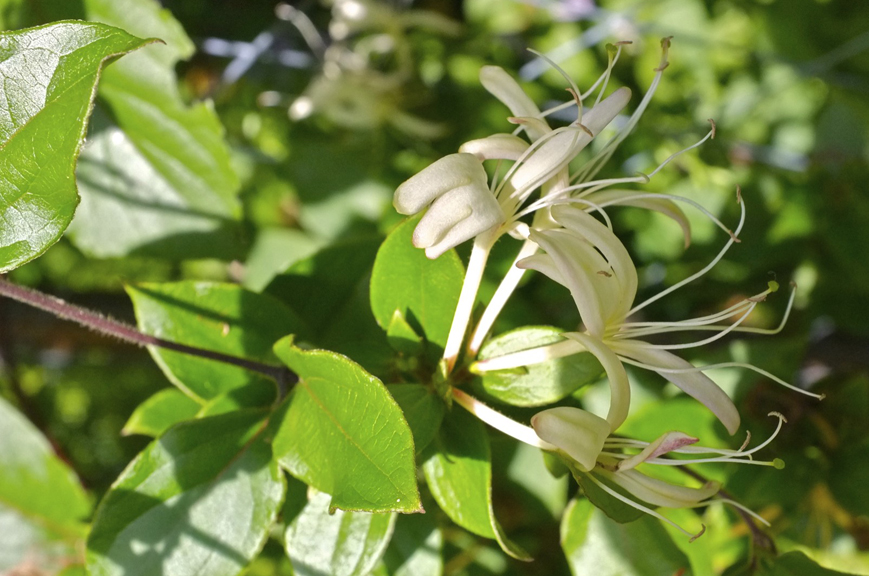
While snapping a photo of the divinely scented honeysuckle embowering the outside shower…
Honeysuckle embowered shower enclosure Lonicera japonica 'Purpurea'

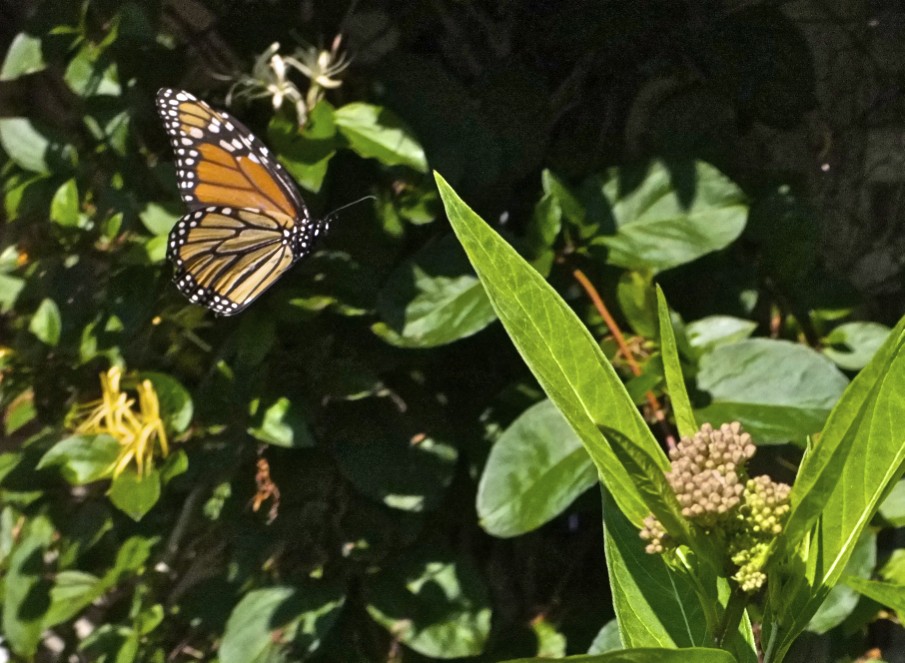
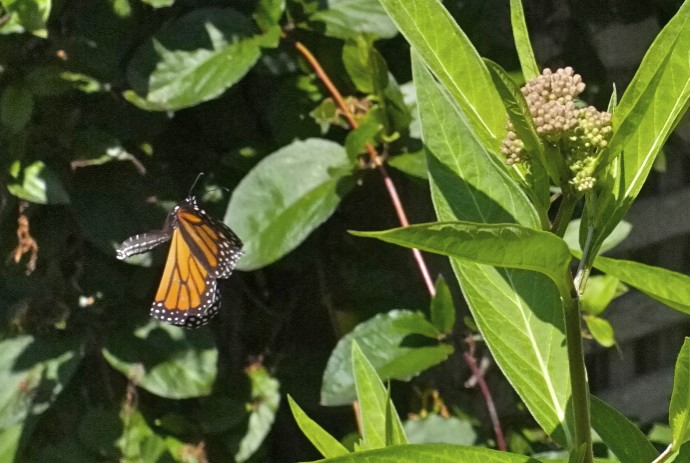
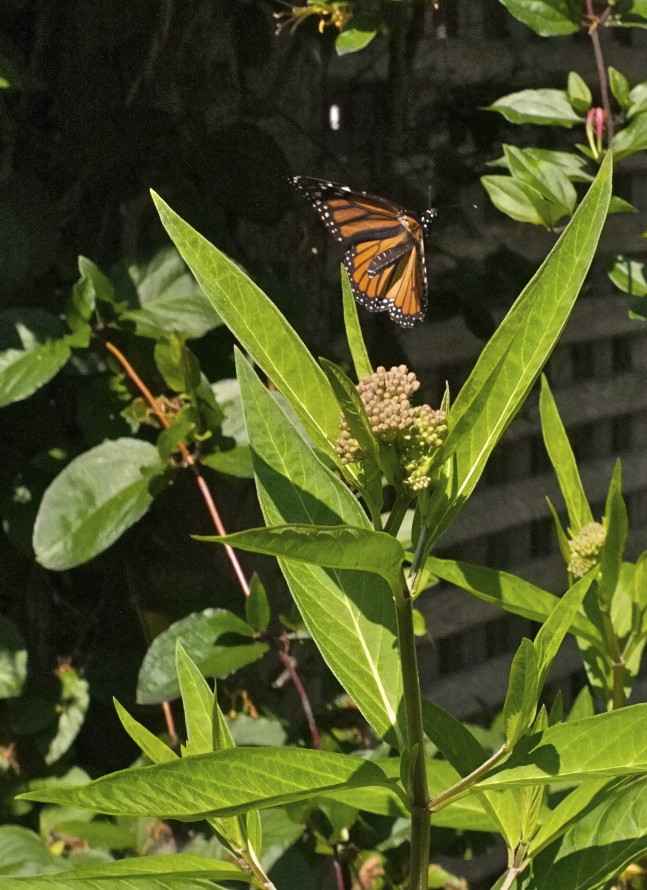
I spotted our first female Monarch butterfly of the season.

Monarch Butterfly Marsh MilkweedShe’s arrived a bit earlier than usual this year, or more accurately, the milkweeds in our garden are slightly behind in blossoming time-Marsh Milkweed won’t bloom for another half-week and Common Milkweed won’t flower for another two weeks (both milkweed patches are growing nearby the shower enclosure). However, she did not have nectaring in mind.
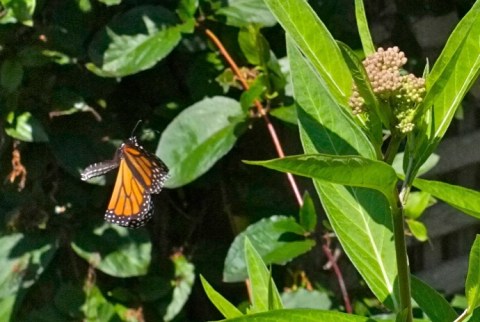
Monarch Butterfly Marsh MilkweedPausing at the emerging buds and foliage of the Marsh Milkweed, then to the Common Milkweed, then back to Marsh, and curling her abdomen to the underside, one by one she oviposited golden egg after golden egg.

Monarch Butterfly depositing egg on Marsh Milkweed

Monarch Butterfly depositing egg on Marsh Milkweed

Typically, she searches for the uppermost, freshly emerging foliage in which to deposit her eggs. Click the above photo to make it larger. The newly deposited egg, no larger than the size of a pinhead, is a visible pale yellow dot adjacent to her abdomen.

Monarch Butterfly Marsh MilkweedAfter ovipositing an egg on the Marsh Milkweed, she next deposited several on the Common.

Common Milkweed Asclepias syriaca Monarch Butterfly Eggs

Click the above photo. Five eggs are visible, two on the upper leaf of the plant to the left and three on the upper leaf of the plant to the right.

I never tire of watching butterflies, especially Monarchs, whether in our garden or further afield, and eagerly anticipate their arrival each year. Monarchs are particularly gratifying to observe and record because they are one of the larger butterflies that grace our region. Oftentimes when I am photographing a smaller butterfly such as a Summer Azure, with a mere one-inch wingspan, I don’t know what I have captured through the camera’s lens until returning to the computer to download and edit. Monarchs, with their big and bold wing patterning and approachableness (is that a word?) are a joy to photograph. Because of their extraordinary migration, I believe the Monarch butterflies are one of the natural wonders of the world. We are so blessed to live in a community that plays host to such great numbers. PLANT MILKWEED and you, too, will have Monarchs! I guarentee it!

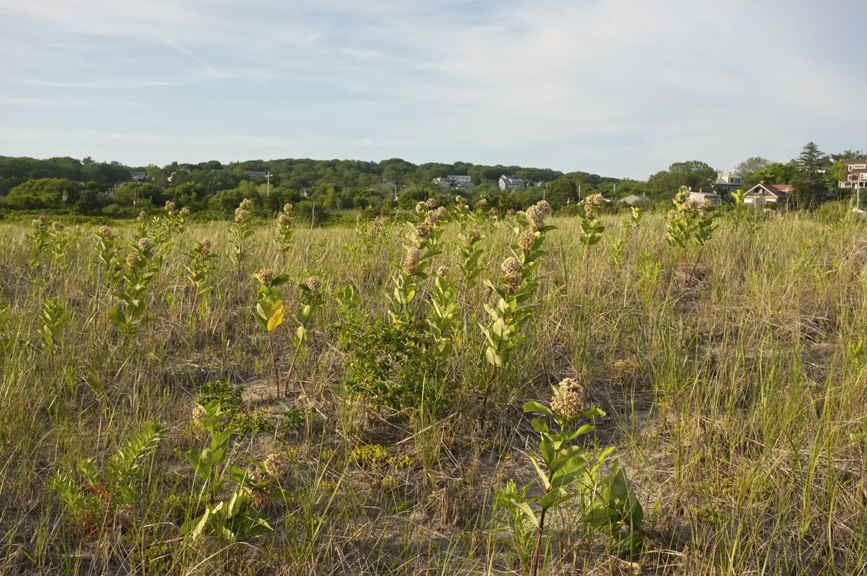
ommon Milkweed Asclepias syriaca Good Harbor Beach GloucesterCommon Milkweed in full bloom at Good Harbor Beach this week.

ommon Milkweed Asclepias syriaca Good Harbor Beach Gloucester

Common Milkweed (Asclepias syriaca) found along the shoreline grows in sandy soil and is exposed daily to windy seaside conditions. In these rough and tumble conditions it typically grows two- to two and a half -feet tall. Conversely, where in our garden it grows in fertile, friable soil and lives in a sheltered corner protected from wind, Common Milkweed often grows six to seven feet tall.

Walking along the boardwalk I often catch the sweet honey-hay fragrance of the Common Milkweed when in full bloom. Marsh Milkweed has little to no fragrance. Several Monarchs were seen while photographing this patch of milkweed.

ommon Milkweed Asclepias syriaca Good Harbor Beach Gloucester

Torch Lily (Kniphofia uvaria)Blooming along the pathway leading to the outdoor shower is the magnificent hummingbird attractant Torch Lily (Kniphofia uvaria) and bee magnet Helenium, commonly called Sneezeweed or Dog Tooth Daisy.

Helenium Sneezeweed Dog Tooth Daisy Mexican marigolds Tagetes tenuifolia

The foliage of the diminutive Mexican marigolds (Tagetes tenuifolia), commonly referred to by the Mexican people as “flowers of the dead,” bears a fabulous spicy citrus fragrance. Flowers and foliage are edible and add both a tangy color and taste. I grow it in a pot, keeping it sometimes near the shower and sometimes moving it to the dining area.

The female Monarch stayed the morning and I have not seen her since. Lucky us, though. I found fifteen eggs, without really trying too hard, and will now have lots of caterpillars and chyrsalids for upcoming butterfly programs!

End Note regarding Japanese honeysuckle: The variety discussed here is a purple-stemmed variant and I have seen it written as Lonicera japonica var. repens and Lonicera japonica ‘Purpurea.’ In our zone 6 garden, I have found it to be well-behaved, neither bearing fruit nor sending runners. I do not recommend planting in zones 7 and above.  Lonicera ‘Purpurea is highly attractive to all manner of bees. As richly scented as the species, the blossoming time of L. ‘Purpurea’ lasts well over six weeks, equating weeks of showering while enwrapped in the spellbinding sweet scent of honeysuckle.

Lonicera japonica var. repens or Lonicera japonica 'Purpurea'Lonicera japonica var. repens or Lonicera japonica ‘Purpurea’

Happy Independence Day!

Here’s to the Red (sort of), White, and Blue!

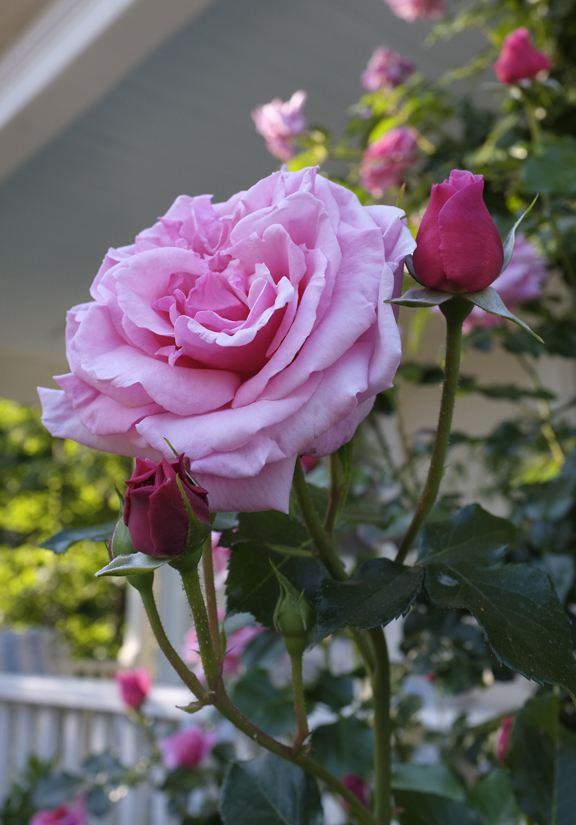
Rosa 'Aloha' Fujifilm x100Sweetly Scented Rosa ‘Aloha’

Variegated Mock Orange Philadelphus Fujifilm x100Deliciously Fragrant Variegated Mock Orange (Philadelphus)

Feverfew and Native Iris versicolor Fujifilm x100Native Blue Flag (Iris versicolor) with Aromatic Feverfew

Our Beautiful Native Sweet Bay Magnolia

Magnolia virginiana ~ Sweet Bay Magnolia

Located in the heart of Ravenswood Park in Gloucester there is a stand of Magnolia virginiana growing in the Great Magnolia Swamp. It is the only population of Magnolia virginiana known to grow this far north. I took one look at the native sweet bay magnolia and breathed in the fresh lemon-honeysuckle scent of the blossoms, fell in love, and immediately set out to learn all I could about this graceful and captivating tree. Recently having returned from a trip to visit my family in northern Florida, I had tucked the bud of a Magnolia grandiflora into my suitcase. I was dreaming of someday having a garden large enough to accommodate a Magnolia grandiflora and was overjoyed to discover the similarities between M. virginiana and M. grandiflora. For those not familiar with the Southern magnolia, it is a grand, imposing specimen in the landscape, growing up to fifty feet in the cooler zones five and six, and one hundred feet plus in the southern states. M. grandiflora is the only native magnolia that is reliably evergreen in its northern range, flowering initially in the late spring and sporadically throughout the summer. The creamy white flowers, enormous and bowl-shaped (ten to twelve inches across), emit a delicious, heady sweet lemon fragrance.

Sweetbay Magnolia virginiana Gloucester Massachusetts

In contrast, the flowers of the sweetbay magnolia are smaller, ivory white, water-lily cup shaped, and sweetly scented of citrus and honeysuckle. The leaves are similar in shape to the Magnolia grandiflora, ovate and glossy viridissimus green on the topside, though they are more delicate, and lack the leathery toughness of the Southern magnolia. The lustrous green above and the glaucous silvery green on the underside of the foliage creates a lovely ornamental bi-color effect as the leaves are caught in the seasonal breezes.

Sweetbay Magnolia virginiana bud Gloucester Massachusetts

Magnolia virginiana is an ideal tree for a small garden in its northern range growing to roughly twenty feet compared to the more commanding height of a mature Southern magnolia. Sweet bay grows from Massachusetts to Florida in coastal freshwater wetland areas as an understory tree. The tree can be single- or multi-stemmed. Sweet bay is a stunning addition to the woodland garden with an open form, allowing a variety of part-shade loving flora to grow beneath the airy canopy. The leaves are a larval food for the Eastern Tiger Swallowtail butterfly. Almost immediately after planting we began to notice the swallowtails gliding from the sunny borders of the front dooryard, where an abundance of nectar-rich flowers are planted specifically to attract butterflies, around to the shady border in the rear yard where our sweet bay is located.

Our garden is continually evolving and part of our garden has given way to a limited version of a woodland garden, for the shady canopy created by the ever-growing ceiling of foliage of our neighbor’s trees has increasingly defined our landscape. We sited our Magnolia virginiana in our diminutive shaded woodland border where we can observe the tree from the kitchen window while standing at the kitchen sink. Gazing upon the tree bending and swaying gracefully in the wind, displaying its shifting bi-color leaves, provides a pleasant view when tending daily chores and the dreamy fragrance emitted from freshly opened blossoms make the chores all that less tiresome.

Excerpt from “Oh Garden of Fresh Possibilities!” Notes from a Gloucester Garden (David R. Godine Publisher), written and illustrated by Kim Smith.