Tag Archives: #ploverjoyed

STARTING YOUNG – OUR LITTLE WILDLIFE ADVOCATE

So proud of Charlotte this morning! She rose early with me to catch her first ever sunrise and to watch the Plovers. Rising in a dramatic fiery red ball, the sun was all that it could be for a first-ever sunrise experience.

We found the chicks foraging along the water’s edge, while she stood back as still as a statue to give them lots of space. She kept eyes on all four and helped herd a seagull away from my canvas beach bag, but not in the direction towards the chicks. She added more seashells and discarded “sand-shapers” to her collections and was most enamored of all our early morning friends.

The four thirty-day-old chicks at area #3, plus Dad, were all present and accounted for this morning. Little Hip Hop is still undersized, but quite independent.

Hip Hop and sibling at twenty-nine-days old

So very unfortunately, we lost one of the two chicks at area #1 over the weekend. Tomorrow, the one remaining area #1 chick attains the wonderful four week old milestone. Both Moms departed over a week ago so we have five chicks plus two Dads. The five chicks occasionally all forage together, while the Dads stay ever vigilant in watching over their respective chicks (and duking it out between themselves over “foraging rights.”)

HAPPY FOUR WEEKS OLD TO OUR GOOD HARBOR BEACH PIPING PLOVER PLUMPLINGS! #ploverjoyed

Hello Piping Plover Friends,

Today we are celebrating a milestone for our Piping Plover chicks at area #3, their four-week-old milestone. In one more week, the Plover chicks will be fully fledged. The three normally developing chicks are taking brief lift offs several feet above ground. We hope tiny Hip Hop won’t take too long to catch up to his siblings before he too is showing signs of flying.

We’d like to take this opportunity to thank all our wonderful friends and partners who have worked with us to reach this important milestone of FOUR four-week-old chicks. Thank you Mark Cole and the Gloucester DPW beach crew, thank you to ACO officers Teagan and Jamie, thank you to City Councilors Scott Memhard and Jeff Worthley, thank you to the Gloucester football practice kids and coaches, thank you to the GHB volleyball players, and thank you to all the local residents and beachgoers who are watching out for the Plovers when they are at GHB enjoying a beach day. 

Hip Hop and sibling – you can compare in the photos how much more well-developed are the wings of Hip Hop’s siblings. Hip Hop is making great strides though and we have high hopes.

On a more difficult note, our area #1 family has become more elusive and with recent talk about eating Plovers we are concerned that we may be missing a chick after this weekend’s truly unnecessary “stirring the pot.” People don’t understand this kind of cruel talk encourages people to torment and to kill Plovers. They don’t get that this is a thing and that there is a well-documented history of grown men and women killing Plovers and destroying their nests and habitat because they were threatened by the presence of a tiny bird. Many of us hope this way of relating to wildlife died out in the previous century. I believe the great majority has evolved in how we think about protecting wild creatures, particularly in the case of safe guarding threatened, endangered, highly vulnerable and the smallest amongst us.

As has stated been countless times, the mission of the Piping Plover Ambassador program is to share the shore, to keep the beaches open for people and for shorebirds.

If you would like to be a Piping Plover Ambassador next year, please email me at kimsmithdesigns@hotmail.com. Our ambassadors are a wonderful group of kind hearted, funny, sweet, and dedicated people and we have become friends through our stewardship. We have tremendous support from most in the community however, a small handful have labeled us elites and silly bird watchers (not that there is anything wrong with bird watching!). Nothing could be further from the truth. We are an assemblage of hardworking professionals, artists, writers, poets, designers, to name but a few of our careers, who came together to take time out of our professional lives to care for a tiny endangered species that began calling Cape Ann home seven years ago. You don’t need prior “bird watching ” skills to join our Piping Plover Ambassador program and we would love to have you.

Four-week-old Plover plumplings

TINY PIPING PLOVER HIP HOP SHORT VIDEO CLIP

Tiny Piping Plover Hip Hop is the exact same age as his three siblings; twenty-three-days-old when this video was shot. We’re not exactly sure why he is not developing as quickly as the other three but can surmise it is because he has an injured right foot. He doesn’t put weight on the foot and has a run-hop sort of gait. Hip Hop spends much more time thermosnuggling under the adult’s wings than his siblings but when he is out on the beach and tidal flats he eats with great gusto.

HERRING GULL FEEDING ITS YOUNG

Have you ever seen a Herring Gull feed its young? I was experimenting with my new camera and turned it towards this adult and fledgling at the tidal flats. The fledgling was begging like crazy  and then helped pull out the mass from the adult’s throat. At first I thought they were fighting over the regurgitated food but perhaps the adult was teaching the fledgling how to break off a bit. Other nearby gulls took notice of the feeding and swooped in to grab the food. Mom gulped the mass back down her throat and quickly departed.

Unfortunately, the camera went out of focus briefly, but you get the idea. Gulls are such a menace on the beach, to both beachgoers and Plovers, but they are still beautiful creatures and it was fascinating to see how they feed their babies.

LIFE GUARD CHAIR FOUND CAUGHT UP IN THE FOOTBRIDGE ROCK PILINGS

This morning we found the lifeguard chair caught in the footbridge pilings. I imagine it is related to July’s full Buck Moon and super high tide. The Creek is still closed to swimming.

HIP HOP ON THE BEACH – INJURED PLOVERS SURVIVING GOOD HARBOR

Please, if you see this little one on the beach, please give him lots of space to forage and to move around. This is our smallest chick, so nicknamed Hip Hop because his right foot does not work well, which causes him to do a sort of hop run. Despite the injury he is growing and moves with much independence, all around the beach.

Parents of young children, do not allow your child to chase the Plovers, any Plover, adult or chick. If you see a Plover on the beach, hold your child’s hand so they don’t lunge toward the bird and then both watch from a quiet distance. You will see so much more, and the bird may even approach you if you are standing still.

Community members, if you see a person(s) chasing Plovers, please alert a Plover Ambassador. Thank you!

Comparing two three-week-old siblings – Because of Hip Hop’s foot injury, he is growing at a slower pace however, he is robust, which gives us hope he will eventually fill out.  Normally developed three-week-old chick stretching its wings

Interestingly, both Super Mom and Hip Hop have right foot handicaps; Mom has lost her foot and Hip Hop sustained an injury approximately during his first week of life.

PIPING PLOVER TERRITORY DISPUTES

Good morning PiPl Friends!

Thank you Jonathan for the addition of new signs in all these prominent locations, so very much appreciated! And thank you Sally for last night’s lovely evening story, and to all our ambassadors for your thoughtful updates and wonderful information provided throughout the day.

Regarding drones, I was reminded by daily early morning beach walker John Burlingham, a former game warden, and the person who saved the day the other morning with the hostile drone family, that our own sign in the kiosk  at the entrance to the footbridge states clearly that drones are not allowed near the Plovers. It gives the distance and I will check on that tomorrow because I don’t recall precisely what it said, but if you have a problem with a drone operator, please feel free to point out the sign in the kiosk.

Regarding the PiPl smackdowns we have all been witnessing –

When Piping Plovers arrive in early spring they begin almost immediately to establish a nesting territory. The males fly overhead piping loud territorial calls and chase and/or attack intruders including songbirds, Crows, gulls, and even members of their own species. The attacks on each other are brutal and can end in injury, or even worse, death.

Typically, the battles subside for a time while the mated pairs are brooding eggs and when the chicks are very young. The exception to that is when an unattached male, or disrupter, is circulating about the beach.

Later in the season, as the chicks are gaining independence and roam more freely, the youngsters will eventually cross into “enemy territory.” The males resume fighting to both protect their chicks and their turf. We are seeing these little dramas play out at Good Harbor Beach. One reason why I think the older pair at #3, our original pair, are so successful is because Super Mom will also often join in the battle (even with her foot loss), putting herself between the attacker and her chicks, and they will both go after the intruder, whether another Plover or a seagull. In the video, you can see Mom has positioned herself on the left, while Super Dad circles the other male, biting him during the scuffles, then leaping over and then chasing him out over the water. This was yesterday’s battle and today finds all six chicks and all four adults present and accounted for, with no visible injuries.

Happy three-week-old birthday to our area #3 chicks. Truly a milestone for the chicks and for the Good Harbor Beach community of Piping Plover friends and advocates. On Thursday, the twins at Salt Island will also be three weeks old. Imagine! I am trying not to get too excited because last year a gull swooped in and flew off with a 24 day old chick. The following day, we lost a 25 day old chick for the same reason. We’ll just keep hoping and working toward fledging all these six beautiful little babies 🙂 And finally, today for the first time, I saw Hip Hop stretch his wing buds! He is still not putting much weight on his right foot. I don’t think it was a problem at birth because in looking at all the early footage, no chicks had an obvious foot deformity.

Hip Hop, 20 days old, with right foot injury

Have a super July summer day and thank you for all you are doing to help the GHB PiPls!

xxKim

FANTASTIC WILDLIFE HABITAT IS BEING CREATED AT GOOD HARBOR BEACH – THANKS SO MUCH TO DPW ASSISTANT DIRECTOR MARK COLE AND THE DPW BEACH CREW!

You may have noticed that Good Harbor Beach looks exceedingly well-kept and super clean. Every morning before visitors arrive, the DPW crew spreads out over the entire beach and manually picks up the trash. By doing the trash clean up by hand, rather than using a beach raking truck, an amazing songbird attracting habitat has been created. Natural debris has accumulated mostly along the high tide line, supporting tiny insects that not only feed Piping Plovers, Killdeers, and Sanderlings, but also attracts myriad species of songbirds, including Mockingbirds, Song Sparrows, Tree Swallows, Barn Swallows, House Finches, Eastern Kingbirds, Chimney Swifts, and Red-winged Blackbirds. These are bird species we have observed over the years at Good Harbor Beach however, this past summer we are seeing far greater numbers.

You may also have noticed some changes in the vegetation growing at the base of the dunes. Because of the symbolically roped off areas created for Plover protection, lush beach grass has begun to grow as much as ten to fifteen feet into the beach in some areas. This lush growth is a a natural weapon in lessening beach erosion. And, too, Sea Rocket is now growing throughout the protected sanctuaries, also a tremendous help in slowing beach and dune erosion.

We are so appreciative of the good work the DPW is doing at Good Harbor Beach and of their kind assistance throughout the Plover breeding season. Thank you! 

Northern Mockingbird fledgling 

Eastern Kingbird

Killdeer nest

Red-winged Blakbird

THANK YOU PIPING PLOVER AMBASSADORS!

Dear PiPl Friends

Thank you so much everyone for putting in extra time, covering shifts (Barbara), doubling up on shifts (Deb and Sharen), staying soooo long at the beach today (Jennie), and stopping in to keep eyes on Hip Hop in between shifts (Paula and Alexa). Hopefully, Hip Hop will stick with the family for the remainder of the day and evening.

Just to let everyone know, in the morning, I have seen both Mom and Dad thermoregulate Hip Hop. Paula and Alexa have as well. Oftentimes, I see the triplets tucked under wing, but Hip Hop can’t push in so he goes off for a bit. Mom or Dad will pop up and then give him his own special time, this morning for several twenty minute sessions. So even though he has his little handicap and is slower, I don’t think the parents are rejecting him. Barbara, yes Hip Hop was the one that was attacked, but it was not SuperMom or SuperDad.

An unfortunate problem with a drone family on the beach this morning. We don’t have signs and we will definitely have them for next year, but you can gently tell a drone operator (hopefully they will listen), operating a drone near endangered species violates the Migratory Bird Treaty Act and is absolutely considered harassment, and also comes with a hefty fine.

Have a lovely evening.
xxKim

In spite of his handicap and pint-size, 18-day-old Hip Hop is foraging, pooping, and being his usual big and bad independent self.

GOOD THINGS HAPPENING AT GOOD HARBOR BEACH!

Taking the early morning shift of Plover patrol you meet the nicest people. Here are just a handful of much appreciated early morning friends who regularly stop by to check in the with birds.

Pat and Delores, GHB neighbors, daily walkers, and excellent Plover watchers

I love seeing Bill on the beach and can always tell its him even from a distance because of the shape of his hat

David Calvo and friends Traci, Barbara, and Susan going for a freezing cold morning swim

PiPl Ambassador Jonathan Golding, adding more signs this morning to reflect the Plover’s  expanding range as they gain in confidence

18 day-old Piping Plover Chicks

HANDICAPPED CHICK, HANDICAPPED MOM: JULY 4TH PIPING PLOVER UPDATE

One of our Good Harbor Beach chicks is not growing as well as the other five. Just like SuperMom, his right foot has sustained some type of injury. I have been keeping an eye on him the past few days and he’s definitely not eating and not growing as quickly as are his siblings at area #3. He doesn’t put any weight on the foot and often does a hop run like his Mom. He is mostly seen  straggling behind and spends more time than the others thermo-snuggling beneath the parent’s wings, especially Mom. She appears to be extra nurturing with this one and does not seem to mind providing extra snuggles. Perhaps with her injury, more snuggling gives her additional time to rest, too.

You can see in the photo he’s at least a third smaller than his sibling. Please, if you go to see the Plovers, give them lots of and lots of space to forage and to do their thing. particularly during the morning and late day when the beach isn’t crowded, it’s their time to forage and stock up for the day’s limited access to food and to water. Thank you so very much!

The chick on the left is similar in development to his two other siblings. You can see that the little handicapped chick on the right is smaller and is not putting any weight on his foot.

Happy Two-Week-Old Birthday to our GHB Area #3 Chicks

It’s been crazy busy at GHB and if all six chicks survive this most busiest of holiday weekends, it will be a miracle, and also, largely  due to our amazing team of PiPl Ambassadors who have devoted many extra hours over the four day weekend to keeping watch over the PiPls.

DEER DID NOT GET THE 411 TO STAY OUT OF THE PLOVER AREA :)

Good Morning PiPl Friends,

All four chicks and Mom and Dad peacefully foraging at #3.

The footbridge end of the beach is far more active so I did not get down to #1, but Mom and Dad and two chicks were there last evening. I observed as Duncan H expertly escorted the four down the length of the very busy beach. Susan is walking that way when she leaves her shift at 8 today so hopefully, a happy report from #1 will be forthcoming. I am headed back down at 9:30 to cover Marty’s shift so will have a look then if they have not been spotted.

Jonathan joined me on my shift this morning. Thank you Jonathan! He met several of the morning PiPl well wishers including Pat and Delores, long-time Pover fans. Jan Bell was there this morning, too. It’s lovely to have these wonderful members of the community also looking out for the PiPls!

Attached is the latest holiday weekend schedule. Many, many thanks to Jill for taking the 1 to 2pm slot and for also volunteering to check in during the evening on the fireworks situation.

The deer did not get the 411 to stay out of the roped off area!

PIPING PLOVER MILESTONES – HAPPY ONE-WEEK OLD BIRTHDAY AND HAPPY TEN-DAY-OLD BIRTHDAY!

Good Morning PiPl Friends!

Thursday marked the ten-day-old milestone of our GHB #3 Family of four chicks and the one-week-old milestone of our twins from the Salt Island Family. They could not have attained these important dates in a chick’s life without the help of the entire PiPl community and well-wishers. On the one hand I expect any day one will disappear but on the other, I am grateful for each day with these little marshmallows. To have six chicks at GHB is simply astounding!

A huge shout out to our amazing, dedicated, kind-hearted Piping Plover Ambassadors; the City of Gloucester; Mark Cole, Joe Lucido, and the DPW crew; Essex Greenbelt’s Director of Land Stewardship Dave Rimmer; City Councilors Jeff Worthley and Scott Memhard; Coach Lafferty, Athletic Director Byran Lafata, Head Football Coach O’Connor, and the GHS football team. Thank you!

GHB Salt Island one-week-old Plover Chick

GHB Area #3 ten-day-old Piping Plover Chick 


TOO CLOSE FOR COMFORT! Please give the Piping Plovers lots of space

The main reason why we have become increasingly reluctant to publicly share information about the Piping Plover families nesting at Good Harbor Beach is because of photographers. We want to help educate the community and share their beautiful life story unfolding but on the other hand, sharing information and images entices folks who are not as conscientious as you or I would hope. I think most of our local photographers, filmmakers, and well-wishers are very sensitive to giving wildlife their space but out-of- towners, not so much.

The one morning I wasn’t able to stay for my full shift at GHB, a photographer parked herself for several hours smack dab in the midst of the primary Plover area where they traverse back and forth. When the next Ambassador came on duty there was a great deal of confusion  locating chicks with their respective parents and I can’t help but wonder if having a stranger stationed for several hours precisely where they are accustomed to foraging displaced the chicks.

One need not bring a blanket and sit right on top of the Plovers, especially when one has a ginormous telephoto lens. Please stop by, take a few photos from a comfortable distance, and then please, move on. Folks don’t realize too that sitting on top of the baby birds like this also attracts Crows and Gulls, especially in the early and later part of the day when there are few other humans around for the C and Gs to swipe food from. I am quite sure the photographer knew that she was not following good wildlife observing guidelines because the minute she saw me coming as I returned to the beach, she packed up her blanket and gear.

Next year we are going to request the DPW pull the roping out further into the beach. The symbolically roped off area does not need to be quite as wide as it is, but for the general safety and well-being of the PiPls, it needs to be deeper. However, in the meantime, especially early and late in the day when the Plovers are mostly feeding, please give the baby birds the space they need to forage. These few weeks they are at Good Harbor Beach are the most critical days of their little lives. They need lots and lots of space to continuously forage to  fatten up for the long journey south. Thank you!

A SIX PIPL CHICK MORNING!

Good Morning!

All feeding with great gusto except when a hungry family of Starlings appeared on the scene. Mom and Dad both went after the three with much buzzing and brandishing of wings.

Super Mom, with only one foot, giving the Starlings the business!

We are so thankful to Councilor Jeff Worthley, Mark Cole, Coach Lafferty, and athletic director Byran Lafata for their response in moving the sports teams back to the original footbridge location, where they have been practicing for 36 years. Additionally, Coach Lafferty is having the kids run in groups of three, not thirty across, which will help give chicks the opportunity to scamper away if they get caught in the midst. This was the Coach’s idea!

Several days ago, I met the gentleman who owns the house at Cape Hedge where the Plover family had the nest. He was overjoyed to see our pLover chicks and is super bummed about the CHB family. He is dismayed that the no dogs signs still have not been posted at his end of the beach. We are going to have to provide more assistance to our Rockport friends in helping them get organized for next year.

Thank you Everyone for all your great work! Jennie, I am going to post about your Gloucester Writer’s Center event in a separate post. I am hoping to attend and looking forward to listening to your Plover poems, but if not, congratulations and best wishes for a wonderful event <3

Have a beautiful day,
xxKim

LIVE AT THE GLOUCESTER WRITER’S CENTER – JENNIE MEYER AND BOB WHELAN!

Jennie, my friend and Piping Plover Ambassador extraordinaire writes,

“I will be reading alongside Rockport Poetry’s Bob Whelan to launch the opening night of The Gloucester Writers Center summer reading series this Thursday, June 30, at 7pm at the GWC (126 East Main St., East Gloucester).

I am an eco-poet, among other things, and usually read a poem or two about the plovers, and touch briefly on what we do. Bob is a mindful poet who recently hosted the Rockport Poetry Festival. I thought I would pass this on in case you are interested in an evening of local poetry!

Bob and I are also members of a group, The Cape Ann Poets. Last fall we released our new book, Tidelines: An Anthology of Cape Ann Poets, with many locally-themed poems. I have two of my PiPl poems in there along with Good Harbor Beach-based poems among others. I believe there are still a few books available at The Bookstore of Gloucester if you are interested. The larger group will be reading several poems each at the GWC on July the 14th at 7 pm where our book will also be available. (The group has been going strong with their passion for poetry for years before I joined.)”

Best wishes to our friend Jennie for a wonderful event!


SIX PIPING PLOVER CHICKS AT GOOD HARBOR BEACH! #ploverjoyed

Good Morning PiPl Friends,

We have wonderful news to share. Four chicks have hatched at Good Harbor Beach at the area we call #3! Today they are one week old, a milestone in a PiPl chick’s life. All four are doing beautifully on this their one week old anniversary. At the north end of the beach, the Salt Island side, we have a pair of four day old chicks, also thriving. This pair came from a re-nest of four eggs. We know three eggs hatched but the third chick, the one that hatched late, did not make it.

I don’t think we have ever had six chicks at GHB and it shows that when a community works together, amazing, beautiful things can happen. The adage,’it takes a village’ rings true when raising Piping Plovers to fledge. We hope with all our hearts all six chicks will survive to adulthood but also recognize that isn’t always the case.

We could not have had this year’s early success without the help of Gloucester’s DPW crew, Animal Control Officers Jamie Eastman and Teagan Dolan, City government especially Councilors Jeff Worthley and Scott Memhard, and the Gloucester Police Department.

We have simply the best Piping Plover Ambassador team imaginable. They are all extraordinarily kind, creative, and helpful individuals devoted to the well being of the tiniest members of our community. With heartfelt thanks and gratitude to our devoted daily monitors Deb Brown, Jennie Meyer, Sally and Jonathan Golding, Susan Pollack, Paula and Alexa Niziak, Jill Ortiz, Sharen Hansen, Marty Coleman, and Mary Keys. Thank you to our outstanding crew of substitutes including Barbara Boudreau, Ann Cortissoz, Duncan Holloman, Peter Van Demark, Linda Bouchard, Karen Thompson, Duncan Todd, and Sue Winslow.

Please, if you go to GHB to see the Plover chicks give them lots and lots of space.  When the parents are concerned you are too close, they will pipe loudly at you to warn the chicks are underfoot. I emphasize underfoot because they are scurrying around all over the beach.

What can you do to help the Piping Plovers? Here are five simple things we can all do to protect the Plovers.

1) Give them them space, lots and lots of space, to forage and to rest. 

2) Do not linger near the Piping Plovers or their nests. Activity around the Plovers  attracts gulls and crows.

3) Do not feed gulls and crows. Gulls eat chicks in all stages of development and crows eat eggs.

4) Don’t leave behind or bury trash or food on the beach. All garbage attracts predators such as crows, seagulls, foxes, and coyotes, and all four of these creatures eat plover eggs and chicks.

5) Respect the fenced off areas that are created to protect the Plovers.

Thank you!


REMINDER: PIPING PLOVER INFORMATIONAL MEETING THURSDAY JUNE 16TH AT 5:45PM

Good Morning PiPl Friends,

A reminder of our Piping Plover informational meeting this Thursday the 16th, at 5:45 pm, at area #3. For new PiPl friends, park in the lot at the far end, near Boardwalk #3. Walk down the boardwalk and turn right towards the footbridge. You will see the symbolically roped off area and we will meet there. I am looking forward to seeing everyone, old and new <3

We are looking for more volunteers. If you know someone who would like to help, please feel free to bring them to the meeting and please share my email.

Mini-update on our GHB nesting pairs. Both Moms were on the nests this morning while both Dads were foraging at the tidal flats and in the wrack. Everyone looks healthy and ready for chicks! There was hardly any trash on the beach, which was wonderful to see. Thank you Gloucester’s DPW beach crew!

#3 Dad eating a Painted Lady Butterfly

#3 Mom on the nest, well-camouflaged in beach grass

There are many tracks in Area #2 and I am hoping perhaps, if Cape Hedge Mom is still alive, we will have a renest there, but there are no nest scrapes, only footprints. We’ll keep checking.

Thank you to all our PiPl friends, old and new. We’ll see you Thursday!
Warmest wishes,
xxKim

#1 Mom on the nest, next to a shoot of Sea Rocket

#1 Dad preening

ALL FOUR CHICKS MISSING/KILLED – REST IN PEACE SWEET CAPE HEDGE PLOVER FAMILY

Dear PiPl Friends,

We’re so very sorry to write that all four Cape Hedge Plover chicks, and possibly Mom, are gone. The Dad was last seen yesterday. The chick in the above photo was found in the intertidal zone at the end of day by PiPl Ambassador DBrown

I think as a community we can do better than this. We have let the Plovers down. Speaking for myself, not only let the Plovers down, but the community. I had to attend a funeral out of state the day after the chicks hatched but had been hoping the chicks would hatch after we returned, not prior to. Their nest was so well-hidden we didn’t learn about it until after it was well-established and had no clear idea of the hatch date.

There is a slim possibility that if the Mom is still alive she will return and renest this season. This scenario seems unlikely though because no one has seen her. Plovers will renest up to five times in the same season. And Plovers typically return to the same nesting site every year. If we do have a renest this year we will be more organized in our ability to help the Plovers.

We are not experts by any means however, we PiPl Ambassadors in Gloucester have six, going on seven, years of experience learning about how people and Plovers can coexist on a beach. We are willing to help and share everything we have learned with our Rockport neighbors because I believe that to a Plover’s way of thinking, Good Harbor to Cape Hedge is just one long continuous beach.

Suggestions on moving forward –

In speaking to people on the beach there was a great deal of confusion about the Plover’s life cycle. For example, folks thought the chicks needed to be “rescued” when they were up on the rocks doing their thing foraging away from an adult. Beachgoers did not get the information that Plover chicks, after only several hours from hatching, begin foraging on their own.

A large, clearly visible basic informational Piping Plover dos and don’ts sign at both ends of the beach entrances/parking areas would go a long way in helping to educate beachgoers what to do and what not to do when a Plover chick or adult is seen on the beach.

I have developed a fun, informational program to help communities better understand the Piping Plover life story and how we can become better stewards. I am happy to present this program, free of charge, to any Rockport community organization that would like to host us.

I met a photographer on the beach Tuesday, I believe it was. I watched as she followed Cape Hedge Dad Plover up and down the beach, much too closely, with an 800mm lens. When gently suggested in a chatty way she move back, she said to the effect, not to worry, she hates other photographers as they get too close, but she on the other hand was conscious not to disrupt.  I didn’t argue with her however, this was a complete fallacy on her part. She was too close, and following a bird, any bird, at close range for over an hour, especially a bird that is not familiar with you, is incredibly disruptive. With a lens anywhere from 400 to 800mm, a person can capture beautifully cropped close-up images. Please, fellow photographers and Piping Plover observers, observe and take photos from at a minimum a hundred feet away and then move on.

Pet regulations on beaches must be posted in a timely fashion. Why even take them down? Both Rockport and Gloucester take down the summer beach regulations signs, which only causes confusion. If they are left in place year round, then it won’t come as a surprise when the summer regulations go into effect.  Other important informational signs are left in place year round.

The Rockport dog laws are clearly stated on the town’s website. No dogs are allowed on the beach beginning June 1st, yet as of today, June 8th, over the course of the past few days there have been countless dogs running Cape Hedge, both on and off leash. The folks on the beach with dogs that we have spoken with are under the impression the leash laws go into effect on June 15th. There is no signage alerting people to the leash laws. Four beautiful and perfectly healthy chicks hatched overnight May 31st to June 1st , at the time of year when the dogs are prohibited from the beach. We need the town government to take seriously the protection of threatened and endangered species and to define what their role is in helping provide protections.

I would be happy to speak with anyone about suggestions for better protecting the Plovers. Please leave a comment, email at kimsmithdesigns@hotmail.com, or PM me on Facebook with a phone number if you would prefer to talk.

Very best,

xxKim

Every other type of sign, but where are the no dogs on beach signs? We were assured the signs would be posted by June 1st.

Town of Rockport Animal Control website page unambiguously states no dogs allowed June 1st through September 15th.

TENDER TINY EPHEMERAL BEINGS – BEAUTIFUL HOURS OLD PIPING PLOVERS IN THE POPPLES

Overnight on May 31st, the precious Cape Hedge Piping Plover chicks hatched. The photos of these tender tiny ephemeral beings were taken the morning of June 1st when the chicks were only several hours old. In all the photos of the chicks you can still see their teeny white egg tooth, which falls off after a day or so. The hatchlings use their sharp egg tooth to pip, or peck, their way out of the egg shell.


The most well-camouflaged nest in Massachusetts –

THE FINAL GRAND TOTAL OF PIPING PLOVER EGGS!

Dear PiPl Friends,
Happy Memorial Day. I hope you are spending the day with family and friends <3

We have a whopping new grand total of Piping Plover eggs for Cape Ann’s eastern shore and it is an even dozen! This morning when I stopped by for PiPl check in, Salt Island Dad popped off the nest to reveal a fourth egg. All three Cape Ann PiPl families are brooding nests with four eggs in each. We are so blessed to see their beautiful life story unfold!

An added note about the nesting pair at #1, the Salt Island side of Good Harbor Beach – The pair first had a nest of three eggs up in the dune grass. We think it was predated, possibly by a seagull. There were no tracks near the nest and the only evidence found was one crushed egg.

#1 Salt Island original nest

After the first clutch of eggs disappeared, the pair immediately began setting up house away from the grass and closer to the wrack line. Piping Plovers will attempt to re-nest up to five times. The pair eventually settled on a scrape behind a mini mound of dried seaweed, albeit a more vulnerable location than the first.

Salt Island renest

As of today, the Salt Island pair have a nest of four, for a total of seven eggs laid over the past several weeks. Egg laying takes a toll on the Mom. At Good Harbor we now have handicapped Mom at #3 and over extended Mom at #1. When you see Plovers on the beach resting and foraging, please give them lots and lots of space and let them be to do their thing. Thank you!

Tired Mama at #1

Handicapped Mom at #3

GRAND TOTAL CAPE ANN PIPING PLOVER EGGS IN NEST COUNT

Good Morning PiPl Friends,

Joyful update to share from Cape Ann PiPl nest check-up this morning –
Cape Hedge

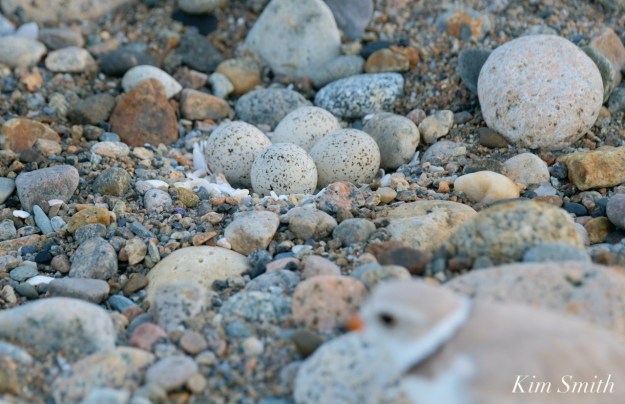
The Cape Hedge Plover parent’s are doing an excellent job guarding their clutch of four eggs, the most well-camouflaged nest in Massachusetts, as our state coastal waterbird biologist Carolyn Mostello refers to the nest. There was a Coyote scavenging around the wrack line near the nest but Mom and Dad went into full protective mode trying to distract. The “broken wing” display wasn’t too necessary though as the second the Coyote saw me, he/she hightailed into the marsh.

Area #1 Salt Island

Essex Greenbelt’s Dave Rimmer installed the exclosure at #1 (Salt Island end of the beach) yesterday afternoon and there are now three eggs in the nest! The Salt Island pair are not yet brooding full time and still continuing to mate. Quite possibly, we’ll have a fourth egg at #1. This little Mama has up to this point laid a total of six eggs, three in the first nest, which we think was predated, and three currently.

Area #3 Saratoga CreeK

In saving the best for last, our amazing handicapped Mom and ever vigilant Super Dad at #3 now have FOUR eggs in the nest. Mom popped off for a brief moment and I was “ploverjoyed” to see a fourth egg. I am not sure when this last egg was laid. It’s going to be a challenge to gauge when is the hatch date but I am working on that this weekend. *Borrowing the expression #ploverjoyed from our PiPl friends at Conserve Wildlife New Jersey 🙂

GHB #3 Mom well-camouflaged on the nest this foggy, foggy morning

Cape Ann’s current grand total of eggs in nests is Eleven (with a possibility of one more).

Yesterday morning, City Councilor Jeff Worthley and I met at Good Harbor Beach. He was very interested in learning about the Plovers and their history at GHB. Jeff agreed that Martha’s idea to speak before the next City Council meeting was a good plan; the next full council meeting is June 14th. He also suggested we do a brief presentation before City Council. The presentation has to be pre-planned and approved by City council president, Valerie Gilman. I don’t know if it’s either/or, or if we would be able to do both. What are your thoughts, PiPl friends? I think also we should definitely plan a “lessons learned” meeting at the end of the season, per Jonathan’s suggestion.

The Good Harbor Beach pre-reservation parking system goes into effect today. Some of the issues will be alleviated with the DPW and parking crew present, restrooms open, and end-of-the school-year high school senior parties behind us. We will still have issues with intoxicated persons tromping through the protected nesting area, but not the sheer numbers as the past two weeks, and hopefully we will see stepped up police enforcement on the beach.

A very brief Monarch update – Monarchs are here (first sightings by friends MJ on the 21st and Patti on May 23rd!) We see them in gardens, meadows, and dunes. Many other species of butterflies, too, have been sighted, including Tiger Swallowtails, Painted Ladies, American Coppers, Common Ringlets, and Spring Azures. May 23rd is early in the season for Monarchs. About every ten years or so we have an extra wonderful year with butterflies. The last was 2012. We are due and perhaps 2022 will be one of those years 🙂

Beauty on the Wing: Life Story of the Monarch Butterfly has been invited to screen at the Essex National Heritage Pollinator Week Program on the evening of June 22nd. For more information go here. Also, Beauty on the Wing is an official selection at the Santa Barbara Film Awards.

If anyone stops by GHB or CHB this weekend, please let us know. I feel fairly confident that the nests at GHB are safe, ensconced in their exclosures, but we like to check regularly nonetheless.

Have a wonderful Memorial Day weekend with friends and family,
xoKim
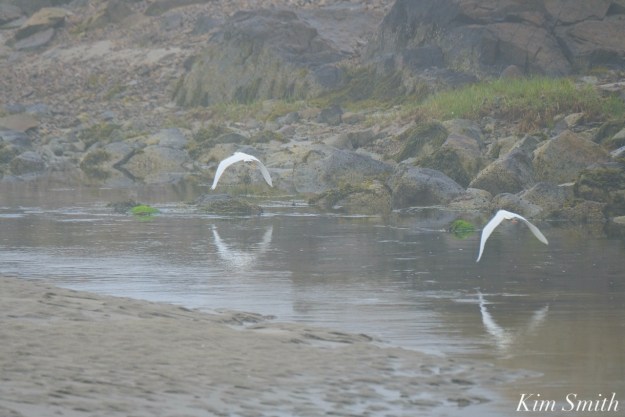
Pair of Snow Egrets at Saratoga Creek

#ploverjoyed FOR A BIT OF PLOVER FLOUFERY!

Over the weekend a mini flock of a half dozen Semipalmated Plovers arrived on Eastern Point, basking in the warm sun and partaking of an abundance of sea worms. I had to take a second look because at this time of year, Semipalmated Plovers look very similar to Piping Plovers. The SemiPs fade from rich chocolate brown and black plumage to hues of weathered driftwood and sandy shores, very closely resembling their cousins.

SemiPs bathe just as do PiPls. They cautiously approach the water, making sure there are no predators before plunging. Repeatedly dipping and diving, then springing from the water with  outstretched wings in a hopping flourish, they then take some quiet moments to flouf and to pouf.

Thank you to our PiPl friend Todd Pover for sharing the hashtag #ploverjoyed!


Semipalmated Plover in summer breeding plumage