Category Archives: Monarch Butterfly Migration

Butterflies! at the Berkshire Museum

Paul Villinski Arcus ©Kim Smith 2014Detail of Paul Villinski’s “Arcus,” made from recycled cans.

Kim Smith Berkshire Museum Butterflies ©Kim Smith 2014My friend Sam Jaffe talking about caterpillars.

Friday night I had the joy to attend the fabulous new exhibit at the Berkshire Museum titled “Butterflies!” The galleries are filled with hands on art and science activities, contemporary butterfly sculpture, artifacts from the museum’s collections, live caterpillars, and mixed media of photography and film, including an audio track from Dr. Lincoln Brower discussing what happens within a chrysalis. And, as part of the exhibit, one of the galleries houses a large butterfly pavilion with over 200 live tropical butterflies from around the world!

Blue Morpho Butterfly ©Kim Smith 2014Underwings of the Blue Morpho Butterfly from the live butterfly pavilion.

“Butterflies” was curated by Maria Mingalone, the museum’s director of interpretation, and she deftly and beautifully combines science, art, and nature in an exhibit that is sure to inspire and delight the very youngest to the most senior of citizens, and every age in between!

Butterflies Berkshire Museum ©Kim Smith 2014  copyThe opening was very joyful and buoyant—I most certainly felt that way and, judging from the expressions on visitor’s faces, wasn’t alone. I am convinced that butterflies bring out the happy in people!

Kim Smith film Berkshire Museum Butterflies ©Kim Smith 2014JPGThe audience for my short film “Flight of the Monarchs”—I watched as many people watched my film many times over, despite the case that because the galleries were so crowded you couldn’t hear the beautiful music. I think there were several thousand people at the event.

The music that I set my film to is “Fields of Blue,” written and performed by Jesse Cook. I wrote the artist and sent him a copy of my film and the most amazing thing happened where, within only the few day whirlwind to create this little film, we were granted permission to use his song!!!!!!!!

My film opens with a clip of a Monarch flying in front of Eastern Point Lighthouse (you can see our Lighthouse in the above photo). Most of the footage that I used for the movie was of butterflies in flight, shot on Cape Ann, and the audience was stunned at how beautiful the migration is through Gloucester. That opening clip of the Lighthouse and the Monarch took several days to capture the exact shot that I wanted. Butterflies don’t take direction!

Berkshire Museum ©Kim Smith 2014 -2Berkshire Museum Kim Smith 2014 1JPGSome of my photos were used to illustrate Dr. Brower’s audio recording explaining what happens inside a chrysalis.

Sam Jaffe Kathy©Kim Smith 2014 copySam and his fiance Kathy, also a graduate student in environmental studies.

Berkshire Museum © Kim Smith 2014JPGIf you have never been to the Berkshire Museum, their website description reads as follows: “The Berkshire Museum offers a unique array of exhibitions, activities, and attractions for visitors of all ages. From fine art and ancient objects to fossils; from an aquarium of native and exotic creatures to the Feigenbaum Hall of Innovation, we are your community museum: a place where everyone, from toddlers to elders, can learn, play, explore, innovate, be engaged and inspired.”

I arrived early, before “Butterflies” opened its door, and explored the galleries. It’s really a very engaging museum and especially while the exhibit is running, would be a wonderfully fun and interesting day trip with children.

Sam Jaffe ©Kim Smith 2014Sam Jaffe making final adjustments to the chrysalis and cocoon display. To see some of Sam’s stunning photography, click on his website here: Sam Jaffee

Olive Ridley skeleton ©Kim Smith 2014Olive Ridley Skeleton at the Berkshire Museum

See more photos from the Berkshire Museum galleries Continue reading →

Exciting New Film Assignment for the Berkshire Museum and Milkweed Seed Mailing Update

Dear Friends,

I have wonderful news to share about an upcoming exhibit at the Berkshire Museum in which I have been asked to create a film about butterflies in flight. The title of the exhibit is, what else—Butterflies! They are going to be showing 26 of my butterfly photographs. Additionally, during the exhibit, my interview film with Tom Emmel will be running on a continuous loop, as will the new short film about butterflies in flight, titled Flight of the Monarchs. And best of all, screenings of my feature-length Black Swallowtail film and Monarch film will be shown during meet the filmmaker events. This is a fantastic educational project, with a 5,000 square foot exhibit space, which will also house live butterflies. It’s a truly hands-on exhibit, designed with children and adults in mind!

“Butterflies” is scheduled to run through August and will most probably be extended though September. I am attending the opening this coming Friday, May 30th, and will take photos and bring you more information about the Berkshire Museum and the exhibit.

Our Cape Ann Milkweed Project went without a hitch and was lots of fun. Most picked up their seeds and if you sent a self-addressed stamped envelope, your package is ready to mail Tuesday morning. So many thanks to Joey for sponsoring the Cape Ann Milkweed Project at Captain Joe and Sons. Thank you so much to everyone that participated, and most importantly, the Monarchs (and myriad other species of pollinators) thank you!!!

Warmest wishes,

Kim

DSCF3768


Cape Ann Milkweed Project Seed Pickup and Information Day is Sunday, May 18th, from 9:30 to Noon

Female Monarch Egg Marsh Milkweed -ecga ©Kim Smith 2013JPGFemale Monarch curling her abdomen around to the underside of a Marsh Milkweed leaf (Asclepias incarnata) to deposit an egg. Photographed in Gloucester

Our milkweed and New England Aster seed pickup day is this coming Sunday from 9:30 to noon at Captain Joe and Sons. Captain Joe’s is located at 95 East Main Street and you can find directions posted on their website here. Thanks so much to Joey for hosting the event at the dock. Looking forward to seeing everyone!

banksy-1Banksy Image Courtesy Bing McGilvray

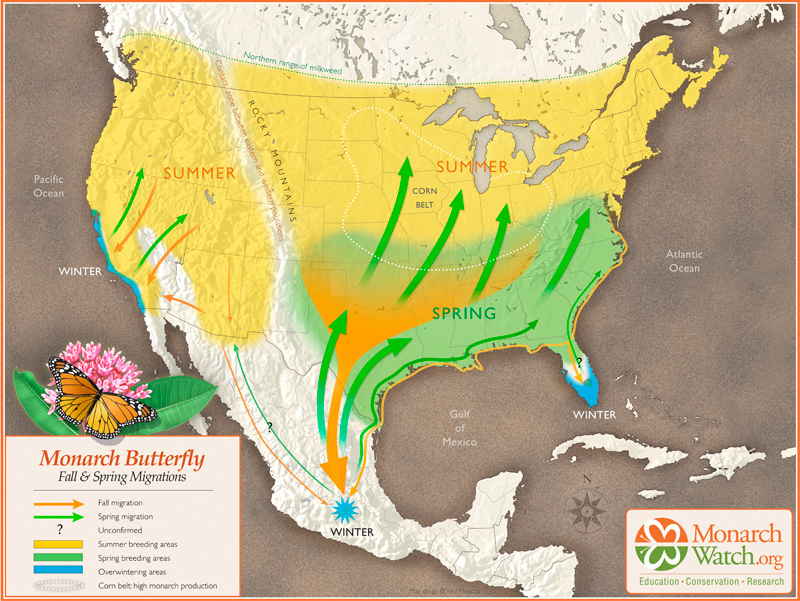
The first Monarchs of Spring 2014 have been sighted in Massachusetts (Kingston), as has emerging milkweed. For the past week, a weather pattern has been in place that is perfect for the Monarchs northward migration. Powerful south winds pumped warm air northward and in conditions such as these, Monarchs are carried from southern regions more quickly northward.

Below is a map from the Journey North website illustrating favorable wind patterns for Monarchs.

Reminder: Monarch Milkweed and Aster Seed Pickup and Information Day is Next Sunday, May 18th, from 9:30 to Noon

male-female-monarch-butterfly-marsh-milkweed-2-c2a9kim-smith-2012-copyMale and Female Monarch Butterfly on Marsh Milkweed (Asclepias incarnata)

Where are the Monarchs today in their northward migration? They have spread throughout the Great Plains and Southern States. Some have already been sighted as far north as Michigan and Wisconsin!

Monarch Migration Map

Our Milkweed and New England Aster seed pickup day is next Sunday from 9:30 to noon at Captain Joe and Sons. Captain Joe’s is located at 95 East Main Street and you can find directions posted on their website here. Thank you so much to Joey for offering to host the event at the dock. See You There!

monarch-new-england-aster-c2a9kim-smith-2013Monarch Butterfly and New England Aster

Xerces Society Letter to President Obama

April 14, 2014

President Barack Obama The Honorable Tom Vilsack, Secretary of Agriculture The Honorable Sally Jewell, Secretary of the Interior

Dear Mr. President, Mr. Secretary of Agriculture, and Madam Secretary of the Interior,

In light of the severe decline of both the eastern and western monarch butterfly populations that has occurred since the late‐1990s, we are writing to ask you to establish a multi‐agency monarch butterfly recovery initiative to restore the habitats that support the extraordinary migrations of this iconic species. We encourage you to direct the Natural Resources Conservation Service (NRCS), Farm Service Agency (FSA), and Forest Service (USFS) of the U.S. Department of Agriculture and the Fish and Wildlife Service (USFWS) and Bureau of Land Management (BLM) of the U.S. Department of the Interior to develop a cooperative, landscape‐ level initiative with the many stakeholders willing to help foster significant monarch recovery.

These migrations can be saved for future generations by restoring to the landscape milkweeds, the host plants for monarch caterpillars, and nectar plants that sustain the adult butterflies. These habitats would support pollinators and a large number of other species as well. The federal agencies that incentivize conservation of wildlife habitat on private lands and that directly manage wildlife habitat on public lands can play key roles in this effort by targeting funding and technical support for such an initiative.

As you know, the eastern monarch population has been declining for more than a decade, and this year scientists observed the lowest numbers ever documented, representing a 90% drop from population numbers recorded in the mid‐1990s. Since then, there has been a significant loss of milkweeds in agricultural areas of the Midwest, which is directly correlated with the declining monarch population. Monarch habitat has also declined sharply in the West.

Monarch Migration Map

Paul Mirocha Illustration for Monarch Watch Continue reading →

New Film: Monarch Migration Interview with Tom Emmel

Horses neigh, bugs crawl across the lens, and Monarchs flutter in the background —interview on the mountaintop and it was all beautiful! Video includes footage from my forthcoming film, Beauty on the Wing ~ Life Story of the Monarch Butterfly.

Monarch Migration Interview with Tom Emmel, filmed at the summit of the Sierra Chincua Monarch Butterfly Biosphere Reserve, Angangueo, Mexico.

This was Tom’s 40th trip to Angangueo to study the Monarchs. In this interview, he provides some historical perspective from those very first trips to the remote Oyamel fir forests atop the Trans-Mexican Volcanic Mountains. We learn how scientists count millions of Monarchs. Tom discusses the state of the Monarch migration today and why it is in crisis.

Tom Emmel is the Director of the McGuire Center for Lepidoptera and Biodiversity at the Museum of Natural History of the University of Florida, Gainesville. Additional footage shot at El Rosario Monarch Butterfly Reserve and at the base of Sierra Chincua.

ORDER YOUR MILKWEED SEEDS TODAY!

Monarch Caterpillars Eating Common Milkweed ©Kim Smith 2012JPGMonarch Caterpillars Munching on Milkweed

Ordering information:

Please note that the milkweed seeds are available in two different species and two different quantities. Please place your order amounts in the comment section of this post as follows:

Your Name, Your Email Address (optional), and Seed Type and Quantity.

For Example:

Pippi Longstocking, villavillakula@gmail.com

1 Packet Common Milkweed 3.50

1 oz. Marsh Milkweed 15.00

2 Packets Pink New England Aster @ 3.50 ea. = 7.00

My order total: $25.50

We are not collecting money ahead of time for the seeds. The orders are placed entirely by the honor system. Last year we did not have a single stiff and I will accept cash or check at the time of pick up. Seed pick up and information day will be Sunday, May 18th, from 9:30 to noon, at Captain Joe and Sons.

The packets of milkweed seeds (200-300 seeds) are perfect for a relatively smallish patch.

The larger ounce quantity is ideal for planting larger areas. On average, plan on 50 seeds per square foot. If your patch is 10 feet x 10 feet, that equals 100 square feet, and would require approximately 5,000 seeds.

Additionally, we are also offering pink and purple New England aster seeds. I’ve never grown New England asters from seed, but have read that they are relatively easy to start (although slow to germinate). New England asters make a beautiful border and will not only offer sustenance to southward migrating Monarchs, but in late summer also provide nectar for myriad species of bees and butterflies.

SEEDS

Common Milkweed (Asclepias syriaca)

Seed Packet (300 seeds) 3.50

1 ounce (4900 seeds) 12.00


Marsh Milkweed (Asclepias incarnata)

Seed packet (200 seeds) 3.50

1 oz. (5,200 seeds) 15.00


Pink New England Aster (Aster novae-angliae variation)

Seed Packet (1000 seeds) 3.50


Purple New England Aster (Aster novae angliae)

Seed Packet (1750seeds) 3.50

*    *    *

Why is it so important to plant milkweed for the Monarchs? Milkweed is the only food plant of the Monarch butterfly caterpillar. The Monarch butterfly migration is in serious peril due to loss of habitat in the United States by the use of Monsanto’s genetically modified Roundup Ready corn, soybean, and sorghum crops. Global climate change is also a factor in the weakening migration. We can all help mitigate some of the destruction by planting milkweed and nectar-rich wildflowers.

Common Milkweed (Asclepias syriaca) is the milkweed we see most typically growing in our dunes, meadows, roadsides, and fields. It grows quickly and spreads vigorously by underground runners. This is a great plant if you have an area of your garden that you want to devote entirely to milkweed. It prefers full sun, will tolerate some shade, and will grow in nearly any type of soil. The flowers are dusty mauve pink and have a wonderful honey-hay sweet scent.

monarch-caterpillars-common-milkweed-c2a9kim-smith-2011Common Milkweed and Monarch Caterpillars J-shape

Marsh Milkweed (Aclepias incarnata) is more commonly found in marshy areas, but grows beautifully in gardens. It does not care for dry conditions. These plants are very well-behaved and are more clump forming, rather than spreading by underground roots. The flowers are typically a brighter pink than Common Milkweed.

Monarch Butterfly marsh Milkweed ©Kim Smith 2012Marsh Milkweed and Monarch Butterfly

New England Aster (Aster novae-angliae) is a hardy late summer perennial that grows approximately 36 inches to 60 inches. New England asters prefer wet to medium soil, grow well in full sun, and will tolerate part shade.

New England Aster and Monarch Butterfly ©Kim Smith 2014Monarch Butterfly Nectaring at New England Aster

Cape Ann Milkweed Project Continues ~ Plant Milkweed Seeds to Save the Monarchs!

Monarch Butterfly Common Milkweed Asclepias syriaca Honey Bee©Kim Smith 2013Good Harbor Beach Common Milkweed

Last year was the beginning of our first and wonderfully successful Cape Ann Milkweed Project. My friend Joe Ciaramitaro from Good Morning Gloucester generously offered to hold the plant sale at Captain Joe and Sons, which is very conveniently located on East Main Street, and we had a fantastic turnout. This year I am thinking about doing things a little differently. Rather than shipping and handling live small plants, I am planning to purchase milkweed seeds in bulk. My question is, and this is not the official order form, but just to get a sense of participation, does anyone have an interest in planting milkweed from seed in their gardens, meadows, and/or abandoned areas around our community?

I think I can get good quantities of seed of Marsh Milkweed, Common Milkweed, and Prairie Milkweed. All three are very easy to grow from seed and take about 14 days to germinate. I will provide complete information and tips on growing milkweed from seed.

Please answer in the comment section if you are interested in growing milkweed from seed.

monarch-butterfly-overwintering-graph-journey-northWhy is it so important to plant milkweed for the Monarchs? I’ve written much about that and at the end of the post, please find a list of posts previously published about the importance of milkweed. In a nutshell, milkweed is the only caterpillar food plant of the Monarch Butterfly. The Monarch Butterfly migration is in serious peril One way we can all take action to is to plant milkweed to help mitigate the loss of habitat, partly due to global climate change and primarily due to the use of Monsanto’s GMO Roundup Ready corn, soybean, and sorghum seed along with the massive use of their herbicide Roundup.

Cape Ann Milkweed Project

News Release: MONARCH WATCH ANNOUNCES ‘BRING BACK THE MONARCHS’ CAMPAIGN

How Exactly is Monsanto’s Roundup Ravaging the Monarch Butterfly Population?

Where Are All the Monarchs?


Monarch Butterfly Marsh Milkweed ©Kim Smith 2012

Make Your Voices Heard for the Monarchs

This is not a request to donate money. Click here to sign this petition and tell the EPA to protect the Monarchs!

P.S. The photo that is on the NRDC’s Monarch petition page is my photo of a male and female Monarch Butterfly, newly emerged and resting on the foliage of Marsh Milkweed (Asclepias incarntata).

male-female-monarch-butterfly-marsh-milkweed-2-c2a9kim-smith-2012-copy

Male and Female Monarch Butterfly

Meet McGuire Center Director Tom Emmel at the Monarch Butterfly Biosphere Reserves

Tom Emmel Angangueo ©Kim Smith 2014Tom Emmel, right

Our expedition to the Monarch Butterfly Biosphere Reserves was led by Tom Emmel, Ph.D. Tom is the Directorof the McGuire Center for Lepidoptera and Biodiversity, which is part of the University of Florida’s Museum of Natural History. He is also the university’s professor of zoology and entomology and the author of over 400 publications, including 35 books. Not only is Dr. Emmel a professor and director of the center, he leads expeditions to research biodiversity around the world, including recent trips to Bali to Komodo Island to study the Komodo Dragon (with a great story of how he and his fellow travelers very nearly almost became Komodo Dragon supper), the Galapagos Islands, and Madagascar.

This was Dr. Emmel’s fortieth trip to Angangueo to study the Monarch Butterfly migration. His first trip was in 1980 with Dr. Lincoln Brower who had, at the same time as Dr. Fred Urquhart, discovered the Monarch colonies in 1975. In those first early years of conducting research at the biospheres, Dr. Emmel and Dr. Brower traveled on old mining roads, rode horseback to the colonies, and camped in tents. Today, there are well-marked trails with options for either hiking or horseback riding.

On the second day of our expedition, I interviewed Dr. Emmel at the top of Sierra Chincua Monarch Colony. He was also interviewed by a Mexican television crew at the summit of the Sierra Chincua biosphere. I am in the process of editing the interview footage and will have that ready to post in the near future. Amongst the many aspects of the Monarch’s migration discussed during the interview, Dr. Emmel reveals exactly how one counts millions upon millions of Monarchs and offers several theories as to why the butterflies migrate to the very specific climate zone of the Trans-Mexican Volcanic Belt. We cover the subject of Monarch conservation and precisely how Monsanto’s GMO genetically modified Roundup Ready corn and sorghum, and Bt-corn, are indisputably deadly to the Monarchs. You’ll be surprised at the results of the research that was conducted on our journey in regard to the numbers of Monarchs counted in the biospheres.

Monarch Oyamel tree ©Kim Smith 2014 copyThis photo was taken early in the day, before the butterflies awaken in the sun. You can see that the limb of the Oyamel tree is so heavily laden with butterflies, it appears as though it will snap at any moment. And oftentimes, the limbs do break! The butterflies  scatter and then regroup to another location.

Ian Segebarth Craig Segebarth ©Kim Smith 2014Meeting Dr. Emmel and fellow expedition travelers was one of the most interesting and exciting aspects of the journey. You can’t imagine traveling with a more knowledgeable expert than Dr. Emmel. He is not only a world authority on all aspects of the Monarch’s migration, the history of the development of the biospheres, and the community of Angangueo, he also has extensive knowledge about a wide range of wildlife species and topics relative to biodiversity and the natural world.  He shares the information generously and with a sense of humor, too.

Dr. Emmel’s assistants, brothers Ian and Craig Segebarth, are two of the brightest and most helpful young men you could hope to meet. Marie Emerson, who works in the development department at the museum was a joy and also super helpful, as was Josh Dickinson, who was traveling with his wonderfully fun granddaughter, 5th grader Zoie Dickinson. Josh Dickinson has spent a lifetime consulting on forestry management and he will be helping with forestry management at the Monarch biospheres. Josh also speaks Spanish very well and was tremendously helpful, especially when I locked myself out of my hotel room! Thanks again Josh for your kind assistance!

Zoie Dickinson ©Kim Smith 2014 copyZoie Dickinson

Monarch Expedition: Part One ~ Angangueo Michoacán, Mexico

Angangueo Mexico ©Kim Smith 2014

After the four-hour drive from Mexico City, across a wide canyon of rustic farmland and over and around volcanic mountains, we arrived in the early evening at the beautiful town of Angangueo. Pitched on a steep mountainside, the narrow streets and closely packed buildings with shared stucco walls immediately reminded me of southern European villages. Especially lovely were the modest and many handmade outdoor altars gracing townspeople’s homes and gardens.

Angangueo is located in the far eastern part of the state of Michoacán in the central region of Mexico within the Trans-Mexican Volcanic Belt. During the late 1700s minerals were discovered.  Large deposits of silver, gold, copper, and iron ore brought a rush of people to the area. Today, Angangueo is noted as home to two of the most beautiful Monarch Butterfly Biospheres, El Rosario and Sierra Chincua.

Altar Angangueo mexico ©Kim Smith 2014

Hotel Don Bruno Angangueo Mexico ©Kim Smith 2014Our guesthouse, the Hotel Don Bruno, was utterly charming. As with many of the buildings we passed on the way to Angangueo, a cheery row of glazed terra cotta pots brimming with red and pink geraniums lined the hotel entrance. Through the entryway door and past the front office, guests entered the beautiful inner courtyard garden. All the rooms faced into the courtyard and mine had a delightfully fragrant sunny yellow rose just outside the door. I quickly changed for dinner to meet my fellow travelers in the hotel’s second floor dining room. A long dining table arranged family style, running the length of the room, had been set up for our group, with a view onto the flowering courtyard below.

Chef Jean Gabriel Salazar López Hotel Don Bruno Angangueo © Kim Smith 2014.As he did that evening, and every dinner and breakfast, Chef Jean Gabriel Salazar López had prepared an elegant feast of many different entrees, mostly native Mexican dishes, including and combining a fabulous array of local fruits and vegetables. The proprietors and hotel staff could not have been more friendly and accommodating.

Dinner was followed by a discussion led by Dr. Emmel. Tom Emmel is the Director of the McGuire Center for Lepidoptera and Biodiversity, which is part of the University of Florida’s Museum of Natural History. He is also a professor of zoology and entomology and the author of 35 books (more about Dr. Emmel in the next installment). I recorded several of Dr. Emmel’s lectures and an interview atop the Sierra Chincua Biosphere and will be posting all on youtube.

Mural Angangueo Mexico ©Kim Smith 2014Mural in the town plaza

At daybreak the following morning, I climbed the central outdoor stairwell to the top of the hotel to film the sleepy town awakening. Roosters crowed and the hotel’s freshly washed and drying sheets whipped to the wind in the crisp mountain air. The morning light did not disappoint. Kitty corner across from my rooftop vantage point was one of the small town’s several churches, with a walled courtyard and red and white banners fluttering in the breeze. The village’s main road leads further up to the mountains and is lined with red tiled roofed-homes and sidewalks swept immaculately clean. The sun was just beginning to peek through the mountains when I had to leave to hurry down to breakfast.

Angangueo ©Kim Smith 2014

Despite the beauty and well-kept appearance of Angangueo, and especially of our charming guesthouse, the town and the Hotel Don Bruno were nearly empty of tourists. Reports of mayhem and murder in Michoacán have drastically reduced the number of people traveling to Angangueo to see the Monarchs at the biospheres.

The gang violence is taking place on the far western side of Michoacán, near the Pacific Coast. Angangueo is located on the far eastern side of the state, bordering the state of Mexico. Not traveling to Angangueo for that reason is as uninformed as if someone decided not to travel to San Francisco because of the gang violence that takes place in Los Angeles! The people of Angangueo have stopped logging to protect the Monarch’s habitat and have come to rely heavily on income from tourism. I was deeply saddened to see the lack of visitors, at this time of year especially, when the Monarchs are at their peak activity at the colonies.

San Simón Angangueo Mexico ©Kim Smith 2014San Simon Parish Church

Inmaculada Concepcíon ©Kim Smith 2014Inmaculada Concepcíon

Next installment: Day 1 at the Monarch Colony

Monarch Butterfly Explosion!

Monarch butterfly explosion ©Kim Smith 2014Monarch Butterfly Explosion!

I am back from Mexico and, although there for less than a week, there was much to take in. My most sincerest thanks to all my readers for your safe-travels well-wishes and kind thoughts!

The butterflies were dazzling and beautiful beyond imagination, but also very sad. This wondrous migration of the Monarchs, which has taken place for over thousands of years, is in serious peril. If changes are not made very soon, the migration will end. I’ll write more about my trip and the extraordinary scientist that led our expedition, Doctor Tom Emmel, this weekend after I am all caught up with design work and photography projects. Additionally, I interviewed Dr. Emmel at the top of the Sierra Chincua Monarch Colony, located in Michoacán at 10,000 feet above sea level, and will be bringing readers the full interview!

Natural Resources Defense Council Licenses Butterfly Kisses for Valentine’s Day

One of my Monarch Butterfly photos of a male and female Monarch was licensed for the NRDC Green Gifts initiative. Here’s a link to the site and description: 

butterflykisses2014

CREATE A MONARCH SANCTUARY

Send your Valentine some springtime warmth with a gift that will feed beautiful Monarch butterflies. Each e-card will allow NRDC to plant a half-dozen milkweeds this spring to help these incredible migrators bounce back from decades of habitat loss.

Link for more green gifts

Link to Natural Resources Defense Council

Request for Help and Monarch Film Update

Header Good FINAL FINALFor the past three years I have been filming the life story of the Monarch Butterfly in backyards and along the shores of Cape Ann. My original intent was to tell the story of the butterflies primarily as it relates to their northern breeding grounds and specifically here in our community. Prior to filming, I wrote a children’s story about the Monarchs and during this entire time I have had an ongoing inner debate as to whether or not to travel to Mexico. While editing the film these past few months, I determined that capturing the butterfly’s story in their winter sleeping grounds as they are awakening in Mexico would only add to the film’s depth and beauty. To film in Mexico would be a dream come true.

In February I am going to Mexico to film the Monarchs!!! This all has come about very quickly! I have to practice walking five miles a day, recall how to ride a horse, and learn enough Spanish so that if I am separated from my group or kidnapped by bandits, I can at least inquire as to where is the bathroom.

Does anyone know of a local outfit that gives lessons in trail riding? And does anyone have experience with a Spanish language lesson CD (basic)? If so, can you please recommend in the comment section. Thank  you!!!!!!!

Stay tuned for adventures from Mexico! Beauty on the Wing ~ Life Story of the Monarch Butterfly will premiere  in the summer of 2014.

Rather than wait until the film was complete, this weekend I made a new website for the film-in-progress. When you have a moment, I hope you’ll visit my website and read more about Beauty on the Wing here.

monarch-butterfly-milkweed-good-harbor-beach-c2a9kim-smith-2011Monarch Butterfly Nectaring at Common Milkweed ~ Good Harbor Beach, Gloucester

Beauty on the Wing celebrates the poetry and majesty of the uniquely North American phenomenon of the Monarch butterfly and its migration. There are no other butterflies the world over that travel this distance and it is a fascinating ecological link that connects Mexico with nearly every geographic region within the United States and Canada. How well the forested habitats of Michoacán are taken care of is as of equal importance to the Monarchs as how we in Gloucester conserve our habitats.

Setting the Table for a Regal Butterfly Comeback, With Milkweed

Monarch Caterpillar Milkweed ©Kim Smith 2013Monarch Caterpillar Eating the Foliage of Common Milkweed (Asclepias syriaca)

Thank you readers and Monarch Butterfly friends for forwarding the following article from the NY Times!

By Michael Wines

Published December 20th, 2013

CEDAR FALLS, Iowa — Bounding out of a silver Ford pickup into the single-digit wind-flogged flatness that is Iowa in December, Laura Jackson strode to a thicket of desiccated sticks and plucked a paisley-shaped prize.

It was a pod that, after a gentle squeeze, burst with chocolate brown buttons: seeds of milkweed, the favored — indeed, the only — food of the monarch butterfly caterpillar.

Once wild and common, milkweed has diminished as cropland expansion has drastically cut grasslands and conservation lands. Diminished too is the iconic monarch.

Dr. Jackson, a University of Northern Iowa biologist and director of its Tallgrass Prairie Center, is part of a growing effort to rescue the monarch. Her prairie center not only grows milkweed seeds for the state’s natural resources department, which spreads them in parks and other government lands, but has helped seed thousands of acres statewide with milkweed and other native plants in a broader effort to revive the flora and fauna that once blanketed more than four-fifths of the state.Monarch Caterpillar milkweed -2 © Kim Smith 2012Monarch caterpillar hanging from a Marsh Milkweed (Asclepias incarnata) leaf rib, in the characteristic J-shape, readying to pupate.

Nationwide, organizations are working to increase the monarchs’ flagging numbers. At the University of Minnesota, a coalition of nonprofits and government agencies called Monarch Joint Venture is funding research and conservation efforts. At the University of Kansas, Monarch Watch has enlisted supporters to create nearly 7,450 so-called way stations, milkweed-rich backyards and other feeding and breeding spots along migration routes on the East and West Coasts and the Midwest.

But it remains an uphill struggle. The number of monarchs that completed the largest and most arduous migration this fall, from the northern United States and Canada to a mountainside forest in Mexico, dropped precipitously, apparently to the lowest level yet recorded. In 2010 at the University of Northern Iowa, a summertime count in some 100 acres of prairie grasses and flowers turned up 176 monarchs; this year, there were 11.

Read the story here

The Year the Monarch Didn’t Appear

Many, many friends have forwarded the following article from the New York Times, “The Year the Monarch Didn’t Appear.” 

Female Monarch Egg Marsh Milkweed ©Kim Smith 2013JPGFemale Monarch Depositing an Egg

In the above photo, the female Monarch Butterfly is curling her abdomen around to the underside of the Marsh Milkweed plant. She chooses the most tender foliage toward the top of the plant on which to deposit her eggs.

Begin New York Times article, published November 22, 2013 ~

ON the first of November, when Mexicans celebrate a holiday called the Day of the Dead, some also celebrate the millions of monarch butterflies that, without fail, fly to the mountainous fir forests of central Mexico on that day. They are believed to be souls of the dead, returned.

This year, for or the first time in memory, the monarch butterflies didn’t come, at least not on the Day of the Dead. They began to straggle in a week later than usual, in record-low numbers. Last year’s low of 60 million now seems great compared with the fewer than three million that have shown up so far this year. Some experts fear that the spectacular migration could be near collapse.

“It does not look good,” said Lincoln P. Brower, a monarch expert at Sweet Briar College.

It is only the latest bad news about the dramatic decline of insect populations.

Another insect in serious trouble is the wild bee, which has thousands of species. Nicotine-based pesticides called neonicotinoids are implicated in their decline, but even if they were no longer used, experts say, bees, monarchs and many other species of insect would still be in serious trouble.

That’s because of another major factor that has not been widely recognized: the precipitous loss of native vegetation across the United States.

“There’s no question that the loss of habitat is huge,” said Douglas Tallamy, a professor of entomology at the University of Delaware, who has long warned of the perils of disappearing insects. “We notice the monarch and bees because they are iconic insects,” he said. “But what do you think is happening to everything else?”

A big part of it is the way the United States farms. As the price of corn has soared in recent years, driven by federal subsidies for biofuels, farmers have expanded their fields. That has meant plowing every scrap of earth that can grow a corn plant, including millions of acres of land once reserved in a federal program for conservation purposes.

Another major cause is farming with Roundup, a herbicide that kills virtually all plants except crops that are genetically modified to survive it.

As a result, millions of acres of native plants, especially milkweed, an important source of nectar for many species, and vital for monarch butterfly larvae, have been wiped out. One study showed that Iowa has lost almost 60 percent of its milkweed, and another found 90 percent was gone. “The agricultural landscape has been sterilized,” said Dr. Brower.

The loss of bugs is no small matter. Insects help stitch together the web of life with essential services, breaking plants down into organic matter, for example, and dispersing seeds. They are a prime source of food for birds. Critically, some 80 percent of our food crops are pollinated by insects, primarily the 4,000 or so species of the flying dust mops called bees. “All of them are in trouble,” said Marla Spivak, a professor of apiculture at the University of Minnesota.

Farm fields are not the only problem. Around the world people have replaced diverse natural habitat with the biological deserts that are roads, parking lots and bluegrass lawns. Meanwhile, the plants people choose for their yards are appealing for showy colors or shapes, not for their ecological role. Studies show that native oak trees in the mid-Atlantic states host as many as 537 species of caterpillars, which are important food for birds and other insects. Willows come in second with 456 species. Ginkgo, on the other hand, which is not native, supports three species, and zelkova, an exotic plant used to replace elm trees that died from disease, supports none. So the shelves are nearly bare for bugs and birds.

Native trees are not only grocery stores, but insect pharmacies as well. Trees and other plants have beneficial chemicals essential to the health of bugs. Some monarchs, when afflicted with parasites, seek out more toxic types of milkweed because they kill the parasites. Bees use medicinal resins from aspen and willow trees that are antifungal, antimicrobial and antiviral, to line their nests and to fight infection and diseases. “Bees scrape off the resins from the leaves, which is kind of awesome, stick them on their back legs and take them home,” said Dr. Spivak.

Besides pesticides and lack of habitat, the other big problem bees face is disease. But these problems are not separate. “Say you have a bee with viruses,” and they are run-down, Dr. Spivak said. “And they are in a food desert and have to fly a long distance, and when you find food it has complicated neurotoxins and the immune system just goes ‘uh-uh.’ Or they become disoriented and can’t find their way home. It’s too many stressors all at once.”

There are numerous organizations and individuals dedicated to rebuilding native plant communities one sterile lawn and farm field at a time. Dr. Tallamy, a longtime evangelizer for native plants, and the author of one of the movement’s manuals, “Bringing Nature Home,” says it’s a cause everyone with a garden or yard can serve. And he says it needs to happen quickly to slow down the worsening crisis in biodiversity.

When the Florida Department of Transportation last year mowed down roadside wildflowers where monarch butterflies fed on their epic migratory journey, “there was a huge outcry,” said Eleanor Dietrich, a wildflower activist in Florida. So much so, transportation officials created a new policy that left critical insect habitat un-mowed.

That means reversing the hegemony of chemically green lawns. “If you’ve got just lawn grass, you’ve got nothing,” said Mace Vaughan of the Xerces Society, a leading organization in insect conservation. “But as soon as you create a front yard wildflower meadow you go from an occasional honeybee to a lawn that might be full of 20 or 30 species of bees and butterflies and monarchs.”

First and foremost, said Dr. Tallamy, a home for bugs is a matter of food security. “If the bees were to truly disappear, we would lose 80 percent of the plants,” he said. “That is not an option. That’s a huge problem for mankind.”

Jim Robbins is a frequent contributor to The New York Times and the author of “The Man Who Planted Trees.”
 *  *  *

My note about milkweeds ~

Common Milkweed (Asclepias syriaca) is the milkweed we see most typically growing in our dunes, meadows, roadsides, and fields. It grows quickly and spreads vigorously by underground runners. This is a great plant if you have an area of your garden that you want to devote entirely to milkweed. It prefers full sun, will tolerate some shade, and will grow in nearly any type of soil. The flowers are dusty mauve pink and have a wonderful honey-hay sweet scent.

Marsh Milkweed (Aclepias incarnata) is more commonly found in marshy areas, but it grows beautifully in gardens. It does not care for dry conditions. These plants are very well-behaved and are more clump forming, rather than spreading by underground roots. The flowers are typically a brighter pink than Common Milkweed.
Easiest Method on How to Grow Milkweed From Seed

Easiest Method on How to Grow Milkweed From Seed

Milkweed Eastern PointCommon Milkweed Patch Eastern Point

Now is the perfect time of year to collect and to plant milkweed seeds, either from pods that are just splitting open or from pods that have already split and are showing their silky fluff.

There are several different methods of propagating milkweed and the following is by far the simplest. Gather milkweed seeds and store in a paper bag. At the location in your garden where you are planning a milkweed patch, lightly scratch the soil with a rake. Scatter the seeds over the soil. Sprinkle a thin layer of soil over the seeds, just enough to keep them from blowing away. That’s it! Next spring, by mid-May, you will have a patch of milkweed seedlings. This super simple method works for Common Milkweed (Asclepias syriaca) and Marsh Milkweed (Asclpeias incarnata).

Note ~ when collecting seeds from wildflowers, never remove the plant from its location, and never take all the seeds.

Monarch Butterfly Marsh Milkweed ©Kim Smith 2011

If you’d like to learn more about this beautiful plant species, and how growing milkweed in your own garden directly benefits the Monarch Butterfly, there are over several dozen posts covering milkweed on Good Morning Gloucester; too numerous to list here. Type milkweed in the search box in the upper right hand corner of my home page to see all.

Monarch Caterpillars Feeding on Common Milkweed ©Kim Smith 2011Monarch caterpillars eating Common Milkweed leaves

Where Are All the Monarchs?

Cape Ann Milkweed Project

How Exactly is Monsanto’s Roundup Ravaging the Monarch Butterfly Population?

Marsh Milkweed Seeds Asclepias incarnata

“The Pollinator Garden” at the Beverly Public Library

On Tuesday evening, October 15th, at 7 pm, I’ll be giving my program, “The Pollinator Garden,” at the Beverly Public Library. Following the rhythm of the seasons, I present a slide show (with over 100 photos!) and lecture demonstrating how to create a welcoming haven for bees, birds, butterflies, and other wildlife. Native plants and examples of organic and architectural features will be discussed based on their value to particular vertebrates and invertebrates. I hope you’ll come join me!

Sunflower and bee  ©Kim Smith 2013Helianthus annuus

Where Are All the Monarchs?

Monarchs usually arrive in our region by the first week in July and go through several brood cycles. This year, barely any arrived. The Monarch’s sensitivity to temperature and dependence on milkweed make it vulnerable to environmental changes. Since 1994, U.S. and Mexican researchers have recorded a steady decline in the Monarch population in their overwintering grounds, with 2012-2013 being the lowest recorded to date.

Monarch butterflies daybreak willow tree ©Kim Smith 2012

Temperature change and habitat loss affect breeding success and longevity. Dr. Chip Taylor, a leading Monarch researcher at the University of Kansas reports that the widespread adoption of GMO corn and soybean crops resistant to herbicides, along with with intensive herbicide use, coupled with the federal government’s incentivized expansion of corn and soy acreage for the production of biofuels have caused a significant drop in milkweed throughout the heart of the Monarch’s range. Lack of milkweed equals no Monarchs. “Monarch/milkweed habitat has declined significantly in parallel with the rapid adoption of glyphosate-tolerant corn and soybeans and, since 2006, the rapid expansion of corn and soy acreage to accommodate the production of biofuels,” Taylor wrote on May 29.

Monarch Butterfly Nectaring at Seaside Goldenrod ©Kim Smith 2011Monarchs Nectaring at Seaside Goldenrod

What can we do? Encourage conservation organizations that conserve Monarch habitat, plant milkweed, plant nectar plants, and raise caterpillars. Hopefully the weather next spring and early summer will be more conducive to the Monarch’s northward migration and breeding success, and if and when the Monarchs arrive, they will find our milkweed plants.

Monarch Butterflies New england Aster ©Kim Smith 2012Monarch Butterflies Nectaring at New England Asters

If anyone sees a Monarch, please email me at kimsmithdesigns@hotmail.com or leave a comment in the comment section.

Update: For more information, see previous GMG posts on Monarchs and Milkweed:

How Exactly is Monsanto’s Roundup Ravaging the Monarch Butterfly Population?

News Release: MONARCH WATCH ANNOUNCES ‘BRING BACK THE MONARCHS’ CAMPAIGN

Cape Ann Milkweed Project

GloucesterCast Podcast 4/25/13 With Guest Kim Smith

Monarch at the Gloucester HarborWalk Butterfly Garden Tour Today

Many Thanks to the Positively Most Awesome Community Ever!

The Cape Ann Monarch Milkweed Project was positively a resounding success. Thank you to everyone who ordered and picked up your milkweed plants. Thank you to Joe Ciaramitaro from Good Morning Gloucester who turned my small seed of an idea into a fabulous community-wide project and who also very kindly offered Captain Joe and Sons for mug up and pick up. Thank you to all my GMG fellow contributors and all the FOBs for coming, and for everyone’s enthusiasm in the project.

And, most importantly, the Monarchs thank you!!!

We have exactly fourteen plants remaining and all fourteen are spoken for. After all the plants are picked up and the money totaled, we will have enough to make a donation to the Rocky Neck Cultural Center. So thank you again. I am very inspired by the success of the program and plan to later in the summer have a Cape Ann Monarch Aster and Goldenrod Program.

Monarch Butterfles Eastern Point Gloucester MA © Kim Smith 2012

Monarch Butterflies at Eastern Point

How to Plant and Care for Your Milkweed Plants

Common Milkweed (Asclepias syriaca) has a taproot. Plants with taproots do not like to be disturbed once established so it is best to plant your Common Milkweed seedlings as soon as possible. Common Milkweed is not too fussy about soil and is the milkweed we see growing in fields, roadsides, dunes, and meadows. It can reach up to six-feet in height, but more commonly grows two- to four-feet. Common Milkweed spreads by underground shoots and by seed dispersal.

The Marsh Milkweed (Asclepias incarnata) are well-rooted year-old plants and can be planted in the garden now, or within the next month or so. Marsh Milkweed grows best in good garden soil and/or moist areas. Marsh Milkweed is clump forming and does not spread by underground shoots.

Both milkweed species prefer full sun, but will take some slight shade. Plant with the soil line equal to the soil line in the pot. Place a stake nearby so that you do not step on your little milkweed seedling. Water gently. Check frequently on your milkweed plant until it is fully established. Water when dry, but do not over water. Monitor for milkweed aphids. Milkweed aphids are tiny soft-bodied orange insects. If you do see any aphids, gently wash them away with water; no soap or strong pesticides needed!

Milkweed seed pod bl-wh ©Kim Dmith 2012

Monarch-Milkweed Mug Up This Saturday!

Hooray–our milkweed plants shipped from Missouri Monday and should arrive to Gloucester by Thursday!!!

Plants will be available for pick up at Captain Joe and Sons, 95 East Main Street, Saturday morning at 9:00am and we will be there all morning until noon. Felicia is helping and we will have coffee for everyone. Written instructions will be provided on how to take care of your plants.  Looking forward to seeing you all at the first ever Monarch~Milkweed Mug Up!

I did not collect the funds ahead of time. Please everybody,  if you ordered plants, be sure to pick-up Saturday morning. I am counting on you!! If the project is successful, we will do this again later in the season, with Seaside Goldenrod and New England Asters, but we can only have another plant sale if everyone honors their commitment. Thank you!! 

For more detailed information, see previous posts:

GloucesterCast Podcast 4/25/13 With Guest Kim Smith

Cape Ann Milkweed Project

Cape Ann Milkweed Project ~ Last day to order plants

WOW and WONDEFUL—150 milkweed plants ordered!!! (Actually, 190 plants were ordered!!)

How Exactly is Monsanto’s Roundup Ravaging the Monarch Butterfly Population?

Monarch Butterfly and Marsh Milkweed

News Release: MONARCH WATCH ANNOUNCES ‘BRING BACK THE MONARCHS’ CAMPAIGN

Monarch Butterfly Marsh Milkweed ©Kim Smith 2011

WOW and WONDEFUL—190 milkweed plants ordered!!!

Thank you to everyone participating in the Cape Ann Milkweed Project!

Monarch Butterfly milkweed Good harbor Beach ©Kim Smith 2011

Monarch Butterfly Nectaring at Common Milkweed ~ Good Harbor Beach

Milkweed may not be for everyone’s garden; even if you did not order plants, you are welcome to come on down to the dock Saturday morning, the 18th of May, and learn more about the Monarch-milkweed connection. The plants are being shipped on Monday the 13th and I will keep you updated on their progress.

Cape Ann Milkweed Project ~ Last day to order plants

Monarch Butterfly Marsh Milkweed ©Kim Smith 2011


Order Your Milkweed Plants Today!

In case you missed the details see Sunday’s Post: Cape Ann Milkweed Project

Tonight I am placing the order for the milkweed plants. Please get your orders in.

Thank you, thank you to Everyone participating in our Cape Ann Milkweed Project!!!

Monarch Butterfly Twins ©Kim smith 2011

Newly Emerged Monarch Butterflies. I called these two butterflies the” Twins,” because they completed every stage of their life cycle within moments of each other, including pupating and emerging from their chrysalides.

Cape Ann Milkweed Project

Monarch Butterfly Monarch Butterfly Emerging from Chryslais ©Kim Smith 2011Monarch Butterfly Emerging from Chrysalis

Order Your Milkweed Plants Today!

In March I shared an article about bringing back the Monarch Butterflies. Great interest in planting milkweed was expressed by many. The way to bring as many Monarchs as possible to our region is to help recreate the butterfly’s habitat in our own gardens. The number one way to do this is by planting native wildflowers, milkweed for the summer caterpillars, and asters and goldenrod for the fall migrants. Number two is to make a commitment not to use pesticides, which will indiscriminately kill all the creatures that your milkweed plants invite to your garden.

Monarch Butterfly Eggs Common Milkweed ©Kim SmithMonarch Eggs on Common Milkweed ~ see the tiny yellow pinhead-sized dots on the top of the upper leaves of the milkweed plants (click to view larger)

Milkweed is the only food plant of the Monarch caterpillar and the flower is a fantastic source of nectar for myriad species of bees and butterflies.

So many readers wrote in requesting milkweed plants that my friend Joey from Good Morning Gloucester blog has very generously offered his place of business—Captain Joe and Sons—as our go-to-place for picking up plants!! It’s going to be a super fun morning–stop by with your coffee, visit, learn about milkweed and Monarchs, and pick up your order.

Please place your order today or tomorrow. I am not pre-collecting the money and am fronting the funds to purchase plants. I don’t want to have dozens of homeless plants, so I am asking everyone to please be on the honor system.

We are ordering two types of milkweed. The cost is 7.00 per plant, which will come in a 3.5 inch square pot. The plants are on the smallish side however, that is the ideal size for shipping and transplanting milkweed. I am writing instructions for planting and they will be provided at the time of purchase.

Monarch Caterpillars Common Milkweed ©Kim Smith 2011Monarch Caterpillars J-Shape on Common Milkweed Getting Ready to Turn into a Chrysalis

Common Milkweed (Asclepias syriaca) is the milkweed we see most typically growing in our dunes, meadows, roadsides, and fields. It grows quickly and spreads vigorously by underground runners. This is a great plant if you have an area of your garden that you want to devote entirely to milkweed. It prefers full sun, will tolerate some shade, and will grow in nearly any type of soil. The flowers are dusty mauve pink and have a wonderful honey-hay sweet scent.

Marsh Milkweed (Aclepias incarnata) is more commonly found in marshy areas, but it grows beautifully in gardens. It does not care for dry conditions. These plants are very well-behaved and are more clump forming, rather than spreading by underground roots. The flowers are typically a brighter pink than Common Milkweed.

Monarch Butterfly Emerging from Chryslais ©Kim Smith 2011.JPG

Monarchs deposit their eggs readily on both types of milkweed and in my garden I grow Common Milweed and Marsh Milkweed side-by-side.

The cost of the plants includes shipping from Missouri. Hopefully everyone will be good and if they place an order, will honor their commitment. If there is any money beyond what was spent on plants and shipping we will donate it to the ongoing fundraising drive for the Rocky Neck Cultural Center purchase of the beautiful center on Wonson Street.

Plant pick-up is at Captain Joe and Sons, 95 East Main Street, Gloucester, on Saturday, May 18th from 9:00am to 12noon. If you cannot pick up your plants at that time, please ask a friend.

My order to the nursery is being placed on Tuesday night, so please get your orders in asap. Place Your Milkweed Order in the comment section of this post. Be sure to indicate which type of milkweed, Common or Marsh, and number of plants.

Our deepest thanks to everyone who is participating. 

Monarch Butterfiles Female left Male right Milkweed ©Kim Smith 2012Female and Male Monarch Butterfly on Marsh Milkweed (Asclepias incarnata)

Rain date pick up: Sunday, May 19th from 9am to 12noon.