Category Archives: Antennae for Design

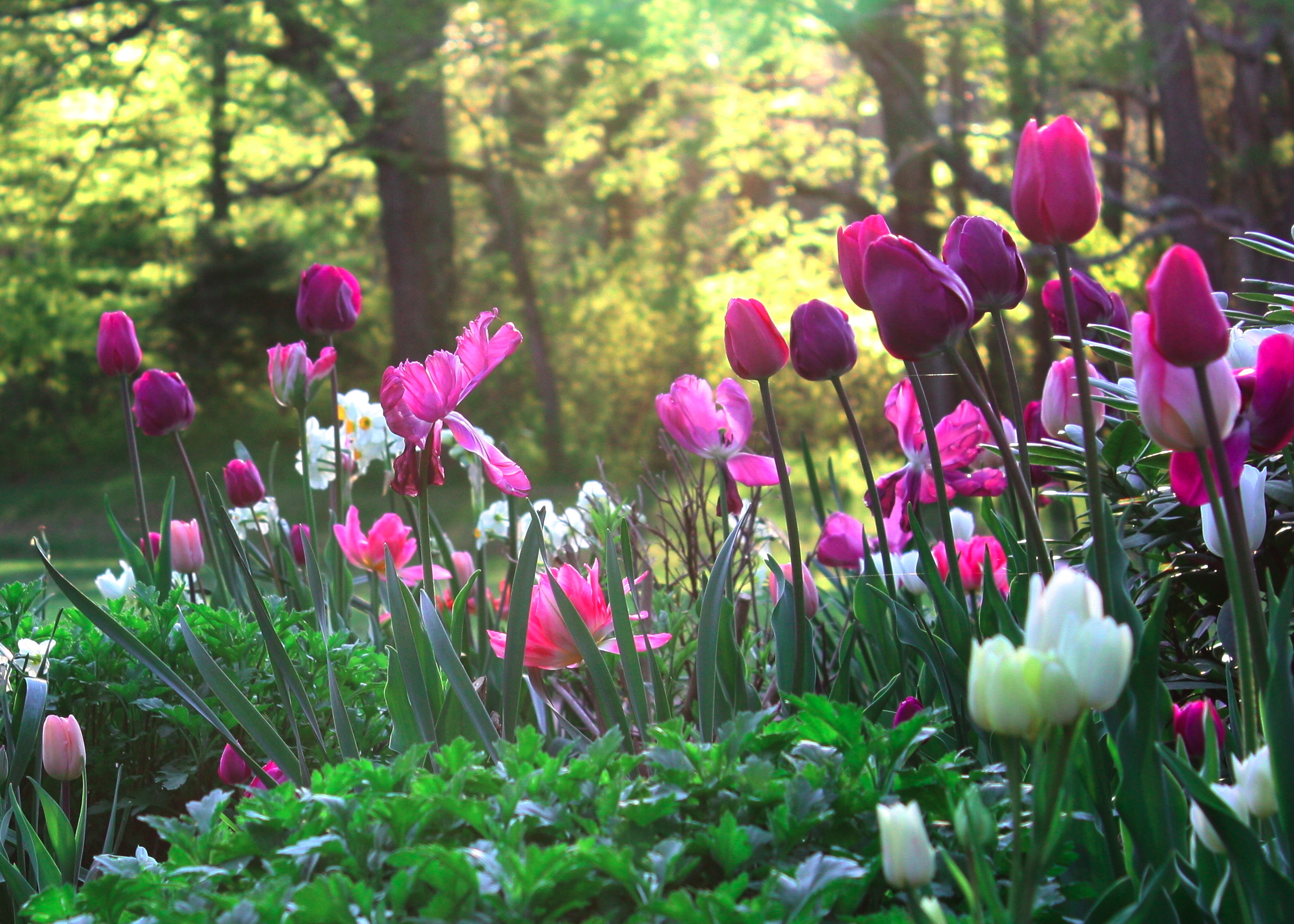
Tulipomania at Willowdale!

Tulips Blooming at Willowdale Estate Topsfield Massachusetts

The bridal season has begun and the grounds are topfull of tulips and sweetly scented jonquils. While photographing with eyes and nose at flower height, I am intoxicated by the the heady perfume emanating from the narcissus and the splendorous hues and broken patterns of the shimmering satin tulip petals–and dreaming about making cocktail dresses in every colorway! Lenna (from Willowdale) and I are creating a book of garden photographs for the brides, and because all the flowers and butterflies are so gorgeous, it is a challenge to decide what photos to include. Dan Pritchard, who works for my publisher, David Godine, suggested that I post  regular updates on what is currently in bloom at Wdale and I think it is a great idea. The following are a few potential candidate photographs to add to the spring section of our photo book.

Tulips Blooming at Willowdale Estate Topsfield Massachusetts

Tulips and Narcissus Blooming at Willowdale Estate Topsfield Massachusetts

The new pergola designed by Gerald Fandetti, Architect

Pergola designed by Gerald Fandetti, Architect

Native dogwood (Cornus florida) with tulips

Native dogwood (Cornus florida)

Wisteria Arbor in the Butterfly Courtyard

Wisteria Arbor in the Butterfly Courtyard at Willowdale Estate, Topsfield

Viridiflora Tulip ‘Greenland’


Flowering and Fruiting Apricot Trees

Prunus armeniaca ‘Harglow’

The genus Prunus evokes a multitude of images of picturesque spring flowering and summer fruit-bearing trees. The wands of branches shrouded in five-petal blossoms hold their color high up while the floor of the garden is carpeted in companionable tulips, jonquils, forget-me-nots, and lily of-the-valley. Falling blossoms swirling like snow sift their fragrant petals through the floral carpet, clinging and scattering along the pathways.

The apricot tree (Prunus armeniaca), abricocke as it was known of old, may seem like an odd selection of fruit tree for a garden in the northeastern region of the United States. Apricots are generally considered more suitable for a warmer Mediterranean climate, though several cultivars are hardy through zone five! Prunus armeniaca was formerly thought to originate from Armenia, therein the name armeniaca. There is little doubt that its original habitat was in the temperate areas of Asia. Never having seen a living apricot tree, nonetheless we were inspired to grow Prunus armeniaca from an old photograph of one pictured in an enclosed garden setting, as well as by our desire to make apricot tarts from our own tree-ripened fruit.

With its ornamental round-headed silhouette and broad, oval leaves, it is a tree of graceful beauty. The sweetly scented pure white flowers issue forth from plump violet colored sepal-enclosed buds. The two colors of violet and white are visible while the tree is leafless and in bloom and, from a distance, create the illusion of a delicately pale pink flower. We sited our apricot tree at the top of our fragrant path to savor the lilting honey scent of its blossoms.

The apricot buds swell at the earliest hint of warm air and are the first fruit bearing trees to flower in our garden. Unfortunately the flowers, and therefore the fruit crop, may be damaged by a late spring frost. Spring in New England is predictably unpredictable; some years the tree sets fruit and some years it does not. Nevertheless, the apricot is a worthy specimen for the beauty of its blooms and branches alone.

There are several varieties of European apricots that are suitable to grow in a northern climate. We chose ‘Harglow’. Named varieties beginning with ‘Har’ (‘Harval,’ ‘Hargrand,’ Harcot,’ and ‘Harlayne’) were developed in Canada at the Harrow Research Station. For the most part, these cultivars are resistant to fungal and bacterial diseases caused by exceedingly damp, wet springs and humid summers. They are an ideal choice for a garden in a temperate zone where the growing season is shorter than a Mediterranean climate and are grown extensively in the Pacific Northwest.

Apricots are also a sound selection for the urban garden as they are less affected by air pollution than other fruit trees. ‘Harglow’ is a perfect cultivar for the small garden. They are self-pollinating and grown on a semi-dwarf rootstock, ultimately reaching only fifteen to eighteen feet in height. For four seasons of beauty I encourage every gardener who lives in a suitable climate, including those with only a wee bit of space, to consider growing the elegant apricot tree. When planning where to site an apricot tree, choose a sunny, sheltered location out of the path of drying winter winds. Plant apricot trees in loose soil with excellent drainage. After the first hard frost, cover the root area with several inches of compost. Water apricot trees deeply, once a week during the growing season and more if you are experiencing drought-like conditions.

Standard and semi-dwarf apricot trees require regular pruning to maintain their height for ease of harvesting fruit and to allow light and air to penetrate the interior of the tree. Most fruits are borne on one- to three-year-old spurs that look like short, stubby branchlets. To best see the overall shape of the tree, prune in late winter or early spring, just after flowering, while the tree is leafless.

Apricots are plagued by many of the same pests as peach trees. Be on the lookout for signs of the Oriental fruit moth and peachtree borer. Peachtree borers burrow into the bark of the tree, leaving a gummy exudate of sap and tree dust. To prevent this problematic creature from destroying the tree, wrap the trunk of a newly planted tree with strips of brown paper up to the first lateral branch. Cultivate the soil four inches deep within the drip-line of the tree, being mindful of the tree’s root system. With its distinguishable black body banded with vermilion or yellow, the adult peach tree borer moth is easy to detect, and unlike most moths, this one flies during the day. From the first indication of an infestation of Oriental fruit moth, you will observe the new growing tips have a drooping and wilted appearance. Caused by adult moths burrowing into the tips of the tender new shoots, the subsequent generations of larvae will then burrow into the fruit. Cut (and discard) the infested twig tips back to healthy growth. Again, working the soil at the base of the tree will help to destroy the pupae and therefore any future attacks by the Oriental fruit moth. The adult Oriental fruit moth is a mottled gray-brown with a relatively small wingspan (1⁄2 inch).

At the first sign of disease or pest problem, cut out the infected growth. Practicing good housekeeping and growing disease-resistant varieties may be the best remedies for growing healthy, strong fruit trees. Weak and stressed plants are at a much greater risk than those that are healthy and vigorous.

Apricots are ready to be picked when all traces of their green color have disappeared and they turn a glowing golden yellow. Gently grasp the fruit and pull with a bit of an upward twist. As with pear trees, do not pull the fruit off vigorously. The fruit-bearing spurs may be damaged, thereby reducing next year’s potential harvest. The Persians referred to apricots as “seeds of the sun.” Some cultivars (‘Stark Sweethearts’ for example) produce fruits with large and edible sweet pits inside the stone fruit. And since apricots and almonds are closely related, the edible pits taste characteristically like an almond.

Excerpt from Oh Garden of Fresh Possibilities! Notes from a Gloucester Garden, written and illustrated by Kim Smith (David R. Godine, Publisher).

Three Bees

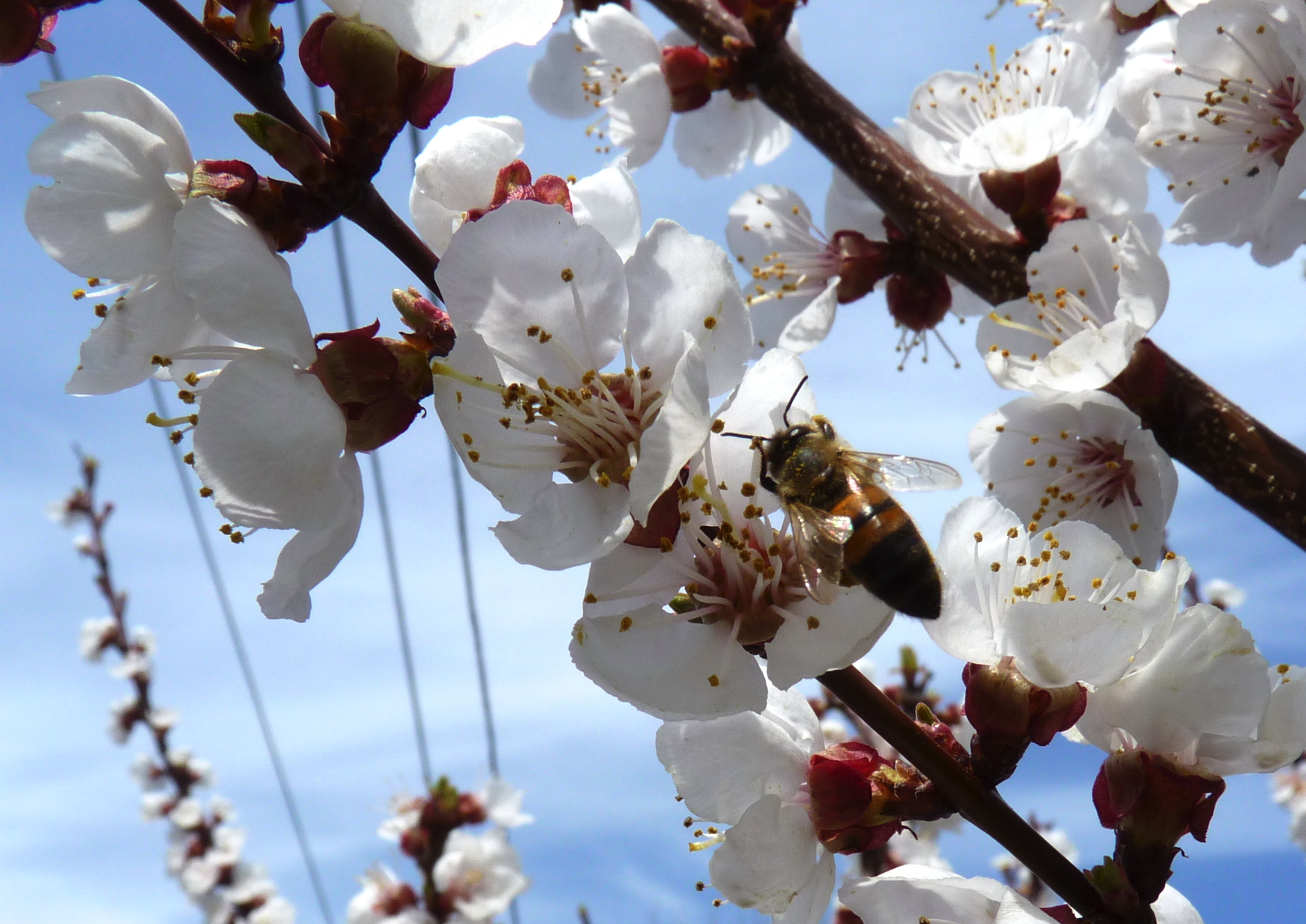
With family visiting for the past week, in honor of our darling daughter’s senior recital, I have been up to my elbows in cooking. I did manage to run out into the garden to photograph our apricot tree in full glory. Apricot trees provide a fantastic source of nectar for native bees in early spring. The blossoming time of apricots is fleeting and, as the petals were drifitng like snowflakes all around me, the pollinators were working furiously. I counted at least seven different species of bees, some so tiny they did not photograph at all well. The first photo is of a carpenter bee and the other two have yet to be identified.

Apricot Blossom with Carpenter Bee

Apricot blossom native bee

Apricot tree Native bee

Native Shrubs and the Carpenter Bee

Pinkshell Azalea and Carpenter Bee

While planting for design clients and organizing plant lists for the class I am teaching at the Arnold Arboretum of Harvard University I thought you would like to know about some of the great shrubs we have been working with. A well-sited flowering and fruiting shrub will often provide at least several, if not four, seasons of beauty; are long-lived (as compared to woody perennials); and provide sustenance and shelter for songbirds, butterflies, and bees. The following are several native favorites well worth considering when planting for people and for pollinators.

The accompanying photograph is of pinkshell azalea (Rhododendron vaseyi) and the much-maligned Eastern Carpenter bee (Xylocopa virginica), taken in mid-May at the Arnold Arboretum where a stunning massed bank of R. vaseyi is planted alongside the Meadow Road. Carpenter bees are an important pollinator for many open-faced spring flowers such as the blossoms of fruiting trees—crabapple, apple, pear, peach, plum, and wild cherry—as well as holly and brambles. The damage done to wood is usually minimal and cosmetic. X. virginica has an especially bad reputation with blueberry growers because they have strong mouthparts (capable of boring into wood), which will easily tear flowers with a deep corolla—blueberries and azaleas, for example.

Xylocopa virginica

Class: Insecta

Order: Hymenoptera

Suborder: Apocrita

Superfamily: Apoidea

Family: Apidae

Subfamily: Xylocopinae

Genus: Xylocopa

Species: virginica

Carpenter bees are regularly mistaken for bumblebees. Their shiny black abdomen most easily distinguishes them, although in the photograph, this carpenter bee was covered in shimmering golden pollen, which could lend a similar appearance to that of a bumblebee. While photographing at the Arnold I observed dozens of carpenter bees and at least half a dozen other species of native pollinators nectaring at the blossoms of the pinkshell azaleas.

Pinkshell is a deciduous azalea discovered in 1878 by George Vasey, the botanist in charge of the United States National Herbarium. Named after Vasey by Harvard botanist Asa Gray, pinkshell is found growing naturally in only six counties in the mountains of western North Carolina. R. vaseyi was introduced into cultivation by the Arnold Arboretum in 1880 and is now widely grown. Although able to attain fifteen feet in height, the pinkshell azaleas at the Arboretum are pruned to approximately chest height. The blossoms of pinkshell are typically seashell pink, but can vary from white to reddish-purple. The upper lobes are usually spotted red, but pink, green, and brown spotted blossoms are also common variants. When grown in a sunny location, the leaves turn a striking reddish hue in fall. R. vaseyi is very easy to grow and is highly adaptable to a wide variety of conditions from mountain ravines, swamps, bogs, stream banks, and high elevation coniferous and oak forests. At the turn of the previous century, it was once found in the wild in Massachusetts, apparently having naturalized at an abandoned nursery near Halifax, and was growing in a swamp as well as in sandy soil. Native species azaleas (Rhododendron spp.) are a nectar source for the Eastern Tiger Swallowtail butterfly and Ruby-throated Hummingbird and larval host plants for the Azalea Sphinx Moth (Darapsa choerilus).

Ilex glabra, or inkberry, is a fine-textured evergreen shrub, often confused with the less cold-hardy Japanese holly (Ilex crenata). Inkberry is found growing naturally along the East and Gulf coasts, from Nova Scotia to Florida and west to Texas. The species form matures at approximately eight feet high and equally as wide, with an upright oval growth habit. The commonly available cultivars, with names such as ‘Compacta’ and ‘Densa,’ are generally more compact, less leggy, and less suckering than the species form. The compact cultivars and species are ideal for creating year-round screening to disguise a neighboring eyesore. With periodic shearing, the plants can be maintained to the desired density.

The Atlantic (or Holly) Azure butterfly caterpillar (Celestrina ‘idella’) feeds on the male flowers of Ilex, including inkberry and American Holly (I. opaca). The diminutive cream-colored flowers appear in June on male and female plants. When a male pollinator plant is growing nearby, by September green berries ripen to ink-black berries on the female plants, providing sustenance for many songbirds including the Mourning Dove, Northern Bobwhite, and Hermit Thrush. There is much misinformation regarding which cultivars bear fruit; adding to this confusion is the fact that plants are often mis-labeled. When selecting plants for a client, I make a point of looking for remaining fruit on the individual specimens to ensure that we are indeed purchasing a fruit-bearing plant. Inkberry grows in part shade to full sun and prefers moist acidic soil, but is highly adaptable to soil conditions. To avoid winterburn, in general, broadleaf evergreen shrubs should not be sited in a south-or west-facing exposure, although inkberry performs better than most in such adverse conditions.

As usual, I am running out of space and time. A quick note about the early spring blooming pollinator magnets, Fothergilla, both F. major and F. gardenii. The fothergillas are native to the Allegany Mountain region, primarily around Georgia, but also occur in North and South Carolina, Tennessee, Alabama, Arkansas, and Florida. Fothergilla major ‘Mount Airy’ is a deciduous rounded shrub, growing from 6 to 8 feet with scented, white bottle-brush flowers. Although the species name gardenii may lead you to believe it to be more fragrant than

F. major, it is not, rather F. gardenii is slightly less fragrant. The flowers are also a bit smaller and less showy. Fothergilla gardenii fits the bill when a similar, but smaller than, shrub to ‘Mt. Airy’ is required. As we were planting F. gardenii at Willowdale Estate several weeks ago, immediately a Spring Azure butterfly joined the scene and began nectaring at the blossoms. The summer foliage of ‘Mt. Airy’ is a lovely soft shade of blue-green, turning brilliant red and yellow during autumn—making it, too, a lovely multi-season plant.

End Notes: You may find the following link helpful in identifying beneficial pollinators: Visual Aid to Pollinator and Beneficial Insect Identification

Cape Ann Magazine

Eye Pillows Designed by Kim Smith for Haiti ProjectsHaiti Projects Hand-embroidered Eye Pillows for Sweet Dreams and Yoga Shavasana

Look for my story about Haiti Project’s founder and Gloucester’s own Sarah Hackett, appearing in the current spring issue of “Cape Ann Magazine!” Also featured—Gail McCarthy, prolific journalist extraordinaire, has written an informative and interesting feature article about the history and restoration of Gloucester City Hall, as well as a great story about the local brewing industry. You can find “Cape Ann Magazine” at Toad Hall Bookstore, The Bookstore of Gloucester, IGA in Rockport, and other markets.

Sarah Hackett Cape Ann Magazine

Your Garden as Habitat

Pam Thompson of the  Arnold Arboretum of Harvard University has invited me back to teach my class Your Garden as Habitat, on Tuesday evenings, beginning May 11th. More information is provided on their website at Your Garden as Habitat. I hope you can take my class–I love teaching it and have crammed as much information as is possible in this four week program, and still, there is always more ground to cover…the time goes by so quickly!

Female Hairstreak native New Jersey Tea Female hairstreak ovipositing an egg on native New Jersey tea plant florets

Haiti Projects on Daily Grommet

Good news for Haiti Projects–a video about founder Sarah Hackett is shown on the Daily Grommet. I can’t take credit for designing the beautiful nightgowns featured. They have long been a staple in HP product’s line and are a favorite item of mine to both wear and to give as gifts. Go to the Haiti Project’s web store to see the full range of embroidery patterns. The nightgowns are made of pure cotton batiste–lovely and cool, comfortable, and flowing–beautifully embroidered, and constructed with typical HP care–French seams and hand crocheted edging. The nightgowns are easy to care for, simply wash on the delicate or gentle cycle and hang to dry.

Save the dates: Cape Cod Rhododendron Festival

Save the dates of Friday, June 4th through Saturday, June 5th for the first ever Cape Cod Rhododendron Festival and Garden Tours, presented by the Heritage Museums and Thornton W. Burgess Society of Sandwich, MA. I will be there both days with my book Oh Garden of Fresh Possibilities! and speaking about habitat gardening at 11:00 on Friday. Much more information and updates to follow. This promises to be a beautiful event!

Rhododendron vaseyii and Carpenter bee photographed at the Arnold Arboretum, Boston

Cape Cod View

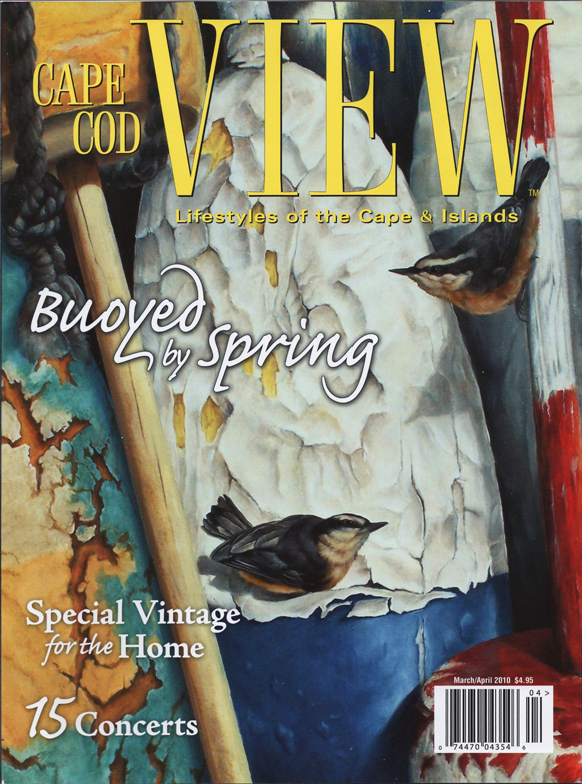
Buoyed by Spring!

Thank you North and Susan for the wonderful article about myself and fellow garden writer C.L. Fornari that appeared in the March/April issue of Cape Cod View!

North Cairn, editor-in-chief  of CCV, writes the following on her editorial page “The View from My Desk:”

“…The Chinese proverb announces that “spring is sooner recognized by plants than men,” but perhpas not when the winter-weary soul finally reawakens to the memory of such glories as the spring ephemeral flowers and the chance to get into the backyard, into the unkempt perennial bed, tousled by the winter winds… It’s all in your point of view – in open eyes and hearts, willing to see the beauty and gifts that reside everywhere; in our homes and favorite outings, among families and friends; in discovery and memory –  and the chance for remembrance and renewal that returns each spring.”

Magazine cover painting by Aleta Steward of Harwich

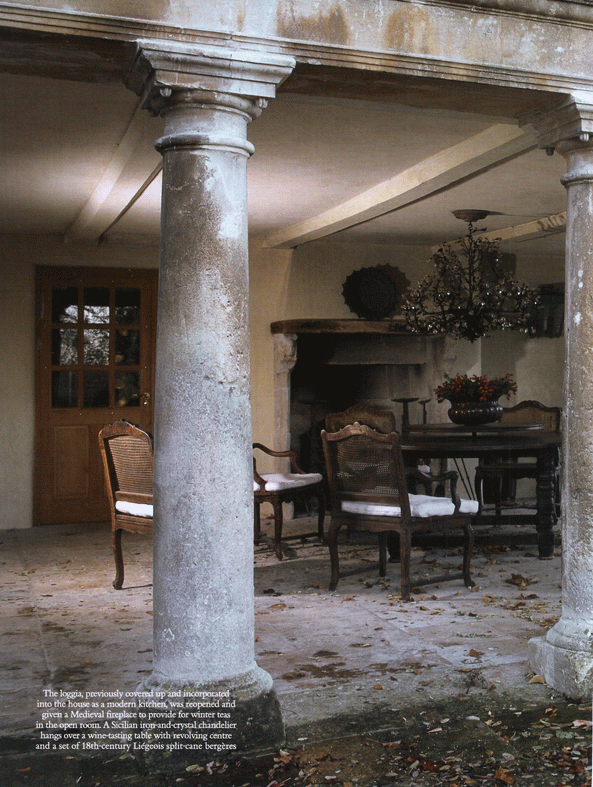
Loggia (lō’-jē-ə) is the name given to an architectural feature originally of Italian design.

Often a gallery or corridor, at ground level or an upper story, on the facade of a building and open to the air, supported by columns or pieced openings in the wall.

Loggia

This Loggia, previously covered up and incorporated into the house as a modern kitchen, was reopened and given a Medieval fireplace to provide for winter teas. A Sicilian iron-and-crystal chandelier hangs over the wine-tasting table and a set of 18th-century Liégeois split-cane bergères.

World of Interiors March 2010

Renee’s Garden Shirley Poppies

Please join me at the The Rhode Island Spring Flower and Garden Show, which is held in Providence, in partnership with the Rhode Island Horticultural Society. I am having a book signing for Oh Garden of Fresh Possibilities! at a wonderful bookstore there, Other Tiger, tomorrow at 1:00, Saturday, February 20th. Renee from Renee’s Garden sent along packets of her beautiful Shirley Poppy seeds. I write quite a bit about Shirleys in Oh Garden and we will be giving away Renee’s seeds with the purchase of my book. I can’t wait for this event and early spring preview!!

“Flower treasures for the eye and heart.” -Renee Shepherd

Renee's Garden Shirley Poppies

Happy Valentines Day!

Glitter Greetings from Anthropologie–a sweet set of twelve Valentine postcards in a handy re-usable tin.

Valentine Greetings from Anthropologie