Tag Archives: marsh milkweed

MORE MONARCH BUTTERFLIES SPIED AROUND CAPE ANN!

Monarch Butterfly on native Buttonbush blossoms

David Rhinelander had one two days in a row at his garden on Pine Street, Heather Hall spotted a Monarch at the Hamilton Library, Jennie Meyer had one in her garden and sent along some photos, Donna Soodalter-Toman had one in her yard, Jen in Rockport has them, and Susan Donelan Burke saw a Monarch in Magnolia. This is very early and thank you so much to Everyone for writing!

Keep your eyes peeled for Red Admirals and Painted Ladies, too.

Red Admirals nectaring at lilacs. The last time we had so many Red Admirals in our garden in May was in 2012 and that was a banner year for butterflies of many species.

Painted Ladies

In the above photo compare the Monarch to the Painted Lady. If you see a “small” Monarch, it may be a Painted Lady or a Red Admiral.

AMAZING!!! MONARCH BUTTERFLIES HAVE ALREADY ARRIVED TO CAPE ANN

There are Monarchs on Cape Ann, and they are laying eggs!!! Check your milkweed Friends! This is nearly a month earlier than usual.

Jane Danekis had a female several days ago in her garden on Revere Street and she deposited over 100 eggs on shoots of newly emerging milkweed.

Michele Del Vecchio saw a Monarch at Good Harbor Beach today, too!

Please let us know if you have seen a Monarch recently, and take a snapshot if you can. Thank you 🙂

A Monarch egg is pale golden yellow in color and shaped like a tiny ridged dome. The egg is no larger than a pinhead.

Morgan Faulds Pike spotted a female Monarch nectaring on her lilacs. Photo courtesy Morgan.

BEST MILKWEED TO PLANT FOR MASSACHUSETTS GARDENS, MEADOWS, FIELDS, AND DUNE RESTORATION

Friends often ask, and I cover this topic extensively in my Monarch programs, “What is the best milkweed to plant in our region?” Without a doubt, the two most important and productive are Common Milkweed (Asclepias syriaca) and Marsh Milkweed (Asclepias incarnata).

Marsh Milkweed also goes by the name Swamp Milkweed, but Marsh sounds so much more appealing, don’t you think? Milkweeds already have the suffix weed attached to their names. To some folks any wildflower that includes the word weed seems invasive, and we don’t want to frighten people from planting our sweet native wildflowers by inferring they are a swamp dweller, too.

Gallery of Marsh Milkweed

When a weed is not a weed  – It’s unfortunate that so many of our native beauties end in “weed.” Ironweed, Joe-pye Weed, Sneezeweed, Thimbleweed, Butterfly Weed, and Milkweed are just some examples. Why were these native wildflowers at one time long ago named “weed.” Because the earliest colonists brought from their home countries flowering plants that were beloved and familiar to them, delphiniums and larkspurs, for example. In their new American home gardens, these treasured European plants would have been easily overtaken by our more vigorous American wildflowers.

To return to the topic of milkweed, Common Milkweed spreads by both underground and by seed. It’s ideal for dunes, meadows, and fields. Marsh Milkweed is more clump forming and stays relatively close to where you plant it. You can control how much it spreads by deadheading, or not, before the seed heads turn to fluff and sail away. I grow both Marsh Milkweed and Common Milkweed side-by-side. In our garden, the female Monarch does not discern the difference between the two species of milkweeds, she will flit from one to the other, and back again, depositing her eggs all along the way.

Gallery of Common Milkweed

By the way, both A. syriaca and A. incarnata are also the easiest milkweeds to grow in Massachusetts.

A ten-year nation-wide study was recently published. Across the country, Marsh and Common proved to be the most productive, in other words, more eggs were laid on these two species than on any other species of milkweed.

The map provided below is somewhat helpful; I write somewhat with a word of advice. If you click on Massachusetts, for example, not only are Common and Marsh Milkweeds listed but also Purple Milkweed (A. pupurascens), Fourleaf Milkweed (A. quadrifolia), Butterfly Weed (A. tuberosa), Poke Milkweed (A. exaltata), Whorled Milkweed (A. verticillata), and Clasping Milkweed (A. amplexicaulis). We grow a nice patch of Whorled Milkweed and I have never, ever seen a Monarch once visit the foliage or flowers. Purple Milkweed can be very challenging to get started, and Butterfly Weed is not as hardy in our region as are Common and Marsh.

Milkweeds are the only food plant for Monarch caterpillars and also provide nectar to a host of pollinators including many, many species of butterflies, bees, beetles, and even hummingbirds. Plant for the pollinators and they will come!

This is an image from my recent adventure to Cerro Pelon. I am dying to write about the trip, but have had a very full schedule finishing up my film, organizing landscape jobs for the season, and hoping to get the PiPls settled in. The Monarchs in the photo are mud-puddling. Tens of thousands leave the butterfly trees during the heat of the day, sucking up water and much needed nutrients from the mud at nearby mountain streams

MONARCH BUTTERFLY EGGS AND CATERPILLAR ALERT!

Monarch butterflies, caterpillars, and eggs, here there and everywhere!

This morning I went out to my garden to collect more milkweed leaves for our current batch of caterpillars. A female was flitting about and in addition to finding half a dozen newly laid eggs, these two beautiful freshly molted third instar caterpillars were forgaing around on the milkweed foliage. We are having at least a second brood of Monarchs this summer, helped greatly but the current warm stretch of hot humid weather. If you have been raising Monarchs and think you are done for the summer, look again on your milkweed plants because you may very well have a second batch coming along.

https://www.instagram.com/p/Bmovi9QH47C/

COMMUNITY MILKWEED SEED POD PROJECT FOR THE POLLINATORS!

MILKWEED SEED COLLECTION AND DISTRIBUTION PROJECT SUNDAY OCTOBER 15TH

Collect ripe milkweed seed pods (only Common Milkweed and Marsh Milkweed please). Place in a paper bag, not plastic, as plastic can cause the seed pods to become damp and moldy.

Bring seedpods to Captain Joe and Sons on Sunday morning between 10:30 and noon. Captain Joes is located at 95 East Main Street, East Gloucester.

If you’d like to distribute seeds, meet at the dock between 10:30 and noon and I will show you what to do.

NOTE: It is easy to tell when milkweed seedpods are ripe. The seeds inside turn brown. Do not collect the pods when the seeds are white or green. If you pick them too soon, they will never be viable. You can check the seed pods by slitting the pod a tiny bit and peeking inside.

Any questions, please comment in the comment section or email me at kimsmithdesigns@hotmail.com. Thank you and I hope to see you Sunday morning!

To learn more about how you can help fund the documentary Beauty on the Wing and the Monarch Butterfly Film Online Fundraising event, please visit the film’s website at monarchbutterflyfilm.com.

MONARCH FILM FUNDRAISING SCREENING PARTY

Dear Friends,

This past spring I had a tremendously inspirational experience. Out of the blue, a lovely woman from Concord, Laura Stevens, contacted me about the possibility of viewing my documentary film about the Monarch butterflies, Beauty on the Wing: Life Story of the Monarch Butterflies. I was reluctant at first, explaining that the film was in a rough cut form. Although the rough cut features the butterflies and Cape Ann in the most beautiful light, the film does need finessing.

Laura comes from a wonderful family and they all love Monarchs! Every year, she and her family gather together for a reunion based around a weekend of learning. Laura explained that it would be an extra special treat for the 27 women and children who attend the reunion to see the film. The more I thought about it the more I thought it would be a super idea, and sent her access to the film.

Several weeks passed when in the mail I received the most heartfelt thank you letters from Laura and her family members who had attended the screening, from the ninety-five year old great auntie to the youngest child there. And soon after that, donations towards the film’s completion arrived from this most generous family. I am so grateful to Laura and her family for the donations, and for their kind encouragement and enthusiasm.

At that time the thought crossed my mind that this would be a wonderful way to continue to raise funds for the documentary. Landscape design work and the story of Little Chick and the Piping Plovers has kept me from doing any recent fundraising, but my work typically slows for a brief period during the end of August and beginning of September.

Female Monarch Butterfly and Marsh Milkweed, 2017

Don’t you think it auspicious for my film project that we are seeing so many butterflies this summer? I began documenting the Monarchs in our region in 2006, which was a tremendous year for the Monarch migration through Cape Ann. The year 2012 was quite strong as well, but in the past four years, as the worldwide population has plummeted, so have the Monarchs migrating through our area. Imagine that in 1977 when the Monarchs were first discovered at their winter sleeping grounds, the butterflies were counted by the billions, while today only by the millions.

My hope for Beauty on the Wing is that it will travel to the various conservation and environmental festivals, and then be made available to classrooms around the nation. Another dream for the film is that it will be translated into Spanish and French. Just as American and Canadian children are curious about the butterflies’ winter home after departing their northern breeding grounds, Mexican children are equally curious as to the butterflies’ destination after they leave the butterfly sanctuaries in central Mexico.

The intent of this letter is to learn if amongst our readers there is interest in hosting a screening of the film in its not quite completed form. The purpose of the screening would be to raise money towards the film’s completion and distribution. And, too, I thought it would be a more fun, educational, and personal way to fundraise. To date I have received over $5,000 in generous donations. I am working with the non-profit filmmaker’s assistance group, the Filmmakers Collaborative. Donations made through FC are tax deductible. An itemized budget is available upon request. Beauty on the Wing is 54 minutes long. I thought we could show twenty minutes of highlights and then discuss the current state of the butterflies. Viewer feedback would also be of tremendous help. Screening parties could be so much fun, especially at this time of year during the butterfly’s migration, and especially in 2017 while we are seeing so many Monarchs on the wing.

Readers, what do you think? Please comment on this post or write me at kimsmithdesigns@hotmail. Thank you so very much for your time, thoughts, and interest.

Warmest wishes,

Kim


Links:

Beauty on the Wing: Life Story of the Monarch Butterfly film website

A Flight of Monarchs

Trailer

Film Interview with Doctor Thomas Emmel at the Monarch Butterfly Biosphere Reserve at Sierra

https://instagram.com/p/BW7wfw-F5o9/

https://instagram.com/p/BXjLQjZleLY/

https://instagram.com/p/BXjL7HgF2p2/

#POLLINATORHERO

Bees and butterflies, as we all know, pollinate flowers, but did you know that bats, songbirds, hummingbirds, wasps, beetles, moths, flies, midges, and even nasty mosquitoes also deliver pollen from plant to plant?

Flower pollinating Green-eyed Wasp drinking nectar from Common Milkweed florets.

The eyes of the male Green-eyed Wasp are larger than the females, all the better to see her, and predators. Green-eyed Wasps are also known as sand wasps because females excavate burrowing nests in sand (as well as soil).

Male Monarch Butterfly flitting about our garden and drinking nectar from the Marsh Milkweed florets.

Notice the mass of orange Milkweed Aphids in the background. Lady Beetles are another pollinator super hero because they help milkweed plants by eating aphids.

https://www.instagram.com/p/BXTNYD9F_We/

Save the Date for My Upcoming Pollinator Garden Program at the Sawyer Free Library!

Dear Friends,

Please join me April 6th at 7pm at the Sawyer Free Library where I will be giving my Pollinator Garden program and screening several short films. This event is free and open to the public. I am looking forward to presenting this program at our wonderful Sawyer Free and hope to see you there!!

Female Ruby-throated hummingbird and zinnia – ornithophily is the pollination of flowering plants by birds. They carry off the pollen on their heads and neck to the next flower they visit.

This newly eclosed Monarch is clinging to its chrysalis case. Within moments of emerging, the two-part Monarch proboscis must zip together to form a siphoning tube. If the two parts do not join, the butterfly will not be able to drink nectar. In this photo, you can see the proboscis is not yet fully zipped.

“Following the rhythm of the seasons, celebrated landscape designer Kim Smith presents a stunning slide show and lecture demonstrating how to create a welcoming haven for bees, birds, butterflies, and other wildlife. Native plants and examples of organic and architectural features will be discussed based on their value to particular vertebrates and invertebrates.”

Hello Mama Monarch

Plant and they will come!Female Monarch depositing eggs copyright Kim Smith

Alighting on the buds of our Marsh Milkweed plants, you can see in these photos that the female Monarch is curling her abdomen to the underside to deposit eggs. She will go from bud to bud and leaf to leaf ovipositing one egg at a time. A female, on average, deposits 700 eggs during her lifetime, fewer in hot, dry weather.

Female Monarch depositing eggs -1 copyright Kim SmithFemale Monarch Butterfly and Marsh Milkweed (Asclepias incarnata)

Butterflies do not “lay” eggs; we say oviposit or deposit. And you wouldn’t describe a caterpillar as hatched, but that it has emerged or eclosed.

Grow Marsh Milkweed and Common Milkweed and you most definitely will have female Monarchs calling your garden home!Female Monarch depositing eggs -2 copyright Kim Smith

In the above photo you can see how she is contorting her abdomen to correctly position the eggs.

KIM SMITH POLLINATOR GARDEN PROGRAM FOR THE NORTH SHORE HORTICULTURAL SOCIETY TONIGHT

I am looking forward to presenting my “Pollinator Garden” program tonight at 7:30 for the North Shore Horticultural Society. The program begins at 7:30 at the American Legion Hall, 14 Church Street, Manchester (behind Town Hall). I hope to see you there!

male-female-monarch-butterfly-marsh-milkweed-2-c2a9kim-smith-2012-copyMale and Female Monarch Butterfly Marsh Milkweed

My Pollinator Garden Talk and Short Films Screening at the Hamilton Wenham Public Library

Male Luna Moth ©Kim Smith 2013Male Luna Moth and Phlox davidii

Please join me on Wednesday evening, April 29th, at 7pm at the Hamilton Wenham Public Library where I will be giving my Pollinator Garden program and screening several short films. This event is free and open to the public. I hope to see you there!

Catbird eating  dogwood fruits ©Kim Smith 2014Catbird and Dogwood Fruits

Monarch Butterfly depositing egg ©Kim Smith 2012Female Monarch Butterfly Depositing Egg on Milkweed 

I am currently booking programs for 2016-2017 and would be delighted to present to your club, library, school, and private or public event. See the Programs Page of my website and feel free to contact me at kimsmithdesigns@hotmail.com with any questions.

©Kim Smith 2014Willowdale Estate Topsfield

Community Call for HELP with the HarborWalk Gardens and a Photography Workshop Offer You Won’t Want to Miss!!

Okay so I’m in a bit of a bind, perhaps of my own making, but a bind nevertheless. Two years ago there was a formal nationwide public call for art for the HarborWalk. My grand idea was to purchase a projector and audio equipment for outdoor screenings and show films on an inflatable screen at I4-C2, along with creating a film for our community. I was a semi-finalist. Although I did not win the competition or receive compensation for my proposal, I am happy to see the benefits to the community stemming from my proposal and appreciate very much the time and energy that has gone into making this vision a reality.

The dilemma is that the gardens surrounding I4-C2 are not at all looking their best and invasive weed species are beginning to take over, as they have already claimed the adjacent plots of land. I’d like the gardens to shine and to be a place of pride for the City. They could look so, so much better than they do in their current condition. The butterfly gardens are basically a low-maintenance garden however they do need some maintenance. Having a public native plants garden in our community is a wonderful asset and provides tremendous educational opportunities. My hope is to eventually donate programs but we have to solve the garden’s maintenance crisis first and foremost. We don’t have an outside crew to take care of the gardens this year and the DPW I have learned has far too many other more important responsibilities. The group that was planning to help water realized that they had taken on too much and will not be helping this summer.

As a result, I am forming an official group to help the HarborWalk and we are calling ourselves “Friends of the HarborWalk.” Our first meeting is this Sunday morning, July 27th, at 9:00am, under the shade tree in front of the Gloucester House Restaurant, near the Schooner Lannon office. We are going to brainstorm about ways to fund basic needs for the gardens, for example, annually purchasing and applying compost/mulch to cut down on the weeding responsibilities. I am hoping businesses in the area that are benefiting directly or indirectly from movie night will also come and contribute their ideas, suggestions, and manpower.

And here is the deal. For the first ten people that sign up to become a working member of the Friends of the HarborWalk, either through the comment section or by emailing me at kimsmithdesigns@hotmail.com, I am giving a close-up photography workshop. We’ll hold the workshop in the garden and it will be identical to the one that I give at the Arnold Arboretum.

Bring your own coffee Sunday  morning and we’ll provide the homemade doughnuts!

White milkweed asclepias incarnata Ice Ballet skippers ©Kim Smith 2014JPGBlooming Today at the HarborWalk Butterfly Garden ~ Asclepias incarnata ‘Ice Ballet,’ or white milkweed, with skippers nectaring. There are over 140 different species of milkweed worldwide; 108 of these are found in North America.

Thank You to Everyone Who Participated in This Year’s Cape Ann Milkweed Project!!!

Monarch Butterflies Pink New England Aster ©Kim Smith 2012Monarch Butterflies Nectaring at Pink New Enlgand Aster, Gloucester

Thank you so much to our most awesome community for participating in the Cape Ann Monarch Milkweed and Aster Project. Today was a huge and wonderful success and we were non-stop with folks dropping in to pick up their seeds and learn more about how they can help the Monarchs. Thank you, thank you, thank you!!!

And my most heartfelt thanks to Joey. He nudged me into doing the sale again this year by inquiring just about a month ago if we were planning a repeat of last year’s plant sale. Joey’s hospitality and interest in everyone who stops by makes Captain Joe’s a wonderfully fun place to have a community event!

Note to anyone who could not pick up their seeds or who was planning to have them sent via a self-addressed stamped envelope: You will recieve an email with information on where to send the check and order amount total. Thanks again to everyone!

Monarch Butterfly fur ©Kim Smith 2012Fun fact about butterflies: Butterflies do not grow fur. The fur-like structures that you see on butterflies are many single cells conjoined to form one long string.

*     *     *

In case you misplace the instructions on how to prepare your milkweed seeds for spring planting ~

How to Vernalize Milkweed Seeds for Spring Planting

Seeds of most temperate plants need to be vernalized—in other words, exposed to cold temperatures. The best way to vernalize is by stratification, which means subjecting seeds to a cold and moist environment for a short period of time. By stratifying, the seed’s natural break of dormancy that occurs when the seed spends the winter in the ground is simulated.

#1 Method of Stratifying Milkweed

Open the bag of seeds and place them between very slightly moistened paper towels in a plastic bag in the refrigerator. After vernalizing for 3-6 weeks, the seeds can be planted out in the garden in warm 70º soil.

#2 Method of Stratifying Milkweed

Place ¼ cup of sand mixed with ¼ tsp. of water in a plastic bag. Add the seeds and mix again. Store in plastic bag in the refrigerator. After vernalizing for 3-6 weeks, the seeds can be planted out in the garden in warm 70º soil.

Prepare the planting bed in a sunny location. Scatter seeds, or plant in rows, and cover with no more than ¼ inch of soil.

For natural vernalization, sow collected seeds directly into a prepared bed in the fall and the seed will germinate the following spring.

Monarch Caterpillars Common Milkweed ©Kim Smith 2012Monarch Butterfly Caterpillars Munching on Milkweed

Cape Ann Milkweed Project Seed Pickup and Information Day is Sunday, May 18th, from 9:30 to Noon

Female Monarch Egg Marsh Milkweed -ecga ©Kim Smith 2013JPGFemale Monarch curling her abdomen around to the underside of a Marsh Milkweed leaf (Asclepias incarnata) to deposit an egg. Photographed in Gloucester

Our milkweed and New England Aster seed pickup day is this coming Sunday from 9:30 to noon at Captain Joe and Sons. Captain Joe’s is located at 95 East Main Street and you can find directions posted on their website here. Thanks so much to Joey for hosting the event at the dock. Looking forward to seeing everyone!

banksy-1Banksy Image Courtesy Bing McGilvray

The first Monarchs of Spring 2014 have been sighted in Massachusetts (Kingston), as has emerging milkweed. For the past week, a weather pattern has been in place that is perfect for the Monarchs northward migration. Powerful south winds pumped warm air northward and in conditions such as these, Monarchs are carried from southern regions more quickly northward.

Below is a map from the Journey North website illustrating favorable wind patterns for Monarchs.

Reminder: Monarch Milkweed and Aster Seed Pickup and Information Day is Next Sunday, May 18th, from 9:30 to Noon

male-female-monarch-butterfly-marsh-milkweed-2-c2a9kim-smith-2012-copyMale and Female Monarch Butterfly on Marsh Milkweed (Asclepias incarnata)

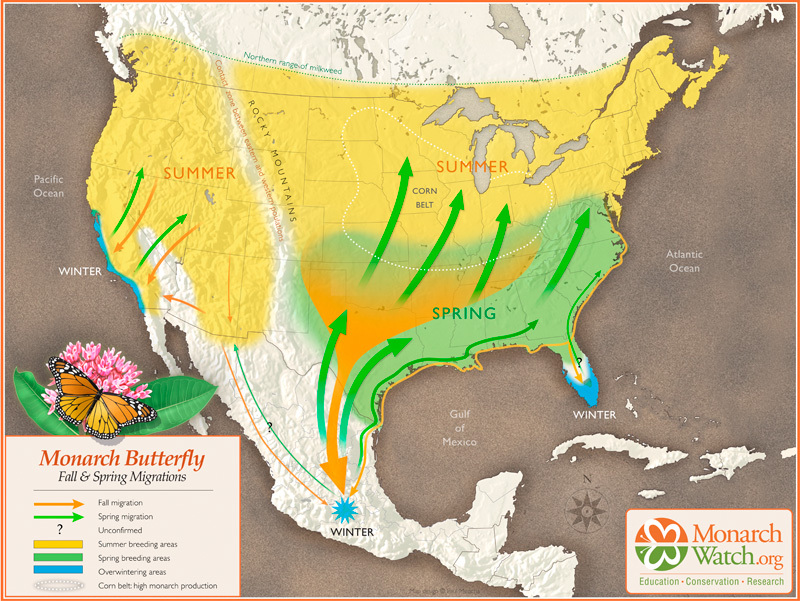
Where are the Monarchs today in their northward migration? They have spread throughout the Great Plains and Southern States. Some have already been sighted as far north as Michigan and Wisconsin!

Monarch Migration Map

Our Milkweed and New England Aster seed pickup day is next Sunday from 9:30 to noon at Captain Joe and Sons. Captain Joe’s is located at 95 East Main Street and you can find directions posted on their website here. Thank you so much to Joey for offering to host the event at the dock. See You There!

monarch-new-england-aster-c2a9kim-smith-2013Monarch Butterfly and New England Aster

Top Native Bee Friendly Plants

Obedient Plant and Bee Physostegia virginiana ©Kim Smith 2013Obedient Plant (Physostegia virginiana)

Below is a list of some favorite nectar- and pollen-rich bee-friendly North American wildflowers for attracting native bees and honey bees to your gardens. They are listed in order of bloom time, from spring through late summer, to provide your foragers with nourishment all growing season long.

Mexican Sunflower © Kim Smith 2013Mexican Sunflower (Tithonia rotundifolia)

Wild strawberry (Fragaria viginiana)

Wild Blue Lupine (Lupinus perennis)

Common Milkweed (Asclepias syriaca)

Marsh Milkweed (Asclepias incarnata)

Black-eyed Susan (Rudbeckia hirta)

Sunflower (Helianthus annus)

Obedient Plant (Physostegia virginiana)

Seaside Goldenrod (Solidago sempervirens)

Great Blue Lobelia (Lobelia siphilitica)

Joe-pye Weed (Eupatorium purpureum)

New York Ironweed (Veronia noveboracensis)

New England Aster (Aster novae-angliae)

Sailor Stan sunflower and bee ©Kim Smith 2011Sailor Stan Sunflower (Helianthius annus)

Eupatorium and Bee ©Kim Smith 2012Joe-pye Weed (Eupatorium purpureum)

Ironweed Bee ©KIm Smith 2011New York Ironweed (Veronia noveboracensis)

ORDER YOUR MILKWEED SEEDS TODAY!

Monarch Caterpillars Eating Common Milkweed ©Kim Smith 2012JPGMonarch Caterpillars Munching on Milkweed

Ordering information:

Please note that the milkweed seeds are available in two different species and two different quantities. Please place your order amounts in the comment section of this post as follows:

Your Name, Your Email Address (optional), and Seed Type and Quantity.

For Example:

Pippi Longstocking, villavillakula@gmail.com

1 Packet Common Milkweed 3.50

1 oz. Marsh Milkweed 15.00

2 Packets Pink New England Aster @ 3.50 ea. = 7.00

My order total: $25.50

We are not collecting money ahead of time for the seeds. The orders are placed entirely by the honor system. Last year we did not have a single stiff and I will accept cash or check at the time of pick up. Seed pick up and information day will be Sunday, May 18th, from 9:30 to noon, at Captain Joe and Sons.

The packets of milkweed seeds (200-300 seeds) are perfect for a relatively smallish patch.

The larger ounce quantity is ideal for planting larger areas. On average, plan on 50 seeds per square foot. If your patch is 10 feet x 10 feet, that equals 100 square feet, and would require approximately 5,000 seeds.

Additionally, we are also offering pink and purple New England aster seeds. I’ve never grown New England asters from seed, but have read that they are relatively easy to start (although slow to germinate). New England asters make a beautiful border and will not only offer sustenance to southward migrating Monarchs, but in late summer also provide nectar for myriad species of bees and butterflies.

SEEDS

Common Milkweed (Asclepias syriaca)

Seed Packet (300 seeds) 3.50

1 ounce (4900 seeds) 12.00


Marsh Milkweed (Asclepias incarnata)

Seed packet (200 seeds) 3.50

1 oz. (5,200 seeds) 15.00


Pink New England Aster (Aster novae-angliae variation)

Seed Packet (1000 seeds) 3.50


Purple New England Aster (Aster novae angliae)

Seed Packet (1750seeds) 3.50

*    *    *

Why is it so important to plant milkweed for the Monarchs? Milkweed is the only food plant of the Monarch butterfly caterpillar. The Monarch butterfly migration is in serious peril due to loss of habitat in the United States by the use of Monsanto’s genetically modified Roundup Ready corn, soybean, and sorghum crops. Global climate change is also a factor in the weakening migration. We can all help mitigate some of the destruction by planting milkweed and nectar-rich wildflowers.

Common Milkweed (Asclepias syriaca) is the milkweed we see most typically growing in our dunes, meadows, roadsides, and fields. It grows quickly and spreads vigorously by underground runners. This is a great plant if you have an area of your garden that you want to devote entirely to milkweed. It prefers full sun, will tolerate some shade, and will grow in nearly any type of soil. The flowers are dusty mauve pink and have a wonderful honey-hay sweet scent.

monarch-caterpillars-common-milkweed-c2a9kim-smith-2011Common Milkweed and Monarch Caterpillars J-shape

Marsh Milkweed (Aclepias incarnata) is more commonly found in marshy areas, but grows beautifully in gardens. It does not care for dry conditions. These plants are very well-behaved and are more clump forming, rather than spreading by underground roots. The flowers are typically a brighter pink than Common Milkweed.

Monarch Butterfly marsh Milkweed ©Kim Smith 2012Marsh Milkweed and Monarch Butterfly

New England Aster (Aster novae-angliae) is a hardy late summer perennial that grows approximately 36 inches to 60 inches. New England asters prefer wet to medium soil, grow well in full sun, and will tolerate part shade.

New England Aster and Monarch Butterfly ©Kim Smith 2014Monarch Butterfly Nectaring at New England Aster

Cape Ann Milkweed Project Continues ~ Plant Milkweed Seeds to Save the Monarchs!

Monarch Butterfly Common Milkweed Asclepias syriaca Honey Bee©Kim Smith 2013Good Harbor Beach Common Milkweed

Last year was the beginning of our first and wonderfully successful Cape Ann Milkweed Project. My friend Joe Ciaramitaro from Good Morning Gloucester generously offered to hold the plant sale at Captain Joe and Sons, which is very conveniently located on East Main Street, and we had a fantastic turnout. This year I am thinking about doing things a little differently. Rather than shipping and handling live small plants, I am planning to purchase milkweed seeds in bulk. My question is, and this is not the official order form, but just to get a sense of participation, does anyone have an interest in planting milkweed from seed in their gardens, meadows, and/or abandoned areas around our community?

I think I can get good quantities of seed of Marsh Milkweed, Common Milkweed, and Prairie Milkweed. All three are very easy to grow from seed and take about 14 days to germinate. I will provide complete information and tips on growing milkweed from seed.

Please answer in the comment section if you are interested in growing milkweed from seed.

monarch-butterfly-overwintering-graph-journey-northWhy is it so important to plant milkweed for the Monarchs? I’ve written much about that and at the end of the post, please find a list of posts previously published about the importance of milkweed. In a nutshell, milkweed is the only caterpillar food plant of the Monarch Butterfly. The Monarch Butterfly migration is in serious peril One way we can all take action to is to plant milkweed to help mitigate the loss of habitat, partly due to global climate change and primarily due to the use of Monsanto’s GMO Roundup Ready corn, soybean, and sorghum seed along with the massive use of their herbicide Roundup.

Cape Ann Milkweed Project

News Release: MONARCH WATCH ANNOUNCES ‘BRING BACK THE MONARCHS’ CAMPAIGN

How Exactly is Monsanto’s Roundup Ravaging the Monarch Butterfly Population?

Where Are All the Monarchs?


Monarch Butterfly Marsh Milkweed ©Kim Smith 2012

Make Your Voices Heard for the Monarchs

This is not a request to donate money. Click here to sign this petition and tell the EPA to protect the Monarchs!

P.S. The photo that is on the NRDC’s Monarch petition page is my photo of a male and female Monarch Butterfly, newly emerged and resting on the foliage of Marsh Milkweed (Asclepias incarntata).

male-female-monarch-butterfly-marsh-milkweed-2-c2a9kim-smith-2012-copy

Male and Female Monarch Butterfly

Setting the Table for a Regal Butterfly Comeback, With Milkweed

Monarch Caterpillar Milkweed ©Kim Smith 2013Monarch Caterpillar Eating the Foliage of Common Milkweed (Asclepias syriaca)

Thank you readers and Monarch Butterfly friends for forwarding the following article from the NY Times!

By Michael Wines

Published December 20th, 2013

CEDAR FALLS, Iowa — Bounding out of a silver Ford pickup into the single-digit wind-flogged flatness that is Iowa in December, Laura Jackson strode to a thicket of desiccated sticks and plucked a paisley-shaped prize.

It was a pod that, after a gentle squeeze, burst with chocolate brown buttons: seeds of milkweed, the favored — indeed, the only — food of the monarch butterfly caterpillar.

Once wild and common, milkweed has diminished as cropland expansion has drastically cut grasslands and conservation lands. Diminished too is the iconic monarch.

Dr. Jackson, a University of Northern Iowa biologist and director of its Tallgrass Prairie Center, is part of a growing effort to rescue the monarch. Her prairie center not only grows milkweed seeds for the state’s natural resources department, which spreads them in parks and other government lands, but has helped seed thousands of acres statewide with milkweed and other native plants in a broader effort to revive the flora and fauna that once blanketed more than four-fifths of the state.Monarch Caterpillar milkweed -2 © Kim Smith 2012Monarch caterpillar hanging from a Marsh Milkweed (Asclepias incarnata) leaf rib, in the characteristic J-shape, readying to pupate.

Nationwide, organizations are working to increase the monarchs’ flagging numbers. At the University of Minnesota, a coalition of nonprofits and government agencies called Monarch Joint Venture is funding research and conservation efforts. At the University of Kansas, Monarch Watch has enlisted supporters to create nearly 7,450 so-called way stations, milkweed-rich backyards and other feeding and breeding spots along migration routes on the East and West Coasts and the Midwest.

But it remains an uphill struggle. The number of monarchs that completed the largest and most arduous migration this fall, from the northern United States and Canada to a mountainside forest in Mexico, dropped precipitously, apparently to the lowest level yet recorded. In 2010 at the University of Northern Iowa, a summertime count in some 100 acres of prairie grasses and flowers turned up 176 monarchs; this year, there were 11.

Read the story here

The Year the Monarch Didn’t Appear

Many, many friends have forwarded the following article from the New York Times, “The Year the Monarch Didn’t Appear.” 

Female Monarch Egg Marsh Milkweed ©Kim Smith 2013JPGFemale Monarch Depositing an Egg

In the above photo, the female Monarch Butterfly is curling her abdomen around to the underside of the Marsh Milkweed plant. She chooses the most tender foliage toward the top of the plant on which to deposit her eggs.

Begin New York Times article, published November 22, 2013 ~

ON the first of November, when Mexicans celebrate a holiday called the Day of the Dead, some also celebrate the millions of monarch butterflies that, without fail, fly to the mountainous fir forests of central Mexico on that day. They are believed to be souls of the dead, returned.

This year, for or the first time in memory, the monarch butterflies didn’t come, at least not on the Day of the Dead. They began to straggle in a week later than usual, in record-low numbers. Last year’s low of 60 million now seems great compared with the fewer than three million that have shown up so far this year. Some experts fear that the spectacular migration could be near collapse.

“It does not look good,” said Lincoln P. Brower, a monarch expert at Sweet Briar College.

It is only the latest bad news about the dramatic decline of insect populations.

Another insect in serious trouble is the wild bee, which has thousands of species. Nicotine-based pesticides called neonicotinoids are implicated in their decline, but even if they were no longer used, experts say, bees, monarchs and many other species of insect would still be in serious trouble.

That’s because of another major factor that has not been widely recognized: the precipitous loss of native vegetation across the United States.

“There’s no question that the loss of habitat is huge,” said Douglas Tallamy, a professor of entomology at the University of Delaware, who has long warned of the perils of disappearing insects. “We notice the monarch and bees because they are iconic insects,” he said. “But what do you think is happening to everything else?”

A big part of it is the way the United States farms. As the price of corn has soared in recent years, driven by federal subsidies for biofuels, farmers have expanded their fields. That has meant plowing every scrap of earth that can grow a corn plant, including millions of acres of land once reserved in a federal program for conservation purposes.

Another major cause is farming with Roundup, a herbicide that kills virtually all plants except crops that are genetically modified to survive it.

As a result, millions of acres of native plants, especially milkweed, an important source of nectar for many species, and vital for monarch butterfly larvae, have been wiped out. One study showed that Iowa has lost almost 60 percent of its milkweed, and another found 90 percent was gone. “The agricultural landscape has been sterilized,” said Dr. Brower.

The loss of bugs is no small matter. Insects help stitch together the web of life with essential services, breaking plants down into organic matter, for example, and dispersing seeds. They are a prime source of food for birds. Critically, some 80 percent of our food crops are pollinated by insects, primarily the 4,000 or so species of the flying dust mops called bees. “All of them are in trouble,” said Marla Spivak, a professor of apiculture at the University of Minnesota.

Farm fields are not the only problem. Around the world people have replaced diverse natural habitat with the biological deserts that are roads, parking lots and bluegrass lawns. Meanwhile, the plants people choose for their yards are appealing for showy colors or shapes, not for their ecological role. Studies show that native oak trees in the mid-Atlantic states host as many as 537 species of caterpillars, which are important food for birds and other insects. Willows come in second with 456 species. Ginkgo, on the other hand, which is not native, supports three species, and zelkova, an exotic plant used to replace elm trees that died from disease, supports none. So the shelves are nearly bare for bugs and birds.

Native trees are not only grocery stores, but insect pharmacies as well. Trees and other plants have beneficial chemicals essential to the health of bugs. Some monarchs, when afflicted with parasites, seek out more toxic types of milkweed because they kill the parasites. Bees use medicinal resins from aspen and willow trees that are antifungal, antimicrobial and antiviral, to line their nests and to fight infection and diseases. “Bees scrape off the resins from the leaves, which is kind of awesome, stick them on their back legs and take them home,” said Dr. Spivak.

Besides pesticides and lack of habitat, the other big problem bees face is disease. But these problems are not separate. “Say you have a bee with viruses,” and they are run-down, Dr. Spivak said. “And they are in a food desert and have to fly a long distance, and when you find food it has complicated neurotoxins and the immune system just goes ‘uh-uh.’ Or they become disoriented and can’t find their way home. It’s too many stressors all at once.”

There are numerous organizations and individuals dedicated to rebuilding native plant communities one sterile lawn and farm field at a time. Dr. Tallamy, a longtime evangelizer for native plants, and the author of one of the movement’s manuals, “Bringing Nature Home,” says it’s a cause everyone with a garden or yard can serve. And he says it needs to happen quickly to slow down the worsening crisis in biodiversity.

When the Florida Department of Transportation last year mowed down roadside wildflowers where monarch butterflies fed on their epic migratory journey, “there was a huge outcry,” said Eleanor Dietrich, a wildflower activist in Florida. So much so, transportation officials created a new policy that left critical insect habitat un-mowed.

That means reversing the hegemony of chemically green lawns. “If you’ve got just lawn grass, you’ve got nothing,” said Mace Vaughan of the Xerces Society, a leading organization in insect conservation. “But as soon as you create a front yard wildflower meadow you go from an occasional honeybee to a lawn that might be full of 20 or 30 species of bees and butterflies and monarchs.”

First and foremost, said Dr. Tallamy, a home for bugs is a matter of food security. “If the bees were to truly disappear, we would lose 80 percent of the plants,” he said. “That is not an option. That’s a huge problem for mankind.”

Jim Robbins is a frequent contributor to The New York Times and the author of “The Man Who Planted Trees.”
 *  *  *

My note about milkweeds ~

Common Milkweed (Asclepias syriaca) is the milkweed we see most typically growing in our dunes, meadows, roadsides, and fields. It grows quickly and spreads vigorously by underground runners. This is a great plant if you have an area of your garden that you want to devote entirely to milkweed. It prefers full sun, will tolerate some shade, and will grow in nearly any type of soil. The flowers are dusty mauve pink and have a wonderful honey-hay sweet scent.

Marsh Milkweed (Aclepias incarnata) is more commonly found in marshy areas, but it grows beautifully in gardens. It does not care for dry conditions. These plants are very well-behaved and are more clump forming, rather than spreading by underground roots. The flowers are typically a brighter pink than Common Milkweed.

Easiest Method on How to Grow Milkweed From Seed

Easiest Method on How to Grow Milkweed From Seed

Milkweed Eastern PointCommon Milkweed Patch Eastern Point

Now is the perfect time of year to collect and to plant milkweed seeds, either from pods that are just splitting open or from pods that have already split and are showing their silky fluff.

There are several different methods of propagating milkweed and the following is by far the simplest. Gather milkweed seeds and store in a paper bag. At the location in your garden where you are planning a milkweed patch, lightly scratch the soil with a rake. Scatter the seeds over the soil. Sprinkle a thin layer of soil over the seeds, just enough to keep them from blowing away. That’s it! Next spring, by mid-May, you will have a patch of milkweed seedlings. This super simple method works for Common Milkweed (Asclepias syriaca) and Marsh Milkweed (Asclpeias incarnata).

Note ~ when collecting seeds from wildflowers, never remove the plant from its location, and never take all the seeds.

Monarch Butterfly Marsh Milkweed ©Kim Smith 2011

If you’d like to learn more about this beautiful plant species, and how growing milkweed in your own garden directly benefits the Monarch Butterfly, there are over several dozen posts covering milkweed on Good Morning Gloucester; too numerous to list here. Type milkweed in the search box in the upper right hand corner of my home page to see all.

Monarch Caterpillars Feeding on Common Milkweed ©Kim Smith 2011Monarch caterpillars eating Common Milkweed leaves

Where Are All the Monarchs?

Cape Ann Milkweed Project

How Exactly is Monsanto’s Roundup Ravaging the Monarch Butterfly Population?

Marsh Milkweed Seeds Asclepias incarnata

Many Thanks to the Positively Most Awesome Community Ever!

The Cape Ann Monarch Milkweed Project was positively a resounding success. Thank you to everyone who ordered and picked up your milkweed plants. Thank you to Joe Ciaramitaro from Good Morning Gloucester who turned my small seed of an idea into a fabulous community-wide project and who also very kindly offered Captain Joe and Sons for mug up and pick up. Thank you to all my GMG fellow contributors and all the FOBs for coming, and for everyone’s enthusiasm in the project.

And, most importantly, the Monarchs thank you!!!

We have exactly fourteen plants remaining and all fourteen are spoken for. After all the plants are picked up and the money totaled, we will have enough to make a donation to the Rocky Neck Cultural Center. So thank you again. I am very inspired by the success of the program and plan to later in the summer have a Cape Ann Monarch Aster and Goldenrod Program.

Monarch Butterfles Eastern Point Gloucester MA © Kim Smith 2012

Monarch Butterflies at Eastern Point

How to Plant and Care for Your Milkweed Plants

Common Milkweed (Asclepias syriaca) has a taproot. Plants with taproots do not like to be disturbed once established so it is best to plant your Common Milkweed seedlings as soon as possible. Common Milkweed is not too fussy about soil and is the milkweed we see growing in fields, roadsides, dunes, and meadows. It can reach up to six-feet in height, but more commonly grows two- to four-feet. Common Milkweed spreads by underground shoots and by seed dispersal.

The Marsh Milkweed (Asclepias incarnata) are well-rooted year-old plants and can be planted in the garden now, or within the next month or so. Marsh Milkweed grows best in good garden soil and/or moist areas. Marsh Milkweed is clump forming and does not spread by underground shoots.

Both milkweed species prefer full sun, but will take some slight shade. Plant with the soil line equal to the soil line in the pot. Place a stake nearby so that you do not step on your little milkweed seedling. Water gently. Check frequently on your milkweed plant until it is fully established. Water when dry, but do not over water. Monitor for milkweed aphids. Milkweed aphids are tiny soft-bodied orange insects. If you do see any aphids, gently wash them away with water; no soap or strong pesticides needed!

Milkweed seed pod bl-wh ©Kim Dmith 2012

Monarch-Milkweed Mug Up This Saturday!

Hooray–our milkweed plants shipped from Missouri Monday and should arrive to Gloucester by Thursday!!!

Plants will be available for pick up at Captain Joe and Sons, 95 East Main Street, Saturday morning at 9:00am and we will be there all morning until noon. Felicia is helping and we will have coffee for everyone. Written instructions will be provided on how to take care of your plants.  Looking forward to seeing you all at the first ever Monarch~Milkweed Mug Up!

I did not collect the funds ahead of time. Please everybody,  if you ordered plants, be sure to pick-up Saturday morning. I am counting on you!! If the project is successful, we will do this again later in the season, with Seaside Goldenrod and New England Asters, but we can only have another plant sale if everyone honors their commitment. Thank you!! 

For more detailed information, see previous posts:

GloucesterCast Podcast 4/25/13 With Guest Kim Smith

Cape Ann Milkweed Project

Cape Ann Milkweed Project ~ Last day to order plants

WOW and WONDEFUL—150 milkweed plants ordered!!! (Actually, 190 plants were ordered!!)

How Exactly is Monsanto’s Roundup Ravaging the Monarch Butterfly Population?

Monarch Butterfly and Marsh Milkweed

News Release: MONARCH WATCH ANNOUNCES ‘BRING BACK THE MONARCHS’ CAMPAIGN

Monarch Butterfly Marsh Milkweed ©Kim Smith 2011

WOW and WONDEFUL—190 milkweed plants ordered!!!

Thank you to everyone participating in the Cape Ann Milkweed Project!

Monarch Butterfly milkweed Good harbor Beach ©Kim Smith 2011

Monarch Butterfly Nectaring at Common Milkweed ~ Good Harbor Beach

Milkweed may not be for everyone’s garden; even if you did not order plants, you are welcome to come on down to the dock Saturday morning, the 18th of May, and learn more about the Monarch-milkweed connection. The plants are being shipped on Monday the 13th and I will keep you updated on their progress.